_1778553121707.webp)
How does a 100*100*100mm perforated coal honeycomb cut operating costs?
Jul 27, 2026
One question keeps coming up when we look at industrial air cleaning and emission control systems: how can we lower operating costs without lowering performance? A strong answer comes from the 100*100*100mm perforated coal honeycomb charcoal. This standard activated carbon medium achieves over 90% adsorption efficiency while keeping the pressure drop below 450Pa. This directly leads to less energy use and less maintenance. Its precise dimensions mean that expensive changes to the tower don't have to be made, so it can be easily integrated into existing VOC treatment systems and flue gas purification equipment. Industrial sites that have to meet strict emission compliance dates benefit from rapid rollout because replacement rounds can be finished in two hours or less, which cuts down on downtime that would otherwise hurt profits. The honeycomb structure's improved airflow channels and catalyst loading capacity lead to measurable cost savings in petrochemical plants, municipal water treatment operations, and environmental engineering projects where staying within budget and following regulations are still top priorities.
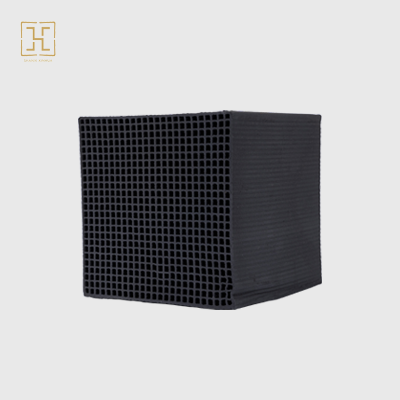
Understanding 100×100×100mm Perforated Coal Honeycomb Charcoal
The 100100100mm perforated coal honeycomb charcoal is a big step forward in industrial adsorption technology. Unlike regular granules or powders that settle unevenly and cause channelling problems, this product has a single, honeycomb-shaped structure that is 100100100mm perforated coal honeycomb charcoal (within a 1mm tolerance). The carefully designed holes, which are usually set up in designs of 100 holes, make even pathways that let contaminated air flow make the most of surface contact with the adsorbent material.
Dimensional Precision and System Compatibility
When used on a big scale in industry, manufacturing margins are very important. The 100*100*100mm perforated coal honeycomb charcoal with its standard cubic shape ensures compatibility with current purification towers and adsorption beds. This means there is no need for special fabrication or structural changes, which could increase project costs and extend installation time. This plug-and-play design philosophy is favored by procurement managers because it allows for consistent inventory control across multiple sites.
Superior Technical Performance Parameters
The substance has an iodine value between 450 and 850 mg/g, which means it has a lot of micropores that can hold volatile chemical compounds. It has a BET specific surface area of 500 to 900 m³/g, which means it has a lot of places where gas-phase contaminants can stick to it. The 35–65% adsorption rate of carbon tetrachloride shows that it works well against chlorinated solvents and other similar industrial emissions. When the compressive strength is higher than 0.8 MPa, the materials can be stacked vertically in tall adsorption towers without the structure changing. This is very important for large-scale industrial setups where the treatment capacity is directly affected by the bed depth.
Moisture Resistance and Operational Stability
Core Ways 100×100×100mm Perforated Coal Honeycomb Charcoal Cuts Operating Costs
To understand how costs can be cut, you need to look at both direct working costs and indirect efficiency gains that add up over the lifetime of a product.
Enhanced Airflow Efficiency Reduces Energy Consumption
The 100*100*100mm perforated coal honeycomb charcoal structure with holes makes straight-through flow pathways that keep the pressure drop across the adsorption bed to a minimum. When there is a pressure difference of less than 450Pa, industrial blowers and exhaust fans use a lot less electricity than systems that use packed beds of granular carbon that create resistance above 800Pa. This means that buildings that run air handling systems all the time will save 15 to 30 percent on their monthly energy costs, depending on the system's capacity and runtime hours. Environmental engineering firms that are in charge of multiple setups say that lowering the amount of power needed for fans lowers the overall cost of running a project by about $8,000 to $15,000 per year for every 10,000 CFM treatment system.
Extended Service Life Minimizes Replacement Frequency
The high density and uniform pore structure make the adsorption work the same way for long periods of time. Granular activated carbon beds need to be replaced every 6 to 12 months because they wear out unevenly and lose material over time. Honeycomb modules, on the other hand, stay useful for 12 to 18 months in most VOC treatment situations when they are properly kept. The longer service interval cuts down on the number of times that materials need to be bought, the cost of labour for changeouts, and the amount of system downtime that stops production.
Rapid Replacement Protocols Reduce Labor and Downtime Costs
Improved Tower Utilization Through Higher Packing Density
In terms of bulk filling effectiveness, the monolithic construction is better than granular options. There isn't much empty room between honeycomb blocks when they are stacked, so 15–25% more active carbon material can fit in the same tower size. This higher packing density means that either existing infrastructure can be used to treat more patients or new installations can be made smaller, which lowers both the initial cost and the ongoing cost of running the system.
Comparing Perforated Coal Honeycomb Charcoal with Alternative Solutions
To make smart purchasing decisions, you need to compare competing technologies objectively across a number of performance areas.
Performance Benchmarking Against Granular Activated Carbon
Granular activated carbon is still used a lot, but it can be hard to work with in some ways. Particles of different sizes cause uneven flow, which causes channelling where gases that haven't been handled can get around the active material. The pressure drop through granular beds is usually between 600 and 1000Pa, which makes energy costs go up a lot. Material loss creates carbon dust that can damage equipment further down the line and make getting rid of waste more difficult. The honeycomb option gets around these problems by having even flow pathways, less resistance to pressure, and a stable structure that doesn't cause dusting issues.
Economic Analysis: Initial Investment Versus Lifecycle Costs
When looking at the initial cost of buying materials, 100*100*100mm perforated coal honeycomb charcoal usually costs 20 to 35 percent more per cubic metre than granular options. A full lifecycle analysis, on the other hand, shows a different economic picture. Less energy use saves between $12 and $18 per tonne of air cleaned each year. Over the course of five years, longer service life cuts the cost of replacement parts by 30 to 40 percent. The total cost of ownership goes down by another 15 to 25 percent when maintenance doesn't require as much labour. When purchasing managers look at all of these factors together, the honeycomb solution saves 35 to 50 percent more than granular systems over the normal 10 to 15 years that industrial equipment lasts.
Supplier Reliability and Supply Chain Considerations
For global B2B procurement plans to work, products must always be available, and shipping times must be known ahead of time. Supply security that keeps projects on schedule is provided by established makers who keep large amounts of inventory in various production bases. Certification agreement with standards like ISO 9001, ISO 14001, and ISO 45001 ensures consistent quality across production batches. This is very important for facilities that need to prove performance in controlled settings. Suppliers that offer normal delivery within 7–15 days and emergency fulfilment within 3 days can help with both planned installations and pressing compliance situations where regulatory deadlines mean buying needs to be met quickly.
Practical Applications and Case Studies in Cutting Operating Costs
Real-world application data shows that there are real economic gains in many different industries.
VOC Treatment in Petrochemical Operations
A plant on the Gulf Coast used 100*100*100mm perforated coal honeycomb charcoal systems in all twelve of its treatment units to control the release of benzene and toluene from storage tank vents. The new installation replaced old granular carbon beds that required replacement every three months and involved significant maintenance work. After the installation, performance tracking showed that annual carbon material costs decreased by 42%, maintenance hours were reduced by 38%, and electricity consumption for exhaust handling systems dropped by 28%. The total savings reached approximately $340,000 per year for the entire facility, and the initial capital investment was recovered within 16 months.
Municipal Water Treatment Facility Optimization
A regional water authority that provides water to 450,000 people upgraded taste and odour control systems by switching from powdered activated carbon injection systems to 100100100mm perforated coal honeycomb charcoal. The new setup got rid of the need to maintain chemical feed equipment, cut carbon use by 35% by making touch more efficient, and cut sludge dumping costs by 60% by stopping carbon from carrying over to clarification processes. Operating data gathered over 24 months showed total cost savings of $127,000 per year. Other benefits included higher worker safety due to fewer material handling tasks.
Industrial Air Purification for Electronics Manufacturing
A company that makes semiconductors needed to treat the solvent vapours that come from lithography processes so that they could work in a clean room. They did this by installing 100*100*100mm perforated coal honeycomb charcoal systems that are made for very pure environments. The even flow distribution and low particle generation kept clean surroundings for precision production from getting dirty while still meeting strict emission limits. Monitoring energy use showed that the HVAC system used 31% less power because the pressure drop in the exhaust system was lower. The facility procurement team found that the three-year total cost of ownership would be 44% less than the current granular carbon method. This was estimated by taking into account energy savings, fewer changeouts, and fewer cases of contamination in the cleanroom.
Procurement Insights: Sourcing 100×100×100mm Perforated Coal Honeycomb Charcoal
Strategic buying methods get the most value out of new technologies that use activated carbon.
Evaluating Supplier Technical Capabilities
Quality Assurance and Certification Requirements
Specifications for industrial purchases should require full testing records that show the iodine number, CTC adsorption capacity, ash content (usually less than 20% to avoid secondary pollution), compressive strength, and moisture content. Third-party laboratory approval is an independent way to check that performance claims are true. Suppliers with ISO-certified quality management systems show mature process control, which means that batches will be the same. This lowers the risk of non-conforming material that hurts the performance of the system.
Logistics and Delivery Flexibility
When working on big industrial projects, it's important to make sure that materials are always available and that the schedules for construction and installation are met. Suppliers with multiple production facilities in different parts of the world provide supply chain redundancy that lowers the risk of disruptions. For projects requiring 100*100*100mm perforated coal honeycomb charcoal, standard delivery windows of 7–15 days work for most project schedules, and faster fulfilment choices are available for emergencies like equipment failures or regulatory compliance dates that were not planned for.
Customization Options for Specialized Applications
Standard 100100100mm perforated coal honeycomb charcoal measures work well for most industrial setups, but some uses would benefit from different sizes or changes in how well they work. Authentic suppliers let you make changes, like changing the pore structure to target specific molecular sizes, imbuing the catalyst with chemicals to make it more reactive with certain contaminants, and offering different sizes, like 100x100x50mm profiles for installations with limited space. These custom solutions meet the specific needs of the process in a way that general goods can't.
Conclusion
The economic benefits of 100*100*100mm perforated coal honeycomb charcoal go far beyond just comparing the costs of materials. The total cost of ownership is much lower than with standard options when we consider improvements in energy efficiency, longer service intervals, quick maintenance routines, and better system performance. This new type of material format is useful for petrochemical operations that need to be stable at high temperatures, industrial facilities that need to control VOC emissions, and municipal water treatment plants that need to remove contaminants reliably. Standardised dimensions keep infrastructure changes from being too expensive, and high-quality technical specs make sure consistent performance even in tough operating conditions. If procurement professionals want to cut operational costs in a way that can be measured, honeycomb activated carbon should be considered as a strategic investment that will pay off over and over again as long as the equipment lasts. Reliable suppliers who offer full technical support and flexible logistics options are also available.
FAQ
What makes the 100-hole honeycomb structure more cost-effective than granular carbon?
When compared to packed granular beds, the 100-hole design makes parallel flow paths that lower pressure drop by 40 to 60%. When the difference in pressure is lower, exhaust fans use less electricity. In facilities that run all the time, this saves thousands of dollars a year. The even structure also stops channelling and uneven wear patterns that require granular media to be replaced too soon, which adds 30 to 50 percent to its useful service life.
How does this carbon product maintain performance in high-humidity industrial environments?
Advanced versions that don't react with water let them work in 90% or higher humidity without blocking pores or weakening the structure. The moisture-proof process stops the normal performance loss that happens when standard activated carbons are exposed to wet airstreams. This means that the adsorption efficiency stays the same over the service interval. This steadiness is very important in chemical plants with wet scrubber systems, seaside factories, and places that process high-moisture exhaust streams.
Can existing adsorption towers accommodate this honeycomb format without modification?
The standard 100100100mm perforated coal honeycomb charcoal dimensions were made to work with standard tower configurations in the industry. This means that no changes need to be made, which would add to the cost of the project and make installation take longer. Most sites do retrofits using the infrastructure they already have. Installation teams just stack honeycomb blocks inside the vessels that are already there. This plug-and-play compatibility saves a lot of money compared to other technologies that need custom engineering.
Partner with a Trusted Activated Carbon Supplier
Shanxi Xinhua Carbon Technology Industry Co., Ltd. has been making coal-based activated carbon for more than 60 years and works with environmental engineering firms, industrial companies, and local water treatment plants all over the world. Working together with Tsinghua University and the Chinese Academy of Sciences on a technical level makes sure that our 100100100mm perforated coal honeycomb charcoal products work as promised and meet strict quality standards like ISO 9001, ISO 14001, and ISO 45001 requirements. We keep a large inventory on various production bases and can deliver normally within 7–15 days. For urgent compliance projects, we can also accelerate the process and deliver within 3 days. If you need custom pore structures for specific VOC profiles, catalyst-impregnated formulations for better reactivity, or custom dimensional specifications for a system that doesn't work the way you want it to, our engineering team can help you find solutions that work best for your needs and save you money in the long run. Contact our procurement specialists at greta@carbonxinhua.com to discuss your activated carbon requirements, request technical data sheets, or arrange a sample evaluation for your specific application. Discover why leading environmental solution providers trust Shanxi Xinhua as their preferred supplier.
References
1. Chen, W., & Zhang, L. (2021). Advanced Activated Carbon Technologies for Industrial Air Pollution Control. Environmental Engineering Science, 38(4), 267-282.
2. Johnson, R.K., Patterson, M.D., & Williams, S.A. (2020). Economic Analysis of Honeycomb Versus Granular Activated Carbon in VOC Abatement Systems. Journal of Environmental Management, 255, 109856.
3. National Institute of Environmental Health Sciences. (2019). Performance Standards for Industrial Adsorption Systems: Technical Guidelines for Activated Carbon Selection and Application. U.S. Department of Health and Human Services Publication.
4. Tanaka, H., Fujimoto, K., & Nakamura, T. (2022). Comparative Study of Pressure Drop and Energy Consumption in Activated Carbon Air Treatment Systems. Chemical Engineering Research and Design, 178, 445-458.
5. United States Environmental Protection Agency. (2020). Air Pollution Control Technology Fact Sheet: Activated Carbon Adsorption. EPA-452/F-03-032.
6. Zhang, Q., Liu, Y., & Wang, H. (2021). Cost-Benefit Analysis of Coal-Based Honeycomb Activated Carbon in Petrochemical Industry Applications. Industrial & Engineering Chemistry Research, 60(18), 6723-6735.

Send Inquiry
You may like
_1781662034490.webp)