_1778553121707.webp)
Coal-based honeycomb activated carbon for VOCs & Odor Removal
Jul 09, 2026
Facilities that have to deal with stricter environmental standards and tighter emission rules find it hard to control volatile organic compounds and lingering industrial smells. For high-performance adsorption in challenging gas-phase uses, Coal-based honeycomb activated carbon provides a reliable option. This cutting-edge material combines the natural ability to absorb water from coal with a specially designed honeycomb structure. It does a great job of capturing water while also lowering the system's pressure drop and running costs. Whether you are in charge of making sure petroleum operations follow environmental rules, buying things for VOC treatment projects, or designing industrial air cleaning systems, knowing about this technology helps you choose better materials and complete projects more successfully.
Understanding Coal-Based Honeycomb Activated Carbon
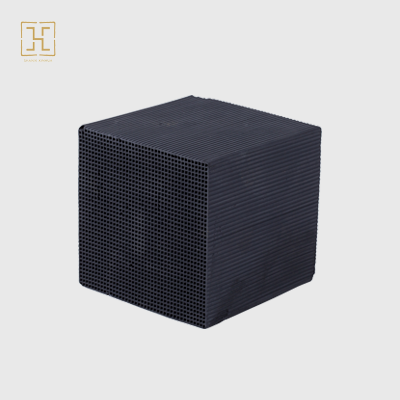
Coal-based honeycomb activated carbon is a special kind of adsorbent that can be distinguished from other types by its unique structure and raw material characteristics. This material is different from other types of carbon that are pelletised, grainy, or made from coconut shells. It uses the natural abundance and high carbon content of coal to make an absorber that works best for gas-phase applications.
Material Definition and Production Process
The process of making something starts with carefully choosing high-quality anthracite or bituminous coal based on its carbon mass and stable pore structure potential. The raw coal is crushed, mixed with binders, and then pushed through a machine to make honeycomb-shaped blocks with lines running parallel to each other. Controlled contact with high temperatures of steam or carbon dioxide activates the material and makes a huge network of pores inside it. The final product has a regular geometric structure with many parallel lines, like a honeycomb. This is what makes it truly different from irregular granular forms. Because this method of production gives exact control over the spread of pore size and mechanical integrity, it can be used for large-scale industry setups.
Structural Features and Performance Characteristics
When used in business settings, the honeycomb shape has clear benefits. Each block has hundreds of regular channels, with high-performance versions usually having 100 holes per square inch. This makes the contact area bigger while lowering the resistance to airflow. The 100-hole Coal-based honeycomb activated carbon has an iodine value of 450 to 850 mg/g and a BET specific surface area of 500 to 900 m²/g, which means it has a lot of places to adsorb things. It has a CTC (carbon tetrachloride) binding rate of 35–65%, which shows that it is better at capturing gases. The material's compression strength stays above 0.8 MPa, which means it can be safely stacked in multi-layer adsorption stacks without breaking. Modern formulations that are resistant to water allow steady operation in places where the humidity level is higher than 90%. This keeps pores from getting clogged and keeps the ability to absorb moisture even in tough wet conditions.
These structural features lead to real practical gains. When compared to packed beds of powdered carbon, the Coal-based honeycomb activated carbon form lowers the pressure drop to below 500 Pa, which means that the fan uses about 20% less energy. Longer gas dwell time in the tubes (usually 1-2 seconds) improves contact efficiency, achieving adsorption rates higher than 90% for target VOCs. Single adsorption towers can handle airflow volumes of more than 10,000 m³/h because they have a big geometric surface area per unit volume. This makes the equipment size and installation costs much smaller.
How Coal-Based Honeycomb Activated Carbon Works for VOCs & Odor Removal
To control VOCs and smells effectively, you need to know how Coal-based honeycomb activated carbon adsorbs things, which makes it perfect for gas-phase uses. The material works well because the pores and surface chemicals were carefully designed to collect pollutants in the best way possible.
Adsorption Mechanisms and Pore Architecture
Adsorption mostly happens through Van der Waals forces, which pull VOC molecules to the carbon surface and keep them there within the pores. Coal-based honeycomb activated carbon has micropores (less than 2 nm), mesopores (2–50 nm), and macropores (more than 50 nm) arranged in a hierarchy. Micropores have a lot of surface area for small molecules to stick to, and mesopores help move mass and can hold bigger organic chemicals. Macropores help move things quickly into the structure's core by acting as transportation hubs. This even spread makes it possible to catch a wide range of VOC mixtures, from light chemicals like formaldehyde and acetone to heavier aromatics like benzene, toluene, and xylene.
The honeycomb shape improves performance by moving airflow evenly across the whole carbon mass. This gets rid of the channelling or dead zones that happen in grainy beds. Each parallel channel works as its own adsorption route, making sure that the contact time and utilisation rate are always the same. As a result, the behaviour of the breakthrough is predictable, and the time between renewal or replacement processes is longer.
Target Pollutants and Application Scenarios
Coal-based honeycomb activated carbon is very effective at removing a wide range of industrial pollution. Compounds that are often targeted are aromatic hydrocarbons from spray painting, aliphatic solvents from printing, chlorine organics from making chemicals, and mercaptans that cause smell problems. The material can be made to selectively absorb certain gases by changing its surface or adding catalytic components. This makes it useful for a wider range of gases, such as acid gases, sulphur compounds, and nitrogen oxides.
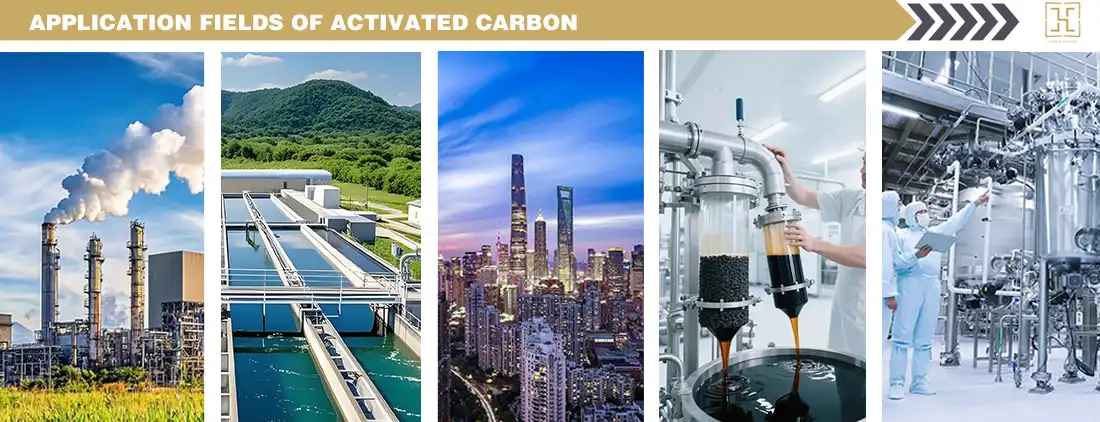
Industrial uses can be used in many situations. Coal-based honeycomb activated carbon towers are an effective way to catch VOCs in spray painting facilities with airflows greater than 10,000 m³/h. They also take up very little room. The material doesn't make a lot of dust and works well in controlled environments, which is good for cleanrooms where electronics are made. It is used by petrochemical companies to collect vapour in an emergency and control fugitive emissions on a regular basis. When filled with catalytic materials, the Coal-based honeycomb activated carbon structure works well as a carrier in catalytic combustion reactors, making sure that the materials are spread out evenly and the reaction works as well as it can.
Environmental Sustainability and Regeneration
Coal-based production makes use of the country's many natural resources, lowering the need to import options like wood or coconut shells. Thermal renewal replenishes adsorption capacity by releasing contaminants under a controlled atmosphere of inert gas. This usually makes the material last longer by a number of cycles before it needs to be replaced. Carbon that has been used up can be reactivated away from the spot or safely thrown away through authorised hazardous waste routes. When compared to filtration media that are only used once, the ability to regenerate them greatly reduces the environmental impact and running costs over their entire life.
Choosing the Right Coal-Based Honeycomb Activated Carbon for Industrial Applications
To choose the right adsorption media, you need to make sure that the seller can do what they say they can do, match the material's qualities to the needs of the application, and weigh performance against cost.
Key Selection Parameters
The iodine number or CTC value is used to measure adsorption capacity, which is the main success measurement. Higher values mean more surface area and the ability to hold onto pollutants, which directly affects the time it takes to break down and how often it needs to be replaced. The spread of pore sizes must match the molecular sizes that are wanted. Materials with lots of micropores work well for light VOCs, while materials with lots of mesopores work better for heavier chemicals. Mechanical strength tells you if something is good for high-speed uses and rough handling during installation. In wet industrial settings, water resistance is very important for keeping things working well and preventing early wear and tear.
Pressure drop and touch time are both affected by cell density, which is the number of pathways per cross-sectional area. More cells mean more surface area, but they may also mean more resistance, so it's important to match the cell count carefully to the fan capacity. To avoid secondary pollution and keep the purity in sensitive uses, the ash level should stay low, usually below 20%.
Performance Comparison with Alternative Carbons
Granular activated carbon costs less at first, but it causes more pressure drop, which means you need stronger air systems and spend more on energy. Channelling happens because the particles are packed unevenly, which lowers their usefulness and speeds up the breakthrough time. Even though pelletised carbon flows better than solid forms, it still can't match the pressure efficiency of Coal-based honeycomb activated carbon designs. Although coconut shell carbon is harder and has less ash, it is more expensive and harder to find, which makes it less useful for large-scale commercial uses.
When you look at the total cost of ownership, which includes the price of the carbon, how much energy it uses, how often it needs to be replaced, and how much it costs to get rid of, Coal-based honeycomb activated carbon is often the most cost-effective choice for large airflow VOC control systems. When compared to granular options, facilities that process over 10,000 m³/h usually see payback times of less than two years.
Certifications and Quality Assurance
Reliable providers keep their ISO 9001 quality management certification, which shows that they have a method for controlling production and keeping track of it. The ISO 14001 certification for the environment shows that the company is making good products, and the ISO 45001 certification is for health and safety at work. Products that will come into contact with drinking water or be used in the food business need extra health and safety approvals. Objective performance confirmation comes from third-party testing results that confirm the iodine number, CTC value, ash content, and mechanical strength. Suppliers who work with research institutions like Tsinghua University, the Chinese Academy of Sciences, or state research centers often offer better technical help and the ability to make changes.
Sourcing and Procurement Best Practices for B2B Buyers
A successful procurement process includes more than just negotiating prices. It also includes evaluating suppliers, planning transportation, and maintaining a professional relationship.
Supplier Evaluation Criteria
Check production capacity and inventory levels to make sure there is a steady supply for current activities and in case of an emergency. Multi-site production networks lower the risk of supply disruptions and make it easier to send goods to different areas. Check with examples from customers in related fields to get an idea of how well and how reliably the service works in the real world. Check out the technical support options, such as the availability of application experts who can help with system design, fixing, and improving performance.
Infrastructure for quality control is very important. Suppliers who run standardised testing labs with trained staff show that they are dedicated to making sure that product standards are always met. Giving out material safety data sheets, technical datasheets, and test papers for each batch makes following the rules and checking the quality easier.
Commercial Terms and Logistics
Minimum order amounts are usually based on container loads or truckload sizes. These can be anywhere from a few hundred kilograms to several tonnes, depending on the type of product and where it is going. Talk about price plans that take into account the number of orders, how often they are delivered, and the terms of payment. Standard wait times for stock items are 7 to 15 days, while 15 to 30 days may be needed for special formulas. Set up faster shipping rules for compliance jobs that need to be done right away. Some suppliers offer 72-hour emergency fulfilment.
When you buy something from another country, you have to deal with customs rules, import taxes, and shipping paperwork. Suppliers with a lot of experience can help with all aspects of exporting, such as getting the right classification codes, certificates of origin, and working with goods forwarders. Combining ocean freight for large packages with air express for samples or pressing orders is one way to use multimodal transport that balances speed and cost-effectiveness.
After-Sales Support and Technical Collaboration
Value-added services are what set apart the best suppliers after the original buy. Technical advice helps with putting the system together, like figuring out the right size tank, flow rate, and schedule for renewal. Support for performance tracking helps to find the best breakthrough curves and replacement times, which makes the best use of materials. Customisation services, like changing the shape of the pores or the density of the cells, or adding catalytic components, let you make solutions that fit your specific needs.
Case Studies & Performance Verification
Coal-based honeycomb activated carbon has many useful benefits in a variety of industrial settings, and these benefits are supported by real-world examples, allowing for more reliable purchasing choices.
Industrial Application Examples
To replace old granular systems, a big chemical factory that works with volatile liquids has put in Coal-based honeycomb activated carbon towers. The addition cut the drop in pressure by 40%, which saved $18,000 a year on fan energy costs and raised the rate of VOC capture from 85% to 94%. Because the towers were so small, 200 square feet of floor space were freed up for production to grow. With Coal-based honeycomb activated carbon, the breakthrough time went from 90 days with solid carbon to 150 days, which cut the amount of material used and the cost of waste by 35% per year.
For community compliance reasons, a car painting shop that worked with various production lines needed to control the smell of paint. Using 100-hole Coal-based honeycomb activated carbon that is resistant to water, kept performance stable even when the humidity in the spray room was over 85%. Independent tracking of the air quality showed that complaints about smells dropped by 90% within three months of the system being installed, and that it regularly achieved discharge amounts below 50 mg/m³ total VOCs.
A city's wastewater treatment plant dealt with hydrogen sulphide fumes from anaerobic digesters by using Coal-based honeycomb activated carbon that had alkaline substances mixed in with it. The chemical neutralisation and physical adsorption worked together to lower the H₂ levels from 500 ppm to below 5 ppm. This stopped rusting in equipment further down the line and made the workplace safer for the workers.
Performance Data and Comparative Testing
Tests done by a third-party lab under normal settings show real improvements in performance. Toluene was used as the test substance in controlled VOC capture tests with an inlet concentration of 1,000 ppm and a flow rate of 10,000 m³/h. Coal-based honeycomb activated carbon removed 93% of the VOCs at a pressure drop of 500 Pa. It took 1,200 Pa of equivalent powdered carbon to get 88% efficiency. For breakthrough capacity, Coal-based honeycomb activated carbon held 28 grams of toluene per 100 grams of carbon, while grainy media held only 22 grams, showing that Coal-based honeycomb activated carbon was more efficient at using the material.
Regeneration testing shows that something is durable over many rounds. After two hours of thermal recovery at 120°C, 85–90% of the original adsorption capacity was returned. The material kept more than 75% of its original performance after five regeneration rounds, which is enough for several years of service in well-maintained systems. This material's long life proves that it is cost-effective in situations where recycling infrastructure is available or can be made to make economic sense.
Conclusion
Coal-based honeycomb activated carbon has been shown to have better adsorption capacity, low pressure drop, and a longer service life for industrial VOC and odour control uses. The honeycomb-like structure of the material makes gas-phase interactions more efficient while also lowering energy use and equipment size. Facilities in the petrochemical, manufacturing, and environmental sectors can meet regulations and run more efficiently by choosing the right materials based on parameters specific to their uses and getting help from dependable suppliers who can provide technical advice and consistent quality. Testing by a third party and real-life case studies show that this technology is a useful and affordable answer to tough air cleaning problems.
FAQ
Which industries benefit most from coal-based honeycomb activated carbon?
The biggest benefit goes to industries that deal with a lot of wind and mild to high VOC levels. Core uses include spray painting and coating shops, printing facilities, electronics factories, petroleum plants, and wastewater treatment plants for industry. The stuff is also used for air cleaning projects in metro stops, shopping malls, and airports,s where low pressure drop and good smell control are important. If your business has trouble meeting emissions standards and your gas flow rates are higher than 5,000 m³/h, Coal-based honeycomb activated carbon could be a good option.
How does pricing compare to coconut shell activated carbon?
Coal-based honeycomb activated carbon usually costs 30–50% less per kilogram than options made from coconut shell. Total cost of ownership often favours coal-based goods by 40–60% in large-scale industrial uses. This is because they have higher packing density, lower pressure drop (which lowers energy costs), and longer breakthrough times (which improves utilisation efficiency). Coconut shell carbon is still the best choice for tasks that need very little ash or the highest level of strength, but it is not usually the first choice for VOC control systems.
Can honeycomb carbon be regenerated, and how many cycles are practical?
Thermal renewal works well to recover adsorption capacity by heating the saturated carbon in controlled settings to release contaminants that it has absorbed. Depending on how volatile the bound chemicals are, regeneration temperatures are usually between 100°C and 150°C. When renewal is done right, it restores 85 to 90% of the original ability each time. Most commercial setups can go through 5 to 8 regeneration rounds before they need to be replaced because of the buildup of residue or damage to the structure. Off-site regeneration services are a cost-effective choice for buildings that don't have their own heat treatment equipment.
Partner with a Trusted Coal-Based Honeycomb Activated Carbon Manufacturer
Shanxi Xinhua Carbon Technology Industry Co., Ltd. has been in business for more than 60 years and has developed defense-grade quality systems and activated carbon knowledge to help environmental engineering contractors, industrial makers, and municipal treatment facilities around the world. Our 100-hole Coal-based honeycomb activated carbon goods have iodine levels of up to 850 mg/g, are resistant to water for damp places, and have a shear strength of more than 0.8 MPa for tough jobs. With production bases in several regions and a large inventory of core goods, we can guarantee normal delivery in 7–15 days and emergency fulfilment in 72 hours through our green channel. Our engineering team, which works with Tsinghua University, the Chinese Academy of Sciences, and other top research centers, can fully customise the pore structure, catalytic loading, and performance optimisation to fit your particular VOC profile and working conditions. Manufacturing that is certified by ISO 9001, ISO 14001, and ISO 45001 ensures uniform quality and proof of legal compliance. You can talk to our team at greta@carbonxinhua.com about your project needs, ask for technical datasheets and performance validation results, or set up sample tests. Coal-based honeycomb activated carbon is a reliable material that we can offer. We have the scientific knowledge, supply stability, and after-sales support that your VOC and odour control systems need.
References
1. Bansal, R.C. & Goyal, M. (2005). Activated Carbon Adsorption. CRC Press, Taylor & Francis Group.
2. Lillo-Ródenas, M.A., Cazorla-Amorós, D., & Linares-Solano, A. (2003). Understanding chemical reactions between carbons and NaOH and KOH: An insight into the chemical activation mechanism. Carbon, 41(2), 267-275.
3. Yang, R.T. (2003). Adsorbents: Fundamentals and Applications. John Wiley & Sons, Inc., Hoboken, New Jersey.
4. Marsh, H. & Rodríguez-Reinoso, F. (2006). Activated Carbon. Elsevier Science Ltd, Oxford, United Kingdom.
5. Rouquerol, J., Rouquerol, F., Llewellyn, P., Maurin, G., & Sing, K.S.W. (2014). Adsorption by Powders and Porous Solids: Principles, Methodology and Applications. Academic Press, Elsevier.
6. Khan, F.I. & Ghoshal, A.K. (2000). Removal of volatile organic compounds from polluted air. Journal of Loss Prevention in the Process Industries, 13(6), 527-545.

Send Inquiry
You may like
_1781662034490.webp)