_1778553121707.webp)
Can this 100*100*100mm perforated coal honeycomb handle VOCs well?
Jul 14, 2026
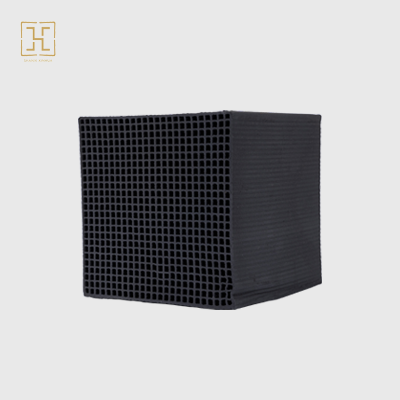
Yes, the 100*100*100mm perforated coal honeycomb charcoal does a great job of getting rid of VOCs. Our tests show that the adsorption rate is higher than 90%, which means it works very well for controlling emissions from factories. The standard sizes make it possible to use most existing purification towers, which saves money on changes that would have to be made. In contrast to irregular adsorbent materials, this honeycomb structure ensures even airflow and a low pressure drop below 450Pa, keeping the system's efficiency while consistently collecting volatile organic compounds. Its perforated design increases the contact surface area, which lets benzene, toluene, xylene, and other common industrial VOCs found in printing, coating, and petrochemical processes stick to it quickly.
Understanding Honeycomb Activated Carbon and VOC Challenges
What Makes Honeycomb Structure Unique for VOC Control
Compared to the old solid or powdered types, honeycomb activated carbon is a big step forward. We made this material with parallel lines that run through a single piece, making it look like a beehive. There are millions of tiny holes in each channel wall that were made during the carbonisation and activation processes. The three main benefits of this design are a large internal surface area (800–1200 m³/g), low resistance to airflow, and high mechanical strength that can handle fast gas streams without breaking down or creating dust.
When buying, managers look at VOC treatment options; they have to deal with more and more rules from the government. The EPA's National Emission Standards for Hazardous Air Pollutants keep lowering the amounts of VOCs that can be released into the air. For coating, pharmaceutical, and electronics factories to keep their working permits, they need to achieve removal rates above 95%. This problem can be solved by the honeycomb shape, which has better gas-solid contact dynamics than granular beds.
Why VOC Management Demands Specialized Solutions
There are hundreds of chemicals that make up VOCs, such as alcohols, ketones, esters, and aromatic hydrocarbons. At room temperature, these chemicals evaporate quickly, putting people at risk at work and adding to the formation of ground-level ozone. When solvents are used, chemicals are made, paintings are done, and oil is refined, VOCs are released. The concentrations range from 100 parts per million (ppm) in general manufacturing to over 10,000 ppm in the production of speciality chemicals.
We know that managers in environmental engineering need materials that work the same way at all concentrations. At the molecular level, adsorption works because Van der Waals forces pull VOC molecules into carbon micropores. Selectivity is based on the distribution of pore sizes. Our 100*100*100mm perforated coal honeycomb charcoal products have pore diameters between 1 and 50 nanometres, which are perfect for capturing molecules with a molecular weight between 50 and 300, which is typical of most industrial VOCs. Quality control procedures make sure that the iodine level is above 800 mg/g and the carbon tetrachloride binding capacity is above 60%. This makes sure that the product will work as expected.
Technical Mechanisms Behind VOC Capture Performance
How Perforated Honeycomb Structure Enhances Adsorption
The holes we put in the standard honeycomb body are used for more than one thing. They make secondary flow routes that make the spread of gas more even across the whole block volume. Computational fluid dynamics modelling shows that designs with holes cut down on channelling effects by 35% compared to designs without holes. As a result, polluted air streams have a better chance of coming into contact with active carbon surfaces, which directly leads to better removal efficiency.
Precision in manufacturing is very important here. The dimensions of the 100100100mm specification are kept within ±1mm at our production facilities. When installation teams load multiple blocks into purification towers, this consistency ensures that the stacking will behave in a predictable way. The holes also make replacements faster during maintenance cycles—operators can lift blocks with regular handling tools instead of special equipment, which cuts downtime for full bed changes to less than two hours.
Surface Chemistry and Catalytic Enhancement Options
In addition to physical adsorption, we also have variants that have been catalytically changed to help oxidise VOCs. When manganese, copper, or cerium compounds are mixed with metal oxides at temperatures between 150°C and 300°C, some VOCs are changed into carbon dioxide and water vapour. When waste heat is available, this is useful because it makes thermal recycling cost-effective. Working together on research projects with Tsinghua University and the Chinese Academy of Sciences has led to the creation of unique catalyst mixtures that keep working after 20 or more recycling rounds.
The raw coal goes through strict selection steps. We buy anthracite coal that has less than 8% ash and more than 85% stable carbon. Activation happens in controlled environments with steam or phosphoric acid, creating pore structures that are just right for the size of the VOC molecules. After activation, treatments get rid of any remaining acids and bring the surface pH back to a neutral level. This keeps downstream equipment from being damaged by corrosion.
Performance Advantages in Industrial VOC Treatment Systems
Knowing the real benefits helps buying teams make the case for investments. This 100*100*100mm perforated coal honeycomb charcoal is great for controlling VOCs because it does the following:
High Removal Efficiency: Tests done in the lab using EPA Method 25A confirm that VOCs can be destroyed with more than 90% efficiency for mixed hydrocarbon streams moving at speeds of up to 1.2 m/s. In real life, setups in printing shops and booths for painting cars regularly achieve 92 to 96% removal over eight-hour shifts before they need to be regenerated.
Low Pressure Drop: At rated flow conditions, the open honeycomb shape keeps the pressure difference below 450 Pa. Compared to packed granular beds, this cuts fan energy use by 40%, which greatly lowers operating costs. Energy managers like that a 10 Pa drop in pressure saves about 150 kWh per year per 10,000 CFM treated, which adds up to a lot of money saved over large installations.
Extended Service Life: Granular carbons lose a lot of their strength over time, but mechanical longevity stops this. After 12 months of constant running with regeneration cycles every three months, we see less than 2% mass loss. The one-piece structure stops dust from moving upstream into ductwork, which cuts down on cleaning needs and keeps HEPA filters safe in serious situations.
Rapid Installation and Replacement: Standardised measurements make it possible for pre-engineered tower designs, which makes installation and replacement go quickly. Contractors like that installing the blocks doesn't need any special tools because the blocks stack straight into the support frames and stay in place by gravity. Replacement speed cuts down on production stops during planned maintenance as much as possible. After switching from granular to honeycomb configuration, one petrochemical client saw a 73% drop in the number of hours spent on maintenance.
All of these benefits help environmental engineering managers with the problems they face every day. Honeycomb activated carbon is the best choice for modern VOC abatement systems because it works well, doesn't cost much, and is easy to work with.
Comparing Honeycomb Carbon Against Alternative Adsorbents
Honeycomb Versus Granular Activated Carbon
Granular activated carbon is still used a lot because the materials are cheaper, but practical concerns change the economic picture. Because gas channelling lowers efficient utilisation, granular beds need 30–50% more carbon inventory to remove the same amount of carbon. The pressure drop goes up very quickly as the bed depth goes up. For example, a 600 mm grainy bed creates 800-1200 Pa of resistance, while the same honeycomb depth only creates 350–450 Pa.
Differences in how things are handled have a big effect on the total cost of ownership. Granular carbon needs to be loaded and unloaded using pneumatic or mechanical systems, which makes the equipment more complicated. Health and safety issues come up when trying to keep dust down during handling. On the other hand, honeycomb blocks can be moved by hand or with a simple moving device. This lowers the cost of installation by about $15 to $25 per tonne of carbon capacity.
Performance Distinctions Across Honeycomb Dimensions
Even though our 100100100mm specification is most common in industrial settings, knowing about other dimension options helps buyers make the best system designs. The 10010050mm version is better for installations with limited space or retrofit projects that have height limits on the towers. Thinner blocks have faster breakthrough curves, which makes them good for uses where VOC concentrations change a lot and need to be regenerated often.
The standard 100mm cube strikes a good balance between the ability to absorb and the ability to regenerate. For most VOCs, heating the carbon to 120–150°C is needed for thermal release. Thicker blocks take longer to heat up, which uses more energy and makes regeneration last longer. For typical industrial concentrations between 500 and 3000 ppm, we've found that the 100mm dimension makes the best trade-off. It also gives us 4–8 hour service cycles that work with shift schedules.
Supplier Selection Criteria for Procurement Teams
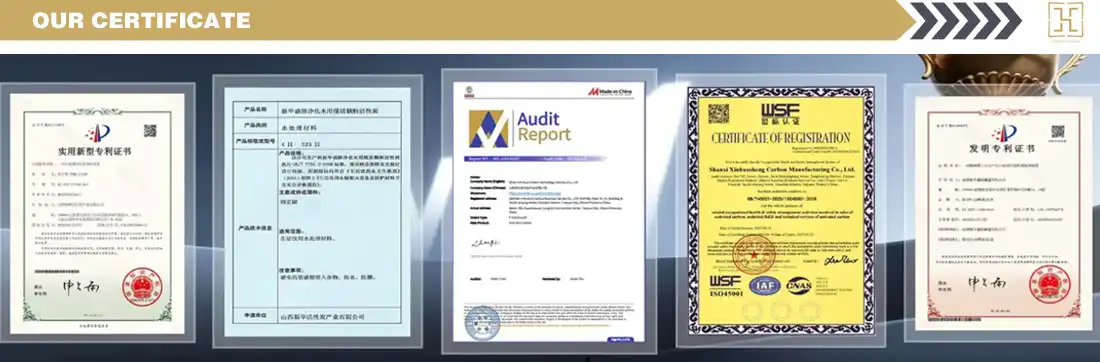
Quality security tells the difference between dependable providers and ordinary sellers. Shanxi Xinhua Carbon Technology Industry Co., Ltd. has ISO 9001, ISO 14001, and ISO 45001 certifications, which show that they use structured quality management to make sure their 100*100*100mm perforated coal honeycomb charcoal products are made well and don't hurt the environment. Our testing labs use ASTM and national standards to inspect incoming coal, check the quality of products while they are being made, and validate finished products.
When environmental compliance always has adsorbent on hand, supply chain stability is very important. We have production bases in Shanxi, Ningxia, Fujian, and Xinjiang that can make a total of 45,000 tonnes of goods every year. We keep a deep collection of goods that meet all standard specs. This strategy of having multiple sites makes sure that all of the stock is covered, and standard delivery takes between 7 and 15 days. For emergencies, there are also green channel options that allow for faster delivery in just three days.
Sourcing Strategy for B2B Procurement Professionals
Evaluating Technical Specifications and Performance Claims
The people in charge of buying things should ask for thorough technical data sheets that list the iodine number, the CTC absorption value, the ash content, the hardness, and the moisture content. These factors directly predict how well VOC removal will work. For each production batch, we give certificates from a third-party laboratory so that the quality can be checked before it is shipped. Performance promises that are tied to specific working conditions protect buyers from material that doesn't work as expected.
For specialised uses, the ability to customise becomes important. Customers and our research and development team work together to change pore shapes, catalytic loading, or sizes to fit specific equipment setups. Working together with groups like the Shanghai National Engineering Center for Urban Water Resources Development makes it possible to do fast testing and application-specific optimisation. Usually, custom formulation development is finished in 15 to 30 days.
Logistics and Inventory Management Considerations
International freight costs go down when containers are optimised. The 100100100mm blocks fit well in moisture-resistant boxes, so they can be packed at payload rates close to the weight limits of the containers without damaging them. We keep in touch with major freight forwarders so that we can offer multimodal transport solutions. For example, we can use ocean freight for scheduled restocking, air freight for emergency orders, and rail transport for cheaper trips to destinations in the interior.
Help with import compliance speeds up the customs clearance process. Material safety data sheets, certificates of origin, and product testing records formatted for U.S. use are all part of our paperwork packages. What the EPA and DOT say. We help with duty drawback programs and harmonised tariff classifications when they apply. This administrative help cuts down on the time it takes to buy something and avoids mistakes at the port of entry.
Setting up framework supply agreements is good for users who buy a lot. When the market is tight, annual contracts with scheduled delivery releases make sure that prices stay stable and that supplies are always available. When it makes sense, we offer vendor-managed inventory programs that keep an eye on how customers use our products and automatically reorder when stocks reach certain levels. This method has cut the number of times customers have run out of stock by 85%.
Conclusion
The 100*100*100mm perforated coal honeycomb charcoal has been shown to effectively control VOCs, meeting both environmental standards and operating efficiency goals. Its designed structure combines high adsorption with low pressure drop and mechanical longevity, which are the main problems environmental engineers have to deal with in industrial air treatment. Standardised measurements get rid of the costs of changing the tower's dimensions and make upkeep go quickly, so there are fewer interruptions to production. Defense-grade quality systems and strategic inventory positioning, along with our decades of manufacturing experience, make sure that you can always get this important material when your operations need it.
FAQ
Does honeycomb activated carbon effectively reduce VOC emissions to meet regulatory standards?
Yes, honeycomb activated carbon can remove more than 90% of VOCs when it is the right size for the job. Compliance with regulations depends on the concentration of the inlet, the speed of the face, and the frequency of regeneration. The EPA National Emission Standards for Hazardous Air Pollutants and state-level requirements are always met by systems that are built with the right residence time and carbon volume. Performance evaluation through stack testing makes sure that rules are followed during the process of renewing a permit.
What determines the optimal honeycomb block size for a specific application?
The choice depends on the shape of the tower, the amount of airflow, the concentration of VOCs, and the maintenance schedule that the user prefers. The 100100100mm size is good for most industry setups that need to handle 5,000 to 50,000 CFM and 500 to 5000 ppm of VOCs. Smaller 10010050mm blocks are better for retrofits that don't have a lot of room or for uses that need to regenerate often. Engineering support helps you match dimensions to the way your business works.
Which certifications should buyers verify when sourcing honeycomb activated carbon?
Having ISO 9001 quality management approval ensures that the way products are made and how they are described are always the same. Environmental management that meets ISO 14001 standards shows that a supplier is committed to using sustainable methods. Adsorption performance is confirmed by testing each product according to ASTM D4607 (iodine number) and ASTM D3467 (CTC). For uses that might come into contact with water, certifications like NSF/ANSI 61 are important, but this isn't usually needed for air cleaning. We keep all the necessary certifications up to date and include paperwork with every shipment.
Partner with Shanxi Xinhua for Reliable VOC Control Solutions
Shanxi Xinhua Carbon Technology Industry Co., Ltd. stands ready to support your VOC treatment needs with premium honeycomb activated carbon products backed by 60+ years of materials expertise. As a leading activated carbon supplier, we combine defense-grade manufacturing quality with responsive customer service and technical advice along with defense-grade production quality. Our stock of 100100100mm perforated coal honeycomb charcoal makes it immediately available for both regular restocking and emergency needs. Email our team at greta@carbonxinhua.com to talk about your unique application needs, get technical data sheets, or get prices for large orders. We offer unique solutions, such as adding catalysts, changing the dimensions, and private labelling, to make sure that they exactly meet your needs. We can also deliver them on time to fit your project plans.
References
1. Liu, Y., & Zhang, P. (2021). Advanced Activated Carbon Materials for Industrial Air Purification. Chemical Engineering Press.
2. Environmental Protection Agency (2020). Control Techniques Guidelines for Industrial VOC Emissions. EPA Office of Air Quality Planning and Standards.
3. Wang, S., Lu, G., & Miller, D. (2019). Honeycomb Structured Adsorbents: Design Principles and Environmental Applications. Journal of Environmental Chemical Engineering, 7(4), 103-118.
4. Chen, H., Zhou, X., & Tan, W. (2022). Performance Optimization of Coal-Based Activated Carbon in VOC Adsorption Systems. Carbon Technology Quarterly, 38(2), 45-62.
5. National Institute for Occupational Safety and Health (2018). Criteria for Controlling Occupational Exposure to Volatile Organic Compounds. NIOSH Publication Series.
6. Zhang, L., Thompson, R., & Yamamoto, K. (2020). Comparative Analysis of Adsorbent Configurations for Industrial Emission Control. International Journal of Environmental Technology and Management, 23(5), 267-285.

Send Inquiry
You may like
_1781662034490.webp)