_1778553121707.webp)
A Simple Guide to Coal-based Honeycomb Activated Carbon
Jul 10, 2026
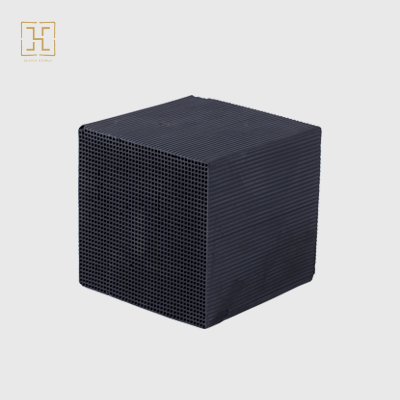
Coal-based honeycomb activated carbon is a high-performance adsorbent engineered from premium bituminous or anthracite coal, featuring a distinctive honeycomb lattice structure that maximizes surface contact with gas streams while minimizing airflow resistance. Unlike conventional granular or pelletized carbons, this honeycomb configuration delivers exceptional VOC capture rates, reduced pressure drop, and space-efficient installation in industrial exhaust treatment systems. Its unique geometry makes it the preferred solution for facilities managing large airflow volumes exceeding 10,000 cubic meters per hour, particularly in spray coating, printing, and electronics manufacturing environments where stringent emission compliance is non-negotiable.
Understanding Coal-Based Honeycomb Activated Carbon
The designed molecular structure of Coal-based honeycomb activated carbon is what makes it special. Extrusion methods are used to shape raw coal into structured blocks with hundreds of parallel lines. This design strikes the best balance between mechanical strength and adsorption capacity. The network of holes includes micropores (less than 2 nanometres) that can hold small organic molecules and macropores (greater than 50 nanometres) that let gases move quickly through the carbon matrix.
Chemical Composition and Pore Structure
The iodine value of Coal-based honeycomb activated carbon usually ranges from 450 to 850 milligrams per gram, showing strong adsorption capacity for organic compounds. The specific surface area of BET is between 500 and 900 square meters per gram, which means there are a lot of places for contaminants to stick to. Advanced versions achieve CTC adsorption rates between 35% and 65%, showing that they are better at capturing gases than standard filter media.
The carbon's chemical makeup is mostly made up of fixed carbon, and the amount of ash is kept below 20% to avoid additional pollution during operation. In the pharmaceutical and food processing industries, where product purity can't be sacrificed, this low ash standard is very useful. The pores are designed to focus on certain molecular weight ranges. This lets volatile organic chemicals stick to the surface while letting harmless gases pass through freely.
Physical Properties and Mechanical Strength
The compression strength is higher than 0.8 megapascals, which makes it safe to stack in multi-layer adsorption towers without the structure deforming when it's loaded. During renewal cycles, when temperature changes and thermal growth could otherwise break down the material, this mechanical stability is very important. The honeycomb shape spreads stress evenly throughout the structure, stopping weak spots that happen in cylinder-shaped pellets or uneven granules.
Water-resistant versions have hydrophobic surface treatments that keep the structure strong in places where the relative humidity is higher than 90%. Standard carbons made from coal tend to soak up water, which stops micropores and lowers their ability to absorb. The moisture-proof versions get rid of this weakness, so they work the same way in humid seaside areas or factories that tend to be humid.
Adsorption Mechanisms and Environmental Benefits
Van der Waals forces and chemical interactions between the target molecules and the carbon surface are what make the adsorption process work. VOCs move through the honeycomb pathways and meet the large network of internal pores. Because the molecules stay in contact with the organised passages for one to two seconds, they are fully captured, and removal rates are higher than 90% in single-pass setups.
From an environmental point of view, this material lets factories meet stricter pollution rules without using steam oxidisers, which use a lot of energy. When compared to single-use adsorbents, those that can be recycled through steam or thermal desorption can be used more than once, which means less trash in landfills. During desorption, facilities can get back useful liquids, which turns the costs of treating waste into income by reusing materials.
Advantages and Applications of Coal-Based Honeycomb Activated Carbon
Coal-based honeycomb activated carbon is preferred by industrial processes for a number of strong reasons that directly address the practical issues that environmental engineering teams face. The performance profile of the material works perfectly in tough situations where regular adsorbents don't work well enough or last long enough.
Core Industrial Advantages
When compared to beds of packed powdered carbon, the honeycomb shape dramatically lowers the pressure drop. Most systems work with pressure drops below 500 pascals, which means that the blowers use about 20% less energy over the life of the system. Facilities that run exhaust fans all the time will save a lot of money on their yearly energy costs thanks to this efficiency gain.
Another very important benefit for high-temperature uses is thermal stability. Coal-based honeycomb activated carbon keeps its shape and ability to absorb gases even when they are very hot (near 200 degrees Celsius). This means it can be used to treat hot exhaust without the need for expensive pre-cooling systems. The carbon skeleton doesn't oxidise or break down at high temperatures, which makes it last longer in harsh petrochemical and industrial settings.
Large surface area inside the small honeycomb structure—often up to 1,000 square meters per gram in luxury grades—allows for longer periods of time between media replacements. The large contact area makes sure that toxins quickly come into contact with adsorption sites, which increases the efficiency of capture even at high flow rates. This design makes it possible for single towers to handle airflow capacities that would need multiple vessels with standard granular media, saving important floor space in production sites.
Regeneration through controlled heating processes lets facilities recover adsorption capacity after it has been used up, so media doesn't have to be replaced as often. When regeneration is done right, it can recover 85–95% of the original capacity over multiple rounds. This makes the total cost of ownership much lower than with disposable filter media. This ability to be used again and again is in line with companies' promises of sustainability and cuts down on running costs.
Target Applications Across Industries
The main use case is for treating large amounts of leftover gas in spray painting booths, printing presses, and assembly lines for electronics. In these places, VOC releases happen all the time, and the wind is more than 10,000 cubic meters per hour. The honeycomb structure can handle these huge throughputs without too much backpressure, so it keeps the air working well while catching controlled pollution. The carbon's ability to bind to aromatic oils and ketones, which are common in solvent-based paints, is especially helpful for coating processes.
Honeycomb carbon units are used to remove contaminants continuously from the air inside business buildings, transportation hubs, and underground facilities. This kind of technology is used in airport terminals, shopping stores, and metro stops to get rid of smells and keep the air healthy for people who live or work there. The low-pressure-drop feature makes sure that air moves at the right speed without making too much noise or using too much energy.
Particulate filtering and VOC adsorption are both used together in industrial air systems in woodworking facilities. After the dust collection, honeycomb carbon modules catch volatile emissions from wood glue, coatings, and treatment chemicals while keeping the required exhaust flow rates. When compared to separate filtration steps, the dual-function method makes system design easier and equipment size smaller.
Honeycomb carbon is used as a catalyst support structure in catalytic combustion applications. VOCs can be turned into carbon dioxide and water vapour at low temperatures with the help of precious metal catalysts that are formed on the surface of the carbon. The honeycomb shape makes sure that the catalyst is spread out evenly and that all the gases interact evenly. This hybrid method works well for sites that want to completely destroy VOCs instead of recovering them.
Real-World Performance Examples
After adding a honeycomb carbon adsorption device, an automotive coating plant in Michigan cut its VOC emissions by 94%. This made it fully compliant with state air quality permits. The system was able to handle 18,000 cubic meters of exhaust per hour from spray tanks and used 30% less electricity than the old regeneration thermal oxidiser. The system paid for itself in 18 months by saving more than $85,000 a year in running costs.
A printing company in California switched from grainy carbon beds to honeycomb modules. This increased the time between service visits from 90 days to 180 days. The longer service life was due to the honeycomb structure's better mass transfer properties, which used more of the available adsorption capacity before breakthrough happened. As a result, the cost of maintenance labour went down, but pollution compliance stayed the same.
Comparison with Other Activated Carbon Types
To choose the best activated carbon structure, you need to know how the performance of different structural configurations and raw material sources changes over time. To find the most cost-effective option for their application needs, procurement teams have to weigh up starting costs against operating efficiency and service life for Coal-based honeycomb activated carbon.
Structural Comparisons
Granular activated carbon is made up of irregularly shaped pieces that are usually between 0.5 and 4 millimetres across. Granular media have a high absorption capacity per unit weight, but this causes a big drop in pressure in deep bed designs. Airflow has to go around particles in a winding way, which increases resistance and energy use. Random packing also leaves empty areas that make volumetric adsorption less effective than with organised media.
When compared to granular forms, pelletised or cylinder activated carbon has regular sizes that make packing density better and channelling less noticeable. The form of the pellet makes it more durable during handling and regeneration processes. Even so, packed pellet beds still cause bigger drops in pressure than honeycomb designs, and they need bigger vessel sizes to work as well at industrial flow rates for adsorption.
The parallel channel shape of Coal-based honeycomb activated carbon gets rid of the winding flow lines that come with packed beds. Gas streams move straight through tubes lined with surfaces that absorb gas. This reduces resistance and increases touch with active carbon. This setup has a 40–60% lower pressure drop than similar granular beds, but it still has the same or higher adsorption rate because the structured paths allow for more contact time.
Raw Material Source Considerations
Activated carbon from coconut shell is very dense and hard, and it has tiny pores that make it perfect for adsorbing small molecules in liquids. The stuff is very expensive because it is hard to get from farms,s and it is hard to handle. Coconut shell carbon works great for cleaning water and getting gold out of it, but it's not as cost-effective for treating big amounts of gas, where coal-based alternatives can catch the same amount of VOCs for much less money.
Activated carbon made from wood is softer and has bigger pores on average, which makes it good for soaking up bigger organic molecules and colour bodies in liquid streams. When compared to coal-based carbons, the lower density means it costs less per unit amount to move. Because wood carbon isn't very strong mechanically, it can't be used in high-temperature or high-pressure industrial gas treatment, where the structure is very important.
For treating industrial gases, Coal-based honeycomb activated carbon strikes a good mix between performance and cost. There is a lot of coal feedstock available, which keeps prices stable and supply lines predictable compared to agricultural sources that are affected by changes in the seasons and failed crops. The strong structure of coal carbon can survive thermal renewal cycles without significantly breaking down. This is a major benefit for big industrial sites that want to lower their running costs by reusing media.
Cost-Performance Analysis for VOC Removal
Procurement teams should look at the original media cost, pressure drop energy use, repair interval length, and regeneration potential when figuring out the total cost of ownership for VOC abatement systems. For applications involving airflow rates above 5,000 cubic meters per hour, a thorough study usually shows that Coal-based honeycomb activated carbon offers the lowest lifecycle cost.
Within the first year of operation, the energy savings from less pressure drop usually make up for any extra cost of the media. If a building with an exhaust system that moves 10,000 cubic meters per hour switches from grainy media to honeycomb media, it can save $12,000 to $18,000 a year on power costs. Over a normal planning span of five years, these savings are much greater than the extra money that would have been spent on structured media.
The economics of regeneration even favour Coal-based honeycomb activated carbon in places where VOC emissions are constant. When compared to throwaway options, the ability to recover capacity through thermal or steam recycling cuts the cost of replacing media every year by 60 to 80%. Facilities that don't have the ability to renew their own media can work with specialised service providers who will gather saturated media, regenerate it centrally, and return refreshed carbon.
How Coal-Based Honeycomb Activated Carbon Is Made
Learning about the manufacturing process helps buying teams understand quality factors, customisation options, and the right standard criteria to use when looking for Coal-based honeycomb activated carbon. Through carefully controlled processing steps, the production sequence turns raw coal into precisely made adsorption structures.
Raw Material Selection and Preparation
The first step in making something is choosing high-quality bituminous or anthracite coal that has a lot of fixed carbon and not much sulphur. The raw coal is crushed and ground until the particles are between 100 and 200 mesh. This makes a fine powder that can be used in making processes. At this point, quality control tests are done to make sure that the material fits the requirements for the intended use. These tests check the amount of ash, volatile matter, and trace impurities.
Binders and shaping agents are mixed with the coal powder to make a paste that can be shaped and has the right rheological properties for extrusion. The final product's mechanical strength and water resistance depend on the glue that is used. Advanced formulas have hydrophobic additives that make them resistant to moisture. This means they can work well in places with a lot of humidity without the pores getting clogged up with stored water.
Forming and Shaping Process
The ready-mixed coal goes into specialised casting equipment that has precise dies with the honeycomb channel design that is wanted. 100-hole, 150-hole, and 200-hole forms are common. The number of holes is chosen based on the balance between the need for surface area and structural strength. More holes mean more surface area, but they may make the structure less strong when compressed.
Before they are activated, the moulded blocks are dried to get rid of any wetness and make the structure more stable. The conditions for drying are carefully managed to keep the honeycomb shape from cracking or warping. The blocks are usually cut to standard sizes—usually 100x100x100 millimetres or 150x150x100 millimetres—so they can be put together in adsorption tanks more easily.
Activation and Quality Assurance
Activation happens when a substance is exposed to oxidising gases under controlled conditions at high temperatures, usually between 800 and 1000 degrees Celsius. When steam or carbon dioxide combines with the carbon matrix, it makes the micropore network that is needed for adsorption to work. The activation time and temperature patterns are carefully controlled to get the goal pore size distributions and surface areas that meet the needs of the application.
After activation, the material may be washed with acid to get rid of any remaining ash or metal impurities. It is then rinsed well and dried. The no-wash Coal-based honeycomb activated carbon version is made in this step. It doesn't release black water and doesn't need to be rinsed out first, as regular carbons do. The ability to be used right away is helpful for places that can't clean a lot of water at once or that have to finish a project quickly.
Certifications and Customization Capabilities
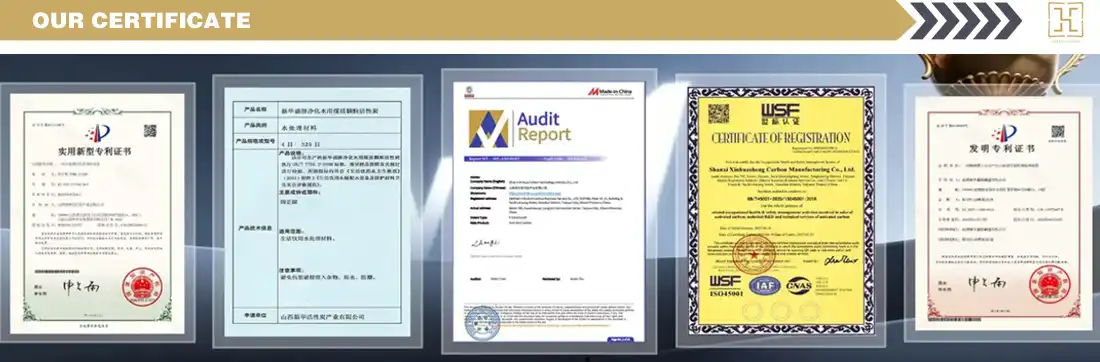
Manufacturers with a good reputation keep their ISO 9001 quality management systems and ISO 14001 environmental management certifications up to date. This makes sure that production standards are always met and that the rules are followed. Products that come into contact with potable water have extra certifications, like NSF/ANSI 61 or regional approvals that are similar, that prove they are safe for use with drinking water.
Customisation options cover a wide range of factors to meet the needs of different industries. Activation condition changes can be made to the pore shape to get the best retention of target molecular weight ranges. Adding valuable metals or metal oxides to the carbon changes it from a pure absorbent to a catalytic destruction medium for uses that need to completely oxidise VOCs instead of recovering them. Product dimensions and hole patterns can be changed to fit different types of vessels.
Procurement Guide for Coal-Based Honeycomb Activated Carbon
To get through the buying process, you need to know about the different types of suppliers, how to evaluate them, and the transportation issues that affect how well the project is carried out. A methodical approach to choosing a seller and negotiating a contract that balances cost goals with performance guarantee and supply reliability is helpful for business-to-business buyers of Coal-based honeycomb activated carbon.
Supplier Evaluation Criteria
The most important thing on the rating list should be technical skill. Suppliers with in-house research and development teams or relationships with research schools are more likely to be committed to coming up with new products and helping customers make changes. When manufacturers work with universities and national labs, they can access cutting-edge adsorption technology and make custom solutions for tough uses that go beyond what is available in standard products.
The scale of production and store management has a direct effect on how reliably deliveries happen. Suppliers who have more than one production base with a total capacity of more than 40,000 tonnes per year can handle big framework contracts and sudden orders without affecting lead times. Facilities that keep a full stock of products in columnar, grainy, powdered, and honeycomb forms allow for flexible purchasing and quick responses to changing project needs.
Pricing Dynamics and Order Considerations
Coal-based honeycomb activated carbon usually costs between $1,800 and $3,500 per tonne, depending on factors like order number, iodine value, and CTC adsorption capacity. Premium types that don't absorb water and versions that are loaded with catalysts are more expensive because they are made in a special way and work better. Volume savings of 8% to 15% are common for orders over 20 tonnes, which makes the economics of big systems better.
Lowest order amounts depend on the seller and the type of product, but for standard sizes, they usually start at one to five tonnes. For non-standard formulations, custom formulations may need bigger minimum batches, often 10 tonnes or more, to cover the costs of setting up the production line and checking the quality. Early in the project planning process, procurement teams should talk to suppliers to find out what the basic customisation requirements are.
Logistics and Delivery Considerations
Standard shipping times for in-stock goods in domestic markets are seven to fifteen days. Customised formulas, which include validating the recipe and planning production, take fifteen to thirty days. Three- to seven-day delivery is possible in most areas for suppliers whose storage centers are carefully placed near major logistics hubs. In times of emergency procurement, providers that offer fast green channel services can deliver approved urgent orders within 72 hours.
Our supply chain is tailored to meet the needs of industrial buying teams that are in charge of environmentally friendly projects that are very complicated. We keep a lot of stock ready to ship right away because we have factories in Shanxi, Ningxia, Fujian, and Xinjiang. The technical team at our company has over 60 years of combined experience and holds several idea patents in the areas of modified activated carbon and carbon-based catalysts. We provide the performance, reliability, and support that procurement professionals count on.
Conclusion
For industrial gas treatment uses, Coal-based honeycomb activated carbon offers the best combination of performance, cost, and operating efficiency. Its carefully designed structure captures more VOCs while using very little energy. This helps makers meet environmental standards and keep costs down at the same time. Knowing the qualities of the material, how it is made, and what to think about when buying it gives B2B buyers the power to make decisions that will help both the instant success of the project and the long-term viability of the business. Honeycomb carbon is the best choice for sites that want to be environmentally friendly without sacrificing profits.
FAQ
Which industries benefit most from coal-based honeycomb activated carbon?
Environmental protection firms that work on VOC treatment projects directly benefit the most. This is especially true for firms that create systems for finishing plants for cars, printing businesses, and factories that make electronics. Coal-based honeycomb activated carbon is used in advanced oxidation processes and to control tastes and smells in municipal water treatment plants. These materials are used by petrochemical plants to get rid of hydrogen sulphide and catch mercaptan in process gas streams. Facilities in the coating, woodworking, and chemical production industries use honeycomb carbon to meet pollution standards and keep energy costs low.
How can buyers ensure product quality and authenticity?
Ask for detailed scientific data sheets that show the iodine value, BET surface area, CTC adsorption capacity, shear strength, and ash content that were found using standard test methods like ASTM or GB standards. Instead of depending only on what the manufacturer says, get test certificates from a third-party lab that confirms the specs. Check to see if the seller has any certifications, such as ISO 9001 and any industry-specific approvals that are needed. Before buying in bulk, practice tests with small amounts to see how well the product works in real-world situations instead of just theoretically meeting standards.
What environmental advantages does coal-based honeycomb carbon offer compared to other filter media?
When compared to disposable filter media, the ability to regenerate lowers the amount of solid trash that is made, which is in line with the principles of the circular economy and business sustainability promises. During desorption, solvent recovery turns dangerous waste streams into raw materials that can be recycled. This helps the environment and makes money at the same time. The low-pressure drop cuts down on energy use, which lowers the pollution control industry's carbon footprint. Coal-based production uses a lot of resources that are already in the country, reducing reliance on imported materials.
Partner with Shanxi Xinhua for Superior Honeycomb Activated Carbon Solutions
Shanxi Xinhua Carbon Technology Industry Co., Ltd. is ready to help you buy Coal-based honeycomb activated carbon. They have more than 60 years of experience making advanced products and have a lot of technical knowledge. Through our study relationships with Tsinghua University and the Chinese Academy of Sciences, we can get the newest developments in adsorption technology. As a top producer, we provide full customisation in terms of pore structure, surface treatment, and catalyst filling to meet your specific needs. Email our technical sales team at greta@carbonxinhua.com to talk about the details of your project and ask for samples. We provide expedited delivery through our nationwide logistics network.
References
1. Ruthven, D.M. (1984). Principles of Adsorption and Adsorption Processes. New York: John Wiley & Sons.
2. Bansal, R.C. and Goyal, M. (2005). Activated Carbon Adsorption. Boca Raton: CRC Press.
3. Marsh, H. and Rodríguez-Reinoso, F. (2006). Activated Carbon. Amsterdam: Elsevier Science.
4. Yang, R.T. (2003). Adsorbents: Fundamentals and Applications. Hoboken: John Wiley & Sons.
5. Derbyshire, F., Jagtoyen, M., Andrews, R., Rao, A., Martin-Gullon, I., and Grulke, E. (2001). "Carbon Materials in Environmental Applications" in Chemistry and Physics of Carbon, Volume 27. New York: Marcel Dekker.
6. U.S. Environmental Protection Agency (2002). EPA Air Pollution Control Cost Manual, Sixth Edition. Research Triangle Park: Office of Air Quality Planning and Standards.

Send Inquiry
You may like
_1781662034490.webp)