_1778553121707.webp)
Xinhua Carbon is professional Coal-based Activated Carbon manufacturers and suppliers in China, specialized in providing high quality Coal-based Activated Carbon with competitive price. For quotation, contact us now.
Coal-based Activated Carbon
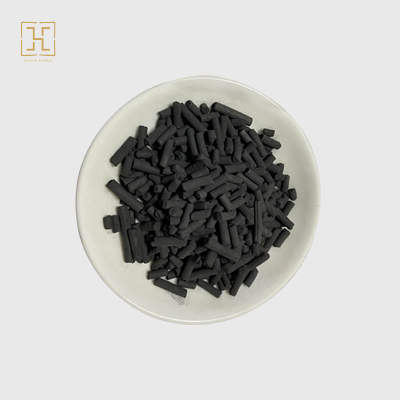
Coal-based Activated Carbon for Industrial Wastewater Treatment
Specifically designed for industrial wastewater treatment, this product uses high-quality coal as raw material and undergoes a special activation process. It boasts a high mesopore ratio, large adsorption capacity, and strong resistance to pollution, effectively removing harmful substances such as COD, color, organic matter, heavy metals, and odors from industrial wastewater. It also exhibits excellent anti-clogging and anti-wear properties, making it suitable for long-term continuous operation. It is suitable for the deep treatment of various industrial wastewaters, including electroplating wastewater, circuit board wastewater, papermaking wastewater, chemical wastewater, and mining wastewater.
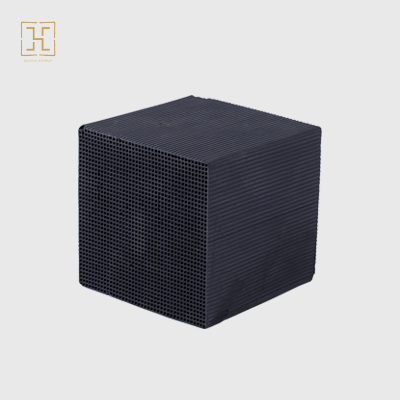
Coal-based honeycomb activated carbon
Made from coal-based charcoal powder, coconut shell charcoal powder, and wood-based charcoal powder, processed using a special technique and then reactivated at high temperature. Its biggest advantages are low air resistance and strong adsorption capacity during filtration, making it suitable for purifying and treating large volumes of low-concentration organic waste gas. It is commonly used for wastewater and waste gas treatment in coking plants, chemical plants, printing and dyeing plants, plastic factories, and paper mills; dioxin removal from waste incineration; desulfurization and denitrification of waste gas from power plants and smelters; waste gas treatment after the combustion of oil, natural gas, coal, and waste fuels; VOCs organic waste gas treatment; and household air purification to remove formaldehyde, benzene, and other pollutants.
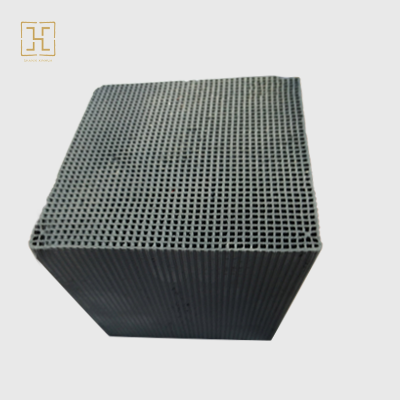
100-hole coal-based honeycomb carbon
Made from coal-based charcoal powder, coconut shell charcoal powder, and wood-based charcoal powder, processed using a special technique and then reactivated at high temperature. Its biggest advantages are low air resistance and strong adsorption capacity during filtration, making it suitable for purifying and treating large volumes of low-concentration organic waste gas. It is commonly used for wastewater and waste gas treatment in coking plants, chemical plants, printing and dyeing plants, plastic factories, and paper mills; dioxin removal from waste incineration; desulfurization and denitrification of waste gas from power plants and smelters; waste gas treatment after the combustion of oil, natural gas, coal, and waste fuels; VOCs organic waste gas treatment; and household air purification to remove formaldehyde, benzene, and other pollutants.
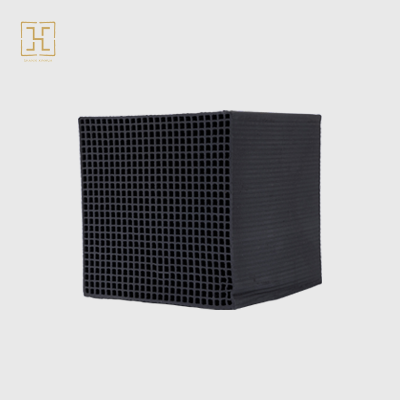
100*100*100mm perforated coal honeycomb charcoal
Made from coal-based charcoal powder, coconut shell charcoal powder, and wood-based charcoal powder, processed using a special technique and then reactivated at high temperature. Its biggest advantages are low air resistance and strong adsorption capacity during filtration, making it suitable for purifying and treating large volumes of low-concentration organic waste gas. It is commonly used for wastewater and waste gas treatment in coking plants, chemical plants, printing and dyeing plants, plastic factories, and paper mills; dioxin removal from waste incineration; desulfurization and denitrification of waste gas from power plants and smelters; waste gas treatment after the combustion of oil, natural gas, coal, and waste fuels; VOCs organic waste gas treatment; and household air purification to remove formaldehyde, benzene, and other pollutants.
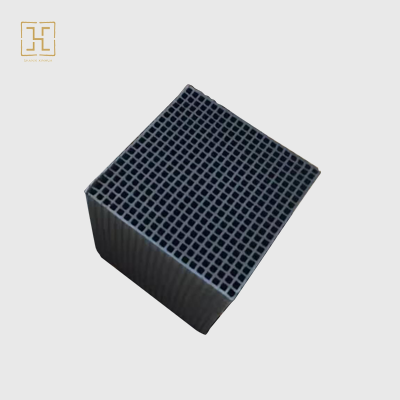
100*100*50mm perforated coal honeycomb charcoal
Made from coal-based charcoal powder, coconut shell charcoal powder, and wood-based charcoal powder, processed using a special technique and then reactivated at high temperature. Its biggest advantages are low air resistance and strong adsorption capacity during filtration, making it suitable for purifying and treating large volumes of low-concentration organic waste gas. It is commonly used for wastewater and waste gas treatment in coking plants, chemical plants, printing and dyeing plants, plastic factories, and paper mills; dioxin removal from waste incineration; desulfurization and denitrification of waste gas from power plants and smelters; waste gas treatment after the combustion of oil, natural gas, coal, and waste fuels; VOCs organic waste gas treatment; and household air purification to remove formaldehyde, benzene, and other pollutants.
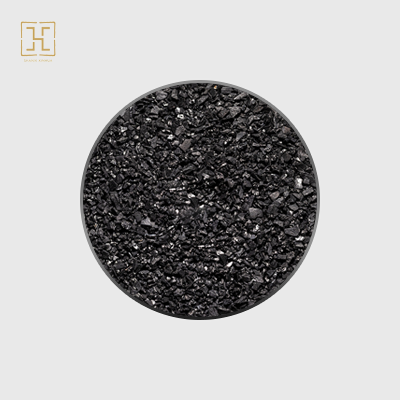
Coal briquette crushing activated carbon
This briquetted carbon is produced by crushing after briquetting. It features high particle strength, excellent wear resistance, and is not easily pulverized or lost. It has a uniform pore structure with a reasonable distribution of macropores, mesopores, and micropores, resulting in rapid mass transfer and stable adsorption capacity. It is characterized by low ash content, high iodine value, high molasses value, and absence of floating matter. Briquetted and crushed charcoal can also produce charcoal with high molasses values, up to 240 or higher. It is suitable for high-load, high-flow-rate purification applications. It is mainly used in high-end air purification, exhaust gas purification, high-purity water treatment, and wastewater treatment. It can also be used for various gas separation and purification processes, and the recovery and utilization of various low-boiling-point substances.
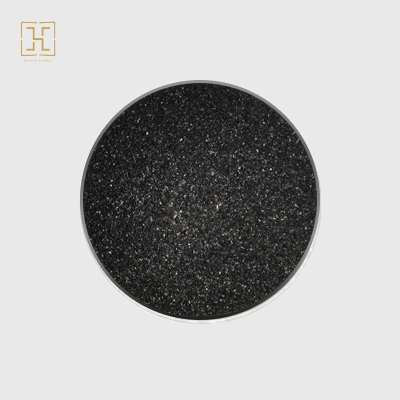
4*8 mesh coal briquette crushing activated carbon
This briquetted carbon is produced by crushing after briquetting. It features high particle strength, excellent wear resistance, and is not easily pulverized or lost. It has a uniform pore structure with a reasonable distribution of macropores, mesopores, and micropores, resulting in rapid mass transfer and stable adsorption capacity. It is characterized by low ash content, high iodine value, high molasses value, and absence of floating matter. Briquetted and crushed charcoal can also produce charcoal with high molasses values, up to 240 or higher. It is suitable for high-load, high-flow-rate purification applications. It is mainly used in high-end air purification, exhaust gas purification, high-purity water treatment, and wastewater treatment. It can also be used for various gas separation and purification processes, and the recovery and utilization of various low-boiling-point substances.
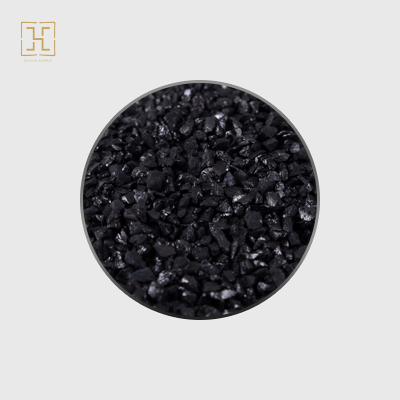
8-16 Coal Quality Crushing Carbon
With a moderate particle size that balances adsorption capacity and mass transfer rate, well-developed surface pores, and high adsorption efficiency, these particles have no fixed shape, resulting in uniform porosity during filling and moderate filtration resistance. They can efficiently remove harmful substances such as organic matter, odors, residual chlorine, and color from water, while also possessing good regeneration performance, making them suitable for repeated use. They are mainly used in municipal drinking water purification, industrial wastewater treatment, groundwater remediation, air purification (such as large-scale workshop exhaust gas adsorption), and solvent recovery, and are compatible with various fixed-bed and moving-bed adsorption devices.
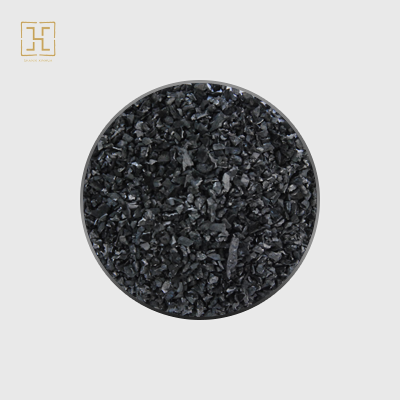
8-30 mesh coal quality crushed carbon
Medium-fine granular coal-based crushed charcoal features smaller particles, a larger specific surface area, faster adsorption speed, and a more developed microporous structure. It efficiently adsorbs small-molecule organic matter, heavy metal ions, and odor substances from water. Simultaneously, its moderate mesopore ratio effectively removes medium- and large-molecule substances such as color and colloids. High particle uniformity and moderate packing density result in low filtration resistance, making it suitable for advanced purification applications. It is primarily used in advanced drinking water purification, advanced industrial wastewater treatment, COD removal, decolorization (such as decolorization of papermaking wastewater), and fine chemical purification.
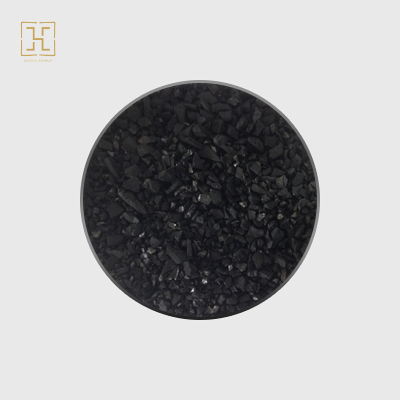
20*50 mesh coal quality crushing carbon
Fine-particle coal-based crushed carbon features small particles, a large specific surface area, extremely fast adsorption speed, well-developed micropores, and high adsorption capacity. It can quickly capture trace amounts of harmful substances in water or air, making it suitable for fine purification and advanced treatment applications. Due to the fine particles, careful control of the flow rate is necessary during filling to prevent leakage. It also possesses excellent decolorization properties, effectively removing pigments, odors, and trace heavy metals from liquids. Its main applications include fine water treatment, liquid-phase decolorization, and fine chemical adsorption and purification.
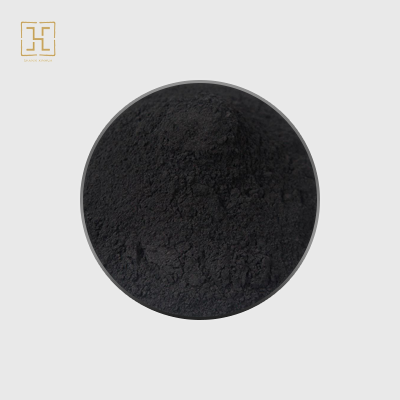
Coal-based powdered activated carbon
Coal-based powdered activated carbon is made from high-quality coal through crushing, grinding, carbonization, activation, and refining. It has uniform fineness, large specific surface area, extremely fast adsorption speed, no fixed shape, and can be quickly dispersed in liquids or gases. It efficiently adsorbs harmful substances and is mainly used in decolorization, sewage treatment, flue gas purification and other applications.
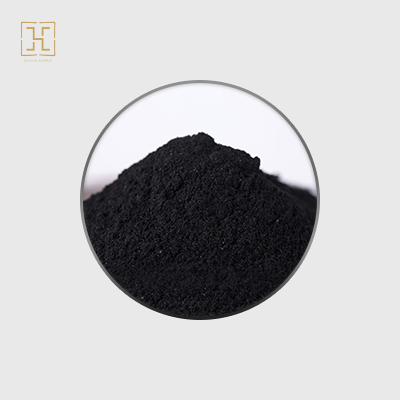
200-mesh coal quality powdered carbon
With moderate particle size, good dispersibility, fast adsorption speed, and well-developed micropores, it can quickly adsorb harmful substances such as pigments, odors, organic matter, and residual chlorine in water. It also has a certain decolorization ability and is suitable for deodorization, emergency water treatment, papermaking wastewater decolorization, and chemical wastewater pretreatment. After adsorption, it can be separated by sedimentation, filtration, and other methods.

- 1
- 2
- 3
- 4
_1781662034490.webp)