_1778553121707.webp)
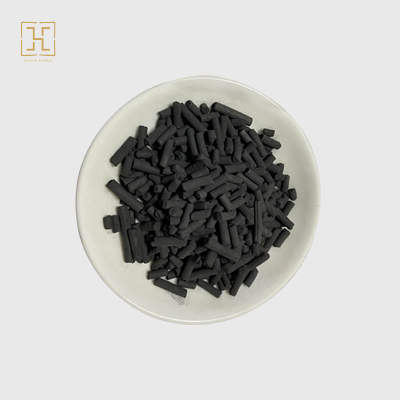
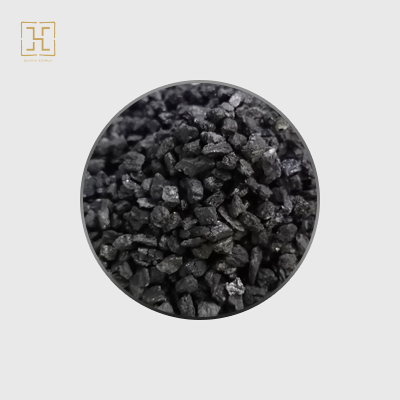
Coal-based Activated Carbon for Industrial Wastewater Treatment

- Fast Delievery
- Quality Assurance
- 24/7 Customer Service
Product Introduction
Coal-based Activated Carbon for Industrial Wastewater Treatment
When you're managing complex industrial effluent challenges, you need proven technology that delivers results. Our Coal-based Activated Carbon for Industrial Wastewater Treatment combines 60+ years of R&D mastery with defense-grade fabricating benchmarks. Built particularly for high-strength wastewater applications, this arrangement accomplishes iodine values up to 1,050 mg/g and keeps up >95% overwhelming metal expulsion effectiveness. With warm recovery capability of 3-5 cycles and optimized mesopore structure, you get reliable execution over COD variances from 300-1,500 mg/L whereas essentially lessening your operational costs.
What Makes Our Solution Stand Out
Designed for Your Toughest Challenges
Your wastewater doesn't take after unsurprising designs. That's why our enacted carbon keeps up steady adsorption indeed when your influent quality shifts dramatically.
Whether you're treating electroplating gushing with hexavalent chromium or overseeing pharmaceutical wastewater with complex organics, this fabric adjusts to your conditions.
Performance That Meets Compliance Standards
Heavy metal removal isn't just about initial efficiency. Our coal-based activated carbon consistently removes Cr⁶⁺, Pb²⁺, and Ni²⁺ at rates exceeding 95%.
This means you meet discharge regulations reliably, batch after batch.
Cost-Effective Long-Term Operation
Single-use solutions drain your budget. Our product offers 3-5 thermal regeneration cycles, cutting replacement frequency and disposal expenses.
You invest once and benefit repeatedly.
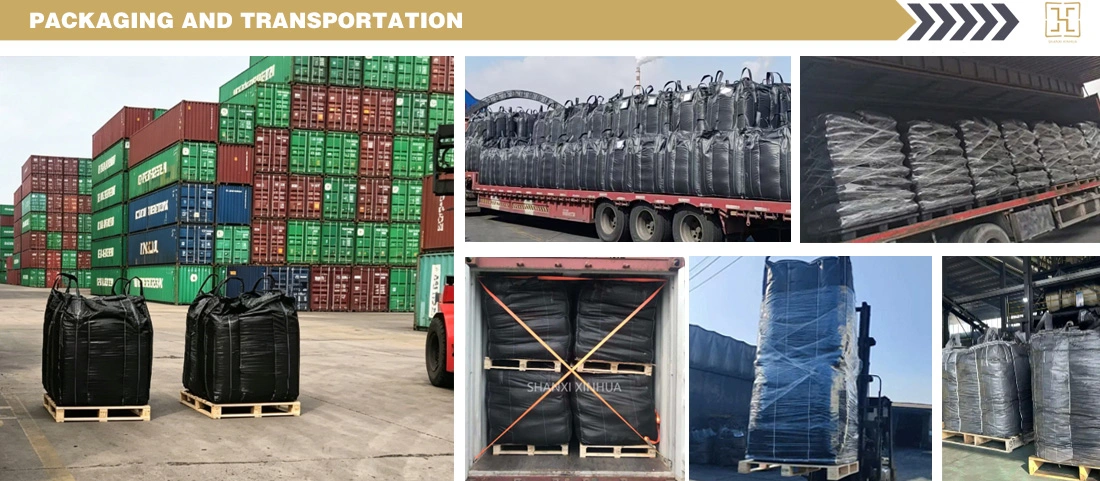
Technical Specifications
| Parameter | Specification |
|---|---|
| Particle Size | 8×30 mesh, 12×40 mesh, 200 mesh, 325 mesh (customizable) |
| Iodine Number | 600-1,050 mg/g |
| Moisture Content | ≤5% |
| Ash Content | ≤20% (customizable to 8% or lower) |
| Adsorption Capacity | >800 mg/g |
| Heavy Metal Removal | >95% efficiency |
| COD Treatment Range | 300-1,500 mg/L |
| Regeneration Cycles | 3-5 times |
Key Advantages for Your Operations
Superior Adsorption for High-Strength Wastewater
You're dealing with COD levels that overwhelm standard materials. Our Coal-based Activated Carbon for Industrial Wastewater Treatment delivers iodine values between 1,000-1,100 mg/g, giving you the capacity to handle concentrated organic loads effectively.
Handles Load Variations Without Performance Loss
Industrial processes don't run at steady state. When your wastewater composition shifts unexpectedly, this activated carbon maintains effectiveness without rapid saturation or breakthrough.
Multiple Formats for Your Treatment System
Whether you operate filter beds, moving bed reactors, or mixed-bed configurations, we provide 6mm pellets, 4×8 mesh, and 8×30 mesh options. Your system design determines the format—we supply what fits.
Enhanced Heavy Metal Capture
Standard activated carbon may not capture certain toxic metals effectively. Our optional sulfur-impregnated variant targets hexavalent chromium and similar contaminants with enhanced binding capacity.
Proven Across Diverse Industries
Chemical manufacturing, electroplating operations, pharmaceutical production, and food processing facilities all face unique wastewater challenges. This product addresses the full spectrum—from organic dyes to metallic ions to odor compounds.
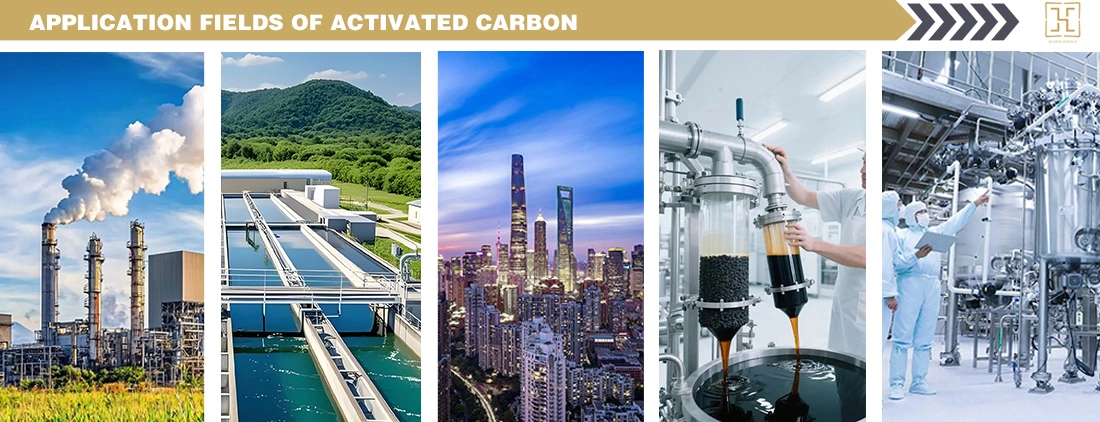
Application Scenarios
You'll find our activated carbon performing reliably in:
- Electroplating wastewater: Removing chromium, nickel, and copper ions
- Circuit board manufacturing: Treating complex organic solvents and metal residues
- Pulp and paper mills: Reducing color, lignin, and COD from bleaching processes
- Chemical plants: Capturing phenols, aromatics, and synthetic compounds
- Mining operations: Treating cyanide, heavy metals, and process chemicals
- Pharmaceutical facilities: Eliminating API residues and synthesis byproducts
Each application benefits from the high mesopore ratio and pollution resistance engineered into every batch.
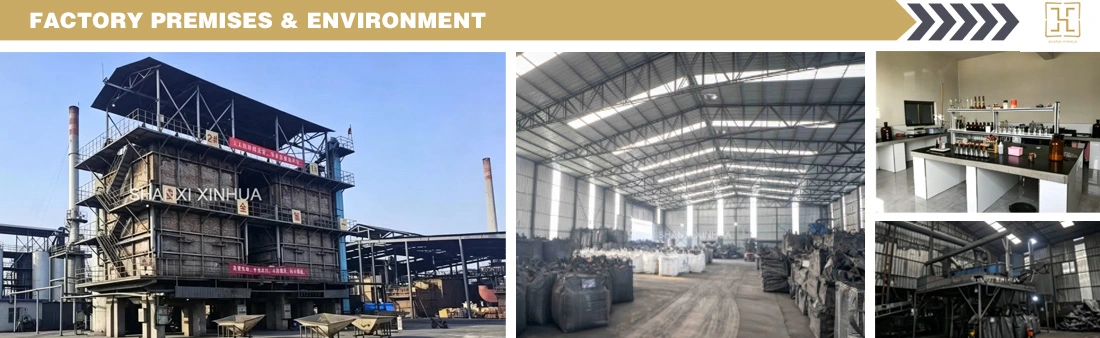
Why Choose Shanxi Xinhua Carbon Technology
Manufacturing Excellence at Scale
With 45,000 tons annual production capacity across multiple facilities, we maintain consistent inventory. You get standard orders within 7-15 days, custom specifications in 15-30 days, and urgent shipments in as little as 3 days.
Quality Systems You Can Trust
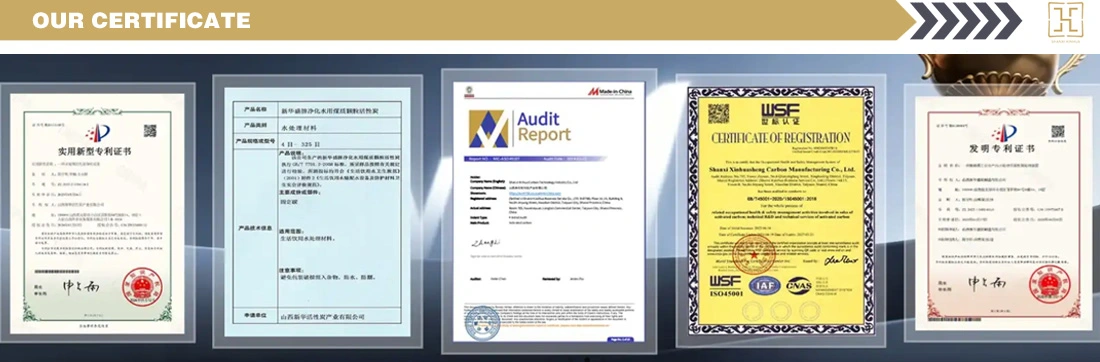
Our ISO 9001, ISO 14001, and ISO 45001 certifications aren't just paperwork. They represent systematic quality control at every production stage, ensuring the Coal-based Activated Carbon for Industrial Wastewater Treatment you receive performs exactly as specified.
Technical Support Throughout Your Project
From initial system design through operational optimization, our engineering team provides 24/7 support. You're not just buying material—you're gaining a technical partner.
Customization Capabilities
Need specific pore structures? Require particular mesh sizes? Want modified surface chemistry for specialized contaminants? Our R&D collaboration with Tsinghua University and the Chinese Academy of Sciences enables full customization from concept to commercial production.
Frequently Asked Questions
What makes coal-based enacted carbon distinctive from other sorts for wastewater treatment?
Coal-based assortments offer prevalent mechanical quality and scraped spot resistance compared to wood or coconut shell carbons. This toughness things in continuous-flow mechanical frameworks where physical breakdown leads to fines, weight drops, and decreased effectiveness. The mesopore structure in our coal-based item moreover gives way better get to for bigger natural atoms common in mechanical effluent.
How do I decide the right molecule estimate for my treatment system?
Your water powered plan drives this choice. Fixed-bed channels regularly utilize 8×30 or 12×40 work to adjust contact time with worthy weight drop. Moving bed reactors regularly incline toward 4×8 work for ideal fluidization. Powdered shapes (200-325 work) work in clump treatment or where you require quick energy with brief contact times. Contact us with your stream rates and framework arrangement for particular recommendations.
Can this item handle changing wastewater compositions?
Yes, stack change resistance is a center plan highlight. Mechanical wastewater once in a while keeps up steady composition—process upsets, group releases, and operational changes make inconstancy. Our actuated carbon keeps up successful adsorption over COD ranges from 300-1,500 mg/L without the fast immersion you'd see with materials optimized as it were for limit conditions.
What's the practical recovery lifespan?
Under appropriate warm recovery conventions (ordinarily 800-900°C in controlled environment), you can anticipate 3-5 cycles some time recently mechanical breakdown or irreversible pore blocking requires substitution. Genuine life expectancy depends on your particular contaminants—some natural loads recover more totally than others. Overwhelming metal stacking may restrain recovery viability compared to absolutely natural fouling.
How does fiery debris substance influence performance?
Lower cinder substance for the most part moves forward adsorption capacity and diminishes auxiliary defilement chance. Whereas our standard determination permits up to 20% fiery debris, we can give fabric with 8% or lower depending on your application prerequisites. For drinking water or touchy forms, lower cinder grades avoid potential filtering of inorganic constituents.
Do you give specialized help with framework design?
Absolutely. Our specialized group conducts on-site appraisals, audits your wastewater characteristics, and prescribes ideal carbon determinations and framework setups. We moreover offer operational preparing and continuous optimization bolster all through your guarantee period and beyond.
Get Started With Your Wastewater Solution
Ready to improve your treatment efficiency and reduce operating costs? Contact our technical team at greta@carbonxinhua.com to discuss your specific Coal-based Activated Carbon for Industrial Wastewater Treatment requirements today.
Send Inquiry
You may like
_1781662034490.webp)