_1778553121707.webp)
Why Use Drinking Water Non-Washing Coal Quality Granular Carbon?
Sep 01, 2026
Drinking Water Non-Washing Coal Quality Granular Carbon represents a groundbreaking advancement in municipal and industrial water purification. This specialized activated carbon is engineered from premium anthracite through precise activation and ultra-low dust screening processes, delivering exceptional adsorption performance without requiring pre-washing or soaking. Its ability to remove color, odors, residual chlorine, and organic micropollutants while maintaining strict heavy metal control makes it indispensable for water treatment facilities committed to meeting national drinking water safety standards like GB 5749.
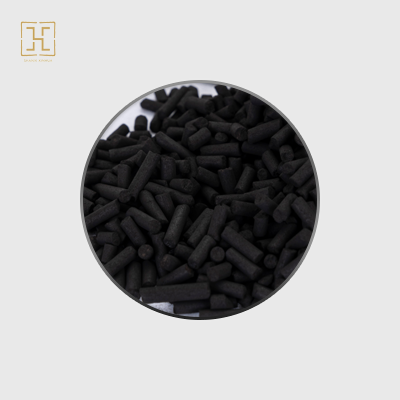
Understanding Non-Washing Coal Quality Granular Carbon for Drinking Water
What Defines Non-Washing Coal Granular Carbon Technology
Non-washing coal quality granular activated carbon is made by activating certain bituminous coals and anthracite with steam. This makes a structure with a lot of pores that works best for drinkable water uses in cities. Unlike most activated carbons, which need a lot of pre-treatment, this material is very pure thanks to better raw material selection and advanced thermal processing. The end result is a filter medium that is both cost-effective and successful, solving important problems in the industry like getting rid of disinfection byproducts, lowering total organic carbon, and getting rid of taste and odor compounds.
High-temperature shaping creates a balanced pore structure with transport mesopores and adsorption micropores during the manufacturing process. This structure lets contaminants move quickly to internal adsorption sites, which makes the material very useful in systems with a high flow rate. The carbon has a huge internal surface area that can hold both small and large organic molecules. It can adsorb iodine at rates between 800 and 1100 mg/g and methylene blue at rates between 100 and 180 mg/g.
How Adsorption Mechanisms Protect Water Quality
The carbon works well because it has two different ways of absorbing things. Physical adsorption is when contaminant molecules get stuck in the micropore structure because of van der Waals forces. Chemical adsorption is when surface functional groups attach to certain pollutants. This mix works especially well against chemicals that cause geosmin and MIB smells, volatile organic compounds, pesticide leftovers, and chlorine compounds.
Deep-bed filters using Drinking Water Non-Washing Coal Quality Granular Carbon can have service cycles that last several years, depending on influent quality, loading conditions, and operating practices. To evaluate performance, breakthrough tests can monitor TOC or UV254 levels in the effluent. The mechanical hardness of Drinking Water Non-Washing Coal Quality Granular Carbon can help reduce wear and fines generation during high-velocity backwashing, helping maintain bed integrity and potentially extend the interval between media replacements. An apparent density in the range of 0.45–0.55 g/cm³ can also be suitable for water-treatment applications because Drinking Water Non-Washing Coal Quality Granular Carbon can remain properly positioned during backwash cycles while still allowing appropriate bed expansion and fluidization. By combining suitable hardness, density, particle-size distribution, and adsorption capacity, Drinking Water Non-Washing Coal Quality Granular Carbon can support stable performance in deep-bed drinking water filtration systems. Properly specified Drinking Water Non-Washing Coal Quality Granular Carbon can therefore help operators maintain consistent treatment performance and manage long-term media replacement costs.
Advantages of Using Non-Washing Coal Quality Granular Carbon in Drinking Water
Superior Performance Specifications That Matter
When you look at this filter medium's core features, you can see how well it works technically. As long as the dust level stays below 0.1%, the carbon stops the problems that come up when water systems have too many small particles. The ash content requirement of ≤8% makes sure that there isn't much chance of contamination, and the strength rating of ≥90% makes sure that the structure stays strong for long periods of time. The wetness level of ≤10% stops microbes from growing while the product is being stored and keeps the adsorption capacity constant.
These perks convert into real operational advantages:
- Immediate System Integration: The ultra-low dust content allows direct addition to purification systems without preliminary washing cycles, reducing commissioning time and labor costs.
- Compliance Assurance: Strict heavy metal leaching control ensures treated water consistently meets GB 5749 standards, protecting public health and avoiding regulatory penalties.
- Extended Service Life: The high mechanical strength withstands repeated backwash cycles, reducing replacement frequency and lowering total cost of ownership.
- Versatile Application Range: Customizable particle sizes accommodate diverse equipment configurations, from gravity filters to pressurized carbon vessels.
Municipal water treatment companies that use this carbon say that it helps get rid of smells caused by algae and lowers the amounts of trihalomethane precursors. The material works well in pH ranges of 6.5 to 7.5, so it will keep working well even if the source water changes. Its ability to remove free chlorine quickly and effectively protects reverse osmosis membranes further downstream while making sure the final water quality meets standards for the beverage industry.
Comparing Non-Washing Coal with Other Granular Carbon Types
Technical Differentiation and Cost Analysis
Procurement managers can make better choices when they know the difference between acid-washed and non-washing coal carbon. Acid-washed carbon has less ash at first and stabilizes pH more quickly, but the non-washing grade removes the same amount of organic matter for a lot less money. This price advantage is especially appealing for large-scale municipal projects that need to buy tons of materials.
The non-washing version of Drinking Water Non-Washing Coal Quality Granular Carbon can be produced with an iodine value above 800 mg/g, depending on the specific grade and testing method, providing strong adsorption capacity for suitable water-treatment applications. Its mechanical strength can also help minimize the generation of fines during handling and operation. Sieve analysis in accordance with ASTM D2862 can be used to verify the particle-size distribution of Drinking Water Non-Washing Coal Quality Granular Carbon, whether the selected grade is 8–30 mesh or 12–40 mesh. Consistent particle sizing helps operators manage pressure drop and maintain effective filtration performance. The floating-material specification for Drinking Water Non-Washing Coal Quality Granular Carbon is also important because it helps ensure that the media remains properly positioned during initial wetting and system startup. By controlling iodine value, hardness, particle-size distribution, and floating-material content, Drinking Water Non-Washing Coal Quality Granular Carbon can provide more consistent performance in drinking water treatment systems.
Evaluation Metrics for Procurement Decisions
When buying granular activated carbon, people in charge of procurement should put a few important factors at the top of their list. The dechlorination half-value length measures how well the catalyst gets rid of free chlorine, which has a direct effect on the safety of the next step in the process. ICP-MS testing of trace metal leachate makes sure that rules for drinkable water are being followed. Specifically, amounts of arsenic, lead, and aluminum are checked. Another thing that sets this carbon apart is its ability to be thermally regenerated. Its high-quality bituminous base allows for three to five regeneration rounds, which greatly reduces the cost of ownership over a long period of time.
Supplier dependability goes beyond product standards and includes the ability to guaranty inventory and make deliveries. Leading manufacturers keep 100% of their core products in stock across multiple production bases. This allows for standard delivery within 7–15 days and fast shipping within three days for compliance projects that need to be done right away. When dealing with treatment problems that are unique to a certain industry, it's important to be able to customize features like pore structure, surface area, and loaded parts.
Procurement Guide for Drinking Water Non-Washing Coal Quality Granular Carbon
Verifying Supplier Credentials and Product Authenticity
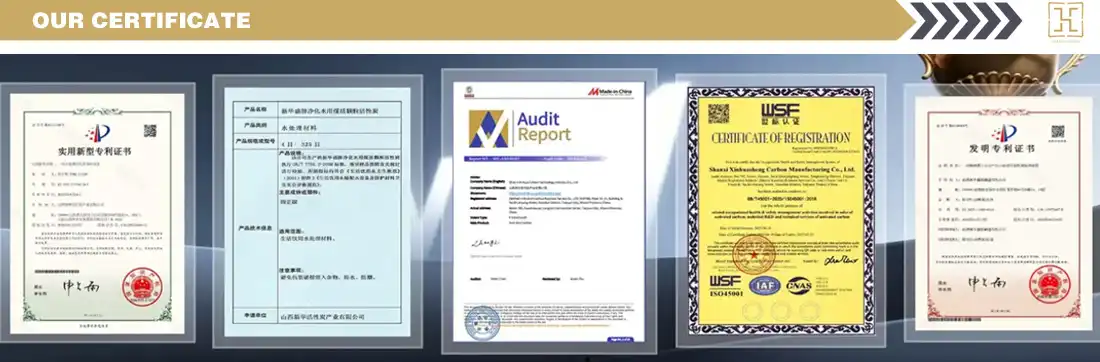
Thoroughly evaluating suppliers is the first step to successful buying. Manufacturers who are certified should have ISO 9001 certification for quality management, ISO 14001 certification for environmental management, and ISO 45001 certification for a workplace health and safety system. Products meant to be used with drinking water need to be certified by NSF/ANSI 61 and get hygiene licenses from the right health authorities. This proves that the materials won't release harmful chemicals into treated water.
Shanxi Xinhua Carbon Technology Industry Co., Ltd. is a great example of how to combine new technology with quality processes. Activated carbon products are always getting better thanks to our work with Tsinghua University, Central North University, and the Chinese Academy of Sciences. We have been doing research and development for over 60 years and have a background in defense-grade chemical protection technology. We hold key invention rights in modified activated carbon and high-specific-surface-area carbon-based catalysts. By helping to make national and industry standards, we establish technological leadership that leads to better product performance.
Navigating Pricing Structures and Logistics
Clear price systems take into account the quality of the raw materials, the amount that is being made, and the cost of licensing. When bulk buyers negotiate framework supply contracts, they usually get good terms, especially when they sign agreements that last for more than one year. Knowing the minimum order amounts helps balance the costs of keeping inventory with the benefits of buying things quickly. For example, industrial users usually order in tons to get the best logistics benefits.
International logistics for Drinking Water Non-Washing Coal Quality Granular Carbon must be carefully coordinated, with transportation options including sea, air, and rail. Reliable suppliers of Drinking Water Non-Washing Coal Quality Granular Carbon can provide real-time shipment tracking, customized protective packaging to prevent moisture and contamination, and comprehensive customs-clearance support. Strategic locations near major transportation hubs can also help suppliers distribute Drinking Water Non-Washing Coal Quality Granular Carbon efficiently, with domestic delivery potentially completed within 3–7 days depending on the destination and logistics conditions. Established fleet operations and logistics partnerships further support reliable transportation of Drinking Water Non-Washing Coal Quality Granular Carbon to municipal and industrial water-treatment facilities. These logistics capabilities help ensure that facilities can maintain a stable supply of Drinking Water Non-Washing Coal Quality Granular Carbon and reduce the risk of treatment interruptions caused by delayed media deliveries.
Implementing Non-Washing Coal Granular Carbon in Your Water Treatment System
Installation Best Practices and Operational Optimization
Paying attention to system-specific parameters is important for successful implementation. When figuring out the bed depth, you have to take into account the empty bed contact time, which is usually between 10 and 20 minutes for municipal uses. Initial startup procedures may include a 24-hour pre-soak or rinse-to-waste period to deal with the short-term rise in pH that coal-based carbons often experience because of surface ash. This effect becomes stable very quickly, and after that, the carbon stays at a normal pH level.
Backwashing steps are very important for long-term success. A recommended bed growth of 20 to 30 percent gets rid of solids that are stuck and re-stratifies the media without washing out the particles. Operators of water treatment plants keep an eye on the backwash frequency by measuring turbidity and difference pressure and changing the cycles to keep the hydraulic conditions in the best possible state. The high density and dynamic strength of the carbon keep the bed from moving, even when backwashing is done in a strong way.
Performance Monitoring and Maintenance Protocols
Monitoring the water quality all the time makes sure it stays good and shows when it's getting close to running out. New tests that measure the amount of TOC in effluent, the absorbance of UV254, or certain contaminants give us quantitative information about how well the system is working. When the factors of effluent go over the goal levels, carbon replacement is needed. However, this material's ability to regenerate thermally provides an alternative. Specialized facilities can restore the material's adsorption capacity through controlled heating, which allows for multiple service cycles and lowers the cost of disposal.
Customers in the beverage industry are especially happy with how this carbon improves taste consistency and lowers membrane fouling after using it for dechlorination and removing traces of pesticides. Operators in cities say that the carbon helps control algae blooms during times of the year when regular cleaning methods aren't working as well. The material's ability to keep working well even when temperatures change makes it reliable all year, no matter what the source water conditions are.
Conclusion
This Drinking Water Non-Washing Coal Quality Granular Carbon is made with cutting edge production technology, strict quality control, and real-world economic value in mind. It is essential for municipal water plants, industrial purification systems, and specialized treatment applications because it has a very low dust content, a high adsorption capacity, and meets strict safety standards. Lifecycle value is unmatched when it comes to being able to get rid of different contaminants while keeping the mechanical integrity over many service cycles. Procurement managers and water treatment engineers know that working with experienced makers gives them access to approved goods, dependable supply chains, and quick technical support—all of which are necessary for operating greatness in today's strict regulatory environment.
FAQ
Does Non-Washing Coal Carbon Cause Initial pH Changes?
Like most coal-based activated carbons, this material may have a temporary rise in pH when it is first used because of the ash that is still on the surface. Most water treatment plants handle this with an initial rinse-to-waste process or a 24-hour pre-soak time. The pH levels quickly settle, and after that, the carbon stays neutral within the 6.5–7.5 range, so there is no long-term effect on the water quality.
How Does Performance Compare to Acid-Washed Carbon?
Acid-washed types have a slightly lower starting ash content and stabilize pH more quickly, but non-washing coal quality powdered carbon gets rid of organic contaminants just as well and costs a lot less. Because of this, it is the standard choice for large-scale municipal uses where cost-effectiveness is important. The iodine levels and methylene blue binding rates are the same as or better than those of more expensive options, and the results of the cleaning are the same.
What Factors Determine Carbon Lifespan?
Service life depends on the quality of the source water, the amount of contaminants in it, the hydraulic flow rates, and how well the system is maintained. Most municipal installations can run for several years before they break through. Constantly checking the measurements of the sewage quality shows that it is getting close to being full. The carbon's ability to regenerate itself through heat means that it can be used three to five times before it needs to be replaced. This gives it a very high lifetime value.
Partner with Shanxi Xinhua Carbon Technology Industry Co., Ltd. for Superior Water Treatment Solutions
To get the best results in cleaning drinking water, you need more than just good activated carbon. You need to work with a manufacturer that has cutting-edge technology, dependable supply lines, and quick expert support. As a top provider of Drinking Water Non-Washing Coal Quality Granular Carbon, Shanxi Xinhua Carbon Technology Industry Co., Ltd. has production bases in Shanxi, Ningxia, Fujian, and Xinjiang that can make a total of 45,000 tons of carbon every year. Our defense-grade quality control systems make sure that every batch meets strict requirements, and our large inventory lets us respond quickly to both planned replacements and situations where compliance is needed right away.
Working with top research institutions pushes us to keep coming up with new ways to improve catalytic performance, make pore structures better, and make customizations that fit specific applications. Whether you need normal mesh sizes or special formulations for tough contaminants, our technical team can help you find the right treatment option for your needs. Get in touch with greta@carbonxinhua.com right away to ask for samples, get detailed technical specs, or get a custom quote. Our full line of products can be seen at xhcarbontech.com. You can also learn about how our activated carbon solutions help businesses meet regulations, run more efficiently, and get better water quality.
References
1. American Water Works Association. (2021). AWWA B604 Standard for Granular Activated Carbon. Denver: AWWA Publications.
2. Bansal, R.C. & Goyal, M. (2019). Activated Carbon Adsorption: Principles and Applications in Water Treatment. CRC Press.
3. Crittenden, J.C., et al. (2020). MWH's Water Treatment: Principles and Design (4th Edition). John Wiley & Sons.
4. National Sanitation Foundation International. (2022). NSF/ANSI Standard 61: Drinking Water System Components - Health Effects. Ann Arbor: NSF International.
5. Sontheimer, H., Crittenden, J.C., & Summers, R.S. (2018). Activated Carbon for Water Treatment (2nd Edition). DVGW-Forschungsstelle.
6. United States Environmental Protection Agency. (2021). Granular Activated Carbon Treatment for Drinking Water Contaminant Removal. EPA Office of Water Technical Report Series.

Send Inquiry
You may like
_1781662034490.webp)