_1778553121707.webp)
Why Select 4*8 Mesh Coal Briquette Crushing Activated Carbon for Filtration Systems?
Aug 14, 2026
Selecting 4*8 mesh coal briquette crushing activated carbon for filtration systems delivers unmatched performance in industrial applications requiring high adsorption capacity, low pressure drop, and structural durability. This specialized carbon material is engineered through briquetting, carbonization, and crushing processes that create uniform pore distribution and exceptional mechanical strength. Its large granule size optimizes flow rates while maintaining superior contaminant capture efficiency, making it the preferred choice for demanding gas-phase and high-flow liquid filtration environments where reliability directly impacts operational success.
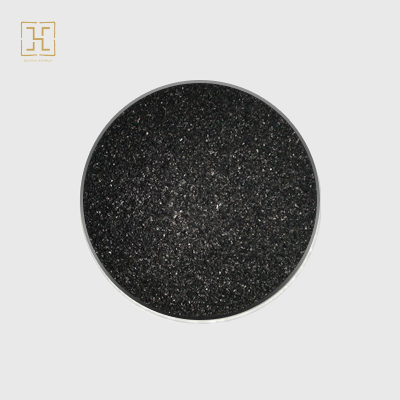
Understanding Briquette Crushing Technology in Activated Carbon Production
The process used to make this filter medium solves important performance problems that regular carbon materials have. Bituminous coal of high quality is ground up into a fine powder, mixed with special binders, and then pressed under a lot of pressure. This step of briquetting makes a uniform structure that later goes through carbonization and steam activation, which forms macro and mesopores that are linked and necessary for good adsorption.
How Briquetting Enhances Performance
The Crushing Stage and Its Strategic Advantages
After being heated, the briquettes are broken up and carefully screened to make sure they meet the 4*8 mesh specification, which means the particles are about 2.36 mm to 4.75 mm in size. This bigger granule size is useful for engineering in situations where fast-moving liquids or air need little resistance. The process of crushing keeps the structure strong and makes particles that pack tightly, stopping channels that would otherwise shorten the time that contaminants and adsorption sites are in touch.
Superior Mechanical Strength for Long-Term Operations
Resistance to Physical Degradation
Carbon sheets are constantly exposed to air moving at different speeds in places like liquid recovery systems and VOC abatement units. Weaker carbon materials make fines that move through the system and could contaminate equipment further down the line or weaken breakthrough security. The briquetting method makes particles strong enough to keep the bed's shape even after thousands of hours of use.
Thermal Reactivation Capabilities
Shanxi Xinhua's method of production makes carbon that can be used for many heat regeneration processes. When carbon is fully absorbed, thermal reactivation releases the contaminants it has trapped at controlled temperatures, restoring its ability to absorb. Because briquettes build mechanical strength, particles don't fall apart during high-temperature treatment. This means that facilities can use cost-effective regeneration protocols instead of replacing all the media. This feature lowers the total cost of ownership over the whole carbon lifecycle by a large amount.
Optimized Flow Dynamics for Industrial Filtration Systems
The 4*8 mesh standard is a strategic engineering approach that is aimed at uses where pressure drop has a direct effect on how efficiently operations run and how much energy they use. 4*8 mesh coal briquette crushing activated carbon provides larger particles that create more open spaces between them in the carbon bed, allowing more fluid to flow through without creating excessive backpressure. This structure helps optimize flow performance while maintaining effective adsorption capacity in industrial applications.
Low Pressure Drop Benefits
Environmental engineering contractors who are in charge of large-scale air stripping systems and exhaust treatment plants are always under pressure to cut down on the amount of energy that fans need. Smaller mesh sizes, like 1240, make resistance that needs bigger fans, which costs more up front and over time in electricity. The 4*8 mesh configuration lets designers reach their target removal efficiencies while keeping flow dynamics that lower energy demand by large amounts compared to finer granulations.
Enhanced Mass Transfer in Gas-Phase Applications
For volatile organic compound capture to work, contaminant molecules must be able to easily move into activated carbon holes. The interconnected macropore structure created by briquetting makes it easier for fast initial adsorption on the outside surfaces, and the mesopore network creates pathways to adsorption sites inside. This two-pore design speeds up kinetics, which means that the empty bed contact times are shorter without lowering the removal efficiency.
Key Performance Indicators for Procurement Evaluation
As environmental engineers and research and development teams look at carbon materials, certain technical parameters determine how well they will work with other systems and how well they will perform in the future. By understanding these measures, you can make smart choices about which materials to use that match their traits to the needs of the application.
Carbon Tetrachloride Activity
The carbon's gas-phase adsorption capacity, or CTC number, shows how much carbon tetrachloride vapor it can hold under normal test settings. With good 4*8 mesh coal briquette crushing activated carbon, the CTC value always goes above 60%, which means that it can effectively remove industrial solvents, aromatic hydrocarbons, and chlorinated chemicals that are common in factory settings.
Ash Content and Purity Considerations
A lower ash percentage directly affects the amount of usable surface area for adsorption and chemical stability. The ash content of premium coal briquette carbon stays below 8%, which means that there are fewer chances for unwanted catalytic reactions or pH shifts in water treatment applications. This level of cleanliness is very important in fields like pharmaceutical manufacturing and food-grade processing where getting rid of small amounts of contaminants is key to maintaining product quality.
Hardness and Abrasion Resistance
This metric measures how resistant something is to breaking mechanically. It is measured using a normal ball pan test. High-quality material is harder than 95% of the time, so it doesn't make many fines when it's being moved, loaded, or used. This specification is very important in automated systems where carbon dust could mess up sensors, control valves, or the purity of the product.
Application Versatility Across Industrial Sectors
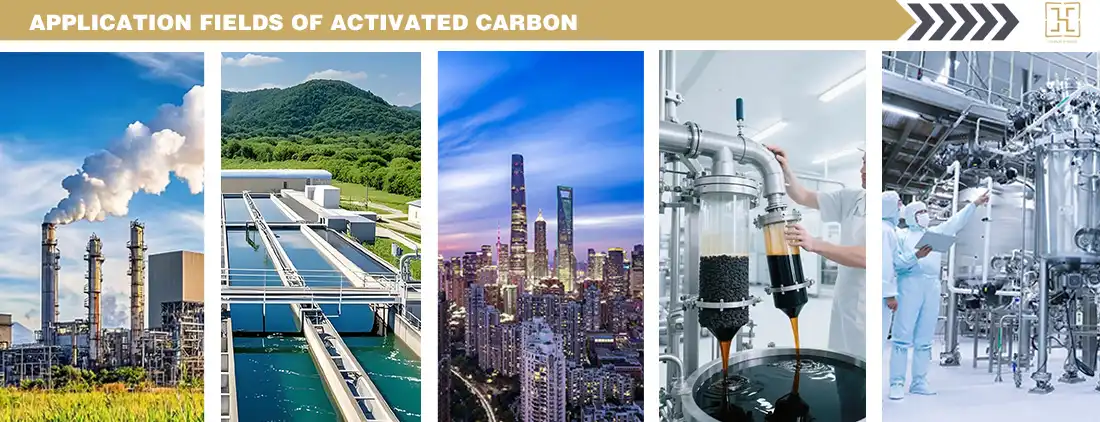
Because it is strong, this 4*8 mesh coal briquette crushing activated carbon material can be used for a wide range of industrial filtration tasks, from processing petrochemicals to making sure cities follow environmental laws.
This carbon is used in deep-bed adsorbers in industrial VOC reduction systems to catch benzene, toluene, xylene, and other volatile organic compounds before they can be released into the air. Chemical processing plants use fixed-bed systems filled with this material to collect expensive liquids from air streams. These systems work well because the material can be used over and over again without breaking down. This carbon is used by painting, printing, and electronics factories to keep the air quality high while reducing pressure drops that would require bigger ventilation equipment otherwise.
Sometimes, municipal water treatment plants use activated carbon with a larger mesh size in the pre-treatment stages when fast flow processing is needed before the finer filtration steps. Industrial wastewater treatment plants that deal with large amounts of effluent find that this granulation works well with water to get rid of dissolved organics and color compounds.
Manufacturers of respiratory protection put this carbon into industrial-grade gas mask cases. Consistent particle sizing makes sure that breakthrough curves are predictable and that service life estimates are accurate. The material is good for protecting workers in dangerous places where broken equipment can cause serious health problems because it has a high CTC rating and is mechanically durable.
Procurement Strategy for Industrial Buyers
Directors of the supply chain and buying managers have a lot of problems to solve when they need to find filtering media that meet performance standards, keep operations running, and stay within budget.
Manufacturers with ISO 9001, ISO 14001, and ISO 45001 certifications show a commitment to quality control, environmental duty, and worker safety. This should be a top priority when evaluating vendors. These certifications make sure that production methods stay consistent and can be tracked, which is very important for industries that are controlled. Technical documents like performance test reports, certificates of analysis, and material safety data sheets should be standard items, not things that people have to ask for.
Reliable suppliers keep a large stock of different sizes of core mesh, which lets them quickly fill urgent orders without changing the product specifications. Companies with more than one production base can offer competitive logistics solutions and lessen the effects of regional supply problems. Knowing the difference between standard and customized order lead times helps procurement teams plan when to restock so that they don't run out of stock during important repair windows for filtering systems.
Prices for large industrial purchases are usually based on commitments to buy a certain amount and how often the goods will be delivered. By making framework supply agreements with reliable manufacturers, you can get better prices and make sure that your products get to the right people first when demand is high. To get an accurate picture of the total cost of different suppliers, you should ask for detailed quotes that break down the costs of materials, shipping, and packaging.
Comparing Alternative Mesh Sizes and Material Forms
Even though 4*8 mesh coal briquette crushing activated carbon works great in some situations, it's important to know when other specs are better so that you can build the best system possible.
Smaller mesh sizes, like 830 or 1240, have more external surface area per unit volume. This makes them better for situations where maximum contamination contact is needed in small bed layouts. These finer granulations are usually used in water treatment systems that handle public drinking water because they allow for less pressure drop and require a lot of surface contact to get rid of taste, odor, and chlorine.
Pelletized activated carbon has a cylindrical shape that can help make the bed packing more even in some vessel designs. However, pellets usually have less mechanical strength than briquetted materials. This means that they are more likely to break when being handled or regenerated. Powdered activated carbon can be used in certain situations where fast reactions are needed, but it can't be used in fixed-bed filter systems because of hydraulic restrictions.
The final choice depends on the flow needs of the system, the type of contaminants that are wanted, the available pressure budget, and operational constraints such as the ability to regenerate and the frequency of replacement. When switching between standards, engineering teams should do pilot tests to make sure that their performance assumptions are correct before committing to full-scale implementation.
Real-World Performance in Industrial Environments
Case studies from environmental engineering contractors show that this carbon material makes a difference when used in harsh industrial settings.
A petroleum plant that manages solvent recovery from process gas streams said that the new carbon media had a 40% longer service life than the old ones. They said this was because the new media was more durable and had better pore structure. The operation successfully put in place heat regeneration routines that made the carbon last longer, allowing it to be used five times before it needed to be replaced.
A company that makes industrial coatings was having trouble with their VOC control system losing too much pressure, so they added this larger mesh material to their adsorber vessels. After the installation, tracking showed that the fans used 35% less energy while still meeting regulation standards for emission levels. This shows that the 4*8 mesh specification improves flow efficiency.
Municipalities that treat high-turbidity source water said that the hydraulic performance in roughing filters was better because the carbon did two things: it removed organics and supported the media. The mechanical strength stopped particles from breaking down, which used to mean that media had to be replaced often during rough backwash cycles.
Conclusion
Activated carbon materials that offer uniform performance, mechanical resilience, and operating efficiency over long service periods are needed in industrial filtration systems. Through manufacturing processes that produce uniform pore structures, exceptional hardness, and optimized particle sizing for high-flow applications, the 4*8 mesh coal briquette crushing activated carbon satisfies these requirements. It is the best choice for environmental engineering companies, petrochemical processors, and industrial makers who need to meet strict emission control standards because it is good at gas-phase adsorption, heat regeneration tolerance, and low-pressure-drop operation. When you buy things, choosing high-quality materials from approved makers with strong technical support can help your system work better and save you money overall.
FAQ
Why choose briquette crushed carbon over directly crushed coal carbon?
When you crush briquettes, the pores are spread out evenly, and the mechanical strength is much higher than when you crush things directly. The binding and compression process gets rid of the structural flaws that are common in raw coal. This cuts down on dust production and increases the equipment's useful life. This way of making carbon gives it predictable performance traits that are important for engineered filtration systems that can't be compromised on dependability.
How does the 4*8 mesh size affect system pressure drop?
This standard for large granules makes it easier for fluids to run through the carbon bed, which makes it perfect for high-speed systems that need to save energy as much as possible. When the mesh sizes get smaller, the packing gets tighter, and the surface drag goes up. To keep target flow rates, stronger pumps or blowers are needed. The 4*8 mesh is the best combination of adsorption efficiency and hydraulic performance.
Can this activated carbon be thermally reactivated?
The briquetting method gives this material its extreme hardness and density, which makes it perfect for many heat regeneration cycles. Controlled heating can bring back the adsorption capacity by releasing contaminants without breaking down the particles' structure. Compared to single-use carbon products, this ability to regenerate cuts the total cost of ownership by a large amount.
What is the typical shelf life when properly stored?
This 4*8 mesh coal briquette crushing activated carbon will keep its ability to absorb things for three to five years if it is kept in sealed cases in cool, dry places away from things that can break down materials. When things are stored correctly, they don't get too wet from the air or toxic chemicals that would otherwise lower the amount of space that can be used. Long shelf stability lets facilities keep strategic supplies without worrying about performance loss.
Partner With Shanxi Xinhua Carbon Technology Industry Co., Ltd. for Superior Filtration Solutions
Shanxi Xinhua Carbon Technology Industry Co., Ltd. has been working with activated carbon for more than 60 years and helps businesses that need reliable, high-performance filtration media. As a top producer of 4*8 mesh coal briquette crushing activated carbon, we keep a large inventory across various production bases. This allows us to guarantee delivery within 7–15 days for normal specs and fast 3-day service for compliance projects. Our ISO 9001, ISO 14001, and ISO 45001 certifications make sure that our quality management is always in line with foreign norms. We work closely with research institutions like Tsinghua University and the Chinese Academy of Sciences to improve carbon material technology. We do this by custom-optimizing the pore structure, testing the performance, and giving you expert help throughout the whole procurement process. Get in touch with our team at greta@carbonxinhua.com to talk about your specific filtration needs and get a detailed technical proposal with competitive bulk pricing. Visit xhcarbontech.com to see all of our products and get access to a lot of technical information that will help you make smart decisions about specifications.
References
1. Activated Carbon: Surface Chemistry and Adsorption from Solution, Advances in Environmental Science and Technology Series, Volume 34, 2006.
2. Bansal, R.C., Goyal, M., "Activated Carbon Adsorption for Water and Wastewater Treatment," CRC Press, 2005.
3. Marsh, H., Rodriguez-Reinoso, F., "Activated Carbon: Properties and Applications," Elsevier Science Publishing, 2006.
4. Hassler, J.W., "Activated Carbon: Manufacturing and Regeneration," Chemical Publishing Company, 1963.
5. Derbyshire, F., Jagtoyen, M., "Activated Carbons from Coal Precursors: Production and Application," Energy & Fuels Journal, Vol. 8, 1994.
6. Mattson, J.S., Mark Jr., H.B., "Activated Carbon: Surface Chemistry and Adsorption from Solution," Marcel Dekker Publishing, 1971.

Send Inquiry
You may like
_1781662034490.webp)