_1778553121707.webp)
Why Is 200-Mesh Wood Powder Charcoal Ideal for Sugar Decolorization?
Sep 14, 2026
When sugar refiners face stubborn color bodies, caramel compounds, and colloidal impurities in their production lines, the choice of decolorizing agent determines both yield and product quality. 200-mesh wood powder charcoal delivers the answer. Its ultra-fine particle structure, derived from precision-carbonized and steam-activated hardwood, creates an enormous accessible surface area that adsorbs pigments and organic impurities on contact. With an iodine adsorption value ≥950 mg/g and adsorption equilibrium reached within 30 minutes, this wood-based powdered carbon outperforms coarser alternatives in both speed and depth of decolorization—making it the preferred choice for industrial sugar refining operations globally.
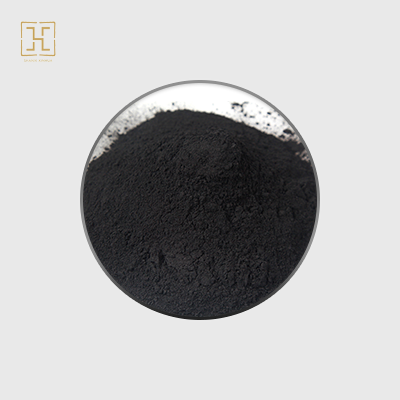
Understanding 200-Mesh Wood Powder Charcoal and Its Properties
What Makes the 200-Mesh Grade Technically Distinct
This substance is made from high-quality hardwood in three steps: precise carbonization, high-temperature steam activation, and ultra-fine grinding down to a 200-mesh particle size, with at least 90% of the particles passing through a 0.074 mm sieve aperture. This makes a black powder that is uniformly fine and has a well-developed pore network that is full of mesopores and macropores. It targets large molecular weight color bodies that are common in sugar liquors. Powdered carbon made from coal is better at adsorbing small molecules in the gas phase, but carbon made from wood is much better at capturing the high-molecular-weight chromophores and polyphenolic compounds that change the color of sugar. Its pH range of 5.0 to 7.0 also stops catalytic sugar inversion, which is an important safety measure for protecting refining yield.
Core Technical Specifications at a Glance
The performance profile of this ultra-fine activated carbon is defined by measurable, verifiable parameters:
- Iodine Adsorption Value: ≥950 mg/g — shows that there are a lot of micropores available to collect impurities.
- Methylene Blue Adsorption: ≥200 mg/g — shows that the mesopores can hold a lot of large chromophore molecules.
- Ash Content: ≤4% — should be less than 4% so that there isn't too much inorganic residue that could get into the refined sugar syrup or blind filter presses further downstream.
- Moisture Content: ≤8% — for stable handling and accurate dosing in continuous production, the moisture content must be less than 8%.
- Heavy Metals: Compliant — levels of Pb, As, and Hg stay within internationally recognized safety limits for food contact, supporting food safety certifications that are in line with GFSI.
- Adsorption Equilibrium: Within 30 minutes — two to three times faster than many other activated carbon powders. This directly cuts down on the contact time needed and boosts throughput.
Shanxi Xinhua Carbon Technology Industry Co., Ltd. has been developing defense-grade quality control procedures and production discipline for decades, which are reflected in the consistent quality of its 200-mesh wood powder charcoal and other carbon products.
Why 200-Mesh Wood Powder Charcoal Excels in Sugar Decolorization
The speed of binding in liquid-phase cleaning is controlled by the particle size. At 200 mesh, the powder has a much larger external surface area per unit volume than 100-mesh grades or solid forms. This means that it can come into contact with color bodies almost instantly in sugar solutions with a high viscosity. This faster contact lowers the chance of color reversion, which can happen when chromophoric chemicals are processed for long periods of time in refineries.
The macropore and mesopore structure of carbon derived from wood is similar to the molecular sizes of common sugar colorants, such as caramels, melanoidins, and phenolic oxidation products. Because of this, a lower effective dosage is needed to achieve the same decolorization goal compared to alternatives derived from minerals or coal. This directly improves the cost-per-unit-of-color-removal metric that procurement engineers use to measure performance.
Another important factor is good dispersibility. This powder mixes evenly with the liquid phase and doesn't clump or layer. This means that complicated pre-treatment slurry equipment isn't needed, and less energy is used for mixing. The fact that the material comes from renewable hardwood biomass also supports the ESG reporting rules that global sugar companies are using more and more in their ingredient supply chains.
Quality Assessment and Testing of This Powdered Carbon
Key Quality Parameters Specific to Sugar Refining
When sugar-grade powdered carbon comes in, it is carefully inspected based on five factors that have a direct effect on how the process works. Spectrophotometry measures the rate at which the caramel loses its color. This shows that the pigment is being removed effectively under conditions that are typical for the process. A lot of care is taken with the iron content (Fe) because reactions between iron and tannins can make the final syrup darker even after carbon treatment. Filtration rate (seconds per 100 mL) shows that the carbon won't block rotating vacuum filters or leaf filter systems, which keeps the factory running smoothly. Polycyclic aromatic hydrocarbon (PAH) levels are checked against food safety standards recognized by the GFSI to make sure they don't get into the finished product. Repeatable performance is achieved when the mesh is uniform across all production batches.
The China Quality System Certification Center has given Shanxi Xinhua Carbon Technology ISO 9001, ISO 14001, and ISO 45001 certifications. The company also has a hygiene license for products that keep drinking water safe, including 200-mesh wood powder charcoal. These certificates give foreign procurement teams that do supplier qualification audits a way to check that they are following the rules.
Procurement Considerations for B2B Clients
When buying 200-mesh wood powder charcoal for decolorizing sugar on an industrial scale, purchasing managers look at suppliers on a number of dimensions that are all connected to each other. The bare minimum for qualifying a supplier is technical paperwork, such as third-party test results, safety data sheets, and food-grade compliance certificates. It's also important that the material has a stable shelf life. If you put it in sealed packages in a cool, dry place, it will keep working well for two to three years, which helps with strategic inventory management without losing any quality.
Here are the practical supply factors that set a trustworthy 200-mesh wood powder charcoal maker apart from other options:
- Production Scale and Inventory Depth: Shanxi Xinhua has production bases in Shanxi, Ningxia, Fujian, and Xinjiang. Together, these bases produce 45,000 tons of goods every year and keep 100% of core product grades in stock, so there is no risk of supply interruption for large framework contracts.
- Delivery Speed: Regular orders are sent out within 7–15 days; for pressing orders that need to be delivered quickly, there is a special route that can be used, and delivery can happen within 3 days.
- Customization Capability: The particle size distribution, pore structure, surface chemistry (including changing the pH to meet process needs), and packaging format can all be changed to exactly match refinery requirements. Both OEM and private-label arrangements can be made.
- Global Logistics Infrastructure: Sea, air, and train transport, real-time package tracking, and full customs clearance support help buyers from North America, Europe, and other places.
For big sugar businesses, these skills directly mean lower procurement risk, lower total cost of ownership, and the ability to keep supplies going. When buyers work with technical sales teams early on, they can use Standard Method 2510 as a guide to test jars to confirm dosage rates and performance before signing a framework agreement.
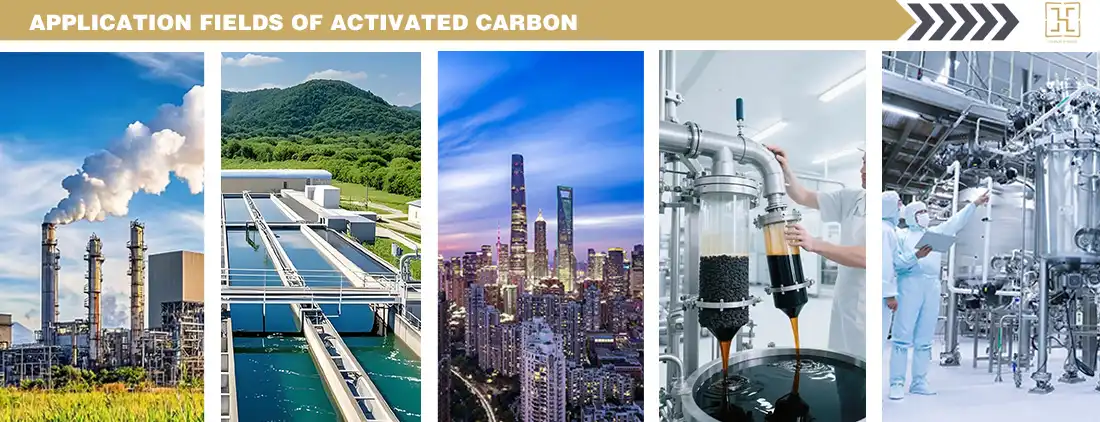
Application Scenarios in Sugar Decolorization and Beyond
When industrial factories that handle raw cane sugar, beet sugar, and high-fructose corn syrup switched from coarser or coal-derived grades to 200-mesh wood powder charcoal, they were able to measurably improve how well they removed colors. Besides sugar, the same substance is used for pharmaceutical intermediate purification, high-end juice and beverage clarification, black liquor mid-stage treatment in papermaking, and advanced dyeing wastewater deep decolorization. In all of these settings, it is necessary to remove large molecules of impurities while adhering to strict purity guidelines. This usefulness across industries shows the variety of pores that hardwood-derived activated carbon provides. It makes the material a core asset for purification rather than a one-use consumable.
Conclusion
FAQ
Does 200-mesh wood powder charcoal work for all sugar types?
It performs effectively across raw cane sugar, refined beet sugar, and liquid sugar syrups. The mesopore-dominant structure targets the chromophoric compounds that are present in all of these substrates. However, the best dose depends on the amount of color coming in and should be found through a jar test protocol.
How does particle size affect adsorption efficiency in sugar liquors?
Smaller particles have more surface area per unit volume, which speeds up the contact process with dissolved color bodies. At 200 mesh, adsorption equilibrium is reached in 30 minutes, which is much faster than at 100 mesh or coarse grades. This cuts down on the time needed for touch and speeds up the process.
What certifications should procurement teams verify?
Check ISO 9001 for quality management, food-grade compliance (PAH and heavy metal limits that are in line with GFSI standards), and the right regional documentation for food safety. All three ISO management system standards are held by Shanxi Xinhua Carbon Technology.
Can the pH be adjusted for specific refinery processes?
Yes. During production, the surface chemistry, which includes the pH profile, can be changed to meet the needs of the process. This stops the sucrose from inverting during treatment.
Is regeneration feasible for powdered grades?
Technically, thermal revival is possible, but for powder grades, it's not cost-effective because a lot of material is lost during recovery. This material is meant to be used only once in ongoing polishing processes.
Partner With Shanxi Xinhua Carbon Technology for Your Sugar Refining Needs
Shanxi Xinhua Carbon Technology Industry Co., Ltd. is a reliable company that sells 200-mesh wood powder charcoal. They have been making activated carbon for more than 60 years, have four production sites across the country, and have quality systems that are ISO-certified. Our team helps with buying in bulk, making unique specs, and fast shipping around the world. Get in touch with us at greta@carbonxinhua.com or visit xhcarbontech.com to get technical data sheets, samples, or a reasonable bulk quote that fits the decolorization needs of your plant.
References
1. Activated Carbon: Fundamentals and New Applications — Chemical Engineering Progress, American Institute of Chemical Engineers, 2018.
2. Adsorption Technology in Water Treatment: Fundamentals, Processes, and Modeling — De Gruyter, 2012.
3. Sugar Technology: Beet and Cane Sugar Manufacture — Bartens, 1998.
4. Powdered Activated Carbon for Sugar Decolorization: Pore Structure and Performance Relationships — International Sugar Journal, 2017.
5. Food-Grade Activated Carbon: Safety Assessment and Regulatory Compliance — Food and Chemical Toxicology, Elsevier, 2020.
6. ISO 9001:2015 Quality Management Systems — Requirements — International Organization for Standardization, 2015.

Send Inquiry
You may like
_1781662034490.webp)