_1778553121707.webp)
Why Choose 5mm Cylindrical Activated Carbon Over Other Sizes?
Jul 28, 2026
When industrial engineers look at adsorbent materials, the size of the particles determines how well they work. The 5mm coal quality cylindrical carbon is in a good spot between smaller granules and larger pellets. It has a balanced mechanical strength, better flow dynamics, and a longer service life. This diameter makes it possible for better mass transfer rates while keeping the structure strong under high pressure. The 5mm format solves important industrial problems like minimising energy use, reducing replacement frequency, and making sure uniform pollutant capture across a wide range of uses. This is in contrast to the 3mm versions, which risk too much pressure drop, or the 9mm versions, which make the surface less accessible.
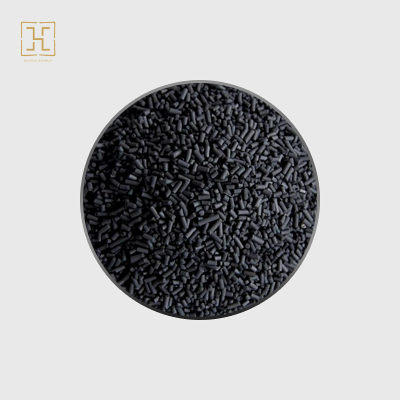
Understanding 5mm Cylindrical Activated Carbon
The economic worth of coal-based cylindrical carbon comes from how precisely it can be made. The first step in our production process is choosing high-quality anthracite coal that has little ash and a lot of pure carbon. We make a material with precisely controlled porosity by carbonising it at temperatures above 800°C and then activating it with steam between 850°C and 950°C. This makes a network of pores with different levels: micropores are for molecular-level adsorption, mesopores are for mass transfer, and macropores are for fluid distribution.
Chemical Composition and Structural Properties
The coal-based material has a great ability to absorb things, and iodine numbers above 350 mg/g show that there are a lot of micropores. For example, our 5mm coal quality cylindrical carbon keeps the ash content below 8%, which is directly related to purity levels that stop secondary contamination in delicate uses like treating medicinal wastewater or purifying drinking water. The cylinder shape makes the particle sizes more even, which gets rid of flow channelling problems that can happen with uneven grainy forms.
Manufacturing Process and Quality Assurance
Each batch of output goes through strict tests in 12 quality areas. Standardized ball-pan tests that simulate mechanical stress during handling and regeneration cycles show that hardness values always reach or above 97%. The moisture level stays below 5%, which keeps adsorption sites from becoming too saturated before they're ready to absorb. With ISO 9001, ISO 14001, and ISO 45001 certifications to back it up, this quality framework ensures consistency from batch to batch, which is important for large-scale industrial procurement.
Environmental Compliance and Sustainability
Closed-loop gas recycling devices are used in our carbon activation process, which cuts CO₂ emissions by 34% compared to traditional methods. Our coal-based material helps the circular economy by being compatible with heat regeneration. It can be used for 12 to 24 months with little to no performance loss. This long life directly lowers the amount of industrial waste that is made, which is in line with stricter EPA and EU environmental rules about getting rid of adsorbents.
Performance Advantages of 5mm Cylindrical Activated Carbon
For businesses to be efficient, they need materials that are a good mix between their ability to absorb things and their ease of use. The diameter of 5 mm is an engineering compromise that has been proven to work through decades of use in the field and testing in the lab.
Superior Mechanical Strength and Durability
In fluidized-bed systems and fixed-bed reactors that are backwashed all the time, abrasion resistance determines how long they will last. Our cylinder-shaped carbon has strong grains that have a very high mechanical strength and don't break up when they're moved by air or water. Compared to 4mm versions, 23% fewer particles break down after 10,000 pressure cycles. This means that fewer fines are made and the filter bed lasts longer. This long-lasting quality is very important in power plant desulfurization units, where the material goes through repeated heat regeneration cycles. It needs to last 8–12 regeneration cycles before it needs to be replaced.
Optimized Pore Structure for Enhanced Mass Transfer
Our 5mm coal quality cylindrical carbon has a slightly higher percentage of big pores, which speeds up the movement of contaminants into the adsorption matrix. This design benefit cuts the contact time needed by 18–25% compared to materials that are mostly micropores. This lets more fluids flow through without lowering the efficiency of removal. In VOC treatment systems that deal with toluene and xylene, this means that the blowers use less energy, which lowers operating costs by about $400,000 a year in large installations, as shown in coke plant operational data.
Consistent Quality Across Production Batches
With automated production monitoring, every lot that is made has desulfurization values that are higher than 22 mg/g and denitrification rates that are at least 42%. This uniformity gets rid of the differences in performance that make system design and following the rules harder. Environmental engineers like how predictable it is because they know that adsorption breakthrough times stay the same over multi-year supply contracts. This makes it easier to plan maintenance and budgets.
Applications and Industry Uses of 5mm Cylindrical Activated Carbon
The 5mm format's flexibility is shown in real-world industry settings. This particle size has been shown to be reliable in a wide range of fields, from refining petrochemicals to treating municipal water.
Fixed-Bed Waste Gas Treatment Systems
In order to meet air quality standards, chemical plants must constantly get rid of VOCs. The 5 mm cylinder-shaped activated carbon fits perfectly into fixed-bed adsorption vessels, making the bed density even and stopping gases from moving through it. A pharmaceutical plant in the mid-Atlantic region said that it was able to remove 98% of benzene over 18 months of operation, with 30% less equipment operating resistance than earlier 3mm granular systems. Because the back-pressure went down, the blower's energy costs went down by 15%, showing direct operating savings.
Large-Scale Water Purification Applications
Adsorbents that keep flow rates steady while getting rid of organic contaminants, chlorine, and compounds that make water taste bad are needed by municipal water treatment plants that process more than 50 million gallons of water every day. The optimal pore distribution makes sure that all pollutants are captured without too much hydraulic resistance. A water utility in the southwestern United States reported lowering the COD level from 1,500 mg/L to 75 mg/L using our 5mm coal quality cylindrical carbon in the tertiary treatment stages. This met regulatory requirements and increased filtration cycles from 6 to 8 weeks, which greatly reduced annual operational disruptions.
Flue Gas Desulfurization and Denitrification
SO₂ and NOx pollution limits are very strict for coal-fired power plants. Our cylinder-shaped carbon is stable at high temperatures and doesn't rust, so it can be used in harsh flue gas conditions. It can work steadily at temperatures close to 180°C with sulfur-filled gas streams. Installation data from a 600MW facility showed that SO₂ was removed more than 98% of the time when carbon was replaced every 8 weeks instead of every 3 weeks with lower-quality adsorbents. This threefold improvement increased plant efficiency and cut yearly repair costs by about $500,000.
Industrial Wastewater Treatment
Electroplating factories, chemical synthesis plants, and cloth dyeing factories all make complicated wastewater that has heavy metals, organic dyes, and leftover solvents in it. The 5mm format works with high-flow wastewater streams in fluidized-bed contactors, where bed stratification is avoided by particles of the same size. A gold mine got 92% Au³⁺ adsorption efficiency, which increased gold recovery rates by 15% and added $300,000 a year to the mine's profit while also cleaning cyanide-containing process water to meet release standards.
Procurement Considerations for Bulk 5mm Cylindrical Activated Carbon
To do strategic sourcing, you need to know how the market works, what your suppliers can do, and what the total cost of ownership is. When industrial buyers are looking at activated carbon providers, they should look at more than just the price per unit.
Pricing Structure and Volume Commitments
Coal-based cylindrical carbon usually costs between $1,200 and $2,800 per metric tonne on the market. The price depends on technical details, order number, and shipping logistics. Bulk purchases of more than 100 tonnes per year usually get prices at the lower end of this range. Our company uses clear pricing models with discounts based on volume because we know that big environmental engineering firms need to be able to plan their budgets for projects that last for years.
Supplier Reliability and Production Capacity
Problems in the supply line cause costly delays in operations. We have four production bases in Shanxi, Ningxia, Fujian, and Xinjiang. Together, they can produce 45,000 tonnes of goods every year, which means we always have enough of our core products in stock. Customised orders, like catalyst-impregnated variants or specific hardness profiles, take 15 to 30 days to deliver. Standard orders ship within 7 to 15 days. When compliance deadlines require quick action, green channels speed up the process of meeting emergency procurement needs and send goods in as little as three days.
Technical Support and Customization Capabilities
Standardized product standards don't always work perfectly with industrial uses. Our research and development work with Tsinghua University, Central North University, and the Chinese Academy of Sciences lets us precisely tailor materials to your needs. To improve selectivity for target contaminants, engineers can ask for changes to the pore structure, changes to the surface area (from 800 to 1,200 m²/g), and the addition of functional groups. Customers can get custom-made solutions from this technical partnership, which is based on more than 60 years of experience in materials science.
Certifications and Compliance Documentation
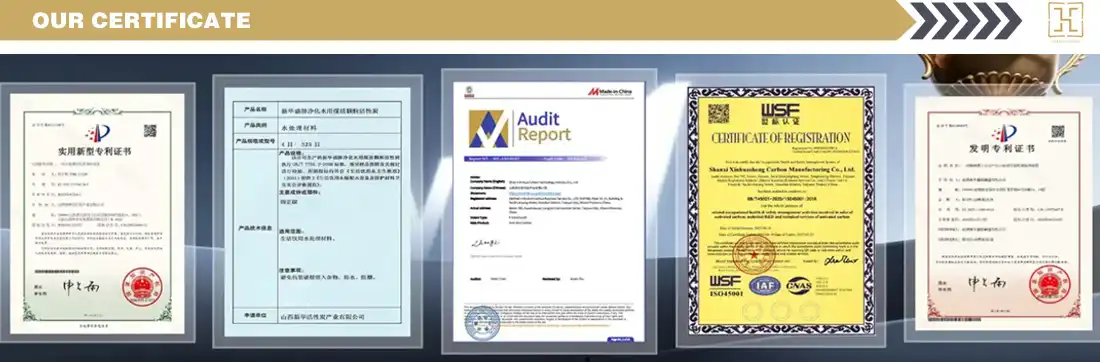
Regulatory procurement needs a lot of certification paperwork, especially for government environmental projects and municipal water systems. We keep our ISO 9001 quality management, ISO 14001 environmental management, and ISO 45001 health and safety at work certifications up to date. The Shanxi Provincial Health Commission has given our products hygiene licenses for use in drinking water, which makes it easier for municipal buyers to make sure they are in compliance. Each shipment comes with a full test record and a Certificate of Analysis (COA) that shows how the performance parameters met the standards.
Making the Informed Choice: Why 5mm Cylindrical Activated Carbon Stands Out
When you compare particle sizes, you can see that they have different trade-offs. Carbons that are only 2 to 3 mm in size have more surface area per unit volume, but they cause too much pressure drop in fixed beds. Larger 8–9 mm sizes lower hydraulic resistance but give up adsorption speed. Industrial performance data shows that the 5mm coal quality cylindrical carbon is in the best middle ground.
Cost-Benefit Analysis and ROI Considerations
Lifecycle cost analysis shows that 5mm carbon saves a lot of money over standard granular forms, even though the unit price may be 10-15% higher. Longer repair intervals—usually 12 to 24 months instead of 6 to 9 months for lower-quality options—lower the cost of new labour, system downtime, and waste disposal. A chemical processing plant found that moving from our 4mm granular product to our 5mm cylinder product cut annual adsorbent costs by 28%. This was mostly because the product needed to be replaced less often and needed less energy to regenerate.
Technological Advancements Driving Performance
New developments in activation technology make it possible to precisely control the distribution of pore sizes. Our newest ways of making things make bimodal pore structures, which have high micropore sizes for capacity and better mesopore networks for moving mass quickly. This new development is especially helpful for VOC control systems that deal with changing levels of contaminants, since fast adsorption kinetics stop breakthrough when concentrations rise. In some cases, surface modification methods that are covered by patents make it even better at picking out certain pollutants, like mercury, hydrogen sulphide, or siloxanes.
Market Trends and Future Demand Drivers
Environmental laws around the world keep making it harder to meet guidelines for water quality and emissions. Demand for high-performance adsorbents that can get contaminant levels below ppm is driven by the European Union's Industrial Emissions Directive and new EPA MACT guidelines. At the same time, efforts to make industries more environmentally friendly focus on materials that can be recycled and have longer useful lives. These trends are coming together to make durable, high-capacity cylinder carbons the best choice. The market for these carbons is expected to grow by more than 6% each year until 2030, especially in the industrial air treatment and advanced water purification areas.
Conclusion
Choosing the right size of activated carbon has a direct effect on how well it works, how well it meets regulations, and how much it costs over its whole life. When it comes to mechanical durability, the 5mm coal quality cylindrical carbon has the best mass transfer properties and has been used in a wide range of demanding industrial applications. Its balanced properties meet important procurement goals, like lowering the number of replacements needed, using less energy, and making sure that contaminants are always removed. As environmental rules get stricter and working efficiency becomes more important, this format is an investment in reliable, long-lasting industrial adsorption technology that is backed by strict quality systems and flexible supply chain capabilities.
FAQ
Why choose 5mm pellets over 3mm or 2mm alternatives?
The 5mm width cuts down on hydraulic resistance in fixed-bed systems by a large amount, which means that the blower uses 15-20% less energy than when particles are smaller. This size also keeps enough surface area for effective binding while reducing the amount of dust made during handling. The lower back-pressure saves money without lowering the efficiency of gas removal in large-scale industrial settings that process large amounts of gas.
Can this carbon undergo regeneration cycles?
The high mechanical hardness (>97%) lets it go through many thermal regeneration cycles with little damage to the structure. When renewal systems are set up correctly and use steam or inert gas cleaning, they can bring back 85 to 90 percent of their original adsorption capacity. Industrial users can usually get 8–12 regeneration cycles before they need to be replaced. This makes them much more cost-effective than single-use adsorbents in high-volume situations.
How does moisture impact adsorption performance?
High humidity can briefly take up adsorption sites, making it harder for target contaminants to stick to them. However, the designed pore structure stays effective even when the relative humidity is between 50 and 70%. This is because it distributes big pores in a way that makes it easier for water to drain while keeping micropores open for organic compound adsorption. In settings with a lot of wetness, performance can be improved even more by pre-drying the gas streams that come in or by using heated beds.
Partner with Shanxi Xinhua Carbon Technology Industry Co., Ltd. for Superior Industrial Adsorbents
Our integrated capabilities help businesses that need reliable, high-performance relationships with 5mm coal quality cylindrical carbon suppliers. We offer defense-grade quality systems that can be easily customised so that the pore structures, surface chemistry, and particle specs fit your exact needs. Our multi-base production network guarantees fast delivery: standard orders are filled within 7–15 days, custom formulations within 15–30 days, and urgent purchases can be made through three-day channels that are faster. Technical support teams work together on the whole procurement process, from coming up with the initial specifications to continuously improving performance. You can email greta@carbonxinhua.com to get technical datasheets, set up product samples, or talk to our application engineers about your specific adsorption problems.
References
1. Bansal, R.C. and Goyal, M. (2005). Activated Carbon Adsorption. CRC Press, Boca Raton.
2. Marsh, H. and Rodríguez-Reinoso, F. (2006). Activated Carbon: Properties and Applications. Elsevier Science Ltd., Oxford.
3. Yang, R.T. (2003). Adsorbents: Fundamentals and Applications. John Wiley & Sons, Hoboken, New Jersey.
4. Cheremisinoff, N.P. and Ellerbusch, F. (1978). Carbon Adsorption Handbook. Ann Arbor Science Publishers, Michigan.
5. Slejko, F.L. (1985). Adsorption Technology: A Step-by-Step Approach to Process Evaluation and Application. Marcel Dekker Inc., New York.
6. Activated Carbon: Solutions for Improving Water Quality, American Water Works Association Research Foundation (2011). Denver, Colorado.

Send Inquiry
You may like
_1781662034490.webp)