_1778553121707.webp)
Where to Buy Bulk 4×8 Mesh Coal Activated Carbon?
Jul 22, 2026
Procurement managers and environmental engineers often ask, "Where can we reliably buy bulk quantities of 4×8 mesh coal-activated carbon?" when they are looking for high-performance filtration materials for industrial uses. The answer is to work with specialised producers who can provide technical know-how, output capacity, and a reliable supply chain. Shanxi Xinhua Carbon Technology Industry Co., Ltd. is a technology-based company that has been researching and developing activated carbon materials for more than 60 years. They offer 4*8 mesh coal briquette crushing activated carbon, which is a high-quality filter medium designed for difficult gas-phase tasks like removing VOCs, recovering solvents, and cleaning up industrial exhaust. This article walks you through the most important things you need to think about when buying in bulk, evaluating suppliers, and making technical specifications to make sure your investment works well and meets all the requirements.
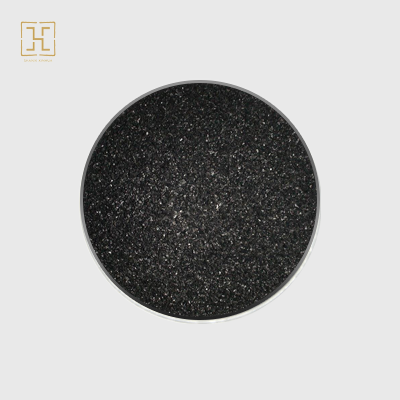
Understanding 4×8 Mesh Coal Activated Carbon and Its Importance
What Defines 4×8 Mesh Coal Briquette Crushing Activated Carbon?
"48 mesh" means particles that are between 2.36 mm and 4.75 mm in size. This is made possible by a special production process. Different from regular crushed coal carbon, 48 mesh coal briquette crushing activated carbon is made by turning high-quality bituminous coal into a fine powder, mixing it with a special binder, and pressing it into balls under high pressure before carbonisation and steam activation. After the briquettes are made, they are crushed and screened to the exact 4*8 mesh size. This "briquette crushing" method fixes important problems in the industry, like uneven hole distribution, too much dust production, and not enough mechanical strength. The end result is a filtering medium with regular pores, better adsorption rates, and longer longevity.
Key Physical and Chemical Properties
This material's technical description includes the fact that it is very stable chemically and physically. According to ASTM D3802 guidelines, typical requirements include an iodine value between 900 and 1100 mg/g, a Carbon Tetrachloride (CTC) binding rate between 50% and 70%, and a hardness level above 95%. The high bulk density (usually 450 to 550 g/L) and optimised macropore-to-micropore ratio make it easy for large molecules to diffuse quickly, which makes it especially useful for systems with a high flow rate. Chemically, it keeps a pH of normal to slightly alkaline and an ash level of less than 12%, which means it doesn't add any impurities to the streams it treats. The 4*8 size is just right for adsorption because it has a high volume and works well with gas flow, so there is little pressure drop and a lot of contact time.
Why the 4×8 Mesh Size Matters for Activation Efficiency?
Choosing the right mesh size has a direct effect on how well the system works and how much it costs to run. The 4*8 mesh classification is a "large granule" standard that is made to reduce wind resistance as much as possible. This is very important in high-velocity pollution treatment systems where energy efficiency determines the total cost of ownership. This granular range lowers pressure drop by up to 30% compared to finer mesh sizes. This means that fans use less power and need to be serviced less often. The uniform particle size ensures that the bed depth stays the same and that breakthrough times are always the same. This makes it easier to plan maintenance and keeps the filter from wearing out too quickly.
Where to Buy Bulk 4×8 Mesh Coal Activated Carbon: Key Channels and Trusted Suppliers?
Direct Manufacturer Sourcing: The Optimal Path for B2B Buyers
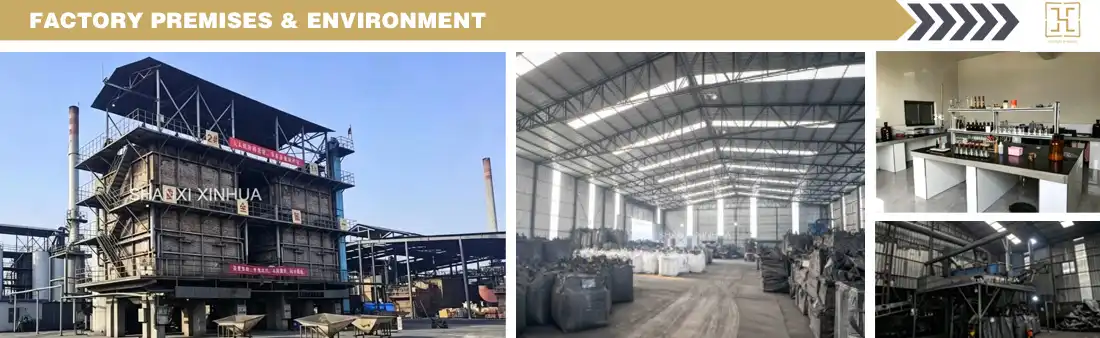
The most reliable way to get large amounts of something is to buy it directly from the manufacturer, and for 4*8 mesh coal briquette crushing activated carbon, this direct purchasing model ensures access to consistent quality, competitive pricing, and technical support for pore structure customization, while also providing supply stability through multi-region production facilities. Companies like Shanxi Xinhua Carbon Technology Industry Co., Ltd. have production bases in Shanxi, Ningxia, Fujian, and Xinjiang. Together, these bases make 45,000 tonnes of carbon every year. This network of multiple production bases ensures a steady supply even during times of high demand and gives transportation experts the freedom to choose the best location for each job. Direct buying gets rid of markups on middlemen, gives you access to technical support teams, and lets you change the structure of pores, the area of the surface that is adsorbent, and the components that are absorbed to fit your needs. Manufacturers who have ISO 9001, ISO 14001, or ISO 45001 certifications show that they are dedicated to quality management, environmental duty, and health and safety at work. These are important qualifications for sellers who work with controlled industries.
Evaluating Supplier Credentials and Capabilities
When looking at possible providers, buying managers should put a number of important factors at the top of their lists. Production capacity and inventory management are very important. Suppliers who keep 100% of their core products in stock can fill standard orders in 7 to 15 days and offer fast "green channel" delivery for urgent needs in as little as three days. A supplier's technical research and development (R&D) strengths show how well they can make special solutions and adapt to changing legal standards. This level of knowledge is shown by the work that Shanxi Xinhua does with Tsinghua University, Central North University, and the Chinese Academy of Sciences. Check the supplier's global operations, such as their ability to offer multiple transport options (sea, air, and train), real-time package tracking, and full customs clearance support for buyers from other countries.
Wholesale and OEM Partnership Opportunities
Setting up long-term framework agreements with suppliers who can do OEM production is good for big environmental engineering firms and equipment makers. Custom branding, recipes that are made just for you, and unique packages are all possible through these relationships. They also make sure that you get bulk savings and priority production schedules. Shanxi Xinhua provides full OEM services, which include changing the structure of the pores, adding loaded catalysts to improve VOC removal, and creating unique product shapes such as powder and honeycomb layouts. These kinds of partnerships make buying easier, make the supply chain more predictable, and let buyers focus on what they do best while relying on manufacturing partners who know what they're doing.
Choosing the Right Crushing Equipment and Process for 4×8 Mesh Coal Briquettes
Types of Crushing Equipment and Their Operational Advantages
Specialised breaking equipment is needed to make uniform 48-mesh coal briquettes. Jaw crushers are great for breaking down bigger coal briquettes for the first time. They can handle a lot of material at once and are built to last for a long time. Hammer mills are used for secondary breaking, and their screen sizes can be changed to give you exact control over how the end particles are distributed. Roller crushers reduce the amount of fines that are made, which is a key benefit for maintaining the 48-mesh specification and lowering the problems that come with handling dust. It is best to use impact crushers for unstable coal products because they have high reduction ratios, but they may make more fines than roller-based systems. To choose the right tools, you have to weigh your production needs, your goals for particle size regularity, and the total cost of ownership, which includes things like energy use and upkeep schedules.
How Pre-Crushing Improves Cost-Efficiency and Product Quality?
There are big economic and technical benefits to pre-crushing coal briquettes before they are activated, and for 4*8 mesh coal briquette crushing activated carbon, this pre-crushing step ensures uniform particle size, which reduces activation time by up to 20% and improves product consistency, while also eliminating oversized particles that cause channelling in adsorption beds and reduce overall bed utilization efficiency. When particles are all the same size, the activation time is cut by up to 20% because steam can spread more evenly through the material bed. This means that less energy is used to make each tonne of activated carbon, and it's easier to predict how good the product is. Pre-crushing also stops the growth of too-big particles that can cause channelling in adsorption beds. This makes sure that the full volume of the carbon bed is used efficiently. This leads to better absorption, longer filter life, and less downtime for operations. These changes have a direct effect on the total cost of ownership for corporate users who run large-scale cleaning systems.
Real-World Case Studies in Optimized Production Workflows
In the US, a petroleum plant recently teamed up with a maker to offer combined breaking and activation services. When the facility switched from using crushed carbon from outside sources to briquette-crushed material with controlled 4*8 mesh distribution, CTC adsorption rates went up by 15%, and pressure drop went down by 25%. This saved more than $40,000 a year on energy costs and pushed carbon replacement rounds from 18 months to 24 months. Case studies like these show how important it is to choose sources that control the whole production chain, from processing the raw materials to making sure the finished product works properly and is of good quality.
Benefits and Uses of 4×8 Mesh Coal Briquettes in Activated Carbon Production
Enhanced Activation Performance Through Consistent Particle Sizing
In the US, a petroleum plant recently teamed up with a maker to offer combined breaking and activation services. When the facility switched from using crushed carbon from outside sources to briquette-crushed material with controlled 4*8 mesh distribution, CTC adsorption rates went up by 15%, and pressure drop went down by 25%. This saved more than $40,000 a year on energy costs and pushed carbon replacement rounds from 18 months to 24 months. Case studies like these show how important it is to choose sources that control the whole production chain, from processing the raw materials to making sure the finished product works properly and is of good quality.
Industrial Applications Across Multiple Sectors
4*8 mesh coal briquette crushing activated carbon can be used in a lot of different industries. It is very good at capturing volatile organic molecules like benzene, toluene, and xylene in VOC removal systems, which meet stricter pollution rules. Chemical processing plants use it to restore solvents, and its structure can survive many heat renewal cycles. This helps them get back expensive liquids while reducing waste. Manufacturers of gas masks and respiratory protection equipment put it in industrial-grade canisters because of its high CTC value and consistent particle size, which makes it reliable for use in dangerous environments. It is used in water treatment plants to control tastes and smells, get rid of chlorine, and lower the amount of organic contaminants. The low ash content keeps secondary contamination from happening.
Here are the core advantages this material brings to industrial operations:
- Superior mechanical strength: Hardness exceeding 95% prevents particle breakdown under high-velocity airflow, maintaining bed integrity throughout extended service intervals.
- Optimized pressure drop characteristics: The 4*8 mesh specification reduces energy consumption in high-flow systems, lowering operational costs while maintaining adsorption efficiency.
- Thermal reactivation capability: High-density structure enables multiple regeneration cycles, reducing the total cost of ownership by 40% to 60% compared to disposable alternatives.
- Minimal dust generation: The briquette crushing process eliminates fine particles that compromise air quality and create handling difficulties in industrial environments.
All of these benefits make it possible for environmental engineering companies to complete projects that meet government standards and give their clients the best long-term operating costs.
Environmental and Economic Sustainability Considerations
Sustainable sourcing practices are now an important part of how companies buy things, and for 4*8 mesh coal briquette crushing activated carbon, this means evaluating suppliers on their use of closed-loop water systems, waste heat recovery, and particle pollution controls, as well as the reactivation potential of the carbon, which reduces landfill waste and extends service life. Companies that make activated carbon and care about the environment use closed-loop water systems, waste heat recovery, and particle pollution controls all the way through the production process. The ability to heat revive 4*8 mesh briquette-crushed carbon is in line with the ideas of the cycle economy. This lowers the amount of trash that ends up in landfills and saves raw materials. The balance between the initial cost of materials and their performance over time is what makes an economy sustainable. For example, carbon that needs to be replaced every 18 months costs a lot more over the course of a 10-year facility's life than carbon that lasts 24 to 30 months and only needs to be reactivated every so often. More and more, purchasing managers are judging sellers based on how well they can protect the earth and lower costs over the course of a product's life.
Procurement Best Practices and Decision-Making Guide for Bulk 4×8 Mesh Coal Activated Carbon
Essential Supplier Evaluation Criteria
Tough evaluation of suppliers protects buying investments and makes sure that the supply chain is strong. Check for licenses like ISO 9001 for quality management, ISO 14001 for environmental standards, and approvals specific to the industry, like NSF/ANSI Standard 61 for drinking water uses. Ask for test reports from a third party that list key performance indicators like the iodine number, the CTC value, the ash content, the hardness, and the moisture content. Check to see if the seller can provide specialised documents like material safety data sheets, product specification sheets, and documents that explain how to use the product. Shanxi Xinhua's work on national standards and partnerships with top research organisations shows the high level of technical knowledge that sets premium suppliers apart from commodity vendors.
Aligning Procurement Strategies with Operational Requirements
Clear needs are the first step to successful buying. To get better prices and make sure the supplier can meet your needs, be clear about how much you need, including how much you want to buy at first and how much you think you will use in a year. Set quality standards based on the purpose of the system; for example, a VOC abatement system that deals with aromatic hydrocarbons needs different pore structure features than a public water treatment plant that deals with taste and odour compounds. When budgets are limited, the total cost of ownership should be taken into account instead of just the unit price. This should include things like service life, revival potential, dumping costs, and effects on the energy economy. Some of the things that may need to be customised are different pore shapes, catalysts that are added to improve selectivity, or special packing for automatic handling systems.
Establishing Long-Term Partnerships and Risk Mitigation
Strategic relationships with suppliers go beyond just buying things. Framework deals with makers like Shanxi Xinhua, who offer savings for buying in bulk, first-choice schedules for production, and specialised technical support teams. Include ways to get to your inventory in an emergency. Suppliers who keep a lot of stock can respond within 24 hours to urgent requests, which is very important when you need to get materials to someone quickly because of a deadline or a broken piece of equipment. Strategies for lowering risks should include multi-base production networks that protect the supply chain from regional disruptions, quality assurance protocols like batch testing and traceability systems, and contractual terms that cover performance guarantees and how to fix problems. Long-term relationships also make it easier for suppliers and buyers to work together on continuous improvement projects. In these projects, suppliers and buyers work to improve product specs based on practical feedback and changing application needs.
Conclusion
When looking for large 4*8 mesh coal activated carbon, you need to carefully consider the supplier's skills, technical requirements, and the cost of ownership over the whole product lifecycle, and for 4*8 mesh coal briquette crushing activated carbon, this means selecting a manufacturer with proven production capacity, ISO certifications, and the ability to provide consistent hardness, pore structure, and adsorption performance across multiple batches. Compared to regular crushed coal carbon, briquette crushing produces better mechanical strength, more uniform pore distribution, and less dust. These benefits lead to lower pressure drop, longer service life, and the ability to be heated and activated again. Direct partnerships with manufacturers give you access to the customisation options, technical know-how, and reliable supply chains that are needed for large-scale industrial uses. Professionals in charge of buying things should give preference to sellers with quality systems that are recognised, the ability to produce in more than one area, and a history of working with controlled industries. Buyers get filtering materials that meet both short-term project needs and long-term practical sustainability goals by matching performance needs with cost concerns and building smart relationships with suppliers.
FAQ
How does 4×8 mesh compare to smaller mesh sizes for gas-phase applications?
The 4*8 mesh size reduces pressure drop, which makes it perfect for high-flow systems that need to use as little energy as possible. Smaller mesh sizes, like 8×30 or 12×40, have more surface area on the outside but make it harder for air to flow through. This means that fans use more power, and systems that treat a lot of exhaust cost more to run.
Are pre-crushed coal briquettes available for purchase?
Many companies, including Shanxi Xinhua, sell briquettes that have already been crushed and are the exact size needed for 4*8 mesh. This gets rid of the need for on-site crushing equipment, makes handling easier, and makes sure that the particles are spread out evenly. Pre-crushed material comes ready to be activated or used right away, which cuts down on the need for expensive capital tools and speeds up the project timeline.
What factors determine the selection of crushing equipment for production?
The choice of equipment is based on the amount of work that needs to be done, the particle size distribution that is wanted, and the coal briquettes' physical properties. Roller crushers are great at reducing the amount of fines that are made, while hammer mills let you change the size of the particles. Look at how much energy the equipment uses, how often it needs to be serviced, and whether the maker can offer combined breaking and activation services that guarantee the best product quality.
Partner with Shanxi Xinhua Carbon Technology Industry Co., Ltd. for Reliable 4*8 Mesh Coal Briquette Crushing Activated Carbon Supply
Shanxi Xinhua Carbon Technology Industry Co., Ltd. is ready to help you buy in bulk. They offer a wide range of options for environmental engineering, water treatment, and industrial air cleaning. As a top provider of 4*8 mesh coal briquette crushing activated carbon, we have over 60 years of experience in defense-grade quality control, the ability to produce 45,000 tonnes of carbon annually across multiple bases, and strategic partnerships with Tsinghua University and the Chinese Academy of Sciences. Our inventory management system makes sure that key goods are always available. Standard shipping takes 7 to 15 days, but we offer faster choices through our green channel logistics network. No matter if you need custom pore structures, loaded catalysts for better VOC removal, or OEM formulations, our technical team can help you get the best system performance and compliance results. Contact us at greta@carbonxinhua.com or visit xhcarbontech.com to discuss your project requirements and receive a detailed quotation backed by comprehensive technical documentation and third-party performance validation.
References
1. American Society for Testing and Materials. "Standard Test Method for Determination of Iodine Number of Activated Carbon," ASTM D4607-14, West Conshohocken, PA, 2014.
2. Bansal, R.C., and Goyal, M. "Activated Carbon Adsorption," CRC Press, Boca Raton, FL, 2005.
3. Marsh, H., and Rodríguez-Reinoso, F. "Activated Carbon: Production, Characterization and Applications," Elsevier Science, Oxford, UK, 2006.
4. U.S. Environmental Protection Agency. "Air Pollution Control Technology Fact Sheet: Activated Carbon Adsorption," EPA Office of Air Quality Planning and Standards, Research Triangle Park, NC, 2020.
5. Water Quality Association. "Activated Carbon for Drinking Water Treatment: Performance Optimization and Supplier Selection Criteria," Technical Report Series, Lisle, IL, 2019.
6. Yang, R.T. "Adsorbents: Fundamentals and Applications," John Wiley & Sons, Hoboken, NJ, 2003.

Send Inquiry
You may like
_1781662034490.webp)