_1778553121707.webp)
What Role Does Wood Charcoal Play in Pharmaceutical Solution Purification Processes?
Sep 21, 2026
Wood charcoal plays a direct and measurable role in pharmaceutical solution purification by physically adsorbing pigments, pyrogens, endotoxins, and trace organic contaminants from liquid drug formulations. Pharmaceutical injection decolorization with wood charcoal relies on the material's highly developed macroporous and mesoporous structure, which captures large-molecule colorants and impurities that smaller-pore adsorbents often miss. With methylene blue adsorption values reaching ≥11 mL/0.1g and ash content below 3%, pharmaceutical-grade wood charcoal consistently meets USP, EP, and CP standards while remaining biocompatible and chemically inert toward sensitive active pharmaceutical ingredients (APIs).
Understanding Pharmaceutical Injection Decolorization Challenges
It's not as easy as it sounds to make an injectable solution that is safe and clear. As the batch goes through fermentation, chemical synthesis, and formulation, unwanted colors, protein-based impurities, and small metal contaminants build up. These substances change the way a product looks, how stable it is, and most importantly, how safe it is for patients if they are not treated.
Common Sources of Discoloration and Contamination
Usually, discoloration in pharmaceutical shots comes from leftovers of fermentation, APIs that have been oxidized, solvents that are still present, and degradation products that are made during heat sterilization. Most of these colors are made up of high-molecular-weight molecules that can't be easily filtered out.
Limitations of Traditional Decolorization Methods
Chemical oxidation treatments, such as cleaning with hydrogen peroxide, can break down molecules that are sensitive to them. Ion exchange resins occasionally work, but they are pricey and create other waste streams. Standard activated carbon made from coal works, but it often has a lot of iron and heavy metals in it, which can make the finished product dirty.
Why Conventional Approaches Fall Short for Injectables
For injectable drugs, the required purity level is generally higher than for oral formulations because parenteral products are subject to strict quality and impurity controls. Pharmaceutical injection decolorization with wood charcoal therefore requires carefully selected wood-based activated carbon with controlled ash, heavy-metal content, and extractable impurities. Even low levels of metal or other contaminants can be significant in injectable applications, depending on the substance, route of administration, and applicable pharmacopeial requirements. This difference between conventional adsorbents and pharmaceutical-grade materials has increased the need for more specific purification solutions. In particular, Pharmaceutical injection decolorization with wood charcoal should be evaluated through appropriate analytical testing to confirm purity, adsorption performance, and compatibility with the pharmaceutical process. For manufacturers developing injectable formulations, Pharmaceutical injection decolorization with wood charcoal can be considered when the material is supported by suitable quality documentation and meets the specifications established for the intended application. Selecting an appropriate grade is essential because Pharmaceutical injection decolorization with wood charcoal must balance effective color removal with stringent impurity-control requirements.
How Wood Charcoal Facilitates Purification and Decolorization
The science behind how well wood charcoal works is well known. Its cellular pore architecture comes from the original wood tissue and creates a naturally balanced macro-mesopore distribution that is great at catching the big organic molecules found in fermentation broths and synthetic drug intermediates.
Adsorption Mechanism and Pore Structure
Target chemicals stick to wood charcoal through weak chemisorption and Van der Waals forces on its long internal surface. The macropores help with movement, and the mesopores are where pigment molecules with diameters between 2 and 50 nanometers stick to it. This is the same size range that most pharmaceutical colorants are in.
Wood Charcoal vs. Coal-Based Activated Carbon
Activated carbon made from coal usually has iron amounts between 200 and 500 ppm and a lot of sulfur. Pharmaceutical-grade wood charcoal keeps iron levels below 50 ppm and almost completely gets rid of sulfur-related interference. This makes it a lot safer for cleaning injection-grade APIs. Its neutral to slightly acidic pH also stops sucrose inversion and API degradation, which can happen with alkaline coal-based carbons.
Biocompatibility, Sustainability, and Cost Efficiency
Wood charcoal comes from reusable forestry waste, so it has a much smaller carbon footprint over its whole life than options made from coal. It makes less inorganic ash residue during filtration, which lowers the cost of maintaining filters further down the line. This mix of better performance and lower total cost of ownership makes it a good long-term choice for B2B buyers who buy a lot.
Optimizing Injection Decolorization Processes with Wood Charcoal
To get the most out of wood charcoal in the pharmacy process, you need to pay attention to a number of different factors. Small changes in quantity or contact time can make a noticeable difference in the amount of decolorization that happens and how fast it filters.
Critical Process Parameters
The following factors directly affect how well decolorization works in pharmaceutical manufacturing:
- Particle size: Finer powder (typically 200 mesh / 75 µm) increases surface contact and accelerates adsorption kinetics, reducing required contact time by up to 30% compared to coarser grades.
- Dosage rate: Industry practice for injection purification typically ranges from 0.5% to 2.0% w/v depending on pigment load; over-dosing increases API co-adsorption loss.
- Contact time and agitation: A 20–40 minute stirred contact period at 60–80°C is standard for most antibiotic and vitamin injection batches, balancing adsorption completeness against thermal API degradation risk.
It's important to work with a supplier that offers technical application support because these parameters are not the same for all API formulations. Each API formulation needs its own optimization protocol.
Integration Workflow for Pharmaceutical Manufacturers
Usually, the solution is first heated to the required temperature, after which the pre-weighed wood charcoal powder is gradually added under continuous stirring. This process is commonly used for Pharmaceutical injection decolorization with wood charcoal, with the contact time and charcoal dosage controlled according to the formulation and process requirements. After treatment for a specified period, the mixture is filtered through a plate-and-frame filter or pressure-leaf filter to remove the spent carbon and other insoluble materials. For Pharmaceutical injection decolorization with wood charcoal, monitoring the filtration step is important because residual carbon particles must be effectively removed before the solution proceeds to subsequent processing. Before the batch enters sterile filtration, a suitable color or clarity test, such as UV absorbance measurement at 420 nm where appropriate to the specific process, can be used to evaluate whether Pharmaceutical injection decolorization with wood charcoal has achieved the required decolorization performance. By combining controlled heating, adsorption, filtration, and analytical verification, Pharmaceutical injection decolorization with wood charcoal can be incorporated into a controlled pharmaceutical purification workflow.
Performance Evidence from Industrial Applications
When making antibiotic and vitamin B-complex injections, using pharmaceutical-grade wood powder charcoal instead of coal-based activated carbon has been shown to increase solution transmittance at 430 nm by 15–25% while lowering filter press blinding frequency by about 20%, according to case data from refineries and pharmaceutical processing.
Selecting and Procuring Pharmaceutical-Grade Wood Charcoal
Not all products made from wood charcoal can be used for pharmaceutical injections. A strict set of quality standards that buying teams must check before accepting a supplier sets the difference between industrial-grade and pharmaceutical-grade material.
Key Quality Benchmarks to Verify
The people in charge of buying things should ask for written test results that show the methylene blue adsorption (≥11 mL/0.1g), pH value (5.5–7.5 range), iron content (Fe ≤50 ppm), sulfated ash (≤5%), particle size distribution (laser diffraction-verified), and, for injectable uses, LAL endotoxin test results that show the substance is free of pyrogens. These signs are in line with the testing methods used by USP [281], USP [791], and EP 2.4.8.
Evaluating Suppliers on Quality, Compliance, and Support
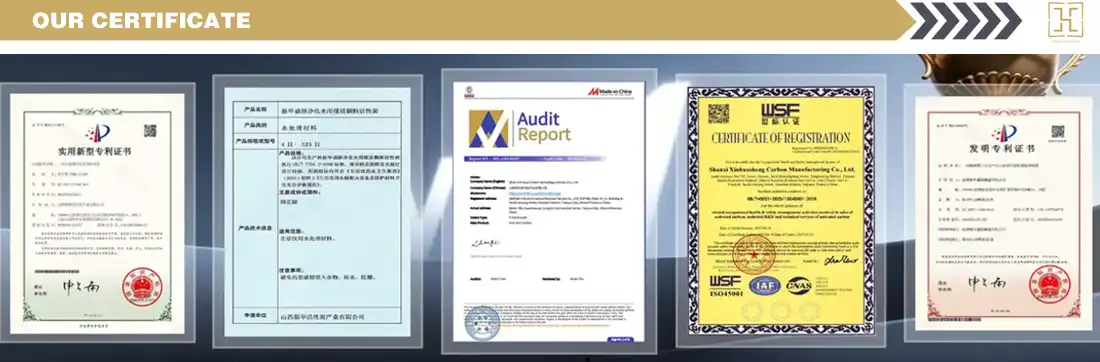
A reliable company that sells pharmaceutical-grade wood charcoal should have ISO 9001 quality management certification, ISO 14001 environmental management certification, and the right hygiene licenses for materials that come into contact with food and medicine. Suppliers who are involved in national or foreign groups that set standards are seen as more trustworthy. For important B2B buying choices, you must have technical datasheets, batch records of analysis, and the ability to provide samples before the shipment.
Bulk Procurement Logistics and Inventory Planning
For large pharmaceutical companies, maintaining a reliable supply is just as important as maintaining consistent product quality. Suppliers supporting Pharmaceutical injection decolorization with wood charcoal should maintain appropriate stocks of pharmaceutical-grade activated carbon to help reduce the risk of supply interruptions. Standard order lead times may range from 7–15 days, while expedited shipping options can be available for compliance-driven purchasing cycles that require faster delivery. For buyers sourcing Pharmaceutical injection decolorization with wood charcoal, clear batch identification and complete traceability are important for inventory control and quality management. Labeled batch numbers on sealed, moisture-resistant multi-layer bags can make it easier to track materials in the storeroom and prepare documentation for GMP audits. Maintaining these controls can help pharmaceutical manufacturers manage Pharmaceutical injection decolorization with wood charcoal procurement more efficiently while supporting batch traceability and consistent supply. For long-term purchasing programs, suppliers of Pharmaceutical injection decolorization with wood charcoal should also be evaluated according to documentation, packaging integrity, delivery reliability, and applicable quality requirements.
Future Perspectives and Environmental Impact
With wood charcoal's renewable source, it naturally fits in with the pharmaceutical industry's growing focus on green manufacturing. Wood-based purification materials have a lower total carbon value than manmade polymer adsorbents or coal-based carbons. They also break down safely after being used only once.
Emerging Trends in Sustainable Pharmaceutical Purification
More and more, rules in the US, EU, and Asia-Pacific regions require drug companies to keep track of how their process materials affect the environment. Compared to adsorbents made from petroleum, wood charcoal has a clear advantage in lifetime assessment scores because it comes from carbon and requires less energy to make.
Alignment with Green Manufacturing and CSR Goals
Companies that use wood charcoal in their cleaning processes can see a clear drop in the amount of chemicals they need to use and the amount of solid trash they make. This directly helps with Scope 3 emissions reduction reporting under GHG Protocol standards and the ESG disclosure rules that investors and regulators are now putting on big drug companies.
Innovation Directions
Several university research groups are looking into surface-modified types of wood charcoal that can both physically adsorb and chemically adsorb certain pyrogens and endotoxins. These materials aren't widely used in business yet, but they will be in the next five to ten years as the next step in the growth of pharmaceutical-grade carbon cleansing.
Conclusion
Wood charcoal has a well-established role in certain pharmaceutical purification and decolorization processes. Compared with some other adsorbents, Pharmaceutical injection decolorization with wood charcoal can offer a biomass-derived option when the material is appropriately selected and manufactured to meet the required pharmaceutical specifications. Pharmaceutical-grade wood powder charcoal may provide useful adsorption performance while offering controlled ash and trace-metal levels when supported by appropriate quality-control procedures. For sourcing teams and process engineers evaluating Pharmaceutical injection decolorization with wood charcoal for injection-related applications, material suitability should be determined through validated process requirements, analytical testing, and applicable pharmacopeial or regulatory specifications rather than broad claims about one material being universally superior. In this context, consistent quality, verified source documentation, and clear analytical records are important purchasing considerations. Suppliers of Pharmaceutical injection decolorization with wood charcoal should therefore be able to provide relevant quality documentation, batch information, and test results to support material evaluation. By reviewing these factors carefully, procurement teams can make more informed decisions when selecting Pharmaceutical injection decolorization with wood charcoal for pharmaceutical manufacturing processes.
FAQ
Is wood charcoal safe for use in pharmaceutical injection purification?
Yes, pharmaceutical-grade wood charcoal is chemically inert and meets USP, EP, and CP safety standards. Its low iron content (typically below 50 ppm) and absence of sulfur-related contaminants make it compatible with sensitive injectable drug formulations. LAL endotoxin testing further confirms its suitability for pyrogen-free injectable manufacturing.
How does particle size affect decolorization performance?
Finer particle sizes (200 mesh and below) significantly increase the available surface area for adsorption, speeding up the decolorization process. However, very fine particles can slow filtration throughput. The optimal balance for most injection batches sits around 150–200 mesh, verified by laser diffraction particle size distribution testing.
Can wood charcoal fully replace coal-based activated carbon in pharmaceutical processes?
In most pharmaceutical injection decolorization and API purification applications, yes. Wood charcoal outperforms coal-based carbon in heavy metal purity and biocompatibility. However, certain high-temperature catalytic processes may still require specialized coal-based materials. A qualified supplier can advise on the right material for each specific application.
Partner with Shanxi Xinhua Carbon Technology Industry Co., Ltd. for Pharmaceutical-Grade Wood Charcoal Supply
Pharmaceutical injection decolorization with wood charcoal is a service that Shanxi Xinhua Carbon Technology Industry Co., Ltd. offers to business customers all over the world. We sell goods that are certified by ISO 9001, ISO 14001, and ISO 45001, and we offer expert datasheet support and full batch certification. As a reliable company that has been making pharmaceutical-grade wood charcoal for over 60 years, we offer a steady supply, emergency delivery in as little as three days, and full OEM customization. We also work with Tsinghua University and the Chinese Academy of Sciences on research projects. Email greta@carbonxinhua.com or go to xhcarbontech.com right now to get your free sample.
References
1. Bansal, R. C., & Goyal, M. (2005). Activated Carbon Adsorption. CRC Press / Taylor & Francis Group.
2. United States Pharmacopeia Convention. (2023). USP–NF General Chapters: <281> Residue on Ignition, <791> pH. United States Pharmacopeia.
3. European Pharmacopoeia Commission. (2023). European Pharmacopoeia 11th Edition: Activated Charcoal Monograph (04/2012:0313). Council of Europe.
4. Mowla, D., Do, D. D., & Kaneko, K. (2003). Characterization of Activated Carbon Prepared from Wood and Its Application in Pharmaceutical Purification. Adsorption Science & Technology, 21(6), 491–507.
5. Marsh, H., & Rodríguez-Reinoso, F. (2006). Activated Carbon. Elsevier Science & Technology Books.
6. Chinese Pharmacopoeia Commission. (2020). Pharmacopoeia of the People's Republic of China, Volume IV: General Principles for Activated Charcoal in Pharmaceutical Applications. China Medical Science Press.

Send Inquiry
You may like
_1781662034490.webp)