_1778553121707.webp)
What Pollutants Can Acid-Etched Coal-Based Activated Carbon Remove?
Aug 24, 2026
Acid-etched coal-based activated carbon effectively removes a wide range of contaminants, including volatile organic compounds (VOCs), heavy metals like iron and lead, acidic gases such as sulfur dioxide, chlorine compounds, pharmaceutical residues, and water-soluble inorganic salts. This high-purity adsorbent addresses pollutants that standard carbons struggle with, particularly in sensitive environments like ultrapure water production, food processing, and pharmaceutical manufacturing where trace metal contamination cannot be tolerated.
Understanding Acid-Etched Coal-Based Activated Carbon and Its Unique Properties
Through a planned chemical processing process, the acid-washing treatment turns regular coal-based carbon into a high-quality filtering material. Starting with high-quality anthracite as the raw material, the carbon goes through the usual steps of activation and shape before being cleaned deeply with acid and dried at high temperatures. This second process completely changes the material's structure and how it looks on the outside.
This product is different from other activated carbon because it is washed with acid. During this phase, the coal matrix is slowly broken down and the metal oxides, heavy metal ions, and water-soluble inorganic salt impurities that are still there are removed. This makes Acid-etched coal-based activated carbon much cleaner, with better purity and surface cleanliness that regular carbons can't match.
Enhanced Purity Through Chemical Refinement
The acid-washing method cuts the amount of ash in carbon to less than 5%. This is a big difference from coal-based carbons, which can have ash levels of 12% or more. This decrease isn't just for looks; it has a direct effect on performance in situations where mineral leaching could hurt the quality of the product or mess up chemical processes that are sensitive. The treatment keeps metal impurities like iron, aluminum, calcium, and magnesium at controlled levels, usually less than 1000 parts per million (ppm). This stops pollution from happening in applications further down the line.
Even after being treated with strong chemicals, the material still has a well-developed porous structure. Its BET surface area is between 1,000 and 1,250 m²/g, and its iodine binding value is between 800 and 1,000 mg/g. The pores stay open, which keeps the adsorption power high, and the surface is cleaned, which speeds up the adsorption process by getting rid of material layers that could block the pores from being reached.
Improved Chemical Stability and Neutral pH
The fact that the pH level of the finished product can be controlled is another important benefit. Acid-etched types usually have a pH range of 6.0 to 8.0, which keeps the pH from changing when the carbon comes into touch with process fluids. This trait is especially useful when making medicines or food, because stable pH levels are needed to make sure the quality of the final product. The neutral chemistry also makes it easier to work with sensitive catalytic systems and lowers the risk of equipment rusting.
Pollutant Types Effectively Removed by Acid-Etched Coal-Based Activated Carbon
When you look at how well Acid-etched coal-based activated carbon can remove different types of pollution, you can see how flexible it is. Normal carbons may be good at some things but not so good at others. Acid-etched carbons, on the other hand, have better surface chemistry and are more pure, so they can remove a wide range of contaminants.
Organic Compounds and VOCs
Many different types of businesses have to deal with the waste that volatile organic compounds cause. Acid-etched carbon is very good at absorbing industrial solvents, aromatic hydrocarbons like benzene and toluene, chlorinated organics, and waste products from petrochemical processes. The cleaned pore structure lets organic molecules go deeper, which increases the contact time and adsorption efficiency. In gas-phase uses, the material keeps its removal rate above 90% even when streams contain a lot of carbon dioxide, which could make it hard for other types of carbon to work.
It can absorb more than 180 mg/g of sulfur dioxide, which makes it very useful in systems that treat high-sulfur waste gas, clean biogas, and remove chemicals from exhaust. This performance comes from both the physical structure of the pores and the changes that the acid treatment makes to the surface chemistry.
Inorganic Contaminants and Heavy Metals
Heavy metal ions, such as mercury, lead, cadmium, and arsenic, stick to the acid-washed surface better. Getting rid of metal impurities that compete with the carbon makes the active sites easier to reach so they can capture target contaminants from process streams. This feature is very important in systems that treat city water, handle industrial wastewater, and control mercury in flue gas, where rules are getting stricter all the time.
It is possible to effectively capture acidic gases like sulfur dioxide, nitrogen oxides, and hydrogen sulfide by having them physically adsorb and react chemically with the carbon surface. The material keeps working well even in tough situations like high temperatures, high humidity, and the acidic atmospheres that are common in industrial settings.
Trace Pollutants and Emerging Contaminants
One of the most interesting uses is getting rid of tiny pollutants that are dangerous even at parts-per-billion levels. The large surface area and open pore volume make it easy to remove pharmaceutical residues, chemicals that mess with hormones, pesticide residues, and other micro-pollutants. The small amount of ash in the carbon makes sure that it doesn't add any competing ions that could mess up analytical discovery or make it hard to meet product standards in electronics and pharmaceuticals.
It's easy to get rid of chlorine compounds and inorganic salts that dissolve in water; methylene blue has an adsorption value higher than 120 mg/g, which shows that it works well for decolorization tasks in chemical, food, and beverage processing.
Comparing Acid-Etched Coal-Based Activated Carbon With Other Activated Carbon Types
Knowing the differences in performance helps buying pros choose the best material for each job. Although there are different kinds of activated carbon, each has its own pros and cons. Acid-etched coal-based activated carbon provides specific advantages in high-purity sectors.
Performance Against Wood-Based and Coconut Shell Carbons
Carbons made from wood and coconut shell are prized because they can be made again and again and have a lot of tiny holes in them. Their smaller pore sizes, on the other hand, may make it harder for bigger molecules to fit, and their lower mechanical strength could mean that they wear out more quickly in harsh industrial systems. Acid-etched coal carbon has higher hardness (strength over 90%) and wear resistance, which means it makes fines less likely to form and lasts longer in moving-bed and fluidized-bed reactors.
The material made from coal is also more cost-effective for industrial uses that need a lot of it. Due to the high cost of the raw materials, coconut shell carbon is more expensive than coal-based goods that offer the same or better performance at a lower price. This is especially useful for projects that need to buy large amounts (tons).
Advantages Over Standard Steam-Activated and Chemically Activated Carbons
Even though steam-activated carbons are very common, they keep more minerals from the coal feedstock. These impurities can get into process lines and make high-purity uses less reliable. This problem is directly fixed by acid-etching, which makes a cleaner product that can be used for ultrapure electrical water, pharmaceutical synthesis, and precise chemical processing.
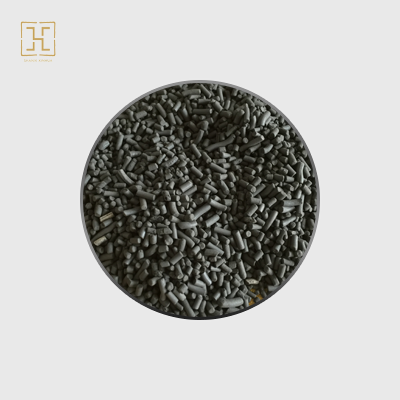
Chemically activated carbons may have a lot of surface area, but the pores aren't always well controlled, and there may be activation chemicals left over. The acid-washing step on coal-based carbon gives it high purity and a better pore structure, making it the best of several activation methods. The particle sizes can be changed and come in cylinders with a diameter of 1.5 to 3.0 mm or in granular forms with a diameter of 8 to 30 mesh. These sizes work with a variety of reactor designs, such as fixed-bed, moving-bed, and fluidized-bed systems.
Regeneration Capability and Lifecycle Economics
One benefit that is often ignored is the ability to regenerate. After being heated and cooled several times, acid-etched carbon keeps more than 80% of its original ability to absorb substances. Compared to carbons that break down more quickly through regeneration, this property makes replacements less often and lowers total running costs. The high dynamic strength keeps the particles from breaking down during handling and regeneration, so the bed stays intact over many service rounds.
Application Scenarios for Acid-Etched Coal-Based Activated Carbon in B2B Industries
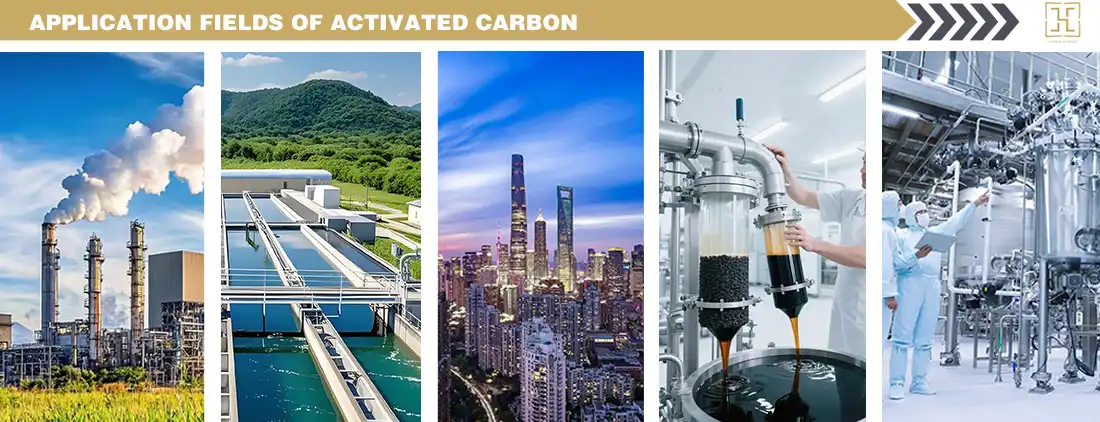
Because Acid-etched coal-based activated carbon has such fine properties, it is needed in many difficult industry areas where regular materials don't meet the needs.
High-Purity Water Treatment and Ultrapure Water Production
Ultrapure water systems are used by municipal water plants, semiconductor factories, and drug companies. Even small amounts of contaminants can cause big problems in these systems. Acid-etched carbon gets rid of organic residues and minor organics without adding mineral ions that would make water flow faster or mess up sensitive manufacturing processes. The low ionic leaching profile, which can be checked by testing the conductivity of a carbon-water slurry, makes sure that strict purity requirements are met.
One of the hardest tasks is making ultrapure water that is good for electronics. Total organic carbon (TOC) levels must stay very low in this case, and any minerals that get into the filter media could hurt microcircuitry or lower chip rates. Acid-etched carbon is the best choice for these important systems because it keeps metal impurity levels below 1000 ppm.
Pharmaceutical and Fine Chemical Manufacturing
Decolorization, impurity removal, and catalyst support functions must be done without adding contamination in pharmaceutical synthesis and fine chemical production. Carbon that has been scratched with acid can be used to remove the color of active medicinal ingredients and as a support for palladium and platinum catalysts. Mineral impurities keep unpleasant side effects from happening and make sure that the quality of the product is the same from batch to batch.
The material is great at cleaning up precise chemical waste liquids, getting back useful compounds, and getting process streams ready to be used again or safely released into the environment. Its neutral pH stops reactions that could make pH-sensitive chemicals less stable, and its high adsorption capacity makes processes more efficient.
Food and Beverage Processing
The clean absorption profile of acid-etched carbon makes it good for getting rid of off-flavors or smells, lightening up drinks, and deeply discoloring glucose syrups. Standard carbons could give products an unpleasant "carbon taste" or leave behind mineral residues that change how they look or taste. These worries are taken away by the high-purity material, which also provides effective treatment at lower dose rates.
Industrial Air Purification and Emission Control
Activated carbon systems help environmental engineering firms and factories that have to follow strict VOC pollution limits stay in line. Acid-etched carbon works well in coating operations, printing facilities, electronics factories, and metals plants where efficient pollution capture is required by air quality laws. The material is very resistant to carbon dioxide interference and regenerates very well, which lowers operational costs while keeping emission control consistent.
Carbon is used to treat waste gases in power plants, steel mills, and chemical plants. It is used to remove acidic gases and mercury. The designed shapes—6 mm pellets, 8 mm pellets, or 4x8 mesh granules—fit different reactor designs and make sure the best gas-solid contact and pressure drop.
OEM Equipment Integration and Customization
Customization options with acid-etched carbon are useful for system integrators and equipment manufacturers. Customized pore structures, particle sizes, surface area requirements, and filled catalytic parts make it possible for filter and purification systems to work at their best. OEM branding and packaging options help products stand out in the market and make sure there is a steady supply by using established production capacity.
Procurement Insights: How to Source Acid-Etched Coal-Based Activated Carbon
Paying for things requires checking the quality, making sure the supplier can do what they say they can do, and making sure the transport system can keep running without stopping. Acid-etched coal-based activated carbon procurement demands strict attention to ash content and mineral leaching specifications.
Supplier Certification and Quality Assurance
Reputable manufacturers have full quality management systems that are certified by ISO 9001, ISO 14001, and ISO 45001, among others. These models make sure that production standards, safety at work, and caring for the environment are all followed consistently. Check that the companies you're considering do thorough tests on important factors like total ash content (ASTM D2866), acid-soluble iron and heavy metals through ICP-OES analysis, water extract conductivity, pH value, and particle hardness and abrasion resistance (ASTM D3802).
For each production lot, you should ask for certificates of analysis and material safety data sheets. Do simple tests in the field, like measuring the conductivity of a 5% carbon-to-deionized water slurry, to make sure there is low ionic leaching before you buy a lot of it.
Production Capacity and Inventory Availability
In order to keep their business going, industrial users need a stable supply chain. Look for suppliers that have more than one production base and a large yearly output capacity. Manufacturers that can produce 45,000 tons or more can usually meet emergency needs and regular demand changes. Make sure that all of your core products are in stock at all times, and that standard delivery times are 7 to 15 days. Customized formulations can be made within 15 to 30 days.
Check to see if the supplier offers faster delivery choices for compliance jobs that need to be done right away. Some manufacturers offer quick response times of up to 24 hours and "green channel" delivery for important orders in as little as three days, which can make the difference when regulatory deadlines are coming up.
Logistics and Global Distribution
Being close to major shipping hubs has a big effect on how fast and cheaply deliveries can be made. If a supplier has established transportation partnerships, they can deliver goods anywhere in the United States within 3 to 7 days and help clients around the world with multimodal transport solutions that include sea, air, and rail freight. Real-time tracking of shipments, customized protective packaging to stop moisture from getting in and particles from breaking down, and full customs clearance support make buying things from other countries easier.
Technical Support and Collaborative Development
Long-term value isn't just the product itself; it also includes working together on technology issues. Strong partnerships in research and development (R&D) between suppliers and major universities and research institutes help suppliers come up with new ideas that help improve the performance of materials for changing application needs. Implementation risks are lower and time to results is faster when you have access to technical instructions, application help, and troubleshooting support.
Conclusion
Acid-etched coal-based activated carbon solves important pollution control problems because it is very pure, removes a wide range of contaminants, and works well in harsh industrial circumstances. The acid-washing refinement process makes a material that works better than regular carbons in situations where there needs to be little metal contamination, stable pH levels, and consistent adsorption efficiency. This special carbon works well to get rid of VOCs in air purification systems, heavy metals from water sources, and to make sure the purity of products in the pharmacy industry. Choosing qualified providers with proven manufacturing skills, thorough quality systems, and flexible transportation infrastructure that can handle both regular replenishment needs and emergency situations is key to successful procurement.
FAQ
Why choose acid-etched carbon instead of standard coal-based carbon?
Standard carbons made from coal usually have ash levels of 12% or more, which can release mineral ions into process streams and cause problems with very pure uses. Acid-etched coal-based activated carbon versions lower the ash content to less than 3%, which keeps it from getting into sensitive areas like ultrapure water systems and drug manufacturing. Cleaning the surface also speeds up the adsorption process by opening up holes that are clogged.
Does the acid treatment reduce adsorption capacity?
No, acid treatment often makes things work better by getting rid of mineral deposits that block pores. The process makes the carbon's structure stronger while increasing its useful surface area. This leads to better reactivity and capacity for many types of pollutants, especially heavy metals and minor organics.
Can acid-etched carbon handle gas-phase applications?
Yes, it works great for filtering very pure gases where mineral dust or small chemical reactions are not wanted. The material is very resistant to carbon dioxide influence and can keep removing gases with an efficiency above 90% even when the gases are difficult to handle. Because it can absorb more than 180 mg/g of sulfur dioxide, it works very well for treating waste gas and biogas.
Partner With a Trusted Acid-Etched Coal-Based Activated Carbon Manufacturer
Shanxi Xinhua Carbon Technology Industry Co., Ltd. combines over 60 years of activated carbon expertise with defense-grade quality control systems to deliver high-purity adsorption solutions for demanding industrial applications. Our Acid-etched coal-based activated carbon products have iodine values up to 1,000 mg/g, ash contents below 5%, and controlled metal impurities below 1000 ppm. These are the exact specifications needed for the process. We keep 100% of our core products in stock and can send them within 7 to 15 days, or as quickly as three days for urgent orders. Our multiple production sites can produce 45,000 tons of goods each year. Together with Tsinghua University and the Chinese Academy of Sciences, our expert team creates pore structures, particle sizes, and catalytic formulas that are exactly what you need to get rid of the pollutants. We provide ISO-certified quality with global shipping support when you need a provider for municipal water treatment, drug decolorization, or VOC emission control. Contact our team at greta@carbonxinhua.com to discuss your application requirements and request technical specifications and samples.
References
1. Activated Carbon: Surface Chemistry and Adsorption from Solution, Journal of Chemical Technology and Biotechnology, 2008.
2. Coal-Based Activated Carbons for Advanced Water and Wastewater Treatment: A Review, Water Research Foundation, 2015.
3. Characterization and Application of Acid-Treated Activated Carbons for Trace Contaminant Removal, Environmental Science & Technology, 2012.
4. Industrial Gas Purification with Modified Activated Carbon: Performance and Regeneration Studies, Chemical Engineering Journal, 2017.
5. ASTM D2866 Standard Test Method for Total Ash Content of Activated Carbon, American Society for Testing and Materials, 2020.
6. Heavy Metal Adsorption on Chemically Modified Coal-Based Activated Carbon: Mechanisms and Applications, Journal of Hazardous Materials, 2019.

Send Inquiry
You may like
_1781662034490.webp)