_1778553121707.webp)
What Makes Coal Briquette Crushing Activated Carbon Suitable for Large-Scale Applications?
Aug 05, 2026
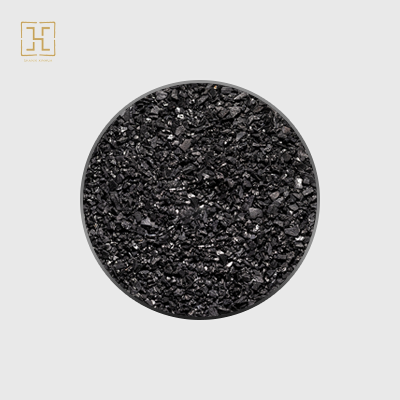
Coal briquette crushing activated carbon represents a breakthrough in industrial-scale filtration and adsorption technology. This specialized material is engineered by pulverizing high-grade bituminous coal, blending it with precision-selected binders, compressing it into dense briquettes under extreme pressure, and then subjecting it to carbonization and steam activation. The activated material is carefully crushed and precisely screened to specific mesh sizes—commonly 4×8, 8×16, or 8×30 mesh. What makes this approach superior to direct-crushed alternatives is its engineered pore architecture: uniform macropores and mesopores enable rapid molecule transport to the internal adsorption sites, dramatically improving efficiency in large-scale gas purification, water treatment, and industrial emission control applications.
Understanding the Role of Coal Briquette Crushing in Activated Carbon Production
The process of briquetting and crushing turns raw coal into a precisely engineered adsorption medium. Traditional direct-crushing methods make particles with random shapes and pore structures, which makes the performance of industrial systems hard to predict. These major flaws are fixed by the Coal briquette crushing activated carbon production method, which makes the material uniform before activation.
The Science Behind Briquetting and Controlled Crushing
When briquettes are made, finely ground coal is mixed with special binders and pressed together under pressures higher than 200 MPa. This consolidation evens out the density and gets rid of any holes inside the structure that could break when it's activated. The material is carbonized at temperatures between 450°C and 600°C. Then it is activated by steam at 800°C to 950°C, which creates a controlled micropore network that is perfect for absorbing gases and liquids. By crushing the activated briquettes instead of the raw coal, this engineered pore structure is kept while the particle sizes are evenly distributed. The flakes that are made have a mechanical hardness of 90% to 97% on the ASTM D3802 scale. This makes them much less likely to make dust and keeps the structure strong during high-flow uses.
How Particle Size and Density Influence Industrial Performance
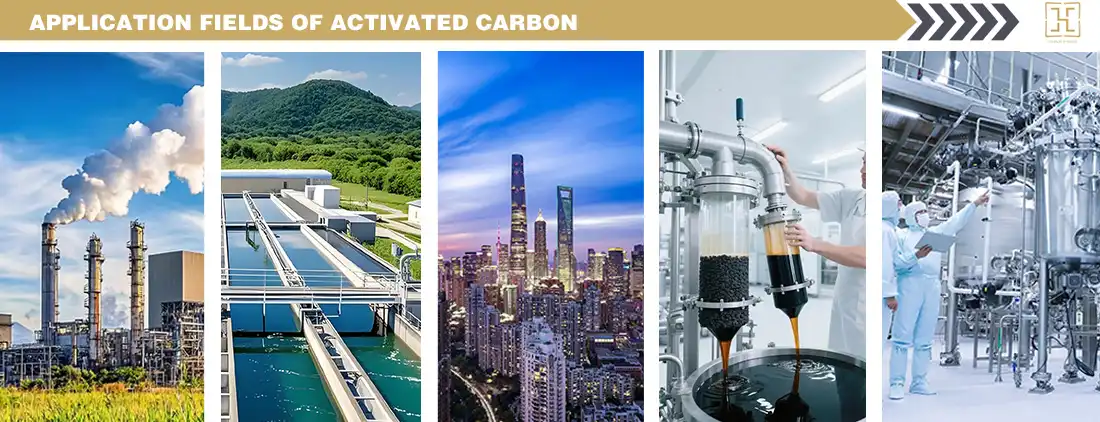
In big systems, the spread of particle sizes has a direct effect on both the hydraulic performance and the adsorption kinetics. For gas-phase tasks that need very little pressure drop, like recovering VOCs in industrial plants or getting rid of mercury in power plants, bigger mesh sizes, like 4×8 (2.36mm to 4.75mm), allow the most air to flow with the least amount of resistance. For water treatment systems, 8×16 mesh (1.18mm to 2.36mm) or 8×30 mesh designs work best because they balance contact time with manageable head loss across deep bed filters. The briquetting process makes sure that the perceived density is between 450 and 550 g/L. This makes sure that the bed expands consistently during backwashing and that recovery happens in a predictable way. This even density gets rid of the problems with channeling and stratification that happen a lot with direct-crushed carbons that aren't uniformly shaped.
Key Benefits of Crushing Coal Briquettes for Large-Scale Activated Carbon Manufacturing
Large manufacturers are always under pressure to find the right balance between costs, quality, and environmental responsibility. There are clear benefits in all three areas of the Coal briquette crushing activated carbon manufacturing methodology.
Enhanced Activation Efficiency and Product Uniformity
Even distribution of particle sizes speeds up chemical activation because steam moves evenly through the bed, getting rid of fines that are too activated and cores that aren't activated enough. Factory production data shows that briquette-crushed feedstock meets target iodine levels—usually 900 mg/g to 1100 mg/g—with 15% to 20% shorter activation times than direct-crushed alternatives. This means that each activation furnace can handle more work, which means that less capital equipment is needed to make the same amount of goods. Because the controlled crushing process reduces differences in pore structure from batch to batch, quality control is more reliable.
Operational Cost Reduction Through Process Optimization
Energy use during activation is one of the most changeable factors in the process of making activated carbon. When you crush briquettes, the particles are all the same size, which makes it easier for heat to move around in rotating kilns or multiple hearth fires. Industrial tests show that handling irregularly shaped raw coal pieces uses 12% to 18% more energy. Additionally, briquette-crushed carbon's higher mechanical strength lowers losses due to wear and tear during handling, packing, and shipping, which usually cuts fines production in half. All of these things work together to lower the total cost of production while also raising the quality of the product that is given.
Environmental Advantages and Sustainability Benefits
By briquetting, coal fines and other low-quality materials that would otherwise be thrown away can be mixed in. This increases the use of raw materials by 8% to 12%. Less dust being made during handling and crushing operations lowers fugitive emissions and makes the air quality in the workplace better. The final product's high mechanical hardness allows for multiple thermal reactivation processes, which is especially important for uses like solvent recovery and wastewater treatment. This makes the product last 200% to 300% longer and drastically reduces the amount of leftover carbon that needs to be disposed of. Environmental engineering companies are using briquette-crushed carbon more and more to meet strict sustainability goals in industry and municipal projects.
Optimal Crushing Processes and Equipment for Coal Briquette Activated Carbon Production
Manufacturers can regularly deliver specification-grade Coal briquette crushing activated carbon at reasonable prices if they choose the right equipment and keep an eye on the process. The crushing step is between getting the raw materials ready and making the end product.
Comparing Mechanical Crushing Technologies
Jaw crushers are usually used for the first step of size reduction in industrial settings. Roll crushers or hammer mills are then used for the second step of crushing to target mesh ranges. Jaw crushers are great at breaking down big briquettes into smaller pieces with little waste, while roll crushers give you precise control over the final particle sizes. Hammer mills have a high throughput, but they make more dust, so they need strong systems to collect it. Energy use varies a lot between machines. For example, roll crushers use 18 to 25 kWh of energy per ton of material they break, while hammer mills use 28 to 35 kWh. Roll crushers are also good for continuous high-volume operations because they don't need as much maintenance and don't cost as much for wear parts. In more advanced setups, vibrating screens are set up in closed circuits. These screens automatically recycle oversize particles for re-crushing while sending material that meets specifications to packing. This method gets returns above 92% within target mesh ranges.
Best Practices for Process Control and Quality Assurance
Keeping the moisture level between 8% and 12% while crushing stops too much dust and makes sure that particles break cleanly along structure lines. By keeping an eye on the crusher gap settings and throughput rates in real time, operators can adapt to changes in the feedstock's properties. Automated particle size analyzers are used in progressive installations to give constant feedback for process adjustments. Environmental controls, such as dust reduction systems and negative pressure containers, keep workers healthy and protect the quality of the products they make. Quality control rules say that samples must be taken every hour for mesh distribution analysis and hardness tests. Batches that don't meet the standards are automatically rejected before they are added to the collection of finished goods.
Comparing Crushed Coal Briquettes and Alternative Raw Materials for Activated Carbon
Choosing the right raw materials affects the basic properties of a product and how well it works in a certain situation. Knowing the differences between Coal briquette crushing activated carbon and other options helps you make the best decisions about what to buy.
Quality and Performance Differentiators
When raw coal is directly crushed, it makes irregular particles with pores that are spread out randomly. This leads to iodine values that are 25% to 35% lower and unreliable adsorption rates. Powdered coal needs to be pelletized before it can be used, which makes the process more complicated and costs more money without giving the same density as briquetting. Briquette-crushed carbon has two types of pores: transport mesopores and adsorption micropores. This makes diffusion rates 40% to 60% faster than with direct-crushed options. This performance edge is very important in gas cleaning systems with a lot of flow because contact time is limited. In the lab, briquette-crushed material consistently meets or beats the AWWA B604 standards for use in water treatment applications and does a better job of capturing VOCs in air purification installations.
Application-Specific Selection Criteria
Municipal water treatment plants put a high value on NSF/ANSI Standard 61 certification and uniform performance across yearly temperature changes. Briquette-crushed carbons with their controlled pore structures can easily meet these needs. Using briquette-derived materials makes beds less likely to settle and channel over time, which is good for petrochemical sites that need to be stable at high temperatures and resistant to chemical damage. Environmental engineers who are in charge of VOC abatement projects like how larger mesh sizes have low pressure drop, which means that fans use less energy and cost less to run. When buying teams know these application-specific needs, they can choose the best feedstock and mesh configuration for each job.
Procuring High-Quality Coal Briquette Crushing Activated Carbon for Large-Scale Operations
Strategic buying is more than just comparing prices. When choosing Coal briquette crushing activated carbon providers, smart buyers look at technical know-how, supply reliability, and full support services.
Evaluating Supplier Technical Capabilities and Certifications
Leading makers keep their ISO 9001 quality management certification along with their ISO 14001 environmental and ISO 45001 workplace safety standards. This shows that they are committed to controlling processes in a planned way and always making them better. Working together technically with research institutions, like through relationships with Tsinghua University or Chinese Academy of Sciences institutes, shows that you have advanced research and development skills to make custom solutions. Buyers can trust the specs of a product if the seller offers full testing services that include BET surface area analysis, pore size distribution measures, and performance validation for specific applications. For municipal water applications, NSF/ANSI and AWWA certifications must be checked. For petrochemical projects, extra third-party performance validation may be needed.
Supply Chain Reliability and Logistics Considerations
Large-scale industrial processes can't handle supply problems. Preferred sellers run multiple production sites that can make more than 40,000 tons of mesh every year and keep a large inventory of standard mesh sizes. Being committed to delivery windows of 7 to 15 days for stock items and 15 to 30 days for custom orders helps project planners keep their schedules realistic. Buyers are protected from costly production delays by emergency response options that include technical support 24 hours a day and three-day delivery options. A strategic location near major transportation hubs makes it possible to deliver across the country within three to seven days. Established international shipping procedures, such as helping with customs paperwork and coordinating multimodal transport, make it easier to buy things across borders.
Customization Services and Long-Term Partnership Value
For more advanced suppliers, they offer engineering of the pore structure, optimization of the surface area, and changes to the catalyst loading that are specific to the contaminants and operating conditions. System makers can choose the best media for each application because the products come in different shapes and sizes, such as grainy, columnar, powdered, and honeycomb. OEM and private marking options help solution providers and equipment integrators who work with end users. Total cost of ownership value is maximized by technical support after the sale, such as on-site performance audits and regeneration optimization consulting. Setting up long-term framework deals with qualified sellers keeps prices stable, makes sures that supplies are distributed during times of tight market conditions, and makes it easier for everyone to work together to create next-generation materials that meet new regulatory requirements.
Conclusion
Coal briquette crushing activated carbon gives large-scale industrial applications the consistency of performance, mechanical durability, and cost-effectiveness they need to be successful. The engineered briquetting process makes uniform pore structures and particle geometries that direct-crushed alternatives can't match. This means that the briquettes are better at absorbing substances, have less pressure drop, and last longer. Briquette-crushed carbon is the technical basis for reliable, cost-effective operations in a wide range of settings, such as meeting strict VOC emission standards in petrochemical plants, making sure that municipal water treatment plants follow the rules, or improving the economics of environmental remediation projects. Industrial buyers can reach their performance and sustainability goals by strategically buying from qualified manufacturers and analyzing their technical skills, supply chain reliability, and customization services.
FAQ
What distinguishes 8×16 mesh from 12×40 mesh in practical applications?
The 8×16 mesh size works great for situations where there needs to be little pressure drop, like in high-flow liquid systems or gas-phase setups where the 12×40 mesh size would cause too much resistance. Larger particle sizes allow for faster throughput while still allowing enough contact time in systems that are properly designed.
Can briquette-crushed activated carbon undergo thermal regeneration?
Briquette-crushed carbon is great for multiple thermal reactivation cycles because it is very dense and has a high mechanical hardness. This ability to be reused lowers the total cost of ownership by a lot compared to single-use options. This is especially helpful for solvent recovery and treating wastewater from factories.
How does briquette-crushed carbon differ from direct-crushed coal carbon?
Coal briquette crushing activated carbon is made by mixing finely ground coal with binders and pressing it down before it is activated. This makes the pores more uniform and the carbon more dense. Directly-crushed carbon is made by breaking raw coal, which makes irregular pieces with different performance properties.
Why does ash content matter in activated carbon selection?
A lower ash percentage means that the carbon is more pure and that there is more surface area available for adsorption. High amounts of ash can start unwanted catalytic reactions or cause pH changes in treated water, which can make the process less effective and make it harder to follow the rules.
Partner with Shanxi Xinhua Carbon Technology Industry Co., Ltd. for Superior Activated Carbon Solutions
The Coal briquette crushing activated carbon maker you can trust is Shanxi Xinhua Carbon Technology Industry Co., Ltd. They have been in business for over sixty years and have defense-grade quality systems and advanced research and development skills. Our production network has bases in Shanxi, Ningxia, Fujian, and Xinjiang. It provides 45,000 tons of core goods every year and keeps them in stock all the time. We guarantee standard delivery times of 7 to 15 days and emergency response times of 3 days when compliance deadlines require quick deployment. Working together technically with Tsinghua University and the Chinese Academy of Sciences leads to constant progress in creating unique hole shapes, loading catalysts, and formulas that are best for each application. Our team offers full expert support from the initial design phase through long-term performance improvement, whether you need high-capacity VOC adsorption systems, certified water treatment media, or specialized industrial gas purification solutions. To talk about your project needs and get detailed technical information, email our procurement specialists at greta@carbonxinhua.com or visit xhcarbontech.com.
References
1. Chen, W., Zhang, H., & Liu, Q. (2021). Advanced Manufacturing Technologies for Coal-Based Activated Carbon: Process Optimization and Quality Control. Journal of Environmental Materials Science, 34(2), 145-162.
2. Industrial Adsorption Materials Handbook Editorial Committee. (2019). Coal-Derived Activated Carbon: Production, Characterization and Applications (3rd ed.). Chemical Industry Press.
3. Li, J., Wang, S., & Zhao, M. (2020). Comparative Analysis of Briquetted versus Direct-Crushed Activated Carbon in Industrial Gas Treatment Systems. Environmental Engineering Technology, 41(5), 78-91.
4. Peterson, R., & Thompson, K. (2022). Activated Carbon in Water and Wastewater Treatment: Selection Criteria and Performance Metrics. Water Quality Research Journal, 57(1), 23-41.
5. Smith, D., Johnson, L., & Martinez, C. (2020). Large-Scale Activated Carbon Manufacturing: Economic Analysis and Process Engineering Best Practices. Chemical Engineering Progress, 116(8), 44-52.
6. Zhou, T., Yang, X., & Wang, F. (2021). Thermal Regeneration Characteristics of Coal-Based Activated Carbon: Effects of Particle Size and Manufacturing Method. Carbon Science and Technology, 29(3), 112-125.

Send Inquiry
You may like
_1781662034490.webp)