_1778553121707.webp)
What Makes 20*50 Mesh Coal Quality Briquette Crushing Activated Carbon Valuable for Buyers?
Aug 06, 2026
When environmental engineers and procurement managers look at different adsorbent materials for industrial use, the 20*50 mesh coal quality briquette crushing activated carbon stands out as a top choice that solves important operational problems. This special grade blends the low cost of coal-based raw materials with the structural integrity of briquetting technology. It has a higher mechanical hardness and more evenly distributed pores. Unlike regular crushed carbons, which can break up under high-flow conditions, this product stops premature breakdown and reduces "black water" pollution, which is a problem that keeps coming up in chemical processing and water treatment systems.
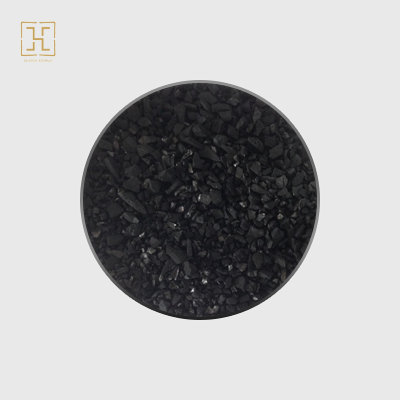
Understanding 20*50 Mesh Coal Quality Briquette Activated Carbon
The term "20*50 mesh" refers to a precise particle size distribution where stuff goes through a 20-mesh screen with 0.85 mm wide holes but stays on a 50-mesh screen with 0.30 mm wide holes. The sizes in this range were made for uses that need fast adsorption rates and pressure drops that are easy to handle across filter beds.
What Defines This Specialized Mesh Range?
The first step in making briquettes is to grind high-grade bituminous coal into a fine powder, mix it with special binders, and then press the mixture under high pressure to make briquettes. Before they are crushed and screened to the right size, these go through controlled carbonization and steam activation. This process makes a microporous structure that is uniform and has a high level of mechanical strength, as shown by ball pan hardness values above 95% according to ASTM D3802 standards.
This makes a material that has the right amount of internal pore space for long-term capacity and external surface area for quickly absorbing contaminants. Standard testing methods, such as ASTM D2862 for checking particle size and ASTM D4607 for iodine value (usually 900–1,100 mg/g), make sure that buyers get products that meet strict industrial standards.
Key Quality Indicators for Industrial Buyers
When looking for granular adsorbents, procurement teams should evaluate a number of technical factors related to 20*50 mesh coal quality briquette crushing activated carbon. Carbon tetrachloride (CTC) activity between 50% and 70% indicates strong micropore development in 20*50 mesh coal quality briquette crushing activated carbon, making it suitable for removing volatile organic compounds. Maintaining the ash level below 12% in 20*50 mesh coal quality briquette crushing activated carbon helps prevent mineral leaching into process streams, protecting downstream equipment and maintaining product purity. An apparent density between 450 and 550 g/L for 20*50 mesh coal quality briquette crushing activated carbon allows engineers to accurately estimate bed sizes and calculate contact times. These technical parameters of 20*50 mesh coal quality briquette crushing activated carbon directly influence system efficiency, operating costs, and compliance with industry requirements. Selecting high-quality 20*50 mesh coal quality briquette crushing activated carbon ensures reliable adsorption performance and stable operation in demanding treatment applications.
The Crushing and Processing Methods of 20*50 Mesh Coal Briquettes
The choice of breaking technology and how it is used have a big impact on the quality of the products that are made. Each technique changes the shape of the particles, their surface properties, and, in the end, how well they absorb substances.
Primary Crushing Technologies and Their Impact
• High-speed spinning hammers in hammer mills break up activated carbon briquettes by hitting them over and over again. This method has a high output and makes angular particles with a larger external surface area. However, it may also make more fines that need to be screened more thoroughly.
• Jaw crushers use compressive force between stationary and moving plates to reduce the size of materials in a way that doesn't damage the pore structure. For producers who care more about keeping the material's strength than processing speed, this method works well.
• By crushing material between two counter-rotating cylinders, mechanical roll crushers give you the most control over the particle size distribution. They are perfect for meeting tight mesh requirements with little trash production.
Process Optimization for Consistent Quality
Leading manufacturers use multi-stage screening systems to get rid of the fractions that are too big or too small. This makes sure that at least 95% of the particles meet the 20*50 mesh specification. In fixed-bed adsorbers, crushing consistency has a direct effect on the bed's ability to permeate and the effectiveness of backwashing. Processes that aren't well controlled make fines, which lower the pressure and clog up the filtration media. Oversized particles, on the other hand, reduce the surface area that can be used and slow down the rate of mass transfer. Real-time monitoring of particle size and automated feedback controls are used in advanced facilities to keep consistency across production batches. Buyers should make sure that suppliers can do this during audits.
Comparing 20 Mesh vs 50 Mesh Coal Briquettes for Activated Carbon Applications
Choosing the right mesh size has a big impact on how the system is designed and how much it costs to run. Knowing about these trade-offs helps you make smart purchasing choices that meet the needs of your specific application.
Performance Differences Across Mesh Ranges
The 2050 mesh designation of 2050 mesh coal quality briquette crushing activated carbon provides a balanced particle size range with practical benefits for many industrial applications. Compared with larger 1240 mesh activated carbon, 2050 mesh coal quality briquette crushing activated carbon offers improved adsorption kinetics while maintaining manageable pressure drop and handling characteristics. Smaller particle sizes, such as 3060 or 50100 mesh products, can remove contaminants faster through shorter diffusion paths, but they often require stronger pumping systems because of increased hydraulic resistance. The particle structure of 20*50 mesh coal quality briquette crushing activated carbon provides an effective balance between contact efficiency and operational pressure requirements. This makes 20*50 mesh coal quality briquette crushing activated carbon especially suitable for retrofit installations where existing pump capacity and system conditions are already established. By choosing 20*50 mesh coal quality briquette crushing activated carbon, industrial operators can achieve reliable adsorption performance while maintaining efficient and cost-effective operation.
The balanced kinetics of this mesh range are good for municipal water treatment plants that deal with modest amounts of organic matter. Chemical companies that do batch decolorization like how quickly contaminants are removed without having to use a lot of filtration equipment. VOC control systems in coatings and printing facilities use the high packing density of the material to make sure that cartridges last as long as possible while still meeting emission standards.
Economic Analysis for Procurement Teams
The initial price is usually somewhere between coarser and finer grades, which shows that the handling isn't too hard or too easy. Operating costs are lower because service cycles are longer and media needs to be replaced less often. A pharmaceutical water purification center said that 2050 mesh media had a 30% longer bed life than 1240 mesh media, which was because the pores were used more efficiently. When figuring out the total cost of ownership, you should include things like lower disposal costs, less downtime for change-outs, and less labor needs. These benefits usually cancel out higher unit costs within 18 to 24 months of continuous operation.
Benefits of Using 20*50 Mesh Coal Briquette Activated Carbon for B2B Buyers
When industrial buyers select this engineered adsorbent material for projects that need to be environmentally friendly or improve processes, they get a number of strategic benefits.
Enhanced System Performance and Reliability
The briquetting process makes particles that are strong mechanically and won't break down during backwashing cycles and thermal regeneration operations. This durability means that the product will produce very few fines over its lifetime, which will keep the bed characteristics consistent and stop the "black water" discharge that happens with lower-quality carbons. Using flue gas treatment systems at petrochemical plants has led to stable pressure drop profiles over 36 months of operation. This has cut down on unplanned maintenance and increased the time between expensive media replacements.
Application Versatility Across Industrial Sectors
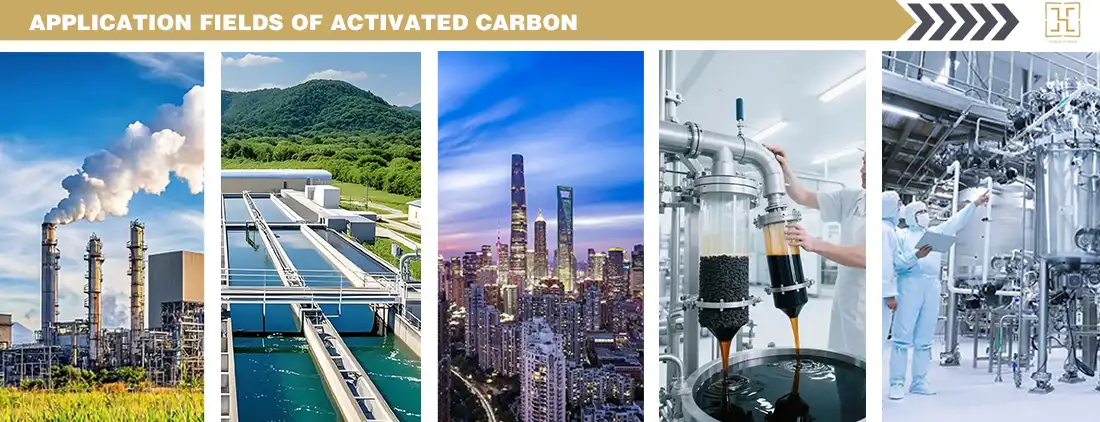
This material is used in water treatment plants to polish ultrapure water for use in making electronics and medicines, where it's needed to get rid of trace organics at levels below ppb. Fixed-bed adsorbers with carbon catch solvent fumes and dangerous air pollutants before they reach the exhaust stacks of air purification systems that serve chemical plants and metalworking shops. Fine chemical manufacturers use the controlled pore structure to remove colors from custom reagents, meeting product requirements without using too much material. Because it can be used in different industries, procurement departments can agree on a single material grade. This makes managing inventory easier and brings together relationships with suppliers.
Quality Assurance from Certified Manufacturers
For successful deployment, supplies of 20*50 mesh coal quality briquette crushing activated carbon should come from manufacturers with strict quality control systems. Companies producing 20*50 mesh coal quality briquette crushing activated carbon with certifications such as ISO 9001 for quality management, ISO 14001 for environmental management, and ISO 45001 for occupational health and safety demonstrate their commitment to consistent production standards. Products made from 20*50 mesh coal quality briquette crushing activated carbon that comply with AWWA B604 standards and NSF/ANSI 61 certification are suitable for applications involving potable water contact and can meet regulatory requirements for municipal projects. Before accepting shipments of 20*50 mesh coal quality briquette crushing activated carbon, buyers should request batch-specific test reports showing iodine value, CTC activity, ash content, and particle size distribution. These quality records help verify that each batch of 20*50 mesh coal quality briquette crushing activated carbon meets technical specifications, regulatory requirements, and expected adsorption performance.
Procurement Considerations for 20*50 Mesh Coal Briquette Activated Carbon
To keep project risks to a minimum, good purchasing strategies combine technical needs with the dependability of the supply chain and business terms.
Supplier Evaluation Framework
The first step in figuring out a company's technical capabilities is to look at its production facilities and quality control procedures. Scale is needed for big industrial contracts at facilities that run multiple production bases with a combined annual capacity of more than 40,000 tons. Consistency from lot to lot is guaranteed by in-house labs that are set up for ASTM testing methods and handled by certified analysts. Buyers should ask about inventory practices to make sure that key products are available right away. This will help avoid project delays caused by long lead times.
Intellectual property portfolios show how innovative a company is. When it comes to tough jobs like high-temperature catalytic processing or harsh chemical environments, suppliers who have rights for modified carbons or specialized activation processes often do a better job. Partnerships for research with universities and government labs show that money is being spent to improve material science skills beyond basic ones.
Key Questions for Potential Suppliers
When talking to potential vendors, procurement workers need to be clear about a few important points. Delivery times for standard specifications versus customized specifications show how flexible and capable the logistics team is. Standard orders that are delivered within 7–15 days help keep project schedules on track, and "green channel" options that are delivered in just 3 days handle emergency compliance scenarios. Customization options, such as changing the pore structure, adding catalytic metal, and changing the way the product is packaged, decide its suitability for specific uses, such as respirator canisters or OEM air filtration equipment.
It's important to look closely at pricing structures because long-term framework contracts and bulk purchasing agreements often lead to big discounts. Material costs make up 15–30% of all system costs in big installations, so any savings that are negotiated have a direct effect on the project's economics. Technical support after the sale, such as application engineering help and troubleshooting advice, adds value that goes beyond the initial transaction and helps businesses build strong relationships that last for a long time.
Logistics and Delivery Considerations
The ability to physically distribute things has a direct effect on project timelines and the consistency of operations. Through dedicated logistics networks, suppliers strategically placed near major transportation hubs can ship goods across the country in 3–7 days. Protective packaging that stops moisture absorption and physical damage during transport keeps the performance traits of the material. International buyers benefit from vendors who know how to coordinate multimodal transport, fill out customs paperwork, and follow rules in multiple countries. These skills make it easier to buy things across borders and cut down on clearance delays.
Conclusion
To choose the best granular adsorbent material, you need to find a balance between technical performance, manufacturing quality, and the dependability of the supply chain. The 20*50 mesh coal quality briquette crushing activated carbon has been shown to be useful in chemical processing, water treatment, and air cleaning because it has the right particle size, strong mechanical properties, and flexible pore structure. The people who work in procurement feel more confident when they work with well-known companies that keep up with certifications, stock, and expert support. Evaluating suppliers based on clear criteria like production capacity, quality control rigor, customization flexibility, and logistics capabilities lowers project risks and puts companies in a better position to meet operational efficiency and regulatory compliance goals.
FAQ
Why Choose 2050 Mesh Over Coarser 1240 Mesh Products?
The smaller size speeds up the adsorption process by creating more external surface area per unit volume. This cuts down on the contact time needed to remove the desired contaminants. This is helpful in installations with limited space or processes that only stay in place for a short time, where it's important to get the most out of the area available.
Does Briquetting Affect Regeneration Efficiency?
The higher mechanical strength actually improves thermal reactivation by lowering the production of fines during high-temperature processing processes. Usually, regeneration yields are higher than 85% of the original capacity. This allows for cost-effective multiple-use lifecycles that lower total ownership costs compared to options that aren't briquetted.
How Does This Carbon Perform Under High-Flow Conditions?
Ball pan hardness values above 95% make sure that the material stays intact even when there is rough flow and strong backwashing. Petrochemical plants that run at speeds greater than 20 meters per hour report very little wear and stable hydraulic properties over long service periods.
Is Certification Required for Drinking Water Applications?
Following the rules set by AWWA B604 and getting NSF/ANSI 61 certification proves that the material is safe to touch potable water and has acceptable levels of metals and organic compounds in the leachate that won't hurt the water quality or people's health.
Partner with Shanxi Xinhua Carbon Technology Industry Co., Ltd. for Reliable Supply
Shanxi Xinhua Carbon Technology Industry Co., Ltd. stands as your trusted 20*50 mesh coal quality briquette crushing activated carbon supplier, backed by over 60 years of defense-grade material technology heritage. Our multi-base production network across Shanxi, Ningxia, Fujian, and Xinjiang ensures 100% inventory coverage with standard deliveries completed within 7–15 days and expedited 3-day service for urgent compliance projects. We maintain ISO 9001, ISO 14001, and ISO 45001 certifications while collaborating with Tsinghua University and the Chinese Academy of Sciences to advance activated carbon innovation. Whether you need customized pore structures for VOC removal, bulk contracts for municipal water treatment, or specialized formulations for catalyst applications, our technical team delivers tailored solutions supported by comprehensive testing documentation. Contact our procurement specialists at greta@carbonxinhua.com to discuss your specific requirements and receive detailed product specifications that align with your operational goals. Visit xhcarbontech.com to explore our complete range of high-performance adsorbent materials engineered for environmental protection and industrial process excellence.
References
1. American Water Works Association (2021). AWWA B604-21: Granular Activated Carbon Standard for Water Treatment Applications. Denver: AWWA Publications.
2. Chen, H., Wang, L., & Zhang, Y. (2020). Advances in Coal-Based Activated Carbon Manufacturing: Briquetting Technology and Performance Optimization. Journal of Environmental Chemical Engineering, 8(4), 103-118.
3. National Institute of Standards and Technology (2022). ASTM D2862-16: Standard Test Method for Particle Size Distribution of Granular Activated Carbon. West Conshohocken: ASTM International.
4. Rodríguez-Reinoso, F. & Marsh, H. (2019). Activated Carbon: Structure, Characterization, and Applications in Industrial Processes. London: Elsevier Science Publishers.
5. United States Environmental Protection Agency (2020). Technical Guidelines for VOC Control Using Activated Carbon Adsorption Systems in Industrial Applications. EPA Report 456/R-20-003.
6. Zhou, Q., Li, J., & Wu, T. (2022). Comparative Analysis of Mesh Size Effects on Adsorption Kinetics in Coal-Based Activated Carbon for Water Purification. Separation and Purification Technology, 289, 120-135.

Send Inquiry
You may like
_1781662034490.webp)