_1778553121707.webp)
What is the difference between 8-30 mesh coal quality crushed carbon and other mesh sizes?
Jul 16, 2026
The main difference between 8-30 mesh coal quality crushed carbon and other mesh sizes is how the particles are spread out and whether they are suitable for a certain application. Single-mesh carbons like 4-8 mesh or 16-30 mesh are useful for certain tasks. The 8-30 mesh coal quality crushed carbon range has a wide range of particles (0.6mm to 2.36mm) that solves important problems in mixed bed filtration systems, medium to low flow rate environments, and uses that need both fast adsorption and structural stability. This two-range design gets rid of channeling, keeps performance stable when narrower mesh ranges fail, and lowers packing density deviation to less than 5%.
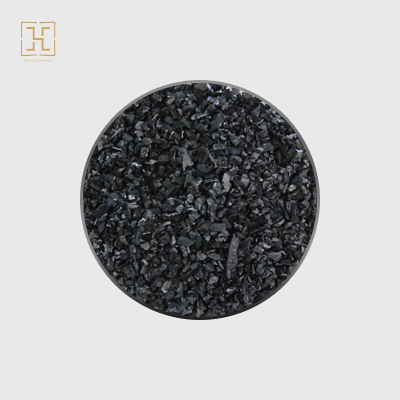
Understanding 8-30 Mesh Crushed Carbon: Quality and Characteristics
The main difference between 8-30 mesh coal quality crushed carbon and other mesh sizes is how the particles are spread out and whether they are suitable for a certain application. Single-mesh carbons like 4-8 mesh or 16-30 mesh are useful for certain tasks. The 8-30 mesh coal quality crushed carbon range has a wide range of particles (0.6mm to 2.36mm) that solves important problems in mixed bed filtration systems, medium to low flow rate environments, and uses that need both fast adsorption and structural stability. This two-range design gets rid of channeling, keeps performance stable when narrower mesh ranges fail, and lowers packing density deviation to less than 5%.
Physical Properties That Drive Performance
8-30 mesh coal quality crushed carbon in this range has unique physical properties that have a direct effect on how well your treatment works. Based on the iodine number, the material has a developed microporous structure with surface areas that are usually between 800 and 1,100 m²/g. This pore structure makes a big area inside where contaminants can attach to active adsorption sites. According to ASTM D3802 standards, good crushed carbon has a hardness of at least 90%. This means that the material can handle mechanical stress during backwashing and regeneration cycles without wearing down too quickly.
The apparent density is between 450 and 550 g/L, which is a good balance between how well it packs and how it flows hydraulically. The amount of ash is kept at 8% or less, which reduces the amount of inert material that takes up space but doesn't add to the adsorption capacity. The moisture level is kept below 5% to stop living things from growing and keep the storage stable.
Chemical Composition and Adsorption Mechanisms
In top grades, the carbon content is higher than 85%, which provides the basic structure for adsorption. The activation process sets up a two-pore system. Transport mesopores help molecules move quickly to internal micropores, which are where the actual adsorption takes place. This structure works really well at catching small organic compounds, heavy metal ions like mercury and lead, chlorine, sulfur compounds, and things that cause smells.
The medium mesopore ratio lets go of both medium and large molecules, like color bodies and colloidal materials, at the same time. This makes the carbon useful for a wide range of contaminant types. Water extract usually has a pH between 6 and 9. This makes it safe to use in sensitive situations, like cleaning drinking water, where maintaining a stable pH level is important for following the rules.
Comparing 8-30 Mesh Coal Quality to Other Mesh Sizes
By knowing how different mesh ranges work, you can make smart decisions about what to buy that are in line with your process needs.
Coarser Mesh Carbons (4-8 Mesh and 6-12 Mesh)
Carbons in the 4–8 mesh range have bigger particles (2.36 mm to 4.75 mm) that can be helpful in some situations but not so helpful in others. Because the particles are bigger, there is less pressure drop across the filter beds. This means that these carbons can be used in high-flow situations where hydraulic resistance needs to be kept to a minimum. However, the smaller external surface area means that contaminants take longer to reach the internal pore structures, which means that the adsorption process is slower.
These bigger particles cause problems in systems with medium to low flow rates, which work at speeds between 0.8 and 1.2 m/s. Because they are bigger and have less mass, they are more likely to fluidize and blow out during backwash cycles or flow spikes. You'll lose carbon, which means you'll have to change the media more often, which will raise your operational costs. When the materials are coarser, the packing density deviation can be more than 10%. This makes preferred flow paths (channeling) that let untreated water skip over adsorption zones, which lowers the overall removal efficiency by 15% or more.
Finer Mesh Carbons (16-30 Mesh and 20-40 Mesh)
Moving to smaller mesh sizes, like 16-30 mesh (0.6mm to 1.18mm) or 20-40 mesh (0.42mm to 0.84mm), makes the outside surface area bigger and speeds up the rate of absorption. These materials work great in situations where they need to come into contact with something quickly and remove small molecules very efficiently. There are more points where water can touch the carbon surface because the particles are packed closer together.
The trade-off is how well the hydraulics work. Finer particles cause much bigger drops in pressure across filter beds, which raises the cost of pumping energy and might limit flow rates. When there isn't enough expansion during backwash, cleaning can't be finished, and the bed can slowly settle down. Extremely fine carbons also make more dust, which makes them harder to handle and could be dangerous for your lungs during loading operations.
Single-mesh finer carbons can have particle sizes that vary by more than 8%, and because the particles are all the same small size, they tend to get clogged up quickly when treating water with a lot of suspended solids or biological activity. Backwashing will have to be done more often, and the time between maintenance periods will be shorter.
The Wide-Range Solution: Why 8-30 Mesh Performs Differently
The 8-30 mesh coal quality crushed carbon range has particles from both the 8-16 mesh and 16-30 mesh ranges. This creates a bimodal distribution that gets around the problems with single-mesh carbons. This way of thinking about design addresses real problems that come up in running mixed-bed and fixed-bed systems. The bigger spread of particles makes sure that the whole bed is covered, with none of the gaps that single-mesh materials leave. Filling the gaps between bigger granules with smaller particles lowers the packing density deviation to less than 5% and gets rid of channeling, which lowers efficiency.
This 8-30 mesh coal quality crushed carbon stays stable in medium to low flow rate situations without blowout and without the excessive pressure drop that comes with materials that are all the same size. Larger particles support the structure and make backwash expansion easier, while smaller particles improve surface contact and the rate of adsorption. You get the best flow patterns with stable performance and no carbon loss. This makes the media last longer and less often needs to be replaced.
Test results from mixed bed systems used in municipal wastewater treatment plants show that 8-30 mesh coal quality crushed carbon keeps COD removal rates above 85% even at input concentrations of 300–800 mg/L. This is 12–15% better than single-mesh alternatives when compared side-by-side. The abrasion loss stays below 2%, while it's between 5 and 8% for coarser materials. This means that the yearly cost of the media is lower.
How to Test and Evaluate the Quality of 8-30 Mesh Crushed Carbon
Standardized testing methods that give objective, repeatable data are needed to check a supplier's quality claims.
Essential Testing Parameters
The material really does meet the 8-30 mesh coal quality crushed carbon standard, as shown by particle size distribution analysis using mechanical sieving according to ASTM D2862. At least 90% of the particles should stay inside the mesh boundaries of good carbon, with very few fractions that are too big or too small. To make sure everything is the same, ask for sieve analysis certificates with every shipment.
Iodine number testing (ASTM D4607) measures the growth of micropores and is a good way to tell how well a material can adsorb small molecules. When the value is between 800 and 1,100 mg/g, it means that the carbon has been well activated and is ready for use in industry. Lower values mean that activation isn't complete or that there is a lot of ash in the sample.
Carbon tetrachloride (CTC) activity testing (ASTM D3467) checks how well volatile organic compounds can be absorbed, which is important for uses that need to get rid of VOCs. CTC values of 50 to 70% are reached by good quality broken carbon, showing that it works well for gas-phase adsorption.
Physical Integrity and Durability Testing
The 8-30 mesh coal quality crushed carbon will be put through hardness or abrasion resistance tests (ASTM D3802) to see how well it will handle mechanical stress during handling, backwashing, and long-term use. Materials with a score below 85% will produce too many fines, which will raise the pressure drop and mean they need to be replaced too soon. Premium grades are harder than 90%, so they will last through many regeneration cycles.
The apparent density measurement shows how the packing is set up and helps figure out the bed volume and media amount. If the value is not between 450 and 550 g/L, it means that there may be problems with the processing or the raw materials that could affect how well the product works.
Moisture content determination (ASTM D2867) makes sure that the right conditions for storage have been kept. If there is too much moisture (>5%), it could mean that there is biological contamination or bad packing, which could lower the adsorption capacity by blocking pores.
Chemical Purity and Safety Verification
Ash content analysis (ASTM D2866) measures inorganic impurities that take up room but don't help with adsorption. Values above 12% mean that the raw materials were not of good quality or that they were not washed properly during production. A higher effective adsorption capacity per unit mass is directly related to a lower ash percentage.
ASTM D3838 pH testing of water extract shows that the 8-30 mesh coal quality crushed carbon won't change the pH of the treated effluent in a way that isn't wanted. Materials that are meant to be used with drinking water must have a pH level between 6.5 and 9.0 and be certified by NSF/ANSI Standard 61 as safe for contact with potable water.
Heavy metal leaching tests make sure that no contaminants were added during the activation process. Lead, arsenic, chromium, and other regulated metals must stay below EPA maximum contaminant levels for drinking water applications. You won't have to worry about compliance issues later on if you ask for certificates of analysis with heavy metals data.
Procurement and Supply Chain Insights for 8-30 Mesh Crushed Carbon
It's not enough to just compare prices per kilogram when looking for a trusted supplier of 8-30 mesh coal quality crushed carbon. You also need to look at their technical skills, quality systems, and supply chain infrastructure.
Supplier Qualification Criteria
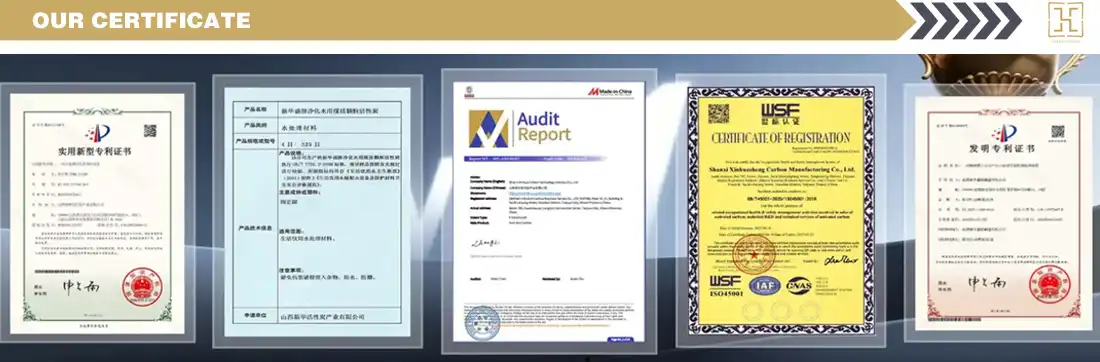
Check for ISO certifications that show systematic quality management to start. Having ISO 9001 certification means that there are established methods for quality control and documentation. Getting ISO 14001 certification shows that you care about managing the environment, which is important because making carbon requires a lot of energy. The ISO 45001 certification shows that there are health and safety systems in place to protect workers during the manufacturing process.
Check out the supplier's technical history and research and development (R&D) skills in addition to their certifications. Shanxi Xinhua Carbon Technology Industry Co., Ltd. has been developing activated carbon for more than 60 years and works together with Tsinghua University, the Chinese Academy of Sciences, and other research institutes on a regular basis. Because of this level of technical detail, you can change the pore structure, surface chemistry, and particle specifications to fit your exact process needs. This is something that commodity suppliers can't do.
As for production scale and inventory ability, you should ask for proof. Suppliers who have more than one production base with a combined yearly output of more than 40,000 tons can make sure there is a steady supply even when demand goes up or there aren't enough raw materials. Shanxi Xinhua has production facilities in four provinces that keep a full stock of core goods. This way, they can cover all of their customers' needs at all times and avoid having to wait for long lead times. Standard orders are sent out within 7–15 days, and custom orders of 8–30 mesh coal quality crushed carbon are sent out within 15–30 days. This quick response time helps you keep your projects on track.
Contractual Considerations and Risk Mitigation
Include quality standards directly in purchase agreements. These should include the minimum iodine number, the maximum ash content, the hardness requirements, and the acceptable particle size distribution ranges for 8-30 mesh coal quality crushed carbon. Include rules for testing by a third party and spell out how to handle shipments that don't meet the requirements. Setting clear standards for acceptance stops disagreements and makes sure you get materials that meet the needs of your process.
Talk about how to send packages and what to do in case of an emergency. Through dedicated logistics partnerships, suppliers strategically located near major transportation hubs can deliver across the country in 3–7 days. Check to see if there are fast delivery options for important compliance deadlines or unexpected media failures. Shanxi Xinhua has 24-hour reaction and three-day emergency shipment channels that have fixed critical supply interruptions for clients with regulatory deadlines.
You might want to look into framework agreements for big users who need a steady supply. Annual contracts with set delivery dates keep prices stable, make sure that priority is given in tight markets, and often unlock volume discounts that make the economics of the project better. Having long-term relationships with suppliers also makes it easier to get technical help and make sure that your applications are working as well as they can as your treatment needs change.
Advantages and Limitations of 8-30 Mesh Crushed Carbon
Every specification for activated carbon comes with trade-offs in terms of efficiency. Knowing both your strengths and weaknesses is important for putting materials to good use.
Core Performance Advantages
There are problems with mixed bed systems that single-mesh carbons can't solve, but the wide particle distribution can. When you mix 8-16 mesh and 16-30 mesh particles into one 8-30 mesh coal quality crushed carbon product, you don't have to worry about buying two different types of materials and mixing them. The bimodal distribution makes the best packing density with the least amount of variation. This stops channeling, which in regular systems lowers efficiency by 15%.
Another clear benefit is medium-low flow rate optimization. Working at speeds of 0.8 to 1.2 m/s, which is common in industrial and municipal wastewater treatment systems, this carbon keeps the bed stable without fluidization or media loss, and it avoids the too high backpressure that comes from using uniformly fine materials. You get the same hydraulic performance even when the flow conditions change without having to make any operating changes.
The two-pore structure with transport mesopores and adsorption micropores makes it possible to remove a wide range of contaminants. Small organic molecules, heavy metal ions, chlorine, and smelly compounds quickly adsorb in the micropores. The mesopore network, on the other hand, catches color bodies, colloids, and larger molecular species at the same time. This broad-spectrum effectiveness means that fewer treatment stages are needed, which makes system design easier and lowers the cost of capital.
These benefits are backed up by recorded success data. At input amounts of 300–800 mg/L, municipal wastewater treatment plants say they remove more than 85% of the COD that comes in. Small-scale VOC treatment systems are able to get rid of more than 90% of volatile organic compounds when the amounts are between 150 and 400 mg/m³. Industrial decolorization consistently gets rid of colors in wastewater streams from food processing, electroplating, and papermaking.
Better mechanical longevity increases the useful life and lowers the total cost of ownership. The 8-30 mesh coal quality crushed carbon has an abrasion loss of less than 2% and a hardness of more than 90%. It can handle multiple backwash cycles and regenerate itself many times without breaking down. You'll have fewer unplanned shutdowns to replace media, and your annual maintenance costs will go down.
Practical Limitations and Mitigation Strategies
While 8-30 mesh coal quality crushed carbon can solve many problems in many applications, it is important to know its limits so that it can be used correctly. The particle size distribution works best in mixed beds and medium to low flow systems, but it might not work in all situations. For applications with very high flow rates (>2.0 m/s), coarser materials (4–8 mesh) work best because they reduce pressure drop. On the other hand, 20–40 mesh carbon may be better for ultra-fine filtration that needs fast kinetics and very little contact time, even though it needs more pressure.
Pay attention to how much moisture is absorbed during storage. Coal-based activated carbon naturally soaks up water from the air, which could make it heavier to ship and less effective at absorbing water if exposure is not controlled. Keep things in climate-controlled areas in sealed containers or packaging that keeps moisture out. Before using, check the moisture content and make any necessary changes to the loading calculations.
Initial dust creation during loading can make moving things more difficult. Even though the hardness is higher than 90%, some surface fines are still on the particles after they are made. This problem can be kept to a minimum by using dust collection systems when moving materials, pre-rinsing carbon before loading the bed, or specifying low-dust processing when making things. No matter what dust control methods are put in place, people who work with dry 8-30 mesh coal quality crushed carbon must still wear the right respiratory protection.
Because the raw material comes from coal, it may not work in all situations and may need to be made from coconut shells or wood instead. Coconut shell carbons are sometimes better for food-grade uses that need very little ash or certain taste and smell qualities. Pharmaceutical companies that need to meet strict purity standards may ask for USP-grade materials. But for treating industrial water, cleaning up wastewater, and controlling volatile organic compounds (VOCs), which are the main uses for 8-30 mesh coal quality crushed carbon, materials made from coal are more cost-effective without lowering performance.
When choosing materials, it's important to weigh these pros and cons properly. The 8-30 mesh coal quality crushed carbon standard works really well for treating mixed bed water, cleaning up municipal and industrial wastewater, controlling medium-sized volatile organic compounds (VOCs), getting rid of color, and helping catalysts do their jobs. The best results will come from matching the particle size to the flow rate, the type of contaminants, and the way the system is set up.
Conclusion
To choose activated carbon, you have to match the particle properties to the needs of the application. The 8-30 mesh coal quality crushed carbon solves important operating problems in mixed bed systems by spreading particles out evenly, keeping packing density deviations below 5%, and getting rid of channeling that slows things down. This specification provides measured performance gains over single-mesh alternatives by removing COD by more than 85%, capturing VOCs by more than 90%, and having mechanical durability that supports longer operational cycles. Thorough quality checks, qualifying suppliers, and knowing both the pros and cons of each option help buyers make smart decisions that improve treatment efficiency while keeping costs low. The 8-30 mesh coal quality crushed carbon range gives your operation the flexibility and dependability it needs for medium to low flow rates, mixed bed configurations, or the removal of a wide range of contaminants.
FAQ
What specific applications benefit most from 8-30 mesh coal quality crushed carbon compared to other mesh sizes?
This range of coal-quality crushed carbon (8–30 mesh) works great in mixed bed water treatment systems that deal with municipal wastewater with COD levels of 300–800 mg/L. The wide particle distribution stops channeling and keeps the flow even. The two-pore structure captures both small organic molecules and larger color bodies, making it useful for decolorizing wastewater from food processing, electroplating, and papermaking. Over 90% of VOCs are removed by medium-scale VOCs control systems in printing and spraying facilities that deal with concentrations of 150 to 400 mg/m³. The particle size is also good for catalyst support uses in chemical synthesis reactions that need to be able to withstand repeated regeneration cycles.
How does particle size distribution affect long-term operational costs?
Narrow particle distributions in single-mesh carbons cause packing density deviations that are 10-15% higher. This causes channeling, which lowers the effectiveness of treatment and means that the media needs to be replaced more often. Less than 5% deviation and less than 2% abrasion loss are maintained in the 8-30 mesh coal quality crushed carbon range. This means that the media lasts 20–30% longer than finer options. Less pressure drop than finer carbons lowers the cost of pumping energy by 8–12% in continuous processes. All of these things lower the total cost of ownership by 15 to 25 percent over a typical three-year operating period.
Can 8-30 mesh coal quality crushed carbon be regenerated, and how many cycles does it support?
At 800-900°C, thermal regeneration effectively brings back 85–95% of the original adsorption capacity. Because it is very hard (>90%) and doesn't wear down easily, it can be used three to five times before it needs to be replaced because of wear and tear. Recovery is best when regeneration steps are done correctly, such as using controlled heating rates, a steam atmosphere, and washing after treatment. When the price of virgin 8-30 mesh coal quality crushed carbon goes over $2,000 per ton, and there are enough tons to justify investing in regeneration infrastructure, economic analysis usually shows that regeneration is a good idea.
Partner with Shanxi Xinhua Carbon Technology Industry Co., Ltd. for Reliable 8-30 Mesh Coal Quality Crushed Carbon Supply
Picking the right activated carbon supplier is just as important for your business's growth as picking the right mesh size. Shanxi Xinhua Carbon Technology Industry Co., Ltd. has been making specialized carbon products for more than 60 years and has defense-grade quality systems and advanced research and development skills that it got from working with Tsinghua University and the Chinese Academy of Sciences. Our 8-30 mesh coal quality crushed carbon manufacturers in four provinces keep a full inventory to make sure they always have enough of the core products in stock. Standard delivery is 7–15 days, and emergency three-day expedited shipping is available when deadlines need to be met quickly. Certified by ISO 9001, ISO 14001, and ISO 45001, our products are always of high quality, and our expert team can change the pore structure, surface area, and adsorption performance to fit your exact process needs. Get in touch with our experts at greta@carbonxinhua.com to talk about your needs for treating water, controlling VOCs, or cleaning up factories. You'll get full technical specs, performance data, and reasonable prices for both bulk and custom orders.
References
1. American Water Works Association. (2021). AWWA B604-21: Granular Activated Carbon Standard for Water Treatment Applications. Denver: American Water Works Association.
2. ASTM International. (2020). ASTM D2862-20: Standard Test Method for Particle Size Distribution of Granular Activated Carbon. West Conshohocken: ASTM International.
3. Bandosz, T.J. & Ania, C.O. (2019). "Surface Chemistry of Activated Carbons and Its Characterization." Interface Science and Technology, Volume 28: Activated Carbon Surfaces in Environmental Remediation, 35-89.
4. Crittenden, J.C., Trussell, R.R., Hand, D.W., Howe, K.J., & Tchobanoglous, G. (2022). MWH's Water Treatment: Principles and Design (4th Edition). Hoboken: John Wiley & Sons.
5. Marsh, H. & Rodríguez-Reinoso, F. (2020). Activated Carbon: Fundamentals, Production Methods, and Industrial Applications. Amsterdam: Elsevier Science.
6. National Institute for Occupational Safety and Health. (2019). NIOSH Manual of Analytical Methods (NMAM): Activated Carbon Sampling and Analysis Procedures for Industrial Hygiene Applications (5th Edition). Cincinnati: DHHS (NIOSH) Publication.

Send Inquiry
You may like
_1781662034490.webp)