_1778553121707.webp)
What is the bulk density of 8-30 mesh coal quality crushed carbon?
Jul 16, 2026
Most of the time, 8-30 mesh coal quality crushed carbon has a bulk density between 450 and 550 g/L. However, this can change depending on the particle size distribution, moisture content, and quality of production. It has a direct effect on the design of the filtration bed, the efficiency of the adsorption process, and the logistics of transport. Premium products, such as Shanxi Xinhua Carbon's 8-30 mesh coal quality crushed carbon, keep their apparent density constant with less than 5% packing deviation. This makes sure that the flow is spread evenly in mixed bed systems and stops channeling problems that happen with cheaper crushed carbons.
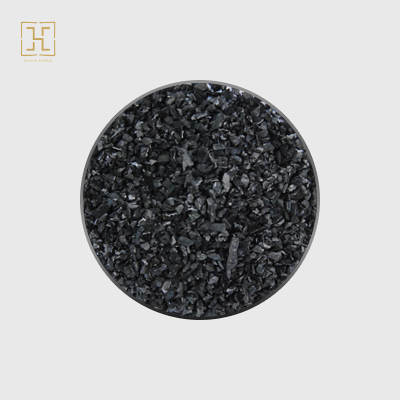
Understanding 8-30 Mesh Coal Quality Crushed Carbon
When purchasing managers look at activated carbon to clean industrial water or get rid of VOCs, it's important to know the mesh size requirements. The name "8-30 mesh" refers to particles that get through an 8-mesh sieve with a 2.36mm opening but stay on a 30-mesh sieve with a 0.60mm opening. This range of particles makes an adaptable absorbent material that works best in medium to low flow rate situations, where bigger particles would blow out and smaller particles would cause too much pressure drop.
What Makes This Particle Range Unique
When compared to coarse grades, medium-fine granular coal-based crushed carbon has smaller particles that give it a larger specific surface area. During high-temperature steam activation, the microporous structure forms, making networks that effectively catch small-molecule organic compounds, heavy metal ions, and substances that cause smells. At the same time, the medium mesopore ratio makes it possible to get rid of medium and large molecules like color compounds and colloidal matter. Because it has two types of pores, these particles work really well in advanced drinking water purification, municipal wastewater treatment, COD removal, and decolorization projects, such as treating the wastewater from papermaking.
Quality Specifications That Matter
Premium Jurassic anthracite is used to make crushed coal-based activated carbon that has high hardness scores (>90%), low ash content (≤8%), and iodine levels ranging from 800 to 1100 mg/g. These specs directly affect how well something works in the real world. A high level of hardness keeps attrition below 2% and cuts down on system downtime by preventing abrasion loss during backwashing cycles. Low ash content keeps treated water's pH from changing and increases service life by reducing the amount of neutral material that fills pores but doesn't add to their ability to absorb.
What Is Bulk Density and Why It Matters for 8-30 Mesh Crushed Carbon
The bulk density of an absorbent material is its mass per unit volume when it is not tightly packed. It is usually given in grams per liter or pounds per cubic foot. This measurement is very different from particle density because it takes into account the empty spaces between carbon granules. Environmental engineers use bulk density information to figure out how much bed space is needed, how much something will weigh when it's shipped, and how the water will behave during operation.
How Bulk Density Influences System Performance
It is the bulk density that determines filtration resistance and contact time when you are designing a fixed-bed adsorber or a mixed-bed water treatment system. When particles are spread out evenly and the packing density is reasonable, materials have predictable flow patterns and low pressure drops. The 8-30 mesh coal quality crushed carbon strikes the perfect balance with an apparent density of 450–550 g/L, which allows for stable operation at medium to low flow rates of 0.8 to 1.2 meters per second. This range stops the carbon loss issues that come with thicker media and stops the head loss issues that come with fine powders.
Variables Affecting Bulk Density
During production and storage, measurements of bulk density are affected by a number of factors. The main factor is the range of particle sizes. Materials with a wide range of particle sizes pack better than single-mesh products because smaller particles fill in the empty spaces between bigger particles. The amount of moisture also changes the readings because water that sticks to carbon surfaces adds mass without improving the adsorption process. Impurities like mineral ash and binder leftovers that haven't been carbonized make the material denser but less effective. Manufacturers of good products keep these factors under tight control by following strict protocols for particle screening, moisture conditioning, and activation that have been proven to work by ASTM D2854 testing methods.
How to Test and Evaluate the Bulk Density of 8-30 Mesh Crushed Carbon
Standardized methods that get rid of operator variability and sampling bias are needed to get an accurate measurement of bulk density. The standard ASTM D2854 tells us how to figure out the apparent density of activated carbon materials that are used in liquid-phase applications.
Standard Testing Procedure
For the test, a calibrated cylinder with a known volume is filled with a carbon sample under controlled conditions. Material is poured through a funnel from a certain height, which lets it settle naturally without being tamped down or shaken. To find the bulk density, the mass of the carbon is weighed and then divided by the volume of the cylinder. To make sure that the results can be repeated, professional labs take measurements three times and report the average number each time. Because temperature and humidity affect moisture content and, by extension, density results, ISO standards require testing to be done in controlled environments.
Common Testing Challenges
The most common error in figuring out bulk density comes from differences in the samples used. Samples of carbon taken from the top and bottom of a storage container may not be the same because particles can separate while being moved and handled. Teams in charge of buying things should be clear about multi-point sampling protocols and ask for certificates of analysis that show consistency from batch to batch. Conditions of storage between production and testing also have an effect on the results. For example, carbon that is exposed to damp environments absorbs water from the air, which makes measurements of apparent density seem higher than they really are without changing the quality parameters.
Interpreting Test Results
When purchasing managers look at supplier data sheets, they should compare the bulk density values to industry standards and think about how these values relate to other quality measures. When materials say they have very high iodine numbers but a very low bulk density, it could mean that they were activated too much, which decreased their mechanical strength. On the other hand, items that look dense but don't have much adsorption power usually have too much ash or core material that hasn't been activated. The best providers give full descriptions that include bulk density, particle size distribution curves, iodine numbers, methylene blue values, and hardness numbers. This lets you make smart comparisons.
Comparing 8-30 Mesh Crushed Carbon Bulk Density to Other Coal Types and Mesh Sizes
When purchasing, professionals know how 8-30 mesh coal quality crushed carbon stacks up against other materials, and they can choose the best goods for each job. The particle size and the way the material is made have a direct effect on the bulk density and the performance characteristics that go with it.
Mesh Size Comparison
Coarser grades of activated carbon, like 4-8 mesh, have lower bulk density values, usually between 420 and 480 g/L. This is because bigger particles leave more empty space between the granules. Even though these materials don't drop the pressure very much, they can't be used in mixed bed systems with medium to low flow rates because they cause particles to blow out. The perceived density of finer materials (30–60 mesh) is higher, getting closer to 550–600 g/L with tighter packing, but they cause too much head loss, which raises pumping costs and lowers throughput. The 8-30 mesh specification is the best in terms of performance. It gives you even packing with less than a 5% difference in density and keeps pressure drops across filter beds to a manageable level.
Material Type Differences
There are clear differences in the bulk densities of coal-based crushed carbon and other types of activated carbon. Because they are harder and have a higher intrinsic density, coconut shell carbons tend to have a higher apparent density (500–600 g/L). Because they are softer and have more pores, wood-based carbons usually have lower values (380–450 g/L). Materials made from coal have a medium density and last a long time. This makes them ideal for treating wastewater in factories and working with chemicals, where strength is just as important as adsorption capacity. The briquette-and-crush method used to make high-quality coal carbons makes particles that are all the same size and shape, which is why they are so popular in difficult municipal water treatment projects.
Procurement Insights: Sourcing Premium 8-30 Mesh Coal Quality Crushed Carbon
To find a reliable activated carbon supplier, you need to look at both the product specs and the organization's skills. One way to tell if a product is consistently made is by its bulk density, but when making a procurement decision, you should also think about other quality assurance factors.
Supplier Evaluation Criteria
Leading producers of 8-30 mesh coal quality crushed carbon show off their technical skills by getting a lot of different certifications, such as ISO 9001 for quality management, ISO 14001 for environmental standards, and ISO 45001 for health and safety at work. These certifications show that the process has been controlled in a way that keeps differences between batches in bulk density and adsorption performance to a minimum. Suppliers that work with research institutions can bring advanced materials science knowledge to the development of new products. For example, working together with Tsinghua University, the Chinese Academy of Sciences, and specialized coal chemistry institutes shows that the supplier is willing to invest in ongoing improvement and customization.
In addition to certifications, you should also look at systems for managing inventory and production capacity. For big industrial projects, ton-level quantities need to be delivered on regular schedules. Suppliers with more than one production base that produce more than 40,000 tons of goods each year can keep enough stock of core products to make standard deliveries within 7 to 15 days and special formulations within 15 to 30 days. When environmental compliance deadlines force purchases to be made quickly, this supply chain dependability becomes very important.
Commercial Considerations
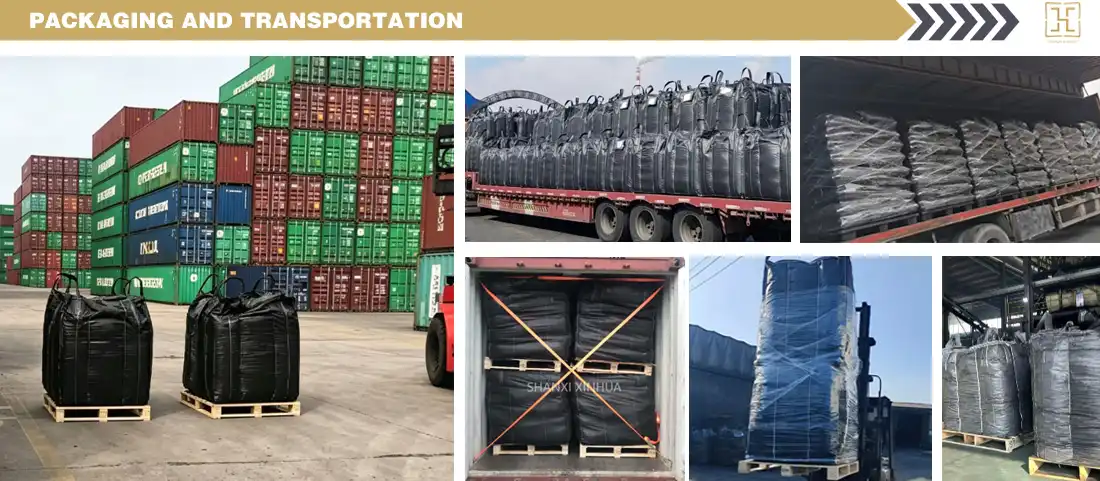
Since bulk density has a direct effect on shipping costs and storage needs, it is an important business parameter. Materials with a higher apparent density save money on freight costs by fitting more adsorption capacity into each container. However, products that are too dense may mean that the quality has been compromised. Different suppliers have different minimum order amounts. For example, some manufacturers offer flexible lot sizes for testing purposes, as well as bulk buying options for businesses that are already up and running. Pricing models should take into account not only the unit cost but also the total cost of ownership, which includes things like service life, the ability to grow back, and the availability of technical help.
Conclusion
Quality 8-30 mesh coal quality crushed carbon has a bulk density of between 450 and 550 g/L. This is important information for system design and purchasing decisions. In mixed-bed water treatment systems and VOCs removal applications, this physical feature is linked to particle uniformity, packing consistency, and operational reliability. By understanding the connection between bulk density and performance measures, environmental engineers and purchasing managers can choose the best adsorbent materials for their needs. Partnering with manufacturers who have consistent quality control, full certifications, and proven supply chain capabilities is the best way to make sure that a project will be successful in the long run and meet the stricter environmental compliance requirements that are being put in place.
FAQ
What is the typical bulk density range for this material?
The bulk density of quality 8-30 mesh coal crushed carbon is usually between 450 and 550 g/L. Values below 420 g/L could mean that the material is too activated or has structural weaknesses. Readings above 580 g/L, on the other hand, usually mean that the material isn't fully activated or has a lot of ash, which makes it less effective at adsorption.
How does bulk density variation between suppliers affect my operations?
When bulk density isn't stable, hydraulic behavior in filtration systems can't be predicted. This can lead to channeling, uneven flow distribution, and less effective treatment. By choosing suppliers with less than a 5% difference in packing density, you can be sure that the system will work well and be easy to operate over many carbon replacement cycles.
Can I verify bulk density claims before placing large orders?
Suppliers with a good reputation give small samples for independent testing based on the rules in ASTM D2854. Before making big purchases for industrial projects, you can check if a supplier is telling the truth by asking for certificates of analysis that show batch-specific bulk density data, particle size distribution, and key adsorption metrics.
Partner with Shanxi Xinhua Carbon Technology Industry Co., Ltd. for Reliable 8-30 Mesh Coal Quality Crushed Carbon Supply
Shanxi Xinhua Carbon Technology Industry Co., Ltd. has been making activated carbon for more than 60 years and can help you with your important air and water purification tasks. There are measured performance benefits to our 8-30 mesh coal quality crushed carbon, such as less than 5% packing density deviation, over 85% COD removal efficiency, and more than 90% VOCs capture rates. We have production bases in several regions with a total annual capacity of more than 45,000 tons. We keep all of our core products in stock and offer standard delivery within 7–15 days, with emergency shipping available within 3 days. As a reliable producer of 8-30 mesh coal quality crushed carbon with ISO 9001, ISO 14001, and ISO 45001 certifications, we offer full technical documentation, the ability to make changes, and quick engineering support. Email our purchasing team at greta@carbonxinhua.com to talk about your bulk density needs and to ask for testing samples for your specific application.
References
1. American Society for Testing and Materials. (2020). ASTM D2854-09: Standard Test Method for Apparent Density of Activated Carbon. West Conshohocken: ASTM International.
2. Bansal, R.C., & Goyal, M. (2005). Activated Carbon Adsorption. Boca Raton: CRC Press.
3. Marsh, H., & Rodríguez-Reinoso, F. (2006). Activated Carbon: Properties and Applications. Amsterdam: Elsevier Science.
4. Mattson, J.S., & Mark, H.B. (1971). Activated Carbon: Surface Chemistry and Adsorption from Solution. New York: Marcel Dekker.
5. Suzuki, M. (1990). Adsorption Engineering. Tokyo: Kodansha Ltd.
6. Yang, R.T. (2003). Adsorbents: Fundamentals and Applications. Hoboken: John Wiley & Sons.

Send Inquiry
You may like
_1781662034490.webp)