_1778553121707.webp)
What Is Coal Briquette Crushing Activated Carbon Used For?
Aug 06, 2026
Coal briquette crushing activated carbon is a special kind of granular adsorbent that is made by grinding up high-quality bituminous coal, mixing it with special binders, and pressing it into dense briquettes. The briquettes are then carbonised, activated by steam, crushed, and screened to exact mesh sizes. This briquetting process makes the pores regular and gives the material a high mechanical strength. This makes it perfect for tough industrial uses like getting rid of VOCs, cleaning water, treating waste gas, and chemical processing where long-lasting performance and consistent adsorption are important.
Understanding Coal Briquette Crushing for Activated Carbon
Coal briquette crushing using activated carbon is a big step forward from the old ways of doing things, which used raw lump coal. When we crush coal briquettes before they are used, we get important performance benefits that directly help environmental engineers and buying managers with their day-to-day tasks.
Why Do Coal Briquettes Outperform Raw Lump Coal?
Coal briquettes are very consistent in terms of their chemical make-up and physical structure. Briquettes are made to meet exact specs, while raw lump coal's quality can vary a lot even within the same batch. This consistency means that the adsorption capacity and performance are always the same across production runs. This gets rid of the expensive unpredictability that throws off project schedules and compliance needs.
You can also fine-tune the density and porosity with the briquetting process. Manufacturers make a material with the best internal structure by putting pulverised coal and special binders together under high pressure. This managed structure makes steam activation more effective, which makes activated carbon with more surface area and networks of pores that are all linked to each other.
How Crushing Enhances Adsorption Properties?
Crushing briquettes to certain mesh sizes before or after activation makes the surface much easier to reach. The process makes new surfaces and opens up holes that were previously closed off. This makes more surface area available for adsorption. Common mesh sizes like 4×8, 8×16, and 8×30 are carefully chosen based on the needs of the application. For example, bigger meshes lower pressure drop in high-flow systems, while smaller meshes improve contact efficiency in liquid-phase applications.
In the breaking step, producers can also change how the particles are spread out in terms of size, which has an impact on the density of the bed, its ability to carry water, and how well it regenerates. Modern breaking equipment, like jaw crushers for initial size reduction and hammer mills for exact final sizing, makes sure that the particles have the same shape, which reduces the amount of dust and wear and tear during service.
When buying teams understand these basic technical concepts, they can choose activated carbon goods that meet their exact practical needs instead of general options that don't work well in serious situations.
The Production Process of Activated Carbon from Crushed Coal Briquettes
The finished product's adsorption properties and mechanical longevity are affected by each of the several carefully controlled steps involved in the production of high-performance coal briquette crushing activated carbon.
Coal Preparation and Briquetting
The first step is to choose high-quality bituminous coal that has a lot of carbon and not much ash, and for Coal briquette crushing activated carbon, this precursor selection is critical because the coal's volatile matter, ash content, and sulphur levels directly influence the final pore structure, hardness, and adsorption capacity of the activated carbon. The coal is first washed, and then it is pulverised to make a fine, uniform powder. The powder is then mixed with carefully designed binders, which usually contain starch- or pitch-based compounds and keep the structure strong during further processing.
In briquetting tools, the mixture is pressed under very high pressure to make thick blocks with the same makeup all over. It is very important to do this step because it sets the final activated carbon's base cell structure and mechanical strength. At this point, strict process controls are used by quality makers to make sure that each batch is the same.
Carbonization and Activation
The briquettes are then carbonised in kilns with controlled atmospheres that are heated to temperatures between 500°C and 900°C. This removes volatile chemicals and leaves a carbon-rich core. After carbonisation, the material goes through activation, which makes the large network of pores that allow it to absorb substances.
Adding controlled amounts of water vapour at temperatures between 800°C and 1100°C is what steam activation is used for most coal-based carbon. This oxidative process removes only the carbon atoms that need to be gone, leaving micropores and mesopores in the structure of the material. Manufacturers can change the pore size distribution for certain contaminants by carefully controlling the activation temperature, time, and steam flow rate.
Crushing, Screening, and Quality Control
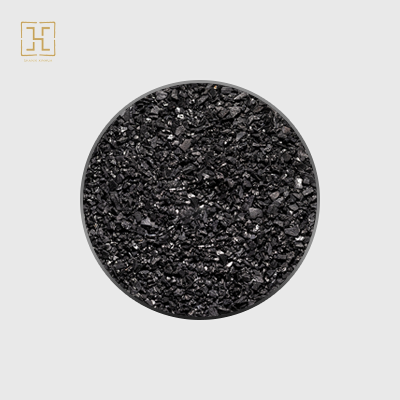
Once the material is activated, it is crushed to the required mesh size using industrial crushers that produce as few fines as possible. The broken material goes through precise screening systems that sort the bits into small groups. This makes sure that the bed works the same way in all customer uses.
During production, strict quality checks keep an eye on important factors like the iodine number (which shows the size of micropores) and the methylene blue number (which shows the structure of mesopores), as well as the hardness, ash content, and wetness level. These metrics give procurement managers objective proof of how well a product works, so they can compare it across suppliers.
Comparing Coal Briquette Crushing Methods and Their Business Implications
Selecting the appropriate crushing method and mesh size carries significant implications for both product performance and total cost of ownership in industrial applications.
Briquette-Derived Carbon Versus Direct-Crushed Coal
It cannot be stressed enough how different materials made by directly crushing raw coal are from those made by coal briquette crushing activated carbon. Crushing briquettes makes carbon with uniform pore distribution and high tensile strength. This makes a lot less dust and increases the service life. The quality of direct-crushed coal carbon isn't always uniform, and it wears away faster, which causes the pressure drop to rise and the bed to empty out too soon.
Studies with municipal water treatment plants have shown that briquette-crushed carbon keeps its ability to absorb water for 20 to 30 percent more regeneration cycles than alternatives that are crushed directly, and for Coal briquette crushing activated carbon, this extended service life translates directly into reduced downtime, lower replacement costs, and improved operational efficiency—all of which have a significant positive impact on the project's total economics. This means less downtime, lower replacement costs, and better operational efficiency, all of which have a big effect on the project's economics.
Mesh Size Selection and Performance Trade-offs
When choosing a mesh size, you have to weigh different factors. Larger mesh sizes, like 4x8, have low pressure drop and high flow rates, which makes them perfect for gas-phase uses where the cost of moving air has a big effect on running costs. These bigger particles also make regeneration easier and reduce the need for backwashing in liquid systems.
On the other hand, smaller meshes like 8×30 or 12×40 have more external surface area and shorter diffusion paths, which makes them better for uses that need to get rid of contaminants quickly. When contact time is short and maximum efficiency is needed, they work great in liquid-phase systems. But these smaller grades do cause more pressure drop, so support systems may need to be stronger.
Equipment Selection and Supplier Reliability
When looking for providers of breaking tools, you need to carefully consider their professional skills and customer service after the sale. Leading makers offer complete solutions that include crushers, screening systems, and dust collection tools that are made to work with activated carbon. Their equipment is made with fine engineering and materials that don't wear down easily, so it needs less upkeep and is up and running more of the time.
People who work in procurement should give priority to sellers who offer full technical support, performance promises, and fast service networks. Getting replacement parts and help with fixing problems quickly has a direct effect on the success of a project and the ability to keep production going.
Environmental and Economic Benefits of Crushing Coal Briquettes
The adoption of Coal briquette crushing activated carbon technology delivers measurable advantages in both environmental stewardship and financial performance—critical considerations for organizations navigating increasingly stringent regulations and competitive markets.
Sustainability Advantages
Making activated carbon from briquettes makes less trash than processing raw lump coal. Higher activation rates are possible because briquettes have a uniform makeup. This means that more of the input material is turned into a useful product instead of being wasted as fines or rejected material. This economy cuts down on the total amount of resources needed to make one tonne of finished activated carbon.
Briquette-crushed carbon has a higher dynamic strength and also allows thermal recovery, which means that the material can be heated up again and used again. This ability to regenerate greatly lowers the amount of spent carbon that needs to be thrown away, which lowers the production of hazardous waste and the costs of getting rid of it. This circular approach is becoming more and more valuable for industries that are under more and more pressure to show they care about the environment.
The briquette method is also better because it uses less energy during breaking and activation. Briquettes' controlled density makes it easier for heat to move more evenly during carbonisation and activation. This saves energy and speeds up the process. At production levels normal for making activated carbon in factories, these energy savings add up to a lot.
Economic Return on Investment
Coal briquette crushing activated carbon has many financial benefits over its entire lifecycle. The initial cost of materials may be a little higher than with direct-crushed options, but the total cost of ownership strongly favours the briquette method. Longer service life, less frequent repair, and the ability to regenerate all add up to a strong return on investment.
After moving to briquette-crushed products, water treatment plants have reported 15–25% lower yearly carbon emissions. This is because the new products work better and last longer, resulting in lower turnover rates. In the same way, industrial gas cleaning systems have fewer unplanned shutdowns and repair visits, which means they can keep output going longer and pay workers less.
More and more, procurement managers are aware that focusing only on the original price doesn't take into account the bigger view of the economy. It is much more useful to compare suppliers based on their total lifecycle costs, the quality of their technical support, and how reliable their deliveries are than just comparing prices.
Procurement Guide for Coal Briquette Crushing Solutions and Activated Carbon Products
Successful procurement of Coal briquette crushing activated carbon requires moving beyond generic specifications to develop a deep understanding of application requirements and supplier capabilities.
Defining Your Technical Requirements
Start planning your purchases by writing down your working conditions in clear language. Think about the contaminants you need to get rid of, as well as their concentrations, flow rates, temperatures, and any corrosive substances that might be present. These things tell you what kind of hole structure, mesh size, and chemical protection you should choose.
For water treatment, carbon with high iodine numbers (900–1100 mg/g) and the right methylene blue values are usually needed to get rid of colour and organics. To get rid of VOCs, you need carbon that has mesopore-rich structures and maybe some added catalysts for breaking down certain chemicals through oxidation. To get mercury out of waste gas, the carbon needs to be treated in a certain way, usually by adding sulphur or halogens.
Evaluating Supplier Qualifications
There are a few main things that set qualified activated carbon suppliers apart from commodity sellers, and for Coal briquette crushing activated carbon, this includes holding ISO 9001, ISO 14001, and ISO 45001 certifications for quality, environmental, and safety management, as well as industry-specific approvals like NSF/ANSI 61 for drinking water applications, which provide documented assurance of consistent product quality and regulatory compliance. Look for companies that have quality standards like ISO 9001, ISO 14001, and ISO 45001, which show that they are committed to consistent methods and constant growth. Industry-specific certifications, like NSF/ANSI 61 for drinking water applications, give you even more peace of mind that the rules are being followed.
The skill to use technology is very important. The best providers keep up study relationships with colleges and research centers, which helps them keep improving their recipes and production methods. Their expert teams can give you thorough information about speed, help with applications, and support for making changes that are specific to your problems.
Suppliers who can reliably meet demand are different from those who can't because of their production ability and how they handle their goods. Manufacturers with various production sites and large stocks of raw materials can make sure they always have supplies, even when the market is down. They can quickly fill orders because they keep a stock of commonly requested mesh sizes. This is very important when compliance deadlines are coming up, or unexpected equipment breaks down.
Building Strategic Supplier Relationships
Instead of buying activated carbon as a simple product, forward-thinking sourcing teams work together with sellers who are highly skilled. These relationships let both companies work together to solve problems, make products more specific, and keep improving their performance, which gives them a competitive edge.
Setting up outline deals with agreed-upon prices, quality standards, and delivery times makes the buying process easier for projects that are already underway. Open lines of contact and regular reviews of performance help find ways to improve and deal with problems before they affect operations. Suppliers who see themselves as partners instead of just sellers are the ones who give technical advice and quick service that makes a project a success.
Protocols for testing and sampling should be set up front, along with clear acceptance criteria and ways to settle disagreements. Reliable providers are happy to go through thorough testing and will gladly provide full technical data sheets, safety paperwork, and regulatory compliance certificates.
Conclusion
Coal briquette crushing activated carbon is a technically better way to do hard industrial adsorption tasks because it has regular pore design and is very durable mechanically. The briquetting method makes uniform, high-performance material that solves important problems like managing pressure drop, making recycling more efficient, and lowering the total cost of ownership. Companies that care about reliable environmental compliance, operational efficiency, and long-term value are becoming more aware that specification decisions need to consider more than just initial pricing. They also need to think about lifecycle performance, supplier technical capability, and the potential for strategic partnerships. Choosing the right mesh size for the job improves both the adsorption process and the system's flow, which has a direct effect on the project's success.
FAQ
What makes Coal briquette crushing activated carbon different from regular coal carbon?
Briquette-crushed carbon undergoes a manufacturing process where coal is pulverized, mixed with binders, and compressed before activation. This creates uniform pore distribution and higher mechanical strength compared to carbon made by directly crushing raw coal, resulting in less dust generation, better regeneration capacity, and longer service life.
Which mesh size should I select for my application?
Mesh size depends on your system requirements. Larger meshes like 4×8 or 8×16 work best for gas-phase applications and high-flow systems where low pressure drop is critical. Finer meshes such as 8×30 or 12×40 provide better performance in liquid-phase applications requiring maximum contact efficiency and rapid adsorption kinetics.
Can briquette-crushed activated carbon be regenerated?
Yes, the high mechanical hardness and uniform structure of briquette-crushed carbon make it exceptionally suitable for thermal regeneration. Properly designed carbon can withstand multiple reactivation cycles, significantly lowering total operating costs compared to single-use alternatives.
How does ash content affect activated carbon performance?
Lower ash content indicates higher carbon purity and more available surface area for adsorption. High ash levels can cause unwanted catalytic reactions, pH changes in treated water, and reduced adsorption capacity, making ash content a critical specification parameter.
Partner with a Trusted Coal Briquette Crushing Activated Carbon Manufacturer
Shanxi Xinhua Carbon Technology Industry Co., Ltd. brings over 60 years of materials engineering expertise to every Coal briquette crushing activated carbon solution we deliver. Our defense-grade quality systems, developed through decades of protecting critical operations, ensure consistent performance across our complete range of coal briquette crushing activated carbon products. We maintain 100% inventory coverage of core mesh sizes including 4×8, 8×16, and 8×30, enabling standard delivery within 7-15 days and expedited three-day shipping for urgent projects. Our technical collaboration with Tsinghua University and the Chinese Academy of Sciences drives continuous innovation in pore structure optimization and catalytic modification, delivering customizable solutions precisely matched to your VOCs removal, water purification, or gas treatment requirements. Whether you need ton-scale procurement for municipal water systems or specialized formulations for petrochemical applications, our team provides comprehensive technical consultation backed by ISO 9001, ISO 14001, and ISO 45001 certifications. Contact us today at greta@carbonxinhua.com to discuss your activated carbon requirements with our applications engineers and discover how our manufacturing capability can enhance your project performance and compliance outcomes.
References
1. Bansal, R.C., and Goyal, M. (2005). Activated Carbon Adsorption. CRC Press, Boca Raton.
2. Marsh, H., and Rodríguez-Reinoso, F. (2006). Activated Carbon. Elsevier Science, Amsterdam.
3. Derbyshire, F., Jagtoyen, M., Andrews, R., Rao, A., Martin-Gullon, I., and Grulke, E. (2001). "Chemistry and Physics of Carbon: Volume 27." Marcel Dekker, New York.
4. Activated Carbon: Solutions for Improving Water Quality (2012). American Water Works Association, Denver.
5. Toles, C.A., Marshall, W.E., and Johns, M.M. (1997). "Granular Activated Carbons from Nutshells for the Uptake of Metals and Organic Compounds." Carbon, 35(9), 1407-1414.
6. Yang, R.T. (2003). Adsorbents: Fundamentals and Applications. John Wiley & Sons, Hoboken.

Send Inquiry
You may like
_1781662034490.webp)