_1778553121707.webp)
What Is 8-16 Coal Quality Crushing Carbon and How Is It Used?
Jul 01, 2026
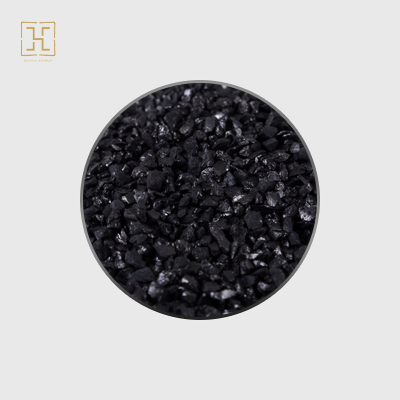
It's important to be precise when looking for adsorption materials for treating gas or water in factories. The term "8-16 Coal Quality Crushing Carbon" describes granular activated carbon that is made by carefully crushing and activating high-grade bituminous coal and has a size between 8 and 16 mesh (or about 1.18 and 2.36 millimeters). This particle size strikes a perfect balance between mass transfer efficiency and surface area exposure. This makes it very good at getting rid of organic contaminants, smells, heavy metals, residual chlorine, and volatile organic compounds in drinking water systems, industrial wastewater treatment plants, and large-scale air purification applications.
Understanding 8-16 Coal Quality Crushing Carbon
Granular activated carbon made from coal in the 8x16 mesh range is a choice made on purpose by engineers. The mesh number means that particles go through an 8-mesh screen but stay on a 16-mesh screen. This makes a middling particle distribution that is good for both liquid and gas-phase adsorption.
Material Composition and Manufacturing Process
Key Physical and Chemical Properties
There are benefits to using broken coal carbon because of its irregular, angular shape in filters. Unlike spherical media, these particles connect as the bed fills up. This creates even porosity and stops flow lines or channels from being preferred. The product from Shanxi Xinhua Carbon Technology Industry Co., Ltd. has an iodine number between 800 and 1100 mg/g, which means it has a lot of micropores. If the bulk density is measured between 380 and 580 g/L and the error is less than 3%, you can be sure that the hydraulic behavior will be reliable. Hardness values above 90% make sure that the carbon can handle mechanical stress during backwashing processes and hydraulic shipping without wearing down too quickly.
Performance Metrics That Drive Selection
In 8-16 Coal Quality Crushing Carbon, the ability to absorb something is directly linked to the growth of pores. There are a lot of active sites for contaminant molecules in this mesh range because the surface holes are well-developed. The medium particle size speeds up mass transfer rates compared to smaller materials, which makes it easier for target chemicals to get to adsorption sites inside the material more quickly. Your system reaches balance more quickly, so less touch time is needed. Fines that can clog downstream equipment or get out of filters through underdrains are kept to a minimum when abrasion loss is below 2%.
Industrial Applications Across Water and Gas Treatment
Coal-based activated carbon with an 8x16 mesh size is useful for a variety of treatment situations where long-term cost savings depend on its dependability and ability to regenerate.
Municipal Drinking Water Purification
Industrial Wastewater Treatment Systems
Activated carbon is used for secondary cleaning and release compliance in factories that make sludge with phenols, dyes, solvents, or petrochemical residues. Fixed-bed adsorbers filled with 8x16 mesh carbon can handle varying amounts of influent while keeping their removal efficiency. The carbon buffer's ability to stop breakthroughs happens when chemical oxygen demand (COD) levels change. During the pre-sales phase, Shanxi Xinhua offers free packing density testing and COD-based standard advice. This makes sure that you choose carbon that is right for the chemistry of your wastewater.
Groundwater Remediation Projects
Long-term cleaning options are needed for polluted groundwater that has chlorinated solvents, petroleum hydrocarbons, or pesticide leftovers in it. Granular activated carbon contactors that are put in at the wellheads or as parts of a pump-and-treat system remove contaminants consistently over long periods of time. Compared to single-use media, coal-based carbon can be reused, which lowers the number of times it needs to be replaced and the cost of removal.
Air Purification and VOC Abatement
Large-scale industrial workshops that make chemicals, electronics, coatings, and prints release volatile organic compounds that need to be captured before they can be released into the air. Adsorbers with moving beds and fixed beds that are filled with 8-16 Coal Quality Crushing Carbon, an 8x16 mesh carbon material, can work at flow rates of 1 to 1.5 m/s without carbon blowout or too much pressure drop. The bulk density uniformity of the material stops fluidization in tall buildings. Shanxi Xinhua's product has a better pore design created through partnerships with Tsinghua University and the Chinese Academy of Sciences, which makes it over 20% more effective at adsorption than regular carbons.
Solvent Recovery Operations
Activated carbon beds are added to process air systems by companies that use a lot of acetone, toluene, ethanol, or other solvents that can be recovered. During production, the carbon soaks up solvent fumes. After steam regeneration, the concentrated solvent is released so it can be recovered and used again. Because it is thermally stable and regenerates well, carbon from coal is a good choice for these cycle uses.
Engineering Advantages in System Design
The adsorption media's physical properties have a big impact on how well your treatment system works. The 8x16 mesh name has specific benefits for operations.
Hydraulic Performance and Pressure Drop
The size of the particles has a direct effect on the bed's porosity and flow resistance. Coarser materials, like 4x8 mesh, have lower pressure drop but use less surface area. Finer materials, like 12x40 mesh, make the surface touch better, but they cause too much headloss in deep areas. The 8x16 range, such as 8-16 Coal Quality Crushing Carbon, is a good compromise for engineers, especially when working with moving beds and needing to keep the balance between gravity flow and hydraulic transportation for carbon that is always moving. A bulk density variation of less than 3% keeps settling rates steady and stops segregation caused by density during tank filling or carbon transfer operations.
Compatibility With Process Equipment
8x16 mesh carbon works well in both fixed-bed and moving-bed adsorption systems. In fixed-bed arrangements, the particle size stops them from moving through normal underdrain systems while still leaving enough empty room for backwash expansion. The material's flowability is good for moving-bed designs because particles move smoothly through transfer lines and distribution systems without sticking together or ratholing. Shanxi Xinhua keeps tens of thousands of tons of ready-to-ship goods in storage at production bases in Shanxi, Ningxia, Fujian, and Xinjiang. This way, your project can stay on schedule whether you need to ship right away or use staged delivery for installations that happen in stages.
Regeneration Economics and Lifecycle Costs
Activated carbon has a much longer useful life after thermal recovery. Coal-based carbon, including 8-16 Coal Quality Crushing Carbon, can be reactivated many times in kilns that are heated to 800–900°C and have controlled atmospheres. If the hardness is above 90%, it means that the particles will keep their shape even when they are heated or handled mechanically. Instead of buying new carbon all the time, you can lower your running costs by regenerating carbon over and over again. Shanxi Xinhua gives detailed advice on regeneration, such as suggested cycles, temperature profiles, and expected performance levels after each restart.
Quality Assurance and Specification Compliance
In environmental engineering, choices about what to buy are based on performance data and approval paperwork that can be checked.
Testing Protocols and Performance Verification
Customization Capabilities
Your application may need specs that are different from what is normally available. Shanxi Xinhua works with top research institutions on research and development, which lets them change the shape of pores, the chemistry of the surface, and the properties of particles. Engineers can change the activation conditions to focus on micropore or mesopore growth, depending on the molecular size of the target contaminant. Adding acids or bases to the surface changes how pH behaves in water-based systems. The company makes powder, granular, columnar, and honeycomb shapes, and can make custom mixtures to meet specific cleaning needs.
Supply Chain Reliability
Conclusion
The success of a cleaning system depends on choosing the right activated carbon standard. For tough uses like water and air cleaning, 8-16 Coal Quality Crushing Carbon provides the exact particle size, pore structure, and mechanical strength needed. Shanxi Xinhua Carbon Technology Industry Co., Ltd. offers more than just a normal product. They have been in the material science field for more than 60 years and follow strict defense-grade manufacturing standards. The ability to produce 45,000 tons per year, the large inventory, the ability to deliver quickly, and the expert technical support all help you with your most important buying issues, such as ensuring performance, making sure you have a reliable supply chain, and lowering your overall lifecycle costs.
FAQ
What Makes 8x16 Mesh Superior to Finer Mesh Sizes Like 12x40?
When controlling pressure drop is very important, the 8x16 size range is very helpful. Finer materials, like 12x40 mesh, cause too much resistance in high-flow liquid or gas systems. This makes more energy be used and could limit flow rates. The slightly bigger particle size keeps enough surface area and improves fluid flow through the carbon bed, which lowers costs without affecting the performance of adsorption.
Can This Carbon Undergo Thermal Regeneration Multiple Times?
Of course. This material is very good for multiple heat reactivation cycles because it is made in a briquetted process and is very hard. At 800-900°C, furnace renewal burns off contaminants that have stuck to the surface and partly fixes the structure of the pores. Particles that are harder than 90% can withstand heat stress and mechanical handling. Customers usually get three to five regeneration rounds before they need to be replaced. This means that the total cost of ownership is much cheaper than with non-regenerative media.
How Does Ash Content Affect Treatment Performance?
A lower ash percentage means that the material is purer and has more surface area available for adsorption. Too much ash can start catalytic reactions that aren't needed, especially when treating water, where changes in pH can affect processes further down the line. Shanxi Xinhua's high-quality coal-based carbon keeps ash levels in check, so the adsorption process is reliable and doesn't mess up your treatment chemistry too much. This regularity is very important, especially in delicate situations like treating water for pharmaceuticals or making food.
Partner With Shanxi Xinhua Carbon Technology for Reliable Adsorption Solutions
Working with a seasoned 8-16 Coal Quality Crushing Carbon manufacturer who is familiar with both material science and industry process standards is essential to achieving environmental compliance. Shanxi Xinhua Carbon Technology Industry Co., Ltd. has been making defense-grade products for decades and works with cutting-edge research groups to make activated carbon that meets the strictest requirements. Whether you need quick inventory for an urgent cleanup job or custom formulations for specific uses, our technical team can help you with everything, from choosing the right specifications to making sure they work well for a long time.
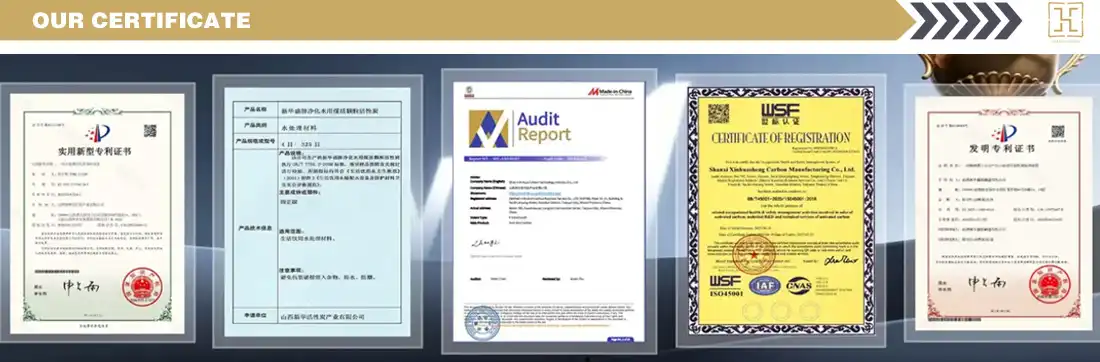
Get in touch with our technical experts at greta@carbonxinhua.com to talk about your unique air or water treatment problems. We provide free packing density analysis, COD-based carbon selection advice, and thorough technical paperwork that includes upkeep and regeneration routines for moving beds. We are ready to help you succeed with your procurement. Our production bases are ideally placed across the country, and we have ISO-certified quality systems and a reliable supply chain that serves petrochemical plants, local water authorities, and environmental companies all over the world. Find out how our 8-16 Coal Quality Crushing Carbon source can improve the performance of your treatment system by requesting your technical data package and quote today.
References
1. Chen, W., Zhang, L., & Wang, H. (2021). Activated Carbon: Fundamentals and Applications in Water and Wastewater Treatment. Chemical Industry Press.
2. American Society for Testing and Materials. (2020). ASTM D4607-20 Standard Test Method for Determination of Iodine Number of Activated Carbon. ASTM International.
3. Bandosz, T. J. (Ed.). (2019). Activated Carbon Surfaces in Environmental Remediation. Interface Science and Technology Series, Volume 28. Elsevier.
4. Marsh, H., & Rodriguez-Reinoso, F. (2021). Activated Carbon: Properties and Performance in Environmental Applications. Springer.
5. National Institute of Environmental Health Sciences. (2022). Industrial Air Filtration: Best Practices for VOC Control Using Granular Activated Carbon. Environmental Engineering Technical Report Series.
6. United States Environmental Protection Agency. (2023). Granular Activated Carbon Treatment for Drinking Water Contamination: Technical Guidance Manual. EPA Water Treatment Standards Division.

Send Inquiry
You may like
_1781662034490.webp)