_1778553121707.webp)
What Is 4×8 Mesh Coal Briquette Activated Carbon Used For?
Jul 21, 2026
4*8 mesh coal briquette crushing activated carbon is a special kind of carbon that is used to fill in performance gaps that regular carbons can't. It is used in systems for environmental compliance and cleaning up factories. To make this engineered carbon, high-grade bituminous coal is ground into a fine powder, mixed with a controlled binder system, and then pressed under high pressure to form dense briquettes. The material is then carbonised and activated by steam. The briquettes are then broken up and carefully screened to a size of 48 mesh, which is between 2.36 mm and 4.75 mm. This method creates a filtration material with uniform pores, high mechanical strength, and low dust production. This makes it essential for high-stakes applications in VOC removal, solvent recovery, and industrial air purification.
Understanding the technical details, real-world uses, and procurement issues of this material gives engineering managers and procurement leaders the power to make smart choices. This guide gives B2B workers useful information for dealing with strict legal settings, demanding customisation needs, and the constant pressure to find a balance between operating performance and cost.
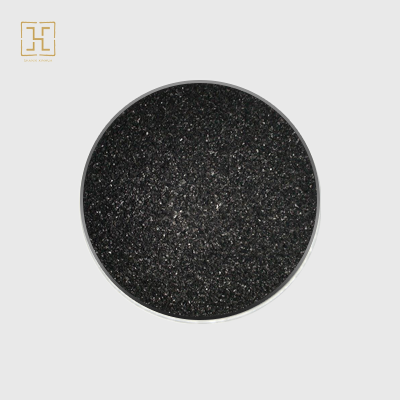
Understanding 4*8 Mesh Coal Briquette Activated Carbon
What Defines the 4*8 Mesh Specification?
Understanding the technical details, real-world uses, and procurement issues of this material gives engineering managers and procurement leaders the power to make smart choices. This guide gives B2B workers useful information for dealing with strict legal settings, demanding customisation needs, and the constant pressure to find a balance between operating performance and cost.
Production Process and Quality Foundations
The managed production process of coal cake crushing technology makes 4*8 mesh coal briquette crushing activated carbon different from direct-crushed raw coal carbon. When pulverised coal is mixed evenly with a binding agent and pressed together under pressures higher than 10 MPa, briquettes with a uniform density are made. These are carbonised at temperatures between 600°C and 800°C, and then activated by steam at 800°C to 1000°C. This creates a complex network of micro-, meso-, and macropores. The activated briquettes are then crushed and sieved until the required mesh size is achieved. This process produces carbon with high hardness (usually more than 95% hardness according to ASTM D3802) and a bulk density of 450–550 g/L. As a result, it provides excellent resistance to wear and crushing during handling and regeneration cycles.
Key Technical Parameters
Standard scientific specs include an iodine number between 900 and 1100 mg/g, which means the material has a lot of micropores that can adsorb small molecules, and a carbon tetrachloride (CTC) adsorption capacity between 50% and 70%, which shows that it works well in the gas phase. The ash content stays below 12%, which keeps impurities from getting in and stops unwanted catalytic reactions or pH changes in cleaned streams. The pH level is neutral to slightly alkaline, and there aren't many heavy metals in it. It meets strict safety and environmental standards, such as ISO 9001 quality management and ISO 14001 environmental certifications.
Applications and Industrial Uses of 4*8 Mesh Coal Briquette Activated Carbon
Industrial VOC Abatement Systems
Volatile organic substances like benzene, toluene, xylene, and acetone are very bad for your health and can be hard for painting, printing, and electronics factories to deal with. The 4*8 mesh coal briquette crushing activated carbon works really well in large-scale exhaust treatment and air stripping systems where a lot of airflow needs materials that don't break down into tiny pieces when the air is moving quickly. The briquette's structure keeps dust from forming and the bed from getting too compacted, so the pressure drop and adsorption efficiency stay the same over long periods of time. Facilities that use this carbon report big drops in VOC emissions, which helps them meet EPA and state air quality standards while cutting down on the time they have to shut down for media renewal.
Solvent Recovery in Chemical Processing
To get expensive solvents back from vapour streams in chemical processing plants, activated carbon needs to be able to go through many thermal or vacuum regeneration cycles without losing much of its capacity. Briquette carbon is very hard and has pores that are all the same size. This means that it can be heated over and over to 120°C to 150°C to remove solvents, then cooled down and used again. The total cost of ownership is much lower than with single-use media because the cycle can be used again and again. Processing plants that deal with dichloromethane, ethanol, and isopropanol are able to recover more than 90% of the chemicals they use. This saves money and protects the environment.
Gas Mask and Respiratory Protection
Manufacturers of industrial safety equipment put 4*8 mesh coal briquette crushing activated carbon into containers that are designed to filter poisonous gases and vapours in petroleum, mining, and hazardous waste environments. The uniform particle size makes it possible to predict flow resistance and breakthrough time, which are critical for worker safety. The high CTC value of the carbon enables it to quickly capture hydrogen sulphide, ammonia, and chlorine. This outstanding performance has been verified through strict testing procedures that comply with NIOSH 42 CFR Part 84 standards.
Municipal and Industrial Water Treatment
The 4*8 mesh size was originally designed for gas-phase uses, but it is also used in high-flow liquid systems that need low head loss, like the pre-filtration steps in drinking water plants and industrial wastewater facilities. Its large pores make it easy for organic contaminants, chlorine, and taste and odour compounds to move through quickly. At the same time, its mechanical strength stops fragmentation and the formation of fines that could clog membranes or ion exchange resins further downstream.
Comparing 4*8 Mesh Coal Briquette Activated Carbon with Other Solutions
Granular vs. Briquette Crushed Carbon
The 4*8 mesh size was originally designed for gas-phase uses, but it is also used in high-flow liquid systems that need low head loss, like the pre-filtration steps in drinking water plants and industrial wastewater facilities. Its large pores make it easy for organic contaminants, chlorine, and taste and odour compounds to move through quickly. At the same time, its mechanical strength stops fragmentation and the formation of fines that could clog membranes or ion exchange resins further downstream.
Mesh Size Selection for Optimal Performance
The choice of 48 mesh coal briquette crushing, activated carbon, 816 mesh, or 1240 mesh relies on the flow rate of the system, the size of the contaminants, and the amount of pressure drop that can be handled. The 48 mesh coal briquette crushing activated carbon has the least amount of resistance in high-speed situations, which makes it perfect for big exhaust stacks and quick solvent recovery systems. Smaller mesh sizes, like 12*40 mesh, have more surface area on the outside, which helps bigger organic molecules stick to the liquid phase, but it costs more in pumping energy.
Addressing Common Limitations
Even though the 4*8 mesh has great flow properties, its bigger particle size can make it slightly less able to absorb volume than smaller grades. System builders can fix this by making the bed deeper or using adsorption trains with multiple stages that balance capacity and pressure drop. The risk of particle degradation can also be lowered by following the right handling procedures and using equipment that reduces vibrations during travel and packing.
Procurement Guide for 4*8 Mesh Coal Briquette Activated Carbon
Identifying Reputable Suppliers
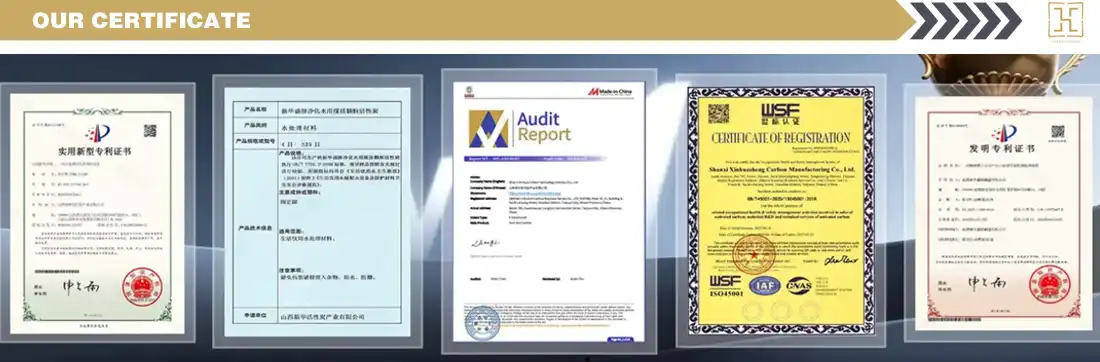
Buyers in business-to-business (B2B) must give more weight to sellers who have multiple licenses, such as ISO 9001, ISO 14001, and ISO 45001, which make sure that strict rules for quality, safety, and the environment are followed, and for 4*8 mesh coal briquette crushing activated carbon, this certification portfolio is especially important because the material is used in critical water treatment and air purification applications where consistency and purity are non-negotiable. Shanxi Xinhua Carbon Technology Industry Co., Ltd. has been making defense-grade chemical protection materials for more than 60 years. They have production bases in Shanxi, Ningxia, Fujian, and Xinjiang, and can make 45,000 tonnes of products every year. This spread out geographical coverage and deep inventory ensure that all core products are always in stock. This means that standard deliveries can happen within 7 to 15 days, and custom formulations can happen within 15 to 30 days.
Pricing, MOQ, and Logistics Considerations
Evaluating Supplier Technical Capabilities
Working with study groups like Tsinghua University, Central North University, and the Chinese Academy of Sciences makes it easier for suppliers to make unique changes to pore structures, develop loaded catalysts, and make mixtures that are best for specific applications. To make sure it works with their process, procurement teams should ask for performance proof data like adsorption isotherms, breakthrough curves, and renewal cycle durability.
Maximizing Performance and Application Outcomes
Best Practices for Storage and Handling
Troubleshooting Operational Challenges
Bed channelling, early breaking, and high pressure drop are all signs of possible problems, such as uneven packing, moisture contamination, or too many particles. Monitoring the difference in pressure and wastewater percentage on a regular basis, along with regular bed checks, allows for proactive repair. Instead of set times, thermal renewal plans should be optimised based on real loading rates. This will keep the carbon active and increase the service life.
Emerging Trends and Innovations
New developments in binder chemistry and activation methods are making briquette carbons with more macroporosity to capture large molecules and surface-treated versions to selectively adsorb certain contaminants like hydrogen sulphide or mercury. Sustainability programs push the creation of bio-based binders and activation methods that use less energy. This helps companies meet their environmental goals without lowering performance.
Conclusion
The 4*8 mesh coal briquette crushing activated carbon is a high-tech answer to industrial filter problems that need low pressure drop, high mechanical strength, and the ability to grow back. Because of its designed pore architecture, strict production standards, and proven success in VOC removal, liquid recovery, and lung protection, it is the best choice for meeting environmental standards and running a business efficiently. Partnering with certified suppliers that offer technical customisation, reliable supply chains, and full support is good for procurement professionals. Engineering managers can improve adsorption systems, lower lifetime costs, and stay in line with regulations in stricter industry settings by learning about the material's qualities, uses, and how it is bought.
FAQ
What industries benefit most from 4*8 mesh coal briquette activated carbon?
The most value is gained by industries that need to clean a lot of petrol, like those that process petrochemicals, treat volatile organic compounds (VOCs), recover solvents, and filter industrial air. It can handle large-scale continual activities because it has a low pressure drop and is mechanically durable.
How does briquette crushed carbon differ from direct crushed coal carbon?
Crushed carbon is made in a controlled process that includes pulverisation, binding, briquetting, carbonisation, and activation. This gives the carbon a uniform pore structure and makes it harder. This consistency is missing from direct crushed carbon, which makes more dust and less consistent performance.
Can a 4*8 mesh carbon be thermally regenerated?
Yes, the high mechanical strength lets it be thermally reactivated many times at temperatures between 120°C and 150°C. This lowers the total cost of ownership by a large amount and helps meet sustainability goals.
What is the typical shelf life?
The carbon will keep its ability to adsorb things for three to five years if it is kept in a cool, dry, sealed place away from oxidisers. Re-testing activity after a long period of storage makes sure that performance is at its best.
Partner with Shanxi Xinhua Carbon Technology Industry Co., Ltd. for Reliable Activated Carbon Supply
The Shanxi Xinhua Carbon Technology Industry Co., Ltd. produces defense-grade 4*8 mesh coal briquette crushing activated carbon. They have been in business for 60 years, have strict ISO certifications, and work with Tsinghua University and the Chinese Academy of Sciences on advanced research projects. Our network of production bases across multiple countries guarantees instant access, quick response times (within 24 hours), and fast shipping through dedicated transportation channels. Our technical team can help with emergency compliance, OEM branding, or custom pore structures for your project. They can also make solutions that meet strict regulatory standards and operational goals. Contact our specialist team at greta@carbonxinhua.com to discuss your procurement needs and request performance data for your specific application. Visit xhcarbontech.com to explore our comprehensive product portfolio and capabilities as a trusted 4*8 mesh coal briquette crushing activated carbon supplier.
References
1. American Society for Testing and Materials. (2019). Standard Test Method for Determination of Iodine Number of Activated Carbon. ASTM D4607-14.
2. Bansal, R. C., & Goyal, M. (2005). Activated Carbon Adsorption. CRC Press.
3. Marsh, H., & Rodríguez-Reinoso, F. (2006). Activated Carbon. Elsevier Science.
4. National Institute for Occupational Safety and Health. (2018). NIOSH Guide to the Selection and Use of Particulate Respirators. Publication No. 96-101.
5. United States Environmental Protection Agency. (2020). Control of Volatile Organic Compound Emissions from Stationary Sources. 40 CFR Part 60.
6. Yang, R. T. (2003). Adsorbents: Fundamentals and Applications. John Wiley & Sons.

Send Inquiry
You may like
_1781662034490.webp)