_1778553121707.webp)
What is 100-hole coal-based honeycomb carbon? Definition, Manufacturing & Application
Jul 15, 2026
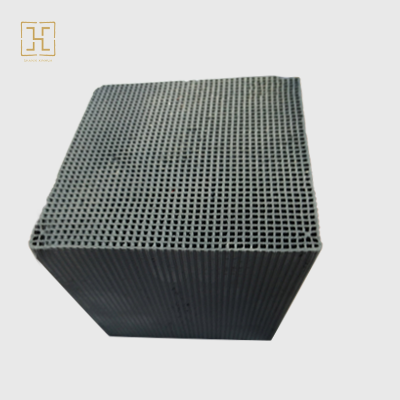
100-hole coal-based honeycomb carbon represents a specialized activated carbon material engineered with exactly 100 uniformly distributed channels running through its honeycomb structure. Manufactured from premium coal-derived precursors, this material delivers exceptional adsorption performance for volatile organic compounds (VOCs), toxic gases, and industrial pollutants. The distinctive 100-hole configuration balances surface area, mechanical strength, and pressure drop characteristics, making it particularly effective for gas-phase purification in industrial exhaust systems, spray painting operations, and environmental compliance projects where cost efficiency meets reliable performance.
Understanding 100-Hole Coal-Based Honeycomb Carbon: Core Technical Definition
This material's structure is based on its exact channel arrangement, which is what makes it good at filtering and working well in industrial settings.
What Defines the 100-Hole Configuration
100-hole coal-based honeycomb carbon usually measures 100x100x100mm and has square-shaped channels that make a good mix between airflow and adsorption area. The iodine value is between 450 and 850 mg/g, and the BET specific surface area is between 500 and 900 m³/g. The rate at which Carbon Tetrachloride (CTC) is absorbed is 35–65%, which means that it can effectively collect gases. In contrast to honeycomb designs with 50 or 200 holes, the 100-hole version strikes the perfect balance between touch time and system pressure needs.
Thermal and Mechanical Properties
When the compressive strength is higher than 0.8 MPa, the materials can be stacked safely in big adsorption towers without the structure deforming under working loads. Advanced water-resistant formulations allow continued performance in settings with humidity levels above 90%. This keeps pores from getting clogged and structures from weakening, which are problems that regular activated carbon materials have. Keeping the ash level below 20% lowers the chance of secondary pollution and increases the service life. Because of these qualities, the material can be used in tough petrochemical processes, to treat petrol from refineries, and to clean high-temperature industrial exhaust where dependability is essential.
Comparison with Ceramic and Metal Substrates
Ceramic honeycomb shapes are very resistant to chemicals, but they can't absorb as much as coal-based activated carbon can. While metal surfaces are better at conducting heat, they are also very heavy and can rust in environments that are acidic or wet. The coal-based 100-hole design strikes a good mix between being strong enough for industrial use, being easy to install, and having natural adsorption qualities that mean you don't need to use any extra coating processes. For environmental engineering companies that are in charge of multiple VOC treatment projects, this combination lowers both the initial investment cost and the long-term upkeep costs.
Manufacturing Process of 100-Hole Coal-Based Honeycomb Carbon
The quality of production has a direct effect on how well it works in the field. This is why procurement workers need to understand the manufacturing process of 100-hole coal-based honeycomb carbon in order to evaluate supplier skills and product consistency.
Raw Material Selection and Preparation
Shanxi Province's high-quality anthracite coal is used as the main fuel because it has low ash content, the right amount of flammable matter, and a stable carbon structure. The coal is crushed and screened to make sure that the particles are all the same size. It is then mixed with organic binders and plasticisers to make a paste that can be pushed through a die. The consistency of the raw material affects the consistency of the finished product. This is why well-known manufacturers keep long-term relationships with certified coal suppliers and test incoming materials according to protocols that check their chemical makeup, particle size distribution, and moisture content before they start making things.
Extrusion and Structural Formation
The ready-made paste is fed into high-precision extruder equipment that has dies with exactly 100 channel holes. Pressure, temperature, and speed are some of the extrusion factors that need to be carefully controlled to keep the channel from deforming or getting blocked. The elongated blocks are dried in a controlled way to get rid of the water without cracking or bending them. This step needs high-tech tools and skilled workers, because if it's not done right, the drying process can cause internal stresses that weaken the structure during the next high-temperature step. To make sure that the dimensions stay the same, good makers use automated moisture tracking and drying rooms with multiple stages.
Carbonization and Activation
When dried blocks are put into carbonisation kilns, the temperatures slowly rise to between 600°C and 900°C in environments with little air. This removes volatile compounds and creates the first carbon structure. The next step is the activation phase, which involves adding steam or carbon dioxide at temperatures between 800 and 1000°C to create the microporous structure that is needed for adsorption to work. To get the desired surface area and pore size distribution, the activation time and temperature curves are carefully managed. Companies with decades of experience, like those with more than one production base, can fine-tune the activation settings to meet the needs of each customer for each type of VOC, whether they are looking for light hydrocarbons, fragrant compounds, or gases that contain sulphur.
Quality Assurance and Testing
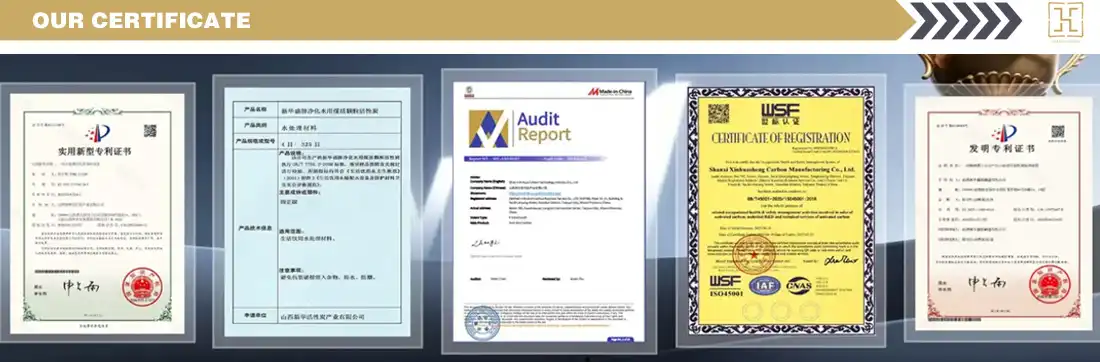
Each production batch goes through a lot of tests, such as measuring the compression strength, finding the Iodine Value, making sure the CTC binding capacity is correct, and making sure the dimensions are correct. Advanced makers keep their ISO 9001, ISO 14001, and ISO 45001 certifications and use strict quality control systems that keep track of every aspect of production. Before goods are shipped, they are checked in physical testing labs that have BET surface area analysers, mechanical testing machines, and gas chromatography systems to make sure they meet both standard specs and specific performance needs.
Comparative Analysis: 100-Hole vs. Alternative Configurations
Knowing the differences between configurations helps procurement managers choose the most cost-effective option for 100-hole coal-based honeycomb carbon for certain legal and business needs.
100-Hole vs. 200-Hole Performance Trade-offs
The 200-hole design gives the material more surface area per unit volume, which could make it better at absorbing low-concentration VOC streams. But this means there is a bigger pressure drop, which means stronger fans are needed, and more energy is used. The 100-hole design works well in places where there are moderate to high levels of VOCs and a lot of wind, like in spray booth exhaust systems and industrial printing processes. Pressure drop stays below 450Pa most of the time, which lowers running costs and keeps adsorption efficiency above 90% for most organic vapours.
Cost-Performance Positioning
When compared to speciality coconut shell carbon or impregnated versions, 100-hole coal-based honeycomb carbon offers solid performance at a price that buyers on a budget value. Because this setup makes manufacturing more efficient, suppliers can keep stock on hand and offer shorter wait times. Standard delivery within 5–7 working days keeps projects on track without charging extra for faster delivery. Small and medium-sized businesses have a lot of problems that this material tries to solve. It helps them get VOC compliance at a low cost, buy it easily, and know what the performance will be like without having to make a lot of changes.
Applications and Industry Uses of 100-Hole Coal-Based Honeycomb Carbon
100-hole coal-based honeycomb carbon has many uses in different fields. Real-world performance in a variety of industries proves the material's adaptability and gives procurement leaders faith when they are looking at new sources or possible material replacements.
VOC Treatment in Manufacturing Facilities
Spray painting workshops, printing presses, and finishing operations all release large amounts of organic vapours that need to be treated all the time to meet stricter environmental rules. The 100-hole honeycomb carbon that is put in adsorption towers effectively removes these chemicals, allowing facilities to meet pollution limits without having to pay expensive fines or shut down operations. Another benefit is that they are easy to install—standard 100x100x100mm blocks fit current tower designs without any changes—and replacement procedures only take about two hours, so planned maintenance doesn't have to stop production too often.
Industrial Air Purification Systems
Industrial facilities that make electronics, metalworking, and chemicals use these carbon blocks in centralised air cleaning systems that keep workers and equipment healthy. The fact that the material is stable even when the humidity changes makes it very useful in situations where the process conditions change. Its ability to keep its shape in high-moisture areas stops channels from collapsing, which would raise pressure drop and lower treatment capacity. Longer service lives and predictable performance decline curves help facilities with ongoing production schedules plan repairs without having to shut down in an emergency.
Petrochemical and Refinery Applications
Chemical plants and refineries have to deal with corrosive gas streams and high working temperatures that make it hard for regular activated carbon products to work. Coal-based honeycomb carbon can be used to treat waste gas, control vent gas from storage tanks, and clean process streams because it is strong and doesn't change shape when heated or cooled. Important safety and environmental protection functions are supported by the material's ability to keep its structural integrity and adsorption performance under tough conditions. These facilities' purchasing managers like suppliers with various production bases and large storage holding capacities. This way, they can be sure of a steady supply for both large-scale needs and sudden restocking requirements.
Procurement Guide for 100-Hole Coal-Based Honeycomb Carbon
When you do strategic sourcing for 100-hole coal-based honeycomb carbon, you need to know about your suppliers' support services, pricing, and skills that go beyond basic product specs.
Evaluating Supplier Credentials
Reputable makers keep a full set of certificates, such as ISO quality management systems, environmental management certifications, and product-specific approvals, like licenses for drinking water safety in municipal settings. Working with research institutions like universities and national labs shows that you are dedicated to making products better and coming up with new technologies all the time. Suppliers with more than 60 years of experience researching materials and more than 20 years of experience making things on a big scale offer steadiness and knowledge that newcomers to the market can't match. These qualifications mean constant product quality, the ability to solve technical problems, and a reliable supply during market disruptions.
Understanding Pricing and Lead Times
Standard 100-hole coal-based honeycomb carbon usually ships within 7–15 days for in-stock items, and the price structure allows for both one-time sales and framework supply contracts for long-term partnerships. Orders of one tonne or more are common in industry buying and qualify for volume discounts. Custom specs that need different pore structures, special impregnation, or non-standard dimensions add 15 to 30 days to the wait time, but they let you get the best performance for your specific needs. Environmental engineering companies that have to deal with unpredictable project timelines can benefit from suppliers who offer quick response times, such as 24-hour quote turnaround and faster three-day delivery routes for compliance emergencies.
Technical Support and After-Sales Service
Professional sellers are different from basic vendors because they offer more than just delivering goods. Buyers can get help from technical experts to choose the right specs for their VOC profiles, airflow rates, and working conditions. Sample testing tools let you check how well something works before you commit to a full sale. Help with installation, suggestions for improving speed, and support for fixing problems all help the system work better and last longer. These services are especially helpful when adding activated carbon systems to infrastructure that is already in place or fixing performance problems that come up out of the blue and put compliance dates at risk.
Conclusion
The 100-hole coal-based honeycomb carbon fills an important gap in industrial gas purification by providing stable VOC capture performance, mechanical sturdiness, and cost-effectiveness that appeals to procurement professionals who have to balance technical needs with limited budgets. Because of its standard sizes, reliable performance, and wide availability, it is an easy option for environmental compliance projects in the municipal, petrochemical, and factory sectors. When you choose providers with strong quality systems, large production capacities, and full expert support, you're not only getting the product you need, but also a partner in reaching your operational and environmental goals.
FAQ
What advantages does 100-hole coal-based honeycomb carbon offer over granular activated carbon?
The honeycomb structure lowers pressure drop compared to packed beds of powdered carbon, which lowers the cost and energy use of the fan. The even channel shape gets rid of channelling effects that make touch less effective in granular beds. The repair and installation processes are easier and faster, which cuts down on system downtime. The standard block format also makes it easier to handle supplies and plan for capacity.
Can this material handle high-humidity industrial exhaust streams?
Yes, modern formulas have water-resistant features that keep the structure strong and the ability to absorb water in places with more than 90% relative humidity. Unlike regular activated carbon, which may soften or get clogged pores when it gets too wet, water-resistant versions keep working well, so they can be used in humid coastal areas, process gases that are full of steam, and wet scrubber downstream uses.
How do I determine the right quantity for my application?
The calculation is based on the amount of exhaust flows, the quantity of VOCs, how well they need to be removed, and how often they should be serviced. For modest VOC levels, a general rule of thumb is to use 1-2 cubic meters of honeycomb carbon per 10,000 m³/h of airflow. Manufacturers that offer technical consultation services can give you exact sizing advice based on your unique factors. This way, you can make sure that your system works at its best without buying too much material.
Partner with a Trusted 100-Hole Coal-Based Honeycomb Carbon Manufacturer
Shanxi Xinhua Carbon Technology Industry Co., Ltd. combines over six decades of activated carbon research with defense-grade manufacturing systems to deliver exceptional adsorption materials for demanding industrial applications. Our many production bases in China maintain a large stock of 100-hole coal-based honeycomb carbon, so we can quickly meet your needs for purchase. Standard delivery takes 7–15 days, and emergency green-channel shipping takes just three. We work closely with Tsinghua University, the Chinese Academy of Sciences, and other top research centers to improve the performance of our products all the time. We can make the pore structures, surface modifications, and impregnation options more specific to your VOC profiles and operating conditions. Our expert team can help you with everything from choosing the right materials to making sure the installation goes smoothly. This is true whether you need to place orders by the tonne for big environmental engineering projects or with specific requirements for unique uses. Get in touch with us at greta@carbonxinhua.com to talk about your needs for 100-hole coal-based honeycomb carbon with experts who are dedicated to providing you with dependable goods and quick service that helps you achieve your compliance objectives and run your business successfully.
References
1. Zhang, L. (2019). Advanced Activated Carbon Materials for Industrial Gas Purification. Chemical Industry Press.
2. Wang, H., & Liu, Y. (2020). Coal-Based Honeycomb Carbon: Manufacturing Technology and Performance Optimization. Journal of Environmental Chemical Engineering, 8(4), 103856.
3. Chen, X. (2018). Adsorption Technology in VOC Treatment: Principles and Applications. China Environmental Science Press.
4. Li, M., Zhao, J., & Sun, Q. (2021). Structural Design and Mass Transfer Characteristics of Honeycomb Activated Carbon. Carbon Materials Research, 36(2), 145-156.
5. International Energy Agency (2020). Best Available Techniques for VOC Emission Control in Manufacturing Industries. IEA Publications.
6. National Institute of Standards and Technology (2019). Performance Testing Standards for Activated Carbon in Air Purification Applications. NIST Technical Report 1847.

Send Inquiry
You may like
_1781662034490.webp)