_1778553121707.webp)
What are the benefits of 8-30 mesh coal quality crushed carbon in purification?
Jul 10, 2026
When you're in charge of industrial cleaning systems, picking the right activated carbon particle size can mean the difference between always following the rules and having costly operating problems. 8-30 mesh coal quality crushed carbon is very good at adsorbing things because the particles are spread out perfectly, with sizes ranging from 0.60 mm to 2.36 mm. This medium-fine-grained structure has a lot of specific surface area and a very well-developed microporous network. This lets it quickly grab small organic molecules, heavy metal ions, and smelly compounds while keeping the filtration resistance low. This type of carbon solves important problems in urban wastewater treatment, VOCs control, and advanced drinking water purification. It does this by removing over 85% of COD and varying the packing density by less than 5%.
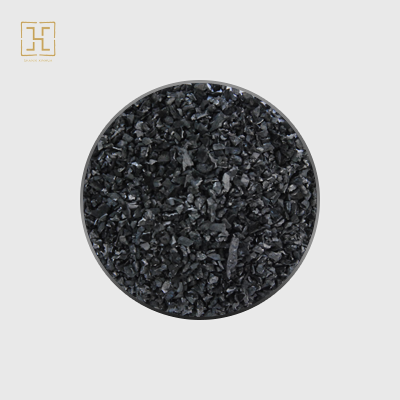
Understanding 8-30 Mesh Crushed Carbon Coal Quality
The name "8-30 mesh" refers to the range of particle sizes that allow material to pass through an 8-mesh screen but stay on a 30-mesh screen. This means that the particles are between 0.60 mm and 2.36 mm in diameter. This standard is very important because particle size directly affects how easy it is to reach surfaces, how well they flow, and how long they last mechanically in cleaning systems.
Physical and Chemical Properties That Drive Performance
Premium coal-based crushed carbon made from Jurassic anthracite coal has unique properties that make the cleaning process better. The material has a hardness level above 90%, which means it will wear down less quickly during use and need less upkeep. The ash level stays below 8%, which stops secondary pollution and makes the product last longer. Iodine levels between 800 and 1100 mg/g show a high adsorption capacity. The medium mesopore ratio blends microporous adsorption sites with transport pathways that make molecular diffusion easier.
A two-pore structure is made by the crushing and re-agglomeration process. Mesopores for transport let contaminants move quickly into the carbon structure, where micropores for binding grab target molecules. This designed pore distribution fixes a problem that most normal crushed carbons have: activation depths that aren't uniform, which causes performance to be limited.
Quality Parameters and Testing Standards
Professionals in procurement test coal-based activated carbon using standard methods to make sure that each run is the same. Abrasion strength is measured by ASTM D2862, and good materials show less than 2% loss. Particle size distribution analysis checks for regularity and stops the channelling problems that happen in systems that use media that isn't rated properly. Contact pH tests and measuring the amount of ash that can be extracted from water show that the material won't cause pH spikes in the effluent or release impurities. BET surface area research confirms the spread of pore volume, which ensures that activation is the same from batch to batch. For potable water uses, materials that meet AWWA B604 standards and NSF/ANSI Standard 61 approval offer extra peace of mind by showing that they meet health and safety standards.
Core Benefits of Using 8-30 Mesh Crushed Carbon in Purification
Choosing the right type of activated carbon changes how well a cleaning system works, taking operations from barely following the rules to reliable, low-cost treatment. This range of particles has benefits in a lot of different operating areas.
Enhanced Adsorption Capacity Through Optimized Surface Area
Because the particles in the 8-30 mesh coal quality crushed carbon range are smaller, there is more surface area for contaminants to stick to. This granular size keeps the structure strong while revealing large microporous networks that can catch small-molecule organic compounds, heavy metal ions, chlorine, sulphur compounds, and substances that cause smells. The microporous structure that was created works well with a wide range of contaminants, from liquid organics in wastewater to volatile organic compounds (VOCs) in gas-phase uses. Municipal wastewater treatment plants that deal with COD levels between 300 and 800 mg/L are able to remove more than 85% of it. In industry settings that are trying to get rid of specific pollutants, molecular size-specific pores can be changed to work better.
Superior Flow Characteristics and System Compatibility
For cleaning systems to work at medium-low flow rates of 0.8 to 1.2 m/s, they need carbon media that is a good mix of permeability and retention. Fluidisation and blow-out happen with coarser 4–8 mesh carbons, which causes media loss and uneven handling. Ultra-fine particles smaller than 30 mesh cause too many drops in pressure, which raises energy costs and limits output. The 8-30 mesh range is the best because it keeps the bed stable while leaving enough empty room for flow to happen freely. High particle consistency with a packing density variation of less than 5% stops channelling, which is when preferred flow paths form that skip over adsorption zones and lower efficiency by 15% or more in systems using media that aren't graded well.
Long-Term Durability and Reduced Maintenance Requirements
When the hardness grade is above 90%, it directly leads to cost savings. Abrasion resistance greater than 98% reduces the production of carbon dust, which keeps downstream filters from getting clogged and lowers the frequency of system backwashing. When compared to softer carbon grades, facilities with continuous processes have a lot fewer unexpected shutdowns, and repair times are much longer. The structure of properly made coal-based crushed carbon can survive multiple rounds of adsorption and desorption in thermally regenerated systems, keeping its performance over a long period of time.
When you add these benefits together, you can see that they save you money. Less frequent repair lowers the cost of buying new parts, and less pressure drop lowers the amount of energy used by pumps. Getting rid of channelling problems makes the most of the media's adsorption capacity, making sure it is fully used up before it needs to be replaced.
Comparing 8-30 Mesh Crushed Carbon with Other Mesh Sizes
When procurement teams know how different particle sizes work in different situations, they can exactly match carbon standards to application needs.
Performance Differences Across Mesh Ranges
Coarser grades, like 4–8 mesh, have very little flow resistance and work great for high-velocity gas cleaning tasks where pressure drop is the most important design factor. However, because they have less surface area per unit volume, adsorption is slowed down. This means that longer contact times or bigger media amounts are needed to get the same removal rates. These grades don't work well in mixed-bed systems with normal flow rates because fluidisation leads to loss and separation of the media.
Finer types below 30 mesh have more surface area and faster absorption, but they also have bigger pressure losses. Systems based on ultra-fine carbons need strong pumping equipment and backwashing often to keep the bed from getting too tight. Most of the time, the extra work and energy costs are greater than the kinetic benefits, especially in large-scale industry settings.
The 8-30 mesh coal quality crushed carbon standard is a good compromise. It has 15% better absorption performance than single-mesh options because it covers a wider range of particles, from 8 to 16 and from 16 to 30. This wide spread gets rid of the need for dual sourcing and makes sure that the whole bed is covered without any dead spots. Testing results from wastewater treatment plants in cities show that they consistently remove more than 85% of COD, which is a lot better than lower grades, which usually stop working at around 70% under the same conditions.
Supplier Quality Variations and Their Impact
Where the materials come from and how they are made have a big effect on how consistent the performance is. When compared to goods made from lower-grade bituminous coal, carbon that comes from fine Jurassic anthracite is harder and purer. Whether the process is chemical activation or steam activation changes the way the pores form, which in turn changes how selective the system is for target contaminants.
Manufacturers with a good reputation keep particle size limits within tight bands. This makes sure that stated distributions stay the same from one production lot to the next. Standard crushed carbons from less strict manufacturers often have particle size differences of more than 10%. This causes packing problems that lead to channelling and lower system efficiency overall. Facilities that buy from providers that have ISO 9001, ISO 14001, or ISO 45001 certifications have fewer operating problems related to quality and can predict how treatments will work better.
Practical Applications and Usage Scenarios of 8-30 Mesh Crushed Carbon
This grade of carbon can be used for a wide range of industry cleaning tasks, from maintaining public structures to making specialised chemicals.
Water and Wastewater Treatment Applications
In the later steps of purification, municipal drinking water plants use coal-based activated carbon to get rid of chemicals that give water its taste and smell, byproducts of disinfection, and small amounts of organic pollutants that are harmful to water quality. The material is certified for contact with drinkable water and has a low extractable content, which ensures that treated water meets strict health standards.
Strong decolorisation and COD reduction skills of 8-30 mesh coal quality crushed carbon help industrial wastewater treatment plants. This type of carbon is used in fixed-bed and mixed-bed setups in food processing plants that make wastewater that is high in organic matter, electroplating plants that deal with heavy metal contamination, and papermaking plants that need to remove colour. The middling mesopore ratio works especially well for getting rid of medium- and large-molecule substances like dyes and liquid materials that are hard for carbons that are only microporous to remove.
Air Purification and VOCs Control
VOC emissions range from 150 to 400 mg/m³ at small to medium-sized factories that work with printing, sealing, and chemical processes. The removal efficiency of granular carbon beds filled with 8-30 mesh material is above 90%, and they catch organic vapours before they are released. The balanced pore structure can hold both light hydrocarbons and heavy aromatic compounds. This lets you control a wide range of emission rates.
Specialized Industrial Processes
Coal-based carbon is strong and doesn't melt at high temperatures, which makes it useful for chemical catalyst support uses. For reactions like making methanol, you need long-lasting substrates that keep their shape under process conditions and offer active sites that are spread out. The even spread of particles makes sure that the bed works the same way every time, with no preferred flow lines that lower the efficiency of the reaction.
Brewery water treatment systems and systems that make drinks count on activated carbon to get rid of chlorine, chloramines, and organic molecules that change the way things taste. The material can come into close contact with food because it has food-grade standards and a low leachable content.
Logistical Considerations for B2B Procurement
When you buy in bulk, you usually start with tonnes, and the prices are based on your commitment to volume and delivery dates. For proper keeping, things need to be kept dry and well-ventilated so that they don't absorb water, which can hurt their performance. When shipping something, it's important to use protective packing to keep dust and particle damage to a minimum.
Different suppliers have different minimum order sizes, but for normal grades, they are usually between 1 and 5 metric tonnes. For customised formulations, bigger commitments are needed to support production runs. Lead times range from 7 to 15 days for materials that are in stock to 15 to 30 days for materials that are made to order.
How to Procure High-Quality 8-30 Mesh Crushed Carbon Coal
For buying to go well, technical requirements, source dependability, and the total cost of ownership must all be taken into account.
Supplier Evaluation and Certification Verification
Manufacturers who are qualified show that they have quality management systems that are certified to ISO 9001 standards, environmental management systems that are certified to ISO 14001 standards, and workplace health practices that meet ISO 45001 requirements. These certifications show that the process is controlled in a way that makes the quality of the output uniform.
Technical skills are just as important. Long-term study partnerships between suppliers and universities like Tsinghua University, Central North University, and the Chinese Academy of Sciences bring advanced material science knowledge to the creation of new products. This partnership leads to new ideas in improving performance, changing the surface, and making the pore structure better, all of which lead to better field results.
Production capacity and inventory management separate providers who can meet large-scale industry needs from those who can't. Multiple production sites with a total yearly capacity of more than 40,000 tonnes make sure that supply stays steady even when demand goes up. Facilities that keep 100% of their core goods in stock avoid delays in ordering, and faster shipping routes that can react within 24 to 48 hours meet urgent compliance needs.
Negotiating Terms and Securing Performance Guarantees
When negotiating bulk prices, the total amount over the course of the deal should be taken into account, not the size of each individual order. Framework supply deals that last between 12 and 24 months make costs predictable and ensure better prices and faster distribution when supplies are low.
Not only must delivery terms include lead times, but they must also cover transportation planning, protective packing standards, and who is responsible for damage. When suppliers offer multimodal transport options that combine trucks, trains, and water freight as needed, they show organisational skill that makes buying easier.
If materials don't meet the stated limits, performance guarantees that are linked to written specs give you a way to get your money back. Reliable suppliers stand behind their goods by sending test reports with every shipment and providing expert help for the entire lifecycle of the product. After-sales services like application optimisation advice, performance troubleshooting, and restart help add value after the sale.
Practical support comes from hearing from similar business users who use similar purification systems. Getting in touch with reference accounts is a good way for procurement teams to talk about real-world performance, provider responsiveness, and long-term happiness.
Conclusion
When choosing activated carbon for cleaning up factories, you need to pay close attention to the particle size distribution, the quality of the material, and the supplier's skills. Municipal sewer treatment, industrial air cleaning, and specialised chemical processes can all benefit from the 8-30 mesh coal quality crushed carbon grade. Its optimised particle range strikes a good balance between adsorption effectiveness and hydraulic performance. Its better mechanical qualities also ensure a longer service life and fewer maintenance needs. Manufacturers with strict quality control, large production capacities, and technical know-how can provide the dependability needed for mission-critical cleaning uses. When operations make buying choices based on detailed performance data, thorough certifications, and suppliers' credentials that can be checked, they set themselves up for long-term compliance and cost-effective treatment results.
FAQ
What distinguishes 8-30 mesh crushed carbon from other activated carbon sizes?
The 8-30 mesh number refers to particles with sizes between 0.60 mm and 2.36 mm, covering both the 8-16 and 16-30 mesh sub-ranges in a single product. This full spread gets rid of the channelling problems that happen with single-mesh carbons, which makes adsorption about 15% more effective. The particle size strikes a good balance between surface area accessibility and flow properties. This makes it perfect for mixed bed systems that work at medium to low flow rates, where coarser grades cause blow-out and smaller grades cause too many pressure drops.
How does particle size affect purification efficiency in practice?
Smaller particles within the 8-30 mesh coal quality crushed carbon range have a larger specific surface area, which speeds up the adsorption process and makes it easier to quickly collect contaminants. The microporous structure that was created effectively catches small organic molecules and heavy metals. The moderate mesopore ratio makes it easier to get rid of bigger molecules like dyes and colloids. A uniform particle distribution with less than 5% packing variation stops flow paths that skip over adsorption zones. This makes sure that the media is used to its full potential and that the removal performance is the same across the whole bed depth.
Which certifications verify coal-based activated carbon quality?
The good materials meet the requirements of AWWA B604 for water treatment uses and are certified by NSF/ANSI Standard 61 as safe for touch with drinking water. The ISO 9001 quality management, ISO 14001 environmental management, and ISO 45001 workplace health standards show that production controls are carried out in a planned way. ASTM testing methods, such as D2862 for wear resistance and BET surface area analysis, confirm performance parameters. A low ash content of less than 8% and a hardness of more than 90% suggest premium-grade material that can be used in tough industrial settings.
Partner with a Trusted 8-30 Mesh Coal Quality Crushed Carbon Manufacturer
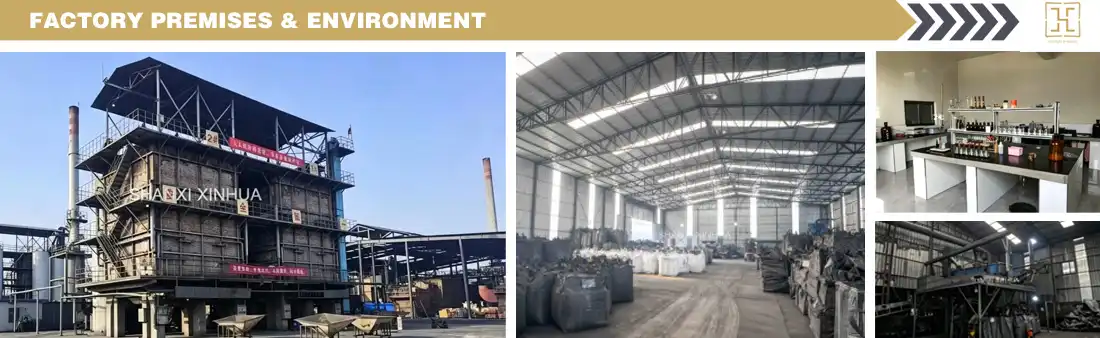
Shanxi Xinhua Carbon Technology Industry Co., Ltd. has been researching and making activated carbon for more than 60 years and can help you with your cleaning needs. Our 8-30 mesh coal quality crushed carbon supplier has multiple sites in Shanxi, Ningxia, Fujian, and Xinjiang with a total annual capacity of more than 45,000 tonnes, providing supply security for large-scale industrial activities. We keep 100% of our core goods in stock and can send standard orders within 7-15 days. For urgent compliance projects, we also offer a green channel service that is faster and takes only 3 days. There is less than 5% variation in packing density and over 85% COD removal efficiency with our defense-grade quality control systems, which are backed by ISO 9001, ISO 14001, and ISO 45001 certifications. Through collaborative study relationships with Tsinghua University and the Chinese Academy of Sciences, you can get pore structures, loaded catalysts, and formulations that are exactly what your process needs. You can talk to our expert team at greta@carbonxinhua.com about your needs for purification, ask for performance proof data, or set up sample tests. We offer detailed paperwork to help with regulatory compliance, expert support throughout the lifetime of a product, and dependable supply partnerships that get rid of the uncertainty of buying things for tough environmental uses.
References
1. American Water Works Association. (2021). AWWA B604 Standard for Granular Activated Carbon. Denver: AWWA Publications.
2. Bansal, R.C., & Goyal, M. (2005). Activated Carbon Adsorption. Boca Raton: CRC Press.
3. Cheremisinoff, N.P., & Ellerbusch, F. (1978). Carbon Adsorption Handbook. Ann Arbor: Ann Arbor Science Publishers.
4. Marsh, H., & Rodríguez-Reinoso, F. (2006). Activated Carbon: Origins, Characterization and Applications. Oxford: Elsevier Science.
5. Mattson, J.S., & Mark, H.B. (1971). Activated Carbon: Surface Chemistry and Adsorption from Solution. New York: Marcel Dekker.
6. Snoeyink, V.L., & Summers, R.S. (1999). Adsorption of Organic Compounds in Water Treatment Processes. Denver: American Water Works Association Research Foundation.

Send Inquiry
You may like
_1781662034490.webp)