_1778553121707.webp)
What Are the Advantages of Coal Based 4mm Cylindrical Carbon?
Jun 23, 2026
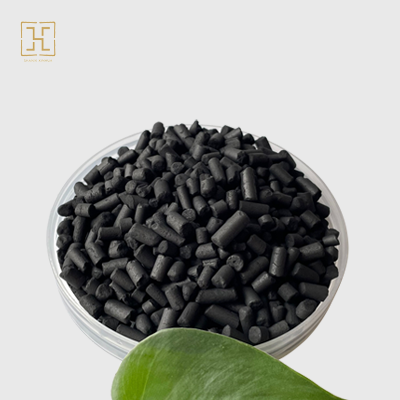
4mm coal quality cylindrical carbon made from coal has a medium particle size, high mechanical strength, and stable adsorption performance. This makes it the best choice for large-scale water treatment systems, VOC adsorption devices, solvent recovery equipment, and desulfurization processes. This material can work in situations with both high flow and high load while still being efficient. Industries that have to follow strict environmental rules depend on their strong structure and high adsorption capacity to stay in line with the rules and keep costs low. Manufacturers like Shanxi Xinhua Carbon Technology Industry Co., Ltd. make 4mm coal quality cylindrical carbon that has been shown to work well in harsh industry settings.
Understanding the Core Properties of 4mm Coal Quality Cylindrical Carbon
Chemical Composition and Carbon Purity
The way 4mm coal quality cylindrical carbon works in factories depends on the chemicals that make it up. High carbon purity, usually more than 85%, ensures that it can absorb the most volatile organic chemicals and pollutants. In some situations, like waste gas treatment systems, where chemical processes help get rid of pollutants, the controlled presence of trace elements can help with catalytic activity.
Physical Structure and Dimensional Precision
The 4mm coal quality cylindrical carbon width is clearly better than the uneven granular shapes. This even shape makes it easier to predict how fluid will move through adsorption beds, which lowers pressure drop and energy use. Manufacturing methods keep tight measurement limits of ±0.2mm, which ensures that the packing density is always the same and gets rid of channeling problems that hurt the effectiveness of treatment.
Thermal Stability and Operating Temperature Range
4mm coal quality cylindrical carbon can survive temperatures up to 400°C without losing its shape. This makes it good for high-temperature uses like cleaning flue gases. Because it is resistant to heat, the material can go through many recycling processes, which increases its service life and lowers the number of times it needs to be replaced. Facilities that run continuous processes benefit from this longevity because having to shut down without warning to change media lowers the efficiency of operations.
Key Advantages of Coal Based 4mm Cylindrical Carbon in Industrial Applications
Exceptional Mechanical Strength for High-Load Conditions
The fact that 4mm coal quality cylindrical carbon has a hardness grade above 90% sets it apart from other materials. This mechanical strength keeps particles from breaking up while they are being moved, handled, or used in high-pressure situations. Industries that run nonstop and do a lot of backwashing need this sturdiness to keep media from wearing out and beds from breaking down over long periods of time.
When doing regular maintenance, the low dust generation feature reduces the risk of breathing problems and equipment contamination. Facilities that have strict safety rules at work like this feature because it makes cleaning easier and the air quality better in work areas. The structural stability also keeps the hydraulic qualities the same across the media bed, which ensures that contaminants are spread out evenly across the adsorption surface.
Superior Adsorption Performance Across Multiple Pollutants
4mm coal quality cylindrical carbon has a balanced number of micropores and mesopores, which makes it good at capturing both small gas molecules and bigger organic chemicals. The material can handle large amounts of pollution without breaking down too soon, as shown by its CTC adsorption capacity range from 50% to 80%. This trait is very important in VOC control systems that need to keep output concentrations low to meet pollution limits.
The material can get rid of chlorine, organic molecules, and substances that cause bad tastes and smells in water, which is useful for water cleaning. When cities treat public water sources, the water quality factors get a lot better. This means that drinking water standards are met while chemical disinfection methods are used less. Industrial wastewater treatment plants that deal with COD levels of up to 500 mg/L are able to meet release requirements by getting rid of organic matter efficiently.
Cost-Effectiveness and Long Service Life
When compared to particles with bigger sizes, procurement managers see a 10% cost savings while keeping the same performance qualities. When installing adsorption media on a large scale that needs several tons, this cost benefit becomes important. Because they last longer—usually 12 to 24 months, based on how much they're loaded—they don't need to be replaced as often, which saves money on work costs.
Thermal revival can recover up to 80–90% of the original adsorption capacity, which makes the regeneration feature even more cost-effective. Facilities with recycling systems have lower lifetime costs than those that use waste media. The money spent on recycling equipment pays off because less media is used and less money is spent on getting rid of waste.
These benefits all help with important buying issues like ensuring reliable performance, keeping costs down, and following rules. Environmental engineers who are in charge of multiple projects, like how this material behaves consistently in a variety of settings. The standard 4mm diameter makes sure that it works with current filter and adsorption equipment, so there is no need to make expensive changes to the system when the media needs to be upgraded.
Manufacturing Process and Quality Assurance of 4mm Coal Based Cylindrical Carbon
Advanced Production Technology and Process Control
The manufacturing methods used by Shanxi Xinhua Carbon Technology Industry Co., Ltd. for 4mm coal quality cylindrical carbon were created through decades of study and collaborations with Tsinghua University and the Chinese Academy of Sciences. Quality control starts with choosing the right grade of raw coal. Different grades are picked based on their carbon level and mineral makeup. The carbonization process happens in a controlled atmosphere at temperatures above 800°C and creates the first hole structure.
Activation processes add oxidizing gases that take carbon atoms specifically. This makes the microporous network that is needed for adsorption. The final pore size distribution and surface area traits depend on how well the temperature and gas flow are controlled at this stage. With extrusion technology, 4mm coal quality cylindrical carbon pieces with the same width and length are made, so there aren't many differences that could affect the hydraulics of the bed.
Quality Testing and Certification Compliance
The iodine number, CTC binding capacity, hardness, ash content, and moisture level are some of the key performance factors that are measured for each 4mm coal quality cylindrical carbon production batch. The lab test shows that the bulk density is between 350 and 550 g/L, which means that the bed packing properties are correct. Chemical testing proves that the ash content is less than 5%, which keeps catalysts from interfering with sensitive uses.
The company has ISO 9001, ISO 14001, and ISO 45001 standards, which show that it cares about quality management, being good to the environment, and keeping workers safe. These standards are known all over the world and give procurement workers peace of mind about the quality of the products they buy and the reliability of the supply chain management. The cleanliness license from the Shanxi Provincial Health Commission proves that the material can be used for drinking water uses, which meets the rules for treating water in cities.
Comparing 4mm Coal Quality Cylindrical Carbon with Alternative Carbon Materials
Performance Advantages Over Powdered Activated Carbon
Powdered carbon has a lot of surface area, but the 4mm coal quality cylindrical carbon works better in systems with constant flow. The stable structure makes it easy to take apart and put back together without draining the system. This cuts down on downtime during maintenance. The hydraulic qualities stay the same over time, but powdered carbon needs to be carefully managed during suspension to keep it from settling and flowing.
Concerns about dust creation with powdered forms make them hard to handle and could be dangerous for your lungs. The 4mm coal quality cylindrical carbon format gets rid of these problems, making it easier to move and add materials. For operators who work in small spaces or places with little air flow, the better handling features during media change are very helpful.
Structural Benefits Compared to Granular Carbon
The packing density of irregular grainy carbon changes, which makes the pressure drop and flow distribution patterns hard to predict. The 4mm coal quality cylindrical carbon shape makes sure that the bed is always porous, which helps fluids and adsorption surfaces stick together better. This certainty makes it easier to figure out how to build a system and makes it more accurate to go from pilot testing to full-scale implementation.
The 4mm width is the best compromise between the length of the internal diffusion route and the area of the surface that faces the outside. The outside surface area of smaller particles is bigger, but the pressure drop is higher. On the other hand, the hydraulic resistance of larger particles is lower, but their kinetic performance is limited. This middle-of-the-road size works well for moving mass while keeping air loss across packed beds at a good level.
Procurement Considerations and Supply Chain Reliability
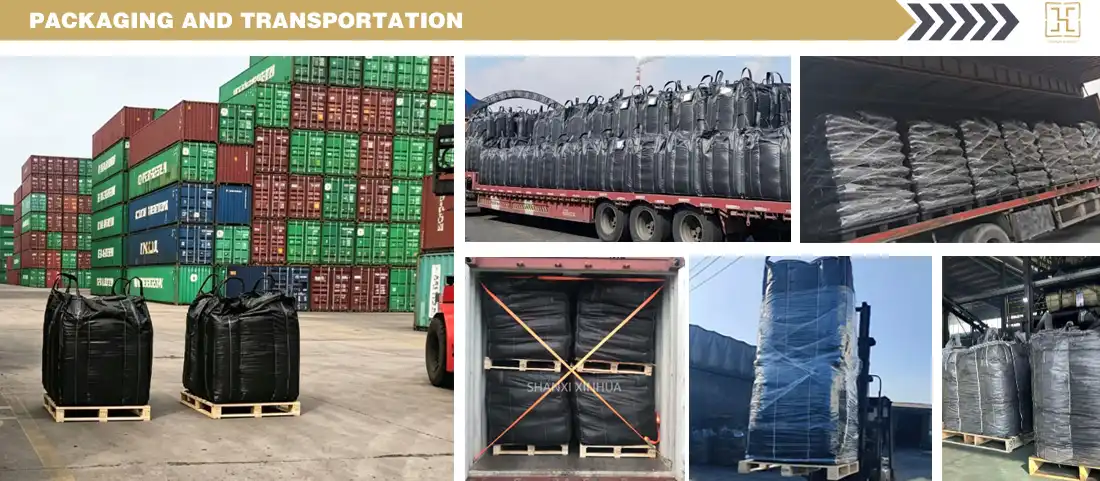
Shanxi Xinhua keeps up a production capacity of 45,000 tons per year for 4mm coal quality cylindrical carbon across several factories in Shanxi, Ningxia, Fujian, and Xinjiang. This spread-out infrastructure makes sure that the supply stays steady even when there are problems in certain areas or changes in regular demand. Standard product inventory allows for delivery within 7–15 days, while personalized formulas ship within 15–30 days, meeting both urgent needs and the needs of a particular project.
The company's location near major transportation hubs helps it get its 4mm coal quality cylindrical carbon products to customers quickly, both in the United States and other countries. Transportation partnerships offer multiple ways to move goods, such as by road, train, air, and sea, and allow for real-time tracking. International customers get full customs support and help with paperwork, which makes buying things across borders easier.
Practical Applications Across Industrial Sectors
Municipal Water Treatment and Drinking Water Purification
Granular activated carbon (GAC) contactors use 4mm coal quality cylindrical carbon in water treatment plants that serve between 10,000 and over 1 million people. The substance gets rid of any leftover chlorine, trihalomethanes, and organic molecules that help make disinfectant byproducts. Compounds that give water its taste and smell, which come from algal blooms or yearly farming runoff, are successfully removed, making treated water more acceptable to consumers.
Based on the quality of the raw water, filter bed levels are usually between 1.5 and 3 meters, and empty bed contact times are between 10 and 20 minutes. Backwashing happens once a week or once a month, depending on how much haze builds up and how much head loss happens. The mechanical strength of 4mm coal quality cylindrical carbon lets it handle rough backwashing without losing too much media, so the bed volume stays the same over many years of use.
Industrial VOCs Control and Air Emission Compliance
Manufacturing sites in the printing, painting, and chemical processing businesses have to follow stricter rules for VOC emissions. When 4mm coal quality cylindrical carbon is used in adsorption systems, it can take in organic vapors with amounts between 50 and 200 mg/m³ and keep them below 20 mg/m³ at the exit. This performance lets people follow area rules about air quality without having to pay big fines for breaking permits.
Solvent recycling applications offer economic benefits that go beyond following the rules. Solvents that are captured go through evaporation and condensation processes, which bring useful materials back into the production cycle. When companies use a lot of toluene, acetone, or ethyl acetate, they buy less fresh liquid, which saves them money. The adsorption-desorption process puts heat stress on the 4mm coal quality cylindrical carbon, and the hardness and temperature stability of the material are important for keeping it working for a long time.
Wastewater Treatment and COD Reduction
The textile, pharmaceutical, and petrochemical businesses all make wastewater that has dissolved organic chemicals that can't be treated by living things. Using 4mm coal quality cylindrical carbon adsorption in the tertiary treatment stages lowers COD levels from 300–500 mg/L to below 100 mg/L, which meets standards for release or lets the water be used again. The particle size of 4 mm is just the right size for high-flow uses because it combines adsorption kinetics with hydraulic concerns.
4mm coal quality cylindrical carbon adsorption is used as a finishing step before more advanced treatment methods like reverse osmosis in industrial sites that want to release no liquid. Organic fouling precursors are taken away, which makes the barrier last longer and requires less cleaning. This unified method improves the general performance of the treatment system while keeping costs low.
Procurement Guide and Trusted Suppliers of 4mm Coal Quality Cylindrical Carbon
Supplier Evaluation Criteria for Long-Term Partnerships
To find a trusted 4mm coal quality cylindrical carbon provider, you need to look at more than just unit price. How well the provider can handle big orders and pressing needs depends on how much inventory they have and how much they can produce. Companies that run multiple sites or networks of contractors need providers that can coordinate deliveries to multiple places at the same time.
The ability to provide technical help sets special 4mm coal quality cylindrical carbon sellers apart from commodity vendors. Before a sale, a review helps with system design calculations, choosing the right media, and making guesses about how well the system will work based on the water or air quality. Post-sales help answers questions about how to use the product, fixes problems with speed, and makes regeneration processes run more smoothly. Having access to skilled experts who know both the properties of the material and the needs of the application adds value throughout the span of the product.
Certification Requirements and Documentation Support
In water treatment and air quality uses, following the rules requires a lot of 4mm coal quality cylindrical carbon products. Material safety data sheets (MSDS), quality certificates, and test results should be sent with every package by the supplier. Certifications from approved testing labs show that the product meets AWWA, ASTM, or other foreign standards that are important to its intended use.
When you buy 4mm coal quality cylindrical carbon internationally, you need to provide more paperwork to get it through customs and make sure it's legal to import. Suppliers with a lot of experience make business invoices, packing lists, certificates of origin, and any other special papers that countries where the goods are going to need. This administrative help makes it easier to coordinate operations and cuts down on wait times at border points.
Pricing Structures and Order Flexibility
Procurement managers can make correct project budgets and figure out the total cost of ownership for 4mm coal quality cylindrical carbon with the help of transparent price models. Levels of prices based on volume encourage large orders, and long-term supply deals keep prices stable even when the market changes. Knowing the minimum order amounts helps you balance the costs of keeping goods with the savings you get from buying in bulk.
Customization lets you change the qualities of 4mm coal quality cylindrical carbon to fit the needs of a particular application. Changes to activation levels, particle size distribution, or surface chemistry improvement can help with treatment problems that normal products don't cover. Suppliers who offer these professional services show that they care about their customers' success in more ways than just a business relationship.
In order to serve industrial markets around the world, Shanxi Xinhua Carbon Technology Industry Co., Ltd. combines 60 years of research and development knowledge with modern production facilities. Working with top research schools helps the company keep coming up with new ways to improve 4mm coal quality cylindrical carbon performance, and production efficiency. Shanxi Xinhua's technical know-how, quality control systems, and quick customer service make it a good choice for procurement workers looking for a trusted provider.
Conclusion
4mm coal quality cylindrical carbon has clear benefits in terms of its mechanical strength, ability to adsorb substances, and low cost. It can be used to treat water, clean the air, and control industry emissions. The uniform particle size improves both the speed of mass transfer and the way fluids move in systems with a lot of flow. Instead of just looking at the original buy price, procurement choices should take into account technical requirements, supplier reliability, and lifecycle costs. Large-scale industrial activities need manufacturers like Shanxi Xinhua Carbon Technology Industry Co., Ltd. to provide the expert support, consistent quality, and stable supply chains that are needed for long-term partnerships to work.
FAQ
Why choose 4mm pellets over smaller 2mm or 3mm sizes?
The 4mm coal quality cylindrical carbon diameter lowers the pressure drop across adsorption beds, which means that industrial fans and pumps in big systems use less energy. It costs more to run a business when the bits are smaller because they create more hydraulic resistance. The medium size keeps enough of the outside surface area for fast absorption while keeping head loss to a reasonable level.
Can this carbon undergo regeneration cycles?
The high mechanical hardness of 4mm coal quality cylindrical carbon lets it go through many heat regeneration processes with little mass loss and damage to the structure. When properly regenerated at controlled temperatures, 80 to 90 percent of the original adsorption capacity is returned. When compared to single-use media options, facilities with on-site regeneration tools have much lower lifecycle costs.
How does moisture affect adsorption performance?
By adsorbing water vapor, high humidity can fill up micropores, briefly limiting the ability of 4mm coal quality cylindrical carbon to capture target contaminants. But because its pores are evenly spaced, this material stays useful even when the relative humidity is between 50 and 70%. In uses that need to be dry, like solvent recovery, pre-drying the inlet gas streams improves efficiency.
What typical service life can facilities expect?
4mm coal quality cylindrical carbon service life ranges from 12 to 24 months, based on the amount of pollution, how often the filter is cleaned, and how it is used. Monitoring performance on a regular basis with breakthrough testing lets you know when the media needs to be replaced or regenerated. With the right system design, bed depth, and touch time, operations can go longer without needing to be serviced.
Partner with Shanxi Xinhua Carbon Technology for Superior Adsorption Solutions
Shanxi Xinhua Carbon Technology Industry Co., Ltd. stands ready to support your water treatment, air purification, and emission control projects with premium 4mm coal quality cylindrical carbon backed by 60 years of manufacturing expertise. Our professional team works with managers of environmental engineering, heads of procurement, and research and development (R&D) to create unique solutions that meet your exact performance needs. We keep a large collection of all of our regular product lines, so we can send quickly (7–15 days in the U.S.) and quickly (within a reasonable amount of time for foreign orders). As a recognized 4mm coal quality cylindrical carbon producer, we offer full paperwork support, quality assurance, and ongoing technical advice for the entire lifetime of your project. Contact our procurement specialists at greta@carbonxinhua.com to discuss your application requirements, request product samples, or obtain detailed technical specs and pricing information that fits your needs.
References
1. Bansal, R.C., Goyal, M. (2005). Activated Carbon Adsorption. CRC Press, Taylor & Francis Group.
2. Marsh, H., Rodriguez-Reinoso, F. (2006). Activated Carbon. Elsevier Science Ltd.
3. Crittenden, J.C., Trussell, R.R., Hand, D.W., Howe, K.J., Tchobanoglous, G. (2012). MWH's Water Treatment: Principles and Design, Third Edition. John Wiley & Sons.
4. Derbyshire, F., Jagtoyen, M., Andrews, R., Rao, A., Martin-Gullon, I., Grulke, E. (2001). Chemistry and Physics of Carbon, Volume 27. Marcel Dekker Inc.
5. Stenzel, M.H., Gupta, M. (2020). Activated Carbon in Water and Wastewater Treatment: Engineering Applications. Water Environment Federation.
6. Lewoyehu, M. (2021). "Comprehensive review on synthesis and application of activated carbon from agricultural residues for the remediation of venomous pollutants in wastewater." Journal of Analytical and Applied Pyrolysis, Volume 159, Article 105279.

Send Inquiry
You may like
_1781662034490.webp)