_1778553121707.webp)
What Applications Require CTC70 Coal Columnar Charcoal with High Adsorption?
Aug 13, 2026
When industrial facilities face stringent emission regulations and volatile organic compound challenges, selecting the right adsorbent material becomes mission-critical. CTC70 Coal Columnar Charcoal delivers exceptional adsorption performance across diverse applications, from petrochemical gas purification to municipal water treatment systems. This cylindrical activated carbon, manufactured from premium anthracite through precise carbonization and activation processes, achieves a CTC adsorption value of at least 70%—making it ideal for high-concentration pollutant environments where standard materials fail. Industries requiring reliable VOC capture, solvent recovery, and toxic gas removal increasingly turn to this high-performance material to meet compliance standards while controlling operational costs.
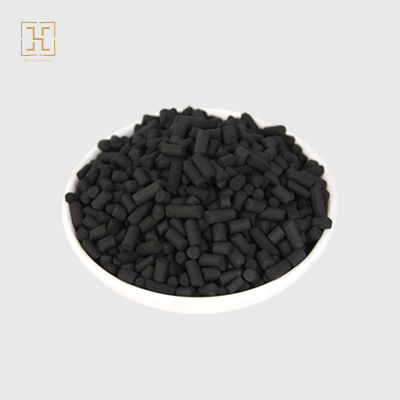
Understanding the Key Properties of CTC70 Coal Columnar Charcoal
The technical details of this activated carbon material directly affect how well it works in tough industrial settings. The product has a well-distributed pore structure that makes the most surface area contact with target contaminants. This is achieved through advanced production processes such as casting, carbonization, activation, crushing, and sieving.
Physical and Chemical Characteristics
The substance has an iodine absorption value higher than 850 mg/g, which means it has a lot of micropores, which are needed to hold small molecules. With mechanical strengths above 95%, the columnar structure doesn't break easily when it's being handled and stays together even when gas flows quickly through it. The ash content stays below 8% to keep catalysts from getting poisoned in delicate chemical processes, and the moisture content stays below 10% to keep the absorption rates stable. It works with most industrial process streams without the need for pre-treatment or buffering systems because its pH range is from 7.0 to 10.0, which is neutral to slightly alkaline.
Customizable Physical Formats
Manufacturers can produce CTC70 Coal Columnar Charcoal with particle sizes ranging from φ1.5mm to φ4.0mm, allowing system designers to achieve the ideal balance between pressure drop and contact time for different vessel configurations. The controlled dimensions of CTC70 Coal Columnar Charcoal help optimize airflow resistance while maintaining effective adsorption performance. With a scratch rate below 3%, CTC70 Coal Columnar Charcoal generates minimal dust, reducing the risk of downstream equipment blockage and simplifying maintenance in compact installation areas. The durability and structural stability of CTC70 Coal Columnar Charcoal extend service intervals, lowering both material expenses and labor costs associated with frequent replacement operations. By combining precise sizing and strong mechanical performance, CTC70 Coal Columnar Charcoal provides a reliable solution for industrial adsorption systems that require consistent quality and long-term efficiency.
Manufacturing Quality Standards
Production facilities follow the rules set by ISO 9001 for quality management. This makes sure that consistency from batch to batch is maintained, which is important for automated industrial systems that need to work reliably. The ISO 14001 environmental certification shows that the manufacturing process is sustainable, and the ISO 45001 occupational health standards protect workers who do production and handling tasks. Purchasing managers can be sure that the materials they buy meet international safety and dependability standards thanks to these certifications.
Industrial Applications Requiring High Adsorption Efficiency
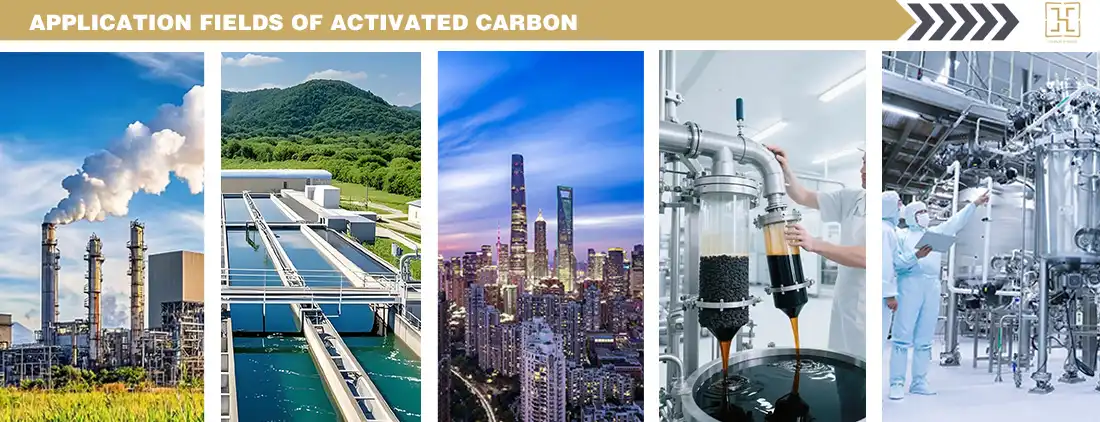
This activated carbon's better micropore structure solves specific technical problems in many different manufacturing areas. Companies that have to follow strict rules about protecting the environment depend on its reliable performance to stay in compliance with the rules and keep production going.
VOC Recovery in Petrochemical Operations
Benzene, toluene, xylene, and other aromatic compounds are made in large amounts at chemical plants and refineries during the distillation and synthesis processes. High-performance CTC70 Coal Columnar Charcoal is packed into fixed-bed adsorption systems that remove these valuable solvents from exhaust streams before they are released into the atmosphere. The material has a high CTC value, which means that recovery rates are higher than 95% even at concentrations below 500 ppm. This lets facilities reuse solvents while still meeting the requirements of their Clean Air Act Title V permit. Thermal regeneration cycles restore the ability to absorb, and the strong mechanical strength keeps the structure from breaking down after many heating and cooling cycles.
Municipal and Industrial Water Purification
Water treatment plants that serve more than 50,000 people need activated carbon that has been certified safe for drinking water. Metal contaminants can't get in because the ash content is low, and chlorine, pesticides, and other organic micropollutants that change taste and smell are successfully removed by the controlled pore distribution. Granular activated carbon contactors that are filled with this material can stay in place for long enough for biological activity to start. This makes systems that can both adsorb and break down complex molecules. Industrial wastewater pretreatment uses it because it doesn't get bad in high-organic-load settings, which means it can be used for longer periods of time before it needs to be backwashed or replaced.
Flue Gas Treatment in Power Generation
The Mercury and Air Toxics Standards put more and more strict limits on how much mercury coal-fired power plants and waste-to-energy sites can release into the air. This activated carbon can effectively remove elemental and oxidized mercury species from combustion gases at temperatures close to 150°C when it is modified with sulfur or halogen compounds. The columnar shape lets the contact pressure be evenly spread across large cross-sectional areas in horizontal ducts. This stops channeling, which lowers the efficiency of the contact. Flue gas plants that process more than one million cubic feet per minute depend on its low pressure drop properties to keep fan power use and operating costs as low as possible.
Chemical Catalyst Support Applications
This substance can hold valuable metal catalysts for use in hydrogenation, oxidation, and synthesis processes because it is stable at high temperatures and has uniform pores. The large surface area makes it easy for the catalyst to stick to many surfaces, and the high mechanical strength stops wear and tear that could cause reactor fouling or product contamination. Columnar formats are chosen by process engineers when they need to design packed-bed reactors with predictable flow distribution and little change in pressure across the catalyst zone.
Selecting the Right Material for Your Specific Application
When making a procurement choice, the total cost of ownership must be weighed against the technical performance standards. Figuring out how important factors relate to the conditions of the process helps you stay away from over-specification and poor performance scenarios.
Matching Adsorption Capacity to Pollutant Loads
High-CTC adsorption materials such as CTC70 Coal Columnar Charcoal provide enhanced adsorption capacity and can effectively handle continuous emissions with VOC concentrations above 1,000 ppm. The extended breakthrough time of CTC70 Coal Columnar Charcoal reduces the frequency of media replacement, helping lower labor expenses and disposal costs associated with frequent changeouts. While standard activated carbon products may be suitable for lower-concentration applications, CTC70 Coal Columnar Charcoal often delivers greater long-term value when evaluating total lifecycle costs because of its longer operating intervals and stable performance. Before investing in a complete treatment system, pilot testing with actual process streams using CTC70 Coal Columnar Charcoal can provide accurate data on adsorption capacity, saturation behavior, and regeneration potential. Selecting CTC70 Coal Columnar Charcoal based on real operating conditions helps ensure efficient VOC removal and reliable long-term system performance.
Particle Size Selection for Pressure Drop Control
Larger diameter pellets make it easier for air to flow through them, which means that fans in high-velocity gas treatment systems use less energy. But smaller particles have more surface area per unit volume, which makes mass transfer rates better in situations where diffusion kinetics rather than equilibrium capacity are the limiting factor. System makers have to figure out whether the binding limit for their configuration is pressure drop or contact efficiency. Computational fluid dynamics modeling helps guess how well different pellet sizes will work before they are actually put in place.
Supplier Reliability and Logistics Considerations
Global supply lines increase the chance that packages will be late or that quality differences will cause production plans to be thrown off. Manufacturers who keep a lot of goods in various production bases can react quickly to emergency needs, and faster shipping choices can help with projects that need to meet safety standards but have to be finished quickly. Having long-term relationships with suppliers that offer technical support services is valuable in more ways than one. For example, application engineering help can improve system design and fix performance problems.
Trusted Manufacturers and Industry Innovations
The market for activated carbon keeps changing because companies and universities are working together on research projects. When companies spend money on advanced characterization methods and process changes, the materials they make work better and meet new regulatory requirements.
Certification and Quality Verification
Reliable suppliers give full test reports that show the product meets certain requirements for things like CTC activity, iodine number, particle size distribution, and mechanical strength. Third-party laboratory verification is a reliable way to prove that performance claims are true. This is especially important for NSF/ANSI Standard 61-certified municipal water treatment uses. Before giving out long-term supply contracts, buying teams can look at how well production facilities can make things and how well they control quality by asking for checks.
New technologies that improve performance
Companies and universities like Tsinghua University and the Chinese Academy of Sciences have worked together on research to make modified activated carbons that are better at picking out certain contaminants. Metal oxides added to the surface improve the ability to collect mercury, and specific activation conditions improve the spread of hole sizes for specific molecular weight ranges. These improvements let facilities deal with complicated pollution patterns that are hard for regular adsorbents, and they can often do so at prices that are comparable to specialty materials that are brought in from other countries.
Market Trends Driving Material Development
Companies are working hard to make goods that can better remove sulfur compounds and halogenated organics because pollution standards for these molecules are getting stricter. As businesses move toward merging, they need bulk supply agreements that guarantee availability and set prices that are easy to predict. People are interested in revival services that extend the lifecycles of materials, which lowers the amount of new carbon used and the amount of waste that needs to be thrown away. In this changing competitive environment, manufacturers who offer integrated solutions that include initial material supply, performance tracking, and regeneration services are in a better position to succeed.
Conclusion
CTC70 Coal Columnar Charcoal is very important in protecting the environment, cleaning water, making petrochemicals, and making electricity. Because it is mechanically durable, has controlled pores, and is priced competitively, it is the best choice for B2B buyers who need stable performance in tough working conditions. The material can be used for many things, from capturing VOCs at room temperature to treating flue gas at high temperatures. Its physical forms can be changed to fit different system configurations. Instead of just looking at unit prices, procurement workers should judge suppliers based on their expert help, quantity of inventory, and well-documented quality systems.
FAQ
What does the value of the CTC really mean?
The Carbon Tetrachloride adsorption number tells us how much CTC gas the activated carbon can soak up at 25°C in a normal test setting. If a material has a CTC70 grade, it means that it can absorb at least 70% of its own weight in CTC vapor. This can be used as a measure of its total micropore volume and its ability to absorb organic compounds. More flammable organic molecules can usually be captured in industrial gas streams when the CTC value is higher.
Is it possible to heat this activated carbon again?
The high mechanical strength and thermal stability make it possible to regenerate the material more than once by carefully heating it in environments with inert gases or steam. Facilities with on-site regeneration equipment can get back 80–90% of their original adsorption capacity, which cuts down on the cost of material use by a large amount. Off-site regeneration services are an option for smaller businesses that don't have the money to buy new tools. The longer the material's lifecycle, the lower the cost of transportation.
How does humidity affect adsorption performance?
Organic molecules can't stick to high-humidity gas streams as well because water vapor is competing for binding sites. This problem can be fixed by pre-drying the inlet gases or choosing materials with hydrophobic surface modifications. Even when the relative humidity is close to 70%, the well-developed micropore structure still captures a lot of organic matter for most industrial uses, though it takes less time to break through than when it is dry.
Partner with a Trusted CTC70 Coal Columnar Charcoal Manufacturer
The global environmental protection market is served by Shanxi Xinhua Carbon Technology Industry Co., Ltd., which has more than 60 years of experience with activated carbon and defense-grade quality systems. Working with top research universities like Tsinghua University means that we can keep coming up with new adsorption material technologies. We have multiple production bases that keep 100% of our core products in stock, so we can deliver standard orders within 7–15 days and respond to emergency needs through green-channel logistics that are faster. For difficult tasks, our technical team creates unique answers that take into account the pore structure, surface area, and filled component needs. Email us at greta@carbonxinhua.com to talk about the details of your project and get detailed data sheets. You can look at our full line of activated carbon products at xhcarbontech.com and learn why top environmental engineering firms around the world choose Shanxi Xinhua as their top supplier for high-performance adsorption materials.
References
1.Bandosz, T.J., and Ania, C.O. "Surface Chemistry of Activated Carbons and Its Characterization." Interface Science and Technology Series, Volume 7, 2006.
2.Marsh, H., and Rodríguez-Reinoso, F. Activated Carbon: Production, Characterization and Applications. Elsevier Science Publishers, 2006.
3.Harding, A.W. "Activated Carbon: Properties and Applications in Water and Air Purification." Proceedings of the Institution of Civil Engineers - Water Management, Volume 162, Issue 3, 2009.
4.Ruthven, D.M. Principles of Adsorption and Adsorption Processes. John Wiley & Sons, 1984.
5.Yang, R.T. Adsorbents: Fundamentals and Applications. John Wiley & Sons, 2003.
6.Bansal, R.C., and Goyal, M. Activated Carbon Adsorption. CRC Press Taylor & Francis Group, 2005.

Send Inquiry
You may like
_1781662034490.webp)