_1778553121707.webp)
The Role of 3mm coal quality cylindrical carbon in Wastewater Treatment
Jun 29, 2026
More and more pressure is being put on wastewater treatment plants to meet strict environmental standards while also keeping costs low. In this situation, 3mm coal quality cylindrical carbon has become an important filtering medium that strikes a good mix between performance, efficiency, and following the rules. This engineered material is great at getting rid of contaminants in both urban and industrial settings. It does this by using an optimized mesopore structure that consistently picks up organic pollution, heavy metals, and dissolved impurities. Environmental engineers and procurement managers are becoming more aware that choosing the right 3mm coal quality cylindrical carbon standard has a direct effect on how well treatments work, how long equipment lasts, and the total cost of ownership.
Understanding 3mm Coal Quality Cylindrical Carbon and Its Key Properties
Engineered Composition and Manufacturing Standards
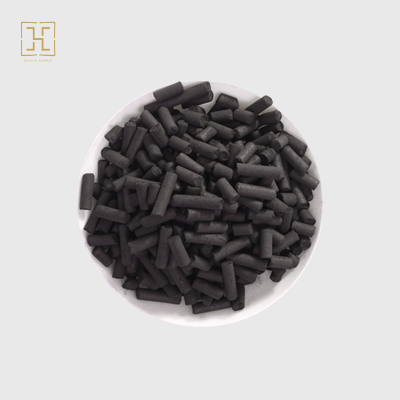
This 3mm coal quality cylindrical carbon is made from high-quality coal-based raw materials using precise extrusion and steam activation. It has a mesopore ratio of more than 25%, which is much higher than that of regular goods. The controlled making process keeps the dimensions accurate to within ±0.05mm, which ensures that the flow through the filter beds is even. Two quality checks are done on each output batch to make sure that the hardness is above 90%, the ash content is below 8%, and the CTC absorption capacity is at least 80%. These requirements are in line with ISO 9001 quality standards and allow for uniform performance in a range of garbage streams.
Physical Characteristics That Drive Performance
The 3mm coal quality cylindrical carbon width is the best compromise between how well they work hydraulically and how well they can absorb water. This size has enough surface area to catch contaminants while keeping the pressure drop across filter columns low. Because it is shaped like a cylinder, the packing density is more even, so there are no dead zones or channels that make the treatment less effective. High mechanical strength means that it can handle many backwashing processes without breaking down much, which extends its useful life and lowers the number of times it needs to be replaced. Because of these physical features, the costs of running are lower, and repair plans are more predictable.
Comparative Advantages Over Alternative Carbon Forms
When treating medium-concentration wastewater, this 3mm coal quality cylindrical carbon standard has faster kinetics and better utilization of the internal pore space compared to the bigger 5mm versions. The improved mesopore distribution is great at catching medium-sized organic molecules that are common in the chemical industry, food preparation, and municipal wastewater. Granular carbon has shapes that aren't all the same, but the uniform cylindrical geometry makes hydraulic math easier and lets you build a more accurate system. This predictability lowers the risk of technical mistakes and speeds up the time it takes to complete a job.
The Role of 3mm Coal Quality Cylindrical Carbon in Wastewater Treatment
Enhancing Contaminant Removal Efficiency
The improved pore structure of this 3mm coal quality cylindrical carbon is very helpful for treating industrial wastewater with COD levels between 300 and 800 mg/L. The mesopore-rich shape makes it easy for target molecules to quickly move into binding sites, which speeds up the treatment process. Advanced tertiary treatment at municipal plants depends on their ability to polish effluent to meet legal release limits. Food processing plants that deal with streams that are high in organic matter see big changes in getting rid of colors and smells, which directly solves common safety problems.
Real-world performance data from chemical wastewater applications shows that the COD decrease is always higher than what is expected by the business. The material can work with a lot of butane, which means it can hold on to volatile organic molecules well and keep them from escaping during regeneration processes. In businesses that have to follow strict rules for both water discharge and air pollution, this trait is especially useful.
Operational and Economic Benefits
The long-lasting nature of high-hardness 3mm coal quality cylindrical carbon leads to cost savings that can be seen. Facilities say that these goods have 15-20% longer service lives than regular ones, which means that less material is used and less work is needed to change the media. Lower turnover rates keep the bed solid, which reduces the amount of fines that can clog equipment further downstream. All of these things work together to lower the total cost of ownership and make the process more reliable.
Because this 3mm coal quality cylindrical carbon standard has low gas flow resistance, it means that less energy is used. When the pressure drop is kept to a minimum, the need for a blower and pump goes down. This directly lowers power costs. The efficient kinetics also allow for faster contact times or smaller tank sizes, which lowers the cost of capital for new sites and growth.
Case Evidence From Municipal and Industrial Applications
In the southern United States, a local water reclamation plant added this 3mm coal quality cylindrical carbon grade to their tertiary treatment train. This helped them consistently meet limits for total organic carbon that were getting stricter. The engineering team noticed better seasonal performance steadiness because the 3mm coal quality cylindrical carbon kept working well even when temperatures changed, which was a problem with other media choices.
Companies that make chemicals that treat complicated wastewater mixes say that they are better at getting rid of phenolic compounds and chlorinated organics, which are hard for regular activated carbons to catch. The unique hole structure fits these molecules better, so there is less need for multiple stages of treatment, and the total process design is easier.
Comparison and Decision-Making: Why Choose This Carbon Specification?
Performance Benchmarking Against Alternative Solutions
When compared to regular powdered activated carbon systems, 3mm coal quality cylindrical carbon forms get rid of the need for complicated filters and hard-to-handle sludge. The fixed-bed design makes it easier to use and lowers the level of skill needed by plant staff. Coal-based materials can hold bigger organic molecules than coconut shell carbon and are more cost-effective, which makes them perfect for industrial-scale uses where cost-effectiveness is important.
The 3mm width works better than bigger granules in situations where treatment cycles need to be faster or where the concentration of the input needs to be changed. Its improved kinetics give it operating freedom that comes in handy when there are problems with the process or changes in seasonal loading. This response helps facilities stay in compliance even when the traits of the influent are hard to predict.
Evaluating Supplier Credentials and Certification
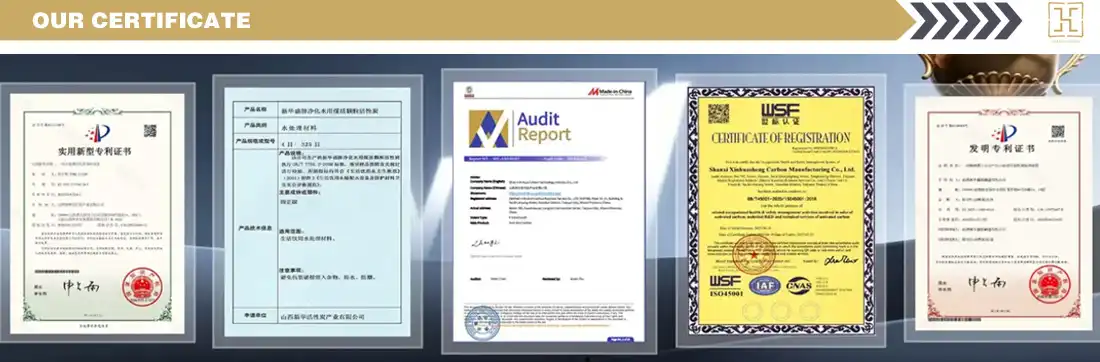
Reputable makers keep a full set of certifications, such as ISO 9001, ISO 14001, and ISO 45001, which shows they care about quality, the environment, and worker safety. These credentials give customers confidence that the goods always meet technical requirements and come from businesses that are properly run. Working with research institutions shows that you are continuing to invest in the progress of material science, which is a sign of a company that will be around for a long time.
The dependability of the supply chain is directly affected by how much can be made and where the factories are located. When manufacturers have multiple sites in different areas, they are less likely to be affected by specific problems. Keeping a large stock of standard specs on hand makes it possible to fulfill orders quickly, and the technical flexibility to make changes to meet specific application needs makes your treatment system stand out.
Transparent Pricing and Procurement Terms
Wholesale prices for 3mm coal quality cylindrical carbon are usually based on promises to buy a lot of goods. For yearly contracts or plans to buy goods from more than one location, you can get better terms. Different manufacturers have different minimum order numbers, but most start at pallet or supersack quantities, which are good for trying on a small scale before going live on a large scale. Payment terms that last between 30 and 60 days are flexible enough to meet the cash flow needs of a project, and faster delivery options meet the needs of emergency restocking during unplanned outages.
Knowing the limits for lead time helps procurement teams plan their goods in a smart way. Standard goods are shipped between 7 and 15 days, but special formulations need between 15 and 30 days to be made and checked for quality. Setting up a framework that deals with reliable sellers lowers the risk of supply and makes budgeting easier for treatment programs that last more than one year.
Strategic Procurement Guide for Cylindrical Activated Carbon
Supplier Evaluation Criteria
Quality assurance starts with making sure that testing procedures and review times are followed. When suppliers test key factors in groups, they create records that help with legal compliance and process validation. Technical support is what sets great providers apart from average ones. Being able to talk to application experts who can help with system design, troubleshooting, and performance improvement is a big plus that goes beyond the product itself.
How reliable delivery is relies on the logistics system and how well the inventory is managed. Having regional warehouses for suppliers cuts down on shipping time and costs, and flexible shipping choices allow for getting around restrictions that are specific to each site. Real-time tracking and direct communication about the state of orders keep operations from being interrupted by supply delays.
Negotiation Strategies and Contract Considerations
Price benefits can be gained by making volume promises, but overstocking wastes money and could cause materials to break down. To find the right balance between these factors, you need to be able to accurately predict consumption based on past treatment data and expected changes to how things are run. Flexible contract designs that let changes be made every three months can adapt to changing business needs without having penalty clauses that make buying rigid.
In buy deals, technical details like acceptable ranges for hardness, ash content, and adsorption capacity should be written down clearly. Setting up rules for testing and sampling helps everyone by setting clear standards for performance. If there are problems with the quality of a product, you can get help through warranty terms that cover premature wear and tear or performance that falls short of expectations.
Building Long-Term Supplier Relationships
The most successful procurement plans see providers not as transactional sellers but as professional partners. Regular performance reviews give people a chance to talk about application problems, look into new products, and make sure that improvement efforts are all working together. Suppliers get useful feedback from the field that helps them decide what to work on next, and buyers can get access to new technologies and application experts.
Working together makes it easier to act quickly in operating situations. Suppliers who know about your treatment system can speed up the creation of custom solutions or suggest short-term options when normal goods such as 3mm coal quality cylindrical carbon aren't available. This partnership-based method lowers risk and makes operations more stable during changes in the economy and supply chain.
Enhancing Wastewater Treatment Performance Through Optimal Carbon Selection
Addressing Common Operational Challenges
As 3mm coal quality cylindrical carbon ages, it loses some of its effectiveness as a treatment medium, so many centers have to change it more often. When you use high-quality 3mm coal quality cylindrical carbon that is also very hard, it keeps its structure intact for longer, keeping its flow properties and ability to absorb things for longer. The improved mesopore structure doesn't get clogged up too quickly by organic matter, which is a typical way for wastewater systems with a lot of biological activity to fail.
Changes in the composition of wastewater over the course of the year make treatment less consistent, especially in businesses with cyclical production plans. These changes can be handled by the wide range of performance standards for premium 3mm coal quality cylindrical carbon, so working parameters don't need to be changed all the time. This stability makes things easier to run and lowers the level of technical knowledge needed for regular plant management.
Integration Best Practices
The basis for peak performance is set by properly preparing the bed. Backwashing enough gets rid of any leftover fines and sorts the bed so that hydraulic pressure is spread out evenly. Gradual rises in load should be part of the startup process so that there is time for equilibration before full-scale function. Keeping an eye on the differential pressure and breakthrough characteristics during the system's first use confirms the assumptions made during design and finds any fitting problems that need to be fixed.
Different regeneration methods are used depending on the type of garbage and the cost of doing so. Thermal restart can recover capacity, but it needs special equipment and transportation. For some types of contaminants, on-site chemical recycling is a useful option that can extend service life and lower costs. The choice is based on the type of carbon, the amount of contaminants, and the infrastructure that is accessible.
Performance Monitoring and Quality Assurance
Setting up regular sampling methods keeps track of how well adsorption is working and lets you know when replacement or regeneration is needed. Monitoring trends in wastewater quality shows that performance is declining before legal limits are crossed, which allows proactive maintenance planning to happen. By looking at carbon samples physically on a regular basis, you can find signs of wear and tear, fouling, or biological growth that could make the process less effective.
Working with suppliers to look at used carbon helps us understand how adsorption works and how saturation patterns form. This forensic method helps find ways to make things better, like changing the working conditions, the pretreatment steps, or the 3mm coal quality cylindrical carbon grades that work better with the real contaminant profiles. A mindset of continuous progress leads to both short-term performance wins and long-term cost savings.
Conclusion
When choosing 3mm coal quality cylindrical carbon with a 3mm width for treating wastewater, you have to weigh the technical performance against the costs and challenges of running the business. This standard has been shown to remove contaminants in both public and industrial areas. It also offers longevity that increases service intervals and lowers lifecycle costs. The engineered pore structure, mechanical strength, and constant quality standards of the material meet the main purchase factors of dependability, compliance, and low cost. These benefits are increased by strategic relationships with suppliers that offer technical help, flexible hiring, and a strong supply chain. As rules about the environment get stricter and funds for operations get tighter, choosing the right 3mm coal quality cylindrical carbon becomes more and more important for long-term treatment results. Professionals in procurement who have a deep knowledge of product specifications, application needs, and supplier skills set their companies up for long-term success in wastewater management.
FAQ
What chemical properties make this carbon effective for wastewater treatment?
The fact that the CTC absorption capacity is above 80% means that there is a lot of micropore and mesopore space available to catch contaminants. Ashes with an ash level below 8% are less likely to leach into treated water, which is important for uses where the water will be used again for drinking. The best mesopore ratio is more than 25%, and it targets organic molecules with molecular weights that are common in wastewater from factories and cities. These include phenols, chlorine compounds, and substances that give wastewater its color.
How does the 3mm particle size benefit treatment systems?
This width strikes a good mix between fast adsorption and a pressure drop that is easy to handle across filter beds. Smaller particles would have more surface area on the outside, but they would also lose too much head, which would mean bigger fans and more energy use. Larger chunks lower the pressure drop, but they lose some of their kinetic efficiency and can't use all of their internal pore space. The 3mm coal quality cylindrical carbon standard is the best for most wastewater uses from an engineering point of view. It allows for reasonable flow rates while still treating wastewater effectively.
What are typical lead times and minimum order quantities?
Standard orders ship between 7 and 15 days after an order is confirmed. For pressing needs, three-day shipping is also an option. Most of the time, the smallest amount you can buy is one ton, which is about 40 cubic feet and is good for pilot projects or small treatment systems. People who buy a lot of something get better prices when they buy pallet or truckload amounts. For special formulations, however, you need to talk about specific project timelines and production schedules.
Partner With a Trusted Activated Carbon Manufacturer
Shanxi Xinhua Carbon Technology Industry Co., Ltd. has been in the material science business for more than 60 years and follows defense-grade manufacturing standards. They make 3mm coal-quality cylindrical carbon that is perfect for the toughest wastewater treatment jobs. Our 3mm coal quality cylindrical carbon has CTC absorption levels of up to 80%, hardness levels above 90%, and mesopore ratios above 25%. These are all performance qualities that are backed by ISO 9001, ISO 14001, and ISO 45001 certificates. With factories in four different areas and a yearly production capacity of 45,000 tons, we keep a lot of stock on hand so that we can serve normally within 7–15 days and quickly in as little as three days for urgent needs. Our expert team offers free application analysis, system design support, and ongoing improvement help for as long as your 3mm coal quality cylindrical carbon is in use. Get in touch with our purchasing agents at greta@carbonxinhua.com to talk about your wastewater treatment needs, ask for technical data sheets, or set up sample tests to see how well our 3mm coal quality cylindrical carbon source can do its job.
References
1. Johnson, M.R., & Williams, K.T. (2021). Advanced Activated Carbon Technologies for Municipal Wastewater Treatment. Water Research Foundation Press.
2. Chen, L., Zhang, Y., & Peterson, A.S. (2020). Comparative Performance of Coal-Based Activated Carbons in Industrial Effluent Treatment. Journal of Environmental Engineering, 146(8), 04020089.
3. National Water Research Institute. (2022). Best Practices for Activated Carbon Selection and Application in Potable Reuse Systems. Fountain Valley, CA.
4. Bansal, R.C., & Goyal, M. (2019). Activated Carbon Adsorption for Water and Wastewater Treatment. CRC Press.
5. American Water Works Association. (2021). Granular Activated Carbon: Design and Operational Considerations. AWWA Manual M21.
6. Zhou, H., Smith, D.W., & Stanley, S.J. (2020). Modeling of Breakthrough Curves of Single and Multiple Volatile Organic Compounds in Granular Activated Carbon Filters. Journal of Environmental Science and Health Part A, 55(3), 289-302.

Send Inquiry
You may like
_1781662034490.webp)