_1778553121707.webp)
No-Wash Coal-Based Activated Carbon for Cost-Effective Purification Systems
Aug 26, 2026
Industrial purification challenges demand materials that deliver performance without complexity. No-wash coal-based activated carbon addresses this need directly—engineered from premium anthracite through precision activation, rigorous sieving, and advanced dust removal processes. Unlike conventional adsorbents requiring extensive pre-treatment, this material arrives ready for immediate integration into process systems. The technology eliminates time-consuming cleaning steps, reduces water consumption, and prevents equipment wear, making it an intelligent choice for operations where efficiency and reliability define success. With uniform particle distribution and dust content below 0.1%, this adsorbent streamlines deployment across municipal water treatment, industrial wastewater management, and chemical manufacturing environments.
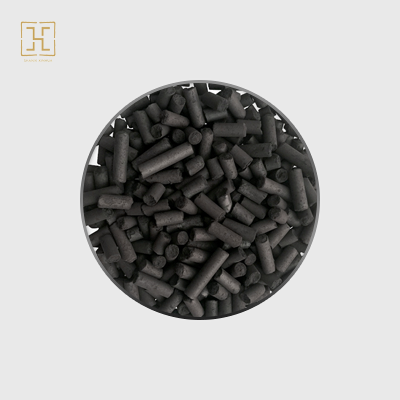
Understanding No-Wash Coal-Based Activated Carbon
What Makes This Material Distinct
The main difference is in how precisely it is made. When traditional coal-based carbons first come into contact with water, they release large amounts of fines, which raises the turbidity and disrupts the system. This ready-to-use version goes through a specific post-activation process called advanced dry purification and surface stability. This gets rid of particles that don't absorb anything while keeping the microporous structure that was created. As a result, the material keeps iodine adsorption levels between 600 and 800 mg/g and methylene blue adsorption levels above 80 mg/g, which means it can effectively remove organic compounds.
Physical and Chemical Characteristics
The microporous structure has the right number of pores to catch a wide range of contaminants. Its mechanical strength is higher than 85%, which keeps it from wearing down during handling and backwashing. The ash level stays below 10%, which maximizes the amount of space available for adsorption per unit mass. The pH level stays stable between 6.0 and 10.0, so there are no more corrosive spikes that damage equipment further down the line or mess up biological treatment stages that are meant to be gentle. When these parameters are set, the performance stays the same even when the temperature changes and the feed composition changes.
Adsorption Mechanisms in Industrial Contexts
Physical binding within the micropore network and surface interactions with functional groups preserved during controlled activation are key mechanisms through which No-wash coal-based activated carbon captures contaminants. Through Van der Waals forces and capillary condensation, No-wash coal-based activated carbon can effectively adsorb certain organic molecules, pigments, and odor-causing compounds. Heavy metal removal can involve electrostatic attraction and coordination interactions with oxygen-containing surface groups. This dual-action mechanism gives No-wash coal-based activated carbon useful potential for treating complex industrial streams containing multiple types of contaminants. By combining porous structures with active surface chemistry, No-wash coal-based activated carbon can support versatile adsorption performance across a range of industrial water and wastewater treatment applications. Proper selection of No-wash coal-based activated carbon based on pore structure, surface chemistry, and contaminant characteristics can further improve treatment efficiency.
Key Applications and Performance Insights
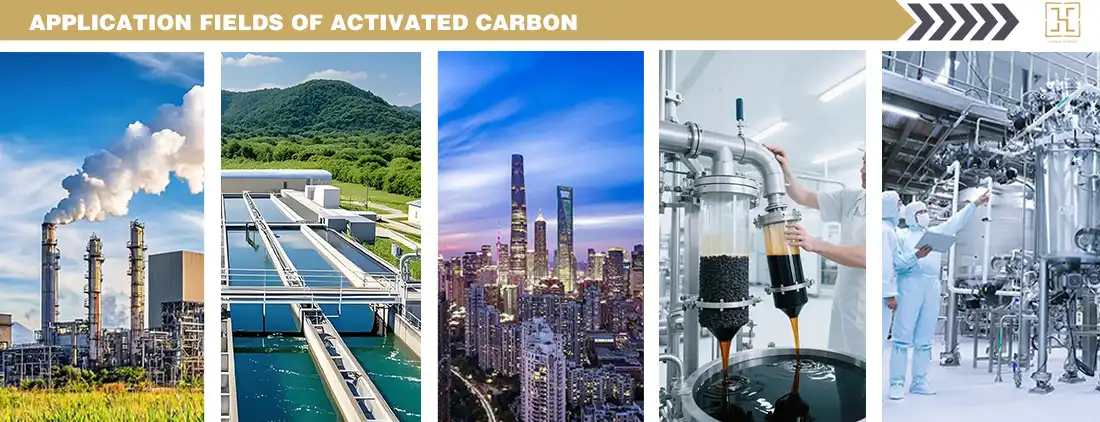
Industrial deployment covers many important areas, and all of them benefit from the ability to use right away. Knowing about these uses helps people who buy things match the specs of materials to the needs of operations.
Municipal and Industrial Water Treatment
Tough rules say that water treatment plants have to get rid of taste, smell, and biological contaminants. This absorber works well with quick gravity filters and pressure vessels to get rid of chloramines, taste-and-odor compounds, and dissolved organic carbon without the need for a first rinse that creates waste streams. When municipal plants follow strict discharge permits, they don't have to worry about the compliance risks that come with carbon fines getting into distribution networks. Industrial facilities that handle high-purity water for making electronics or medicines get rid of the risk of pollution from dust that is still in the air.
Chemical Process and Wastewater Management
Chemical companies that deal with colored wastewater from dye production, electroplating, or textile processing can quickly remove the color without having to take any extra steps to clarify it. The material doesn't contain much dust, so it doesn't get in the way of continuous production lines and automated dosing systems. Predictable adsorption kinetics and longer service cycles are good for wastewater treatment plants that deal with changing amounts of organic matter. Regeneration potential through thermal reactivation lowers lifetime running costs while keeping the effectiveness of adsorption high over many rounds.
Gas Purification and VOC Control
The material works great in gas-phase adsorption for VOC control systems, especially in painting operations, printing facilities, and chemical processing areas. It can also be used in water. Maintenance downtime is cut down because moisture-related dust doesn't form when media is replaced. Facilities that have air quality permits are in compliance without having to follow a lot of complicated rules for preparing media.
Comparative Performance Analysis
This material saves two to four hours of beginning time per installation cycle compared to versions that are made from washed coal. Compared to coconut shell carbon, it has better mechanical durability in high-speed applications and needs to be replaced less often in rough service conditions. When it comes to large-scale installations, where saving water and labor directly affects operational budgets, the economic benefit stands out. Getting rid of thousands of gallons of rinse water every time the media is changed is good for the environment and in line with corporate sustainability commitments and green procurement standards.
Manufacturing and Quality Assurance of No-Wash Coal-Based Activated Carbon
Production Process Overview
The process of making No-wash coal-based activated carbon starts with selecting high-quality anthracite based on its volatile matter content and ash composition. Controlled carbonization of the raw coal is followed by steam activation at temperatures above 800°C to develop the desired microporous structure. After activation, precision screening is an important step in producing No-wash coal-based activated carbon with a consistent particle-size distribution, followed by multiple stages of dust removal using cyclone separation and electrostatic filtration. For applications involving drinking water, No-wash coal-based activated carbon should undergo appropriate microbiological and contaminant testing to verify that it meets applicable safety requirements. Heavy-metal testing can also be used to confirm that arsenic, lead, and other regulated contaminants remain within the limits required for the intended application. These quality-control measures help ensure that No-wash coal-based activated carbon is suitable for use in demanding water-treatment processes. Consistent manufacturing and testing of No-wash coal-based activated carbon can also help maintain reliable adsorption performance from batch to batch.
Technical Indicators and Certification Standards
Turbidity testing is used to check the quality of a specific batch. Samples must reach NTU values below 10 within minutes of contact with water, which is not possible with standard carbons. Abrasion resistance testing can tell you how long a media will last under operational stress. Measuring the surface area confirms that the BET values support the goal adsorption capacities. For water treatment applications, compliance documentation talks about ASTM D series standards and AWWA B604 requirements. Certifications in ISO 9001 quality management, ISO 14001 environmental management, and ISO 45001 workplace health provide even more guarantee that the quality of the products is consistent.
Supplier Evaluation Criteria
Managers in charge of buying things should check how much can be made and ask for proof of multi-base manufacturing infrastructure that can handle big contracts. Technical support is important. Having access to application experts who can help with choosing media, system design, and fixing is what makes a relationship valuable in the long run. Supply chains that are clear, allow for batch tracking, and have a lot of technical information (like Certificates of Analysis, Safety Data Sheets, and performance validation reports) set reliable partners apart from commodity vendors. OEMs' ability to make custom formulas, particle sizes, and package arrangements meets the needs of unique projects.
Procurement Guide: How to Source No-Wash Coal-Based Activated Carbon
Balancing Cost and Performance
When setting a price, you need to look at the total cost of ownership as well as the unit price. Even though this material might cost 10–15% more than regular coal carbon, it saves money in the long run because it eliminates the need for pre-rinse work, lowers the cost of treating wastewater, and makes equipment last longer by lowering wear and tear. When these factors are taken into account in purchasing decisions, the real economic benefit becomes clear. This is especially true for places where water costs are high or where wastewater treatment capacity is limited.
Order Volume Optimization
Buying in bulk takes advantage of economies of scale and makes sure that supplies don't run out. Facilities that use 5–10 tons per year should talk about framework agreements with deliveries every three months to get the best price for volume while also saving money on working capital. Operational insurance includes emergency stock arrangements for unplanned repair or capacity increases. Handling costs and contamination risks are cut down with customized packaging, which can be anything from 25 kg bags for small installations to bulk pneumatic truck delivery for large operations.
Logistics and Payment Considerations
Lead times for regular No-wash coal-based activated carbon products are usually between 7 and 15 days, while customized No-wash coal-based activated carbon products may require 15 to 30 days. These lead times should be considered in strategic inventory management, balancing storage costs against the risk of supply interruptions. International procurement of No-wash coal-based activated carbon also involves coordinating multimodal transportation, completing customs documentation, and ensuring compliance with applicable regulations. Reliable suppliers can provide comprehensive logistics support for No-wash coal-based activated carbon, including real-time shipment tracking, moisture-resistant protective packaging, and transparent landed-cost information. Careful planning for No-wash coal-based activated carbon procurement can help buyers maintain stable inventory levels and reduce delays caused by transportation or customs procedures. A well-organized supply chain for No-wash coal-based activated carbon also supports more predictable project scheduling and long-term purchasing efficiency.
Evaluating Technical Documentation
The data sheets should include information about the particle size distribution, the adsorption isotherms for the contaminants of interest, and the breakthrough curve data when the machine is used in a certain way. Third-party performance validation reviews give the product more respect. Beyond lab data, case studies that show successful usage in similar situations give us useful information. Requesting samples for on-site pilot testing is still the best way to make sure they work, because it lets you compare them directly in real process conditions.
Why No-Wash Coal-Based Activated Carbon Is the Preferred Choice for Cost-Effective Purification
This material is better for modern purification systems because it is cheaper and easier to use. When cleaning processes are taken out of the equation, commissioning time goes down straight. Installations go from being delivered to being used in hours instead of days. When you change the media several times over the life of a building, you save a lot of water and energy. When pumps, valves, and instruments don't have to deal with gritty fines, they last longer.
Facilities that don't have a lot of technical people gain from operational simplicity. Automated systems put the material in without having to change the code for the rinse processes. Maintenance teams change filter media as simple swap-outs, which cuts down on the need for training and the chance of making a mistake. These factors are especially helpful for installations that are far away or for factories that work 24 hours a day, seven days a week, and where downtime costs a lot of money.
Regeneration economics should be emphasized. The material can handle being heated and cooled many times without losing its shape or ability to absorb things. Facilities that can regenerate their own media or have access to reactivation services can save 50–70% on the cost of replacing virgin media. This circular method fits with the company's goals for sustainability and actually saves money.
In the future, tighter disposal guidelines and requirements to reuse water will make the offer more valuable. New toxins that cause worry, like PFAS chemicals, pharmaceutical leftovers, and microplastics, need strong adsorption solutions. Because the material works well in a wide range of situations, it will be useful as treatment needs change. New technologies in surface modification and mixed materials will improve performance even more, but the main advantage of being ready to use will still be a deciding factor in the purchase decision.
Conclusion
Choosing the right adsorbent material has a direct effect on how well industrial purification systems work, how well they meet applicable requirements, and how efficiently they operate financially. No-wash coal-based activated carbon can be used directly in suitable applications, helping operators avoid additional pre-treatment steps while still providing effective adsorption performance. The technical characteristics of No-wash coal-based activated carbon, including controlled dust content, an optimized pore structure, mechanical durability, and verified purity, can address common challenges faced by procurement professionals. Using No-wash coal-based activated carbon can help streamline treatment processes and potentially reduce total cost of ownership across applications ranging from drinking water treatment plants to chemical processing facilities. The operational convenience of No-wash coal-based activated carbon, combined with its adsorption performance and potential lifecycle benefits, makes it a practical option for businesses seeking reliable and durable purification solutions. Selecting the appropriate No-wash coal-based activated carbon according to contaminant type, water or gas conditions, and process requirements can further support consistent treatment performance.
FAQ
What distinguishes ready-to-use carbon from conventional varieties?
The main difference is in the processing that happens after the product is made. Standard coal-based carbons hold on to surface fines and impurities that need to be rinsed with a lot of water before they can be used in a system. When ready-to-use materials are wet, they go through extra dry purification and dust removal to get turbidity levels below 10 NTU almost right away. This means that they don't have to go through black water release or long starting times as regular goods do.
Does the dust removal process reduce adsorption capacity?
The process of removing dust targets surface particles that don't stick to the material and manufacturing waste without affecting the internal pore structure that was created when the material was heated. The amounts of iodine and surface area measurements are still in the best ranges for adsorbing organic compounds. By getting rid of inert material that would otherwise occupy adsorption sites without helping remove contaminants, the process improves performance instead of decreasing it.
Can this material be regenerated for reuse?
Thermal regeneration is still possible, and the material can handle several reactivation processes at temperatures between 700°C and 900°C. The high mechanical strength keeps the particles from breaking down too much while they are being handled or recycled. After the right reactivation, the adsorption capacity usually goes back to 85–95% of what it was before. This makes it a good investment for places that can use renewal services or have their own heat processing equipment.
Partner with a Trusted No-Wash Coal-Based Activated Carbon Supplier
Shanxi Xinhua Carbon Technology Industry Co., Ltd. has been in the materials business for more than 60 years and has defense-grade quality systems that can help with industrial purification problems. Our factories are spread out in many different areas to make sure there is a steady supply of our products. We also keep a very close eye on our stock, making sure that all of our core products are always in stock and available for delivery within 7 to 15 days, or faster if needed for business reasons. Working together technically with Tsinghua University and the Chinese Academy of Sciences leads to constant progress in technologies that improve pore structure and change the surface of things. Our ISO 9001, ISO 14001, and ISO 45001 standards show that we are dedicated to producing high-quality products and being environmentally friendly. Our engineering team helps with every step of the application process, from choosing the right materials and doing pilot tests to integrating the system and making it work better, so your purification systems always meet the design requirements. Email us at greta@carbonxinhua.com to talk about your unique needs, get detailed data sheets, or set up shipments of samples for testing on-site. You can look at our whole line of products at xhcarbontech.com and learn how our strategic relationships with well-known makers give you operational trust and long-term value.
References
1. Marsh, H., & Rodríguez-Reinoso, F. (2006). Activated Carbon. Elsevier Science.
2. Bansal, R. C., & Goyal, M. (2005). Activated Carbon Adsorption. CRC Press.
3. Toles, C. A., & Marshall, W. E. (2002). "Copper Ion Removal by Almond Shell Carbons and Commercial Carbons." Journal of Chemical Technology and Biotechnology, 77(4), 437-444.
4. Activated Carbon: Solutions for Improving Water Quality (2013). American Water Works Association Technical Report.
5. Lillo-Ródenas, M. A., et al. (2005). "Understanding Chemical Reactions Between Carbons and NaOH and KOH: An Insight into Activation Mechanism." Carbon, 43(7), 1433-1442.
6. Bhatnagar, A., & Sillanpää, M. (2010). "Utilization of Industrial By-products for the Removal of Anionic Contaminants from Water." Environmental Science and Pollution Research, 17(1), 1-19.

Send Inquiry
You may like
_1781662034490.webp)