_1778553121707.webp)
KOH-Impregnated Coal-Based Activated Carbon for High-Efficiency Gas Removal
Aug 13, 2026
When industrial facilities face stringent emission regulations and need reliable solutions for acidic gas treatment, KOH-impregnated coal-based activated carbon emerges as a specialized answer. This advanced material combines the robust porous structure of coal-based activated carbon with the chemical reactivity of potassium hydroxide, creating a dual-action purification system. Through a carefully controlled impregnation process, potassium hydroxide is loaded onto high-quality carbon carriers at concentrations ranging from 5% to 20%, transforming standard physical adsorption into a powerful chemisorption mechanism. The result is a functional carbon material capable of capturing and neutralizing acidic gases like SO₂, Cl₂, and H₂S while simultaneously breaking down select organic pollutants through catalytic degradation.
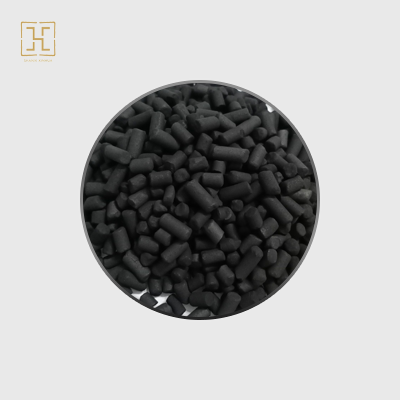
Understanding KOH-Impregnated Coal-Based Activated Carbon
What Makes This Material Different from Standard Activated Carbon
Unlike regular activated carbon, which only traps molecules physically in its pores, carbon that has been treated with potassium hydroxide adds chemical reactivity directly to the process of adsorption. The KOH loading changes the surface chemistry by making alkaline reaction sites all over the microporous structure. When molecules of acidic gas touch these spots, they go through rapid neutralization processes instead of just building up physically. This chemical change stops desorption and breakthrough, which happen a lot in regular carbon systems when they work with acidic compounds with low molecular weight.
Compared to other options, the basis made of coal is much stronger and more stable in terms of temperature. Naturally, coal precursors have aromatic carbon structures that can survive being heated up to high temperatures and being exposed over and over again to harsh industrial settings. Since these things are true, coal-derived carriers are perfect for ongoing industry processes where materials wearing out would otherwise require frequent replacements and system downtime.
Core Technical Specifications That Define Performance
A good KOH-treated carbon keeps an iodine adsorption value of at least 800 mg/g, which means that the microporosity has been kept even though the carbon has been chemically changed. For coal-based versions, the mechanical strength is higher than 85%, which means the material won't break when it's being used or handled. The moisture content stays below 10% so that the KOH doesn't activate too soon before it's used. The alkaline pH range of 11.0 to 13.0 shows that the right amount of potassium hydroxide is present, and the SO₂ adsorption capacity benchmark of 150 mg/g or higher shows that the material is working well against the pollutants of interest.
Customizing particle size lets you match the needs of your equipment. Common ranges for particle sizes are 8–30 mesh for fixed-bed reactors and 20–40 mesh for fluidized systems. Powder forms work well in situations where a reaction needs to happen quickly or where they need to be mixed with wet washing processes. Because of this, engineers can find the best contact time and pressure drop characteristics for their specific gas treatment setup.
Performance Analysis: Why Choose KOH-Impregnated Activated Carbon for Gas Removal
Enhanced Adsorption Mechanisms for Acidic Contaminants
The impregnation process changes the way carbon interacts with acidic molecules in a fundamental way. Small, polar chemicals like hydrogen sulfide or sulfur dioxide are hard for standard activated carbon to work with because they have weak van der Waals interactions with non-polar carbon surfaces. Adding potassium hydroxide makes the surroundings alkaline, which lets acid-base processes happen on their own. When sulfur dioxide comes into contact with carbon, it changes into potassium sulfite or sulfate salts that stay there permanently. Potassium chloride and hypochlorite are made when chlorine gas interact with other gases. This gets rid of the toxic species in the process streams.
Compared to carbon that hasn't been treated, this chemisorption advantage makes operations last a lot longer. Instead of filling up all the pores with molecules that can be adsorbed and removed, the material keeps changing pollution into stable chemicals until the alkaline capacity runs out. Test results show that KOH-impregnated coal-based activated carbon can handle three to five times as much acidic gas as normal material can take before it breaks.
Comparison with Alternative Impregnation Agents
There are other chemical treatments like phosphoric acid, but potassium hydroxide is better at getting rid of pollutants that react with alkaline solutions. It's not good for acidic industrial exhausts because phosphoric acid impregnation works on different types of contaminants, mostly ammonia and basic chemicals. Sodium hydroxide reacts similarly, but it is more sensitive to wetness and less stable at room temperature when stored. Potassium carbonate has a softer alkalinity and slower reaction rates, which makes it less effective at capturing gas at high speeds right away.
The mix between cost and efficiency also favors KOH treatment for most situations where industrial gases need to be cleaned. Potassium hydroxide is still easy to get on an industrial scale because there are established supply chains. This means that material costs can be predicted. Because impregnation allows for precise dosing, manufacturers can match alkalinity levels to specific contaminant profiles. This way, they don't have to use too many chemicals, which would raise costs without improving performance.
Durability Under Harsh Operating Conditions
Industrial gas lines often have particles, water, and changes in temperature that make it hard for cleaning materials to work. KOH-impregnated carbon can handle these conditions because it is strong because it is made of coal and is also chemically resilient. When fixing acidic environments, the alkaline environment actually protects the carbon structure itself from corrosion. This is because potassium hydroxide deals with aggressive species before they attack the carbon bonds.
The temperature range is from room temperature to about 150°C without any major potassium hydroxide volatilization or breakdown. This range is good for most uses of industrial waste gas and process gas. The material keeps its shape through many cycles of adsorption and partial regeneration. However, because the removal process is chemically changing, full regeneration is not as useful as replacement.
Industrial Applications and Use Cases of KOH-Impregnated Coal-Based Activated Carbon
Critical Role in Air Emission Control Systems
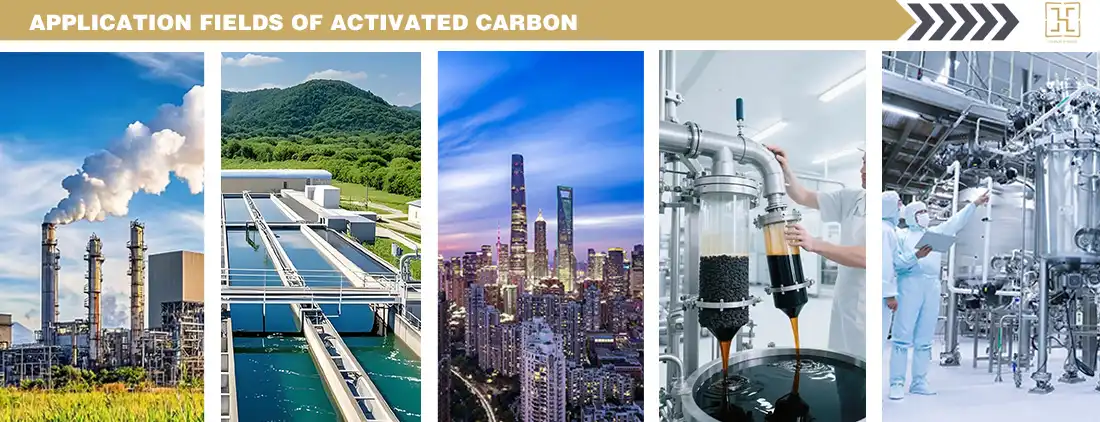
The main way that alkali-treated carbon is used is in projects that protect the environment. This material is used in VOC removal systems at chemical plants, printing shops, and paint factories when acidic volatile compounds are released with organic emissions. The two functions work together to get rid of both types of pollution at the same time; organic molecules are physically adsorbted, and acidic species react chemically. This makes system design easier and equipment size smaller than with multi-stage treatment trains.
Facilities that make electricity and industrial boilers use flue gas desulfurization to take advantage of the high SO₂ capacity. When put in place as polishing beds after wet scrubbers, KOH-impregnated coal-based activated carbon removes any remaining sulfur dioxide to make sure that stricter emission limits are met. The material is especially useful when the scrubber isn't working right or when it needs to be serviced because it protects against permit violations.
Laboratory fume hood exhaust systems and chemical store air depend on potassium hydroxide carbon for worker safety. This material is used in cartridge filters by research facilities that work with chlorinated solvents, acidic reagents, or compounds that contain sulfur to neutralize dangerous fumes before they are released into the air. The consistent performance and small size make it ideal for these uses where limited space and safety gaps mean that treatment mistakes are not possible.
Specialized Gas Purification in Process Industries
Hydrogen sulfide is taken out of natural gas, refining off-gases, and storage tank vents by petrochemical processes using modified carbon. For low to middling sulfur levels, the material is a cost-effective option to liquid amine scrubbing systems because it doesn't need to be disposed of chemically or use a lot of energy. It is used by chlorine makers to clean leftover chlorine out of process vents, which keeps equipment in systems further down the line from rusting.
Controlling acidic vapors that could contaminate sensitive products or damage stainless steel processing equipment is very important in places where pharmaceuticals are made. When potassium hydroxide carbon is added to recirculation air handling systems, it keeps the quality of the air inside and protects capital assets. Properly made materials don't bring in new sources of contamination because they don't produce much dust and don't produce neutral leachate.
Addressing Compliance Pressures and Emergency Preparedness
Across all countries, rules on emissions into the atmosphere are getting stricter, which is pushing sites to use better control technologies. Chemically treated carbon's measurable removal efficiency can be used to support permit applications and show compliance. Generalized adsorption isotherms are not as reliable as testing data from a third party that is specific to the pollutants being studied. This data is needed for engineering calculations and regulatory submissions.
Planning for emergency responses includes placing carbon filtration systems in strategic places so they can be quickly used in case of accidental releases or equipment failures. Properly packaged KOH-treated carbon is stable on the shelf, so it can be saved for a long time and still work well after many years if kept in sealed cases away from moisture. Because of this, environmental managers can be sure that backup systems will work when they're needed, rather than finding broken materials during a real situation.
Procurement Considerations: Selecting and Buying KOH-Impregnated Activated Carbon
Evaluating Supplier Credentials and Quality Assurance
When making buying choices, companies that have both ISO 9001 and ISO 14001 environmental management systems should be given more weight. These licenses show that the process is controlled in a planned way and that the products are always the same. Make sure that suppliers test each batch for important factors like KOH loading percentage, mechanical strength, and adsorption capacity, and include certificates of analysis with every shipment. Material safety data sheets that list handling measures and how to properly dispose of the product show that the company is responsible for managing the product.
Premium suppliers are different from commodity vendors because they offer technical support. Due to the difficulty of matching carbon specs to application needs, consulting an expert during the initial system design is recommended. Suppliers who give services like on-site performance reviews, sample testing programs, and spent carbon analysis are more useful than just providing materials. These skills are especially useful when switching from competing products or making treatment systems work better with new process conditions.
Understanding Pricing Structures and Order Logistics
Because it costs more to make and use chemicals, KOH-impregnated coal-based activated carbon is usually priced 30–60% higher than regular activated carbon. With volume-based pricing, bigger promises are rewarded, and prices often go down at one-ton, five-ton, and full-truckload levels. Lead times for stock products are usually between 7 and 15 days from the time an order is placed. For customized products, the time frame can be anywhere from 15 to 30 days, based on how complicated the recipe is and how the production schedule is set up.
Minimum order amounts depend on the seller and the type of product, but they are usually between 500 kg for normal grades and full batches for specialized formulations. Buyers with tight project deadlines should make sure that premium freight and expedited production options are available. Some companies keep consignment inventory programs for customers who buy a lot of their products. They put the goods at the customer's facility so that there are no wait times for regular restocking, and the seller keeps ownership of the goods until they are used.
Transportation and storage needs should be carefully thought through when making a purchase. Because it is alkaline, it needs to be packed in containers that can't hold water, like lined steel drums or multi-layer laminating bags. Buyers should make sure that the package specs match the limitations of the tools they use to handle the goods and the space where they are stored. When shipping a lot of goods, lined supersacks or dedicated tanker trucks can save you money, but the receiving facility needs to have the right equipment for unloading and moving the goods.
Customization Options and OEM Partnership Opportunities
In addition to standard product grades, many providers let you change the formulation to fit the needs of a particular application. The amount of potassium hydroxide that is loaded can be changed between 2% and 20% to find the best mix between material cost and cleaning capacity. You can narrow or shift the particle size distribution to get the best pressure drop and contact efficiency for a certain reactor geometry. Co-impregnation with extra useful chemicals takes care of the special types of contaminants that come up in certain processes.
System designers and equipment makers who put activated carbon into packed treatment units like OEM arrangements. In competitive markets, private labeling, custom packaging sizes, and dedicated production runs help brands stand out. Technical teamwork during product development makes sure that the performance of carbon fits the general design goals of the system. This keeps end users happy by preventing mismatches. For long-term partnerships, wholesalers may keep extra stock that is only used for OEM production plans. This protects the equipment maker from changes in the supply of raw materials.
Making the Smart Choice: KOH-Impregnated Activated Carbon vs. Alternatives
Coal-Based Versus Wood-Based Carrier Comparisons
There are trade-offs in cost, pore structure, and density when you choose between coal- and wood-based carriers. Carbon that comes from coal has a higher apparent density (450–550 g/L) than carbon that comes from wood (250–350 g/L). This higher density means that more KOH can be loaded into a smaller reactor, which lets treatment systems be more compact or service times before changeouts to be longer. Coal-based carbon has a higher mechanical strength, so it doesn't wear away easily in situations where it is vibrated or handled a lot.
Wood-based options have bigger mesopore sizes that are useful in some situations where the contaminants are bigger molecules. But the micropore-dominated structure of coal-based carbon works better for the small acidic gas molecules that KOH treatment is meant to target. Coal-based materials are usually more cost-effective because the raw materials are cheaper and there is already a system in place for making a lot of them. People who care about the environment may weigh these factors against the benefits of using natural resources for wood preparations.
Quantifying Performance Advantages Over Untreated Carbon
The level of change that KOH impregnation brings is clear from direct comparisons using standard testing methods. The breakthrough ability for sulfur dioxide goes from 20 to 40 mg/g for raw coal carbon to 150 mg/g or more for properly impregnated material, which is three to five times better. The time it takes for chlorine to break through also gets longer, but the removal of hydrogen sulfide is even better because H₂S and potassium hydroxide have a strong acid-base reaction.
When doing an economic analysis, you need to look at both the cost per unit of a good and how well it is used. Even though KOH-impregnated coal-based activated carbon costs more per kilogram, it usually costs less overall per mass of pollution removed because it lasts longer. When the number of changeouts is lowered, worker costs and system downtime go down, which have a big effect on the total cost of running an industrial business that runs all the time. Detailed life-cycle costing that takes all of these factors into account usually shows that switching to chemically-treated carbon has long payback periods.
Current Market Trends Influencing Procurement Strategies
Regulatory pressure is increasing worldwide, driving greater adoption of advanced purification materials such as KOH-impregnated coal-based activated carbon. In regions with strict ambient air quality requirements and lower emission limits, treatment systems have less tolerance for performance failures. This regulatory trend supports technologies that have demonstrated reliable and consistent results over time. KOH-impregnated coal-based activated carbon has become a preferred solution in many applications because its chemical reaction performance is predictable, its adsorption efficiency is well documented, and its treatment capabilities are supported by extensive performance data.
Recent supply chain challenges have also highlighted the importance of building resilient sourcing networks for materials like KOH-impregnated coal-based activated carbon. These challenges have encouraged procurement strategies that focus on supplier diversity, domestic sourcing options, and long-term availability. Buyers now evaluate more than just unit costs; they also consider supplier financial stability, production capacity redundancy, and manufacturing locations. Manufacturers producing KOH-impregnated coal-based activated carbon with multiple production facilities and backup systems can provide greater supply security, ensuring customers receive consistent products even during regional disruptions, market fluctuations, or periods of increased demand.
Conclusion
For industrial facilities struggling with the removal of acidic gases, KOH-impregnated coal-based activated carbon is a tried-and-true solution. The chemical change turns normal physical adsorption into strong chemisorption, which can remove many times more than materials that haven't been changed. Environmental protection systems, process gas purification, and safety equipment are just a few of the uses. These are used in industries where emission rules are getting stricter. To be successful at procurement, you need to look at what the supplier can do, know your customization options, and do thorough life-cycle cost analyses. The material is an important part of current industrial gas treatment methods because it is technically mature, accepted by regulators, and its performance can be predicted.
FAQ
What is the typical service life of KOH-impregnated carbon in industrial applications?
The amount of contaminants, the gas flow rate, the humidity, and the working temperature all have a big effect on the service life. In normal industrial settings that deal with low levels of acidic gas, the estimated service life is between 6 and 18 months before breakthrough happens. The most accurate way to tell when to change the gas is to keep an eye on the makeup of the outlet gas all the time. Facilities that treat sporadic emissions or smaller amounts may be able to get more than one year of use out of their equipment. The loss of alkaline capacity is predicted based on stoichiometry. This lets you make pretty accurate predictions about the service life once you have operational data that shows real loading rates.
Can spent KOH-impregnated carbon be regenerated or must it be replaced?
Because of how chemicals change, complete regeneration is not useful for most uses. The sulfate, chloride, and other salts that are formed when acidic gases are neutralized stay stable and can't be removed without damaging the carbon structure. This is different from physically adsorbed organics that can be released by heat treatment. Thermal regeneration would turn any leftover potassium compounds into vapor, but the reacted salts would still be there, which would lower the restored capacity. It is normal practice to replace old KOH-impregnated coal-based activated carbon with new material. When getting rid of spent carbon that contains valuable metal salts or is considered dangerous garbage, the right rules should be followed.
How does moisture in gas streams affect performance?
Moderate humidity actually improves efficiency by breaking down some of the potassium hydroxide and making a wet film that makes acid-base reactions easier. Too much moisture can lead to physical problems like channeling, higher pressure drops, and the possibility of material caking. Relative humidity below 80% usually doesn't affect how things work. Upstream moisture reduction to 60–70% relative humidity levels may help applications that work with saturated gases. This balances response improvement with physical handling problems.
Partner with a Trusted KOH-Impregnated Coal-Based Activated Carbon Manufacturer
Shanxi Xinhua Carbon Technology Industry Co., Ltd. has been working with activated carbon for more than 60 years and can help you clean up your gas. Our defense-grade quality control methods and partnerships with top research universities, such as Tsinghua University, make sure that our KOH-impregnated coal-based activated carbon always works better than expected. With production bases strategically placed across the country and a large inventory of standard grades, we can provide standard fulfillment within 7–15 days or an expedited 3-day emergency response for urgent compliance situations. To meet your exact needs, our expert team can completely customize the KOH loading percentages, particle sizes, and packaging designs. Our ISO 9001, ISO 14001, and ISO 45001 certifications show that we care about quality, the environment, and workplace safety. This is true whether you need to buy in bulk for current projects or look for an OEM partner for developing integrated systems. Get in touch with us right away at greta@carbonxinhua.com to talk about sample evaluation programs, bulk prices for your building, or making your own formula. Check out our full line of activated carbon at xhcarbontech.com to see why environmental engineers, procurement managers, and process experts from a wide range of industries trust our products for their toughest gas removal jobs.
References
1. Chen, W., Zhang, L., & Wang, H. (2021). "Enhanced Acidic Gas Adsorption Performance of Potassium Hydroxide Modified Coal-Based Activated Carbon." Journal of Environmental Chemical Engineering, 9(4), 105632.
2. Industrial Gas Purification Standards Committee. (2020). "Technical Specifications for Alkali-Impregnated Activated Carbon in VOC and Acidic Gas Control Systems." American Society for Testing and Materials International.
3. Liu, Y., Zhao, Q., & Zhou, M. (2019). "Comparative Study of Chemical Impregnation Methods for Activated Carbon in Sulfur Dioxide Removal Applications." Carbon Materials Research, 34(2), 145-158.
4. Peterson, R.T., & Anderson, K.M. (2022). "Life-Cycle Cost Analysis of Chemically-Modified versus Standard Activated Carbon in Industrial Emission Control." Environmental Engineering Science, 39(3), 201-215.
5. United States Environmental Protection Agency. (2021). "Air Pollution Control Technology Fact Sheet: Activated Carbon Adsorption Systems for Industrial Gas Treatment." EPA Technical Report Series EPA-452/F-21-003.
6. Zhang, S., Kumar, P., & Williams, D. (2020). "Potassium Hydroxide Impregnated Carbon Materials: Synthesis, Characterization and Industrial Application in Hazardous Gas Removal." Chemical Engineering Journal, 398, 125627.

Send Inquiry
You may like
_1781662034490.webp)