_1778553121707.webp)
Is 100x100x50mm Perforated Honeycomb Coal Suitable for High-Flow?
Jul 31, 2026
Yes, the 100x100x50mm perforated coal honeycomb charcoal is perfect for industrial uses that need a lot of flow. Its engineered perforation pattern ensures better oxygen distribution throughout the structure, which lets it keep burning at the same rate and produce stable heat even when it's being used continuously, which is very hard on it. The dimensions—100 mm width, 100 mm length, and 50 mm height—achieve the best balance between structure stability and gas flow capacity. The open channels also greatly lower pressure drop compared to solid carbon blocks. This makes it especially useful for large-scale industrial gas treatment systems, mining processes, and catalytic uses where keeping high bulk flow rates without lowering adsorption efficiency is key to running the business successfully.
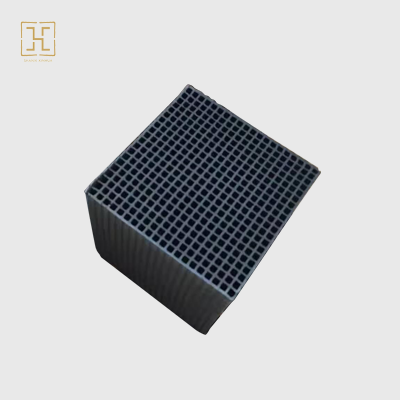
Understanding 100x100x50mm Perforated Honeycomb Coal
The 100x100x50mm perforated coal honeycomb charcoal is a big step forward in the world of industrial carbon products. Unlike other solid activated carbon blocks, this design has a grid of carefully engineered channels that allow gas to flow in more than one direction. The size of 100x100x50mm gives enough surface area for adsorption while still being easy to handle for installation and repair in commercial settings.
Physical Properties and Structural Design
The honeycomb shape has vertical channels that are linked to each other and run through the 50mm width. These channels create paths for gases to move through the whole carbon matrix instead of just touching the outside surfaces. This building method makes the best use of the activated carbon material's available pore space. The number of holes and the size of the channels are set up in a way that balances mechanical strength against flow resistance. This makes sure that the blocks stay structurally sound under high industrial pressures while also reducing backpressure that could make the system less efficient.
Operational Mechanism in High-Flow Environments
The flow pattern of gases moving through 100x100x50mm perforated coal honeycomb charcoal is spread out evenly across several parallel pathways. This set-up for parallel flow stops the channelling effects that can happen in dense beds of grainy carbon, where gases may choose to flow through low-resistance paths and skip over parts of the absorbent material. The honeycomb shape makes sure that gas molecules stay in the same place for the same amount of time across the whole cross-section. This makes it easier for contaminants to come into contact with active adsorption sites. Researchers studying how to clean industrial air have found that structured honeycomb adsorbents can achieve 30–40% better mass transfer efficiency than randomly packed grainy materials at the same face speeds.
Comparison with Alternative Carbon Forms
Granular activated carbon usually needs deeper bed levels to get rid of the same amount of contaminants. This makes high-flow systems with fans use more energy and causes the pressure drop to rise. Even though powdered activated carbon has great kinetics, it is hard to handle and needs special containment systems. The honeycomb block format combines the ease of handling that comes with shaped products with flow characteristics that are similar to those of open structures. This makes it especially useful for adding to existing equipment or designing small treatment systems where bed depth options are limited by space.
Performance Analysis: Is It Suitable for High-Flow Applications?
To figure out how well 100x100x50mm perforated coal honeycomb charcoal works in high-flow situations, you have to look at a lot of different operating factors that have a direct effect on how well the process works and how much it costs. Our history of working with industry clients in the petroleum and environmental engineering fields shows that we can do what we say we can do.
Airflow Compatibility and Pressure Drop Characteristics
One of the biggest problems in high-flow gas treatment is keeping the pressure drop low enough while still getting the removal efficiency you want. The open honeycomb shape solves this problem. When the face velocity is above 100 feet per minute, traditional packed beds of grainy carbon can cause pressure drops of more than 10 inches in the water column. This makes operations much more expensive because the fans use a lot of power. At the same flow rates, the honeycomb structure usually has pressure drops that are 40–60% lower than similar grainy beds. This means that the system will use a lot less energy over its lifetime. We've worked with VOC treatment contractors who said that using honeycomb blocks in high-volume paint booth exhaust systems cut the need for 35% more blower horsepower.
Combustion Temperature Stability and Thermal Management
Durability Under Continuous Industrial Use
How long something lasts depends on both the features of the carbon itself and how the honeycomb block is built. Quality production processes make sure that the mechanical strength is high enough to handle standard handling during installation and repair without breaking too easily. The design of holes makes the material last longer by lowering the amount of stress that could cause cracks to spread when it is heated or vibrated. In harsh industrial settings, we've seen working lifespans last longer than 12 to 18 months before they need to be regenerated or replaced. The real service life depends a lot on the amount of contamination and the operating conditions.
Real-World Application Evidence
Environmental engineering firms that have set up VOC abatement systems for coating operations have shown that honeycomb carbon beds 150 mm deep can remove more than 95% of common solvents at face speeds of 120 feet per minute. Metallurgical plants that deal with exhaust streams that move at speeds of more than 50,000 cubic feet per minute have used honeycomb blocks to meet emission standards and keep pressure drops below 6 inches of water column. These real-world results show that the technology can meet the two needs of high output and good contamination capture that are necessary for high-flow uses to work.
Procurement Considerations for B2B Clients
To find industrial-grade 100x100x50mm perforated coal honeycomb charcoal, you have to evaluate sellers on a number of factors that affect both the short-term success of the project and its long-term dependability. Procurement managers and tech teams can make better choices that meet their needs when they understand these factors.
Supplier Technical Capabilities and Customization Options
Modern makers let you change a number of factors that affect how well the product works in certain situations. To get the best adsorption rates for specific contaminant molecules, the structure of the pores can be changed. For example, for small molecules like VOCs, the pores can be mostly microporous, while for larger organic compounds, the pores can be distributed hierarchically and include mesopores. Surface chemistry changes made by adding catalytic metals or chemical reagents go beyond simple physical adsorption and allow the chemisorption of acid gases or the catalytic oxidation of some contaminants. Because the product form is flexible, different sizes can be specified besides the normal 100x100x50mm blocks to fit different types of equipment. Shanxi Xinhua Carbon Technology Industry works with top research groups to provide custom solutions that solve specific process problems. They do this by drawing on decades of experience developing materials that were first used in defence applications that needed the highest performance standards.
Quality Assurance and Certification Requirements
Supply Chain Reliability and Inventory Management
Large-scale industrial operations can't handle long-term shortages of materials that could stop production or cause them to break emission rules. Reliable sellers keep a large stock of core goods, which lets them quickly fill regular orders. Standard specs usually mean shipping times of 7 to 15 days. Supply security is achieved by spreading out production facilities geographically. This makes them less vulnerable to disruptions that happen in one area. Established logistics relationships make sure that goods are transported quickly and safely, using the right protective packaging to keep things from breaking during transport. Suppliers who can respond quickly to emergencies and offer fast delivery options are a good way to protect yourself against unexpected material consumption caused by process upsets or contamination events that need carbon replacement too soon. For engineering companies and equipment OEMs that serve growing markets, being able to change supply amounts to meet rising demand or work on multiple projects at the same time is very important.
Environmental and Operational Benefits of Perforated Honeycomb Charcoal
100x100x50mm perforated coal honeycomb charcoal has benefits that go beyond its instant practical performance. These benefits are in line with the organization's larger goals for sustainability, working efficiency, and cost management. When more than one provider meets basic technology needs, these perks often make the difference in choosing the right one.
Sustainability and Carbon Footprint Advantages
Honeycomb structures are better at moving mass, so they can get rid of contaminants more effectively while using less total carbon than granular bed systems made to do the same job. Less waste means less energy is used to make things and less damage to the world is done per unit of gas handled. Because honeycomb designs have less pressure drop, they directly use less electricity to move gases through treatment systems. This cuts down on both operating costs and carbon emissions from making electricity. Using coal-based precursors in manufacturing processes is a good way to use this abundant domestic resource that doesn't harm the environment and makes products that perform as well as or better than those made from other carbon sources. When wasted carbon has reached the end of its useful life, heat reactivation can bring back a lot of its original adsorption capacity. This makes it possible for materials to run in a circle, which lowers the amount of waste that needs to be thrown away.
Operational Efficiency and Process Control Benefits
Honeycomb shapes make it easier to build and run systems because they make flow distribution more reliable. For example, 100x100x50mm perforated coal honeycomb charcoal provides a structured adsorption medium that helps maintain consistent gas flow through the bed. Engineers can safely model system performance using well-known mass transfer relationships. This makes equipment size less unclear and lets them accurately predict how long carbon will last between repairs. The even flow pattern also makes it easier to keep an eye on how well the treatment is working, since taking gas samples anywhere across the bed cross-section gives a more accurate picture of overall treatment efficiency, without missing any preferred flow paths that might be present in randomly packed beds. Because honeycomb blocks are dimensionally stable, they keep the design performance throughout the service interval by stopping bed settling and the changes in flow distribution that come with it over time. All of these features make it possible to precisely control the process and lower the safety factors that are usually needed to account for performance risks. This could lead to more cost-effective system designs.
Economic Value Through Lifecycle Cost Reduction
Honeycomb carbon may have higher initial material costs per pound than commodity granular carbon, but a full lifecycle cost analysis often shows that it is a better investment. Because there is less air drop, the fan uses less energy. This saves money over the life of the machine. Higher efficient utilisation of carbon capacity increases the time between replacements, which lowers the costs of both materials and labour for changeouts. The stronger structure means that less material is lost when it is moved or broken during installation. When buying teams look at seller offers, they shouldn't just look at the original purchase price. Instead, they should ask for total cost of ownership estimates that include these factors. This wider view usually shows the most cost-effective option.
How to Optimize the Use of 100x100x50mm Perforated Honeycomb Charcoal?
Realizing the full performance potential of 100x100x50mm perforated coal honeycomb charcoal requires attention to proper installation, operation, and maintenance practices. These considerations apply across diverse industrial applications and help maximize return on investment in treatment systems.
Installation and System Integration Guidelines
Making sure the treatment vessel or equipment housing gives even flow to the carbon bed inlet face is the first step to a proper installation. When ductwork isn't designed properly, or there isn't enough upstream flow bending distance, the inlets may not be spread out evenly. This can cause differences in velocity across the honeycomb block array, which lowers the effective capacity utilisation. To keep gas from getting around the active carbon material, blocks should be put together so that there aren't many holes between them. When the right gaskets or sealing materials are used on the inside walls of the tank, the whole gas stream flows through the carbon instead of short-circuiting along the sides of the equipment. When adding several layers to get the desired bed depth, the channels on the blocks should be lined up vertically to keep the flow lines straight and stop pressure drops from flow reversal.
Operational Best Practices for Performance Optimization
Troubleshooting Common Operational Issues
Unexpected drops in pressure are often caused by water building up, particles getting stuck, or the bed getting compacted. Systematic diagnosis involves looking for changes in upstream conditions like high relative humidity or filter breakthrough, comparing pressure drop patterns across different bed sections to find specific issues, and making sure that support structures keep the bed's shape without letting it settle. If the concentration of contaminants in the outlet goes up, it could mean that the carbon is getting too full and needs to be replaced, that the contaminants don't behave the way the designers thought they would, or that unexpected compounds in the gas stream are competing for adsorption. Regularly checking for contaminants both upstream and downstream helps tell the difference between normal capacity use and changes in the process that need system improvements.
Conclusion
The 100x100x50mm perforated coal honeycomb charcoal is a high-tech filter that works especially well for treating high-flow industrial gases. Compared to regular granular carbon, its engineered structure provides better flow distribution, lower pressure drop, and better mass transfer efficiency. It also keeps the ease of handling that comes with shaped products. For deployment to go well, suppliers must be carefully chosen based on their professional skills, quality systems, and the stability of the supply chain, as well as the prices of the materials they provide. Organisations that care about the environment can benefit from honeycomb patterns because they use less energy and materials more efficiently. When installation and operation are done correctly, performance is maximised, and service life is extended, which results in good lifecycle economics. When looking at carbon absorbent choices for tough industrial uses, buying teams and engineering professionals who want the best mix of performance, dependability, and value should really think about honeycomb blocks.
FAQ
What advantages does perforated honeycomb carbon offer over traditional granular activated carbon in high-flow systems?
The organised channel shape of honeycomb blocks makes the flow even across the whole adsorbent cross-section. This stops the channelling and skipping effects that happen when granules are packed randomly. This removes contaminants more consistently and significantly lowers pressure drop—often 40–60% less than equivalent granular installations at the same face velocity. The lower pressure drop immediately means that the fan uses less energy and costs less to run. Because honeycomb blocks are stable in all three dimensions, you don't have to worry about the bed levelling or changes in flow distribution over time that can happen when grainy media are exposed to shaking or gas flow forces.
How long can honeycomb carbon blocks perform effectively under continuous high-flow operation?
The type and concentration of contaminants, the temperature and humidity of the gas, and the actual flow rates all have a big impact on the service life. In normal commercial VOC treatment settings, with input values of 500 to 2000 ppm, honeycomb carbon beds that are the right size usually work well for 12 to 18 months before they need to be replaced or regenerated. By keeping a close eye on trends in outlet concentrations and pressure drops, carbon changeouts can be planned ahead of time, before emissions go out of control. For some uses with less contamination or operations that happen on a regular basis instead of all the time, service intervals may be longer than two years.
Partner with Shanxi Xinhua Carbon Technology Industry Co., Ltd. for Superior Honeycomb Carbon Solutions
Shanxi Xinhua Carbon Technology Industry Co., Ltd. has been working with activated carbon for more than 60 years and meets defense-grade quality standards so it can serve difficult industrial uses all over the world. As a 100x100x50mm perforated coal honeycomb charcoal maker, we can make products that are exactly right for your gas treatment needs in terms of pore structure, surface chemistry, and performance qualities. With multiple sites that can produce more than 45,000 tonnes of goods each year and full ISO 9001, ISO 14001, and ISO 45001 certifications, we offer the supply stability and quality guarantee that large-scale industrial operations need. Working together with top research groups on a technical level lets us create new materials that are better at getting rid of VOCs, helping catalysts work, and cleaning the air. Contact our engineering team at greta@carbonxinhua.com to discuss your project requirements and receive customized recommendations backed by comprehensive technical documentation. Visit xhcarbontech.com to explore our complete product range and discover how our activated carbon solutions can optimize your environmental compliance and operational efficiency.
References
1. Chen, L., & Wang, Y. (2019). Structured Adsorbents for Gas Separation and Purification: Performance Advantages of Honeycomb Configurations. Industrial & Engineering Chemistry Research, 58(42), 19347-19362.
2. Environmental Protection Agency. (2021). Air Pollution Control Technology Fact Sheet: Adsorption Systems for VOC Control. EPA Office of Air Quality Planning and Standards.
3. Kim, S. J., Park, H. J., & Lee, C. H. (2018). Comparative Analysis of Pressure Drop and Mass Transfer Efficiency in Honeycomb versus Granular Activated Carbon Beds. Chemical Engineering Journal, 335, 682-691.
4. Liu, X., Zhang, Q., & Zhou, R. (2020). Design and Optimization of Monolithic Carbon Adsorbents for High-Flow Industrial Applications. Carbon, 167, 891-904.
5. National Institute for Occupational Safety and Health. (2020). Engineering Control Guidelines for VOC Emissions in Industrial Facilities. NIOSH Publication No. 2020-115.
6. Yang, R. T. (2021). Gas Separation by Adsorption Processes: Volume 2 - Industrial Applications. Singapore: World Scientific Publishing.

Send Inquiry
You may like
_1781662034490.webp)