_1778553121707.webp)
Industrial Applications of 8x30 Mesh Coal Activated Carbon
Jul 30, 2026
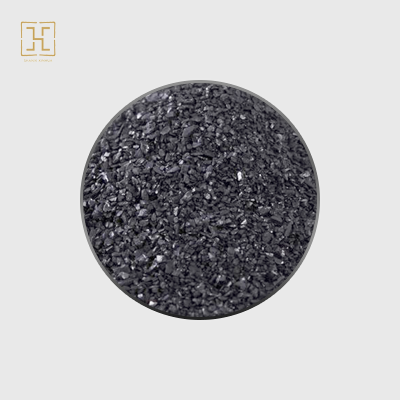
When it comes to solving hard filtration and purification problems in modern business, 8*30-mesh coal briquette crushing activated carbon is a solid choice. To make this stuff, high-grade bituminous coal is ground up, mixed with special binders, and then pressed into briquettes under a lot of pressure. The briquettes are then carbonised and heated with steam, and they are crushed to exact granule sizes between 0.6mm and 2.36mm. This material is very useful because it has two types of pores: transport mesopores that let molecules move quickly and internal micropores that make it easier for molecules to stick to the material. This solid adsorbent is used by businesses all over the world to meet strict environmental standards while keeping costs low and operations running smoothly.
Understanding 8x30 Mesh Coal Briquette Activated Carbon and Its Production
What Defines This Material?
The different particle sizes in this activated carbon have a direct effect on how well it works with water and how quickly it adsorbs things. The 830-mesh rating makes sure that there is a balance between surface access and flow resistance. This makes it perfect for deep-bed filtration systems that need to keep pressure drop manageable. In contrast to directly crushing raw coal carbon, the 830-mesh coal briquette crushing activated carbon process makes the inside structure more uniform, which lowers dust production and increases mechanical durability.
Production Stages That Ensure Quality
The first step in making something is choosing high-quality bituminous coal. This is then finely ground and mixed with special binders. When you briquette under high pressure, you get thick blocks that are carbonised in controlled atmospheres to get rid of toxic chemicals. After that, steam action opens millions of holes all over the matrix. The active briquettes are then broken up and screened until the mesh size is right. At every step, quality control makes sure that standards like AWWA B604 and NSF/ANSI 61 are met. This makes sure that the product is safe to touch and provides drinkable water and works the same way in every batch.
Technical Specifications That Matter
An Iodine Value between 900 and 1100 mg/g is a key performance measure that shows the total surface area and binding ability. Hardness numbers between 90% and 97%, according to ASTM D3802, show that the material is very resistant to wear and tear during handling and renewal processes. The best bed volume and contact time are reached when the apparent density is between 450 and 550 g/L. Low ash content—usually less than 12% to 15%—keeps adsorption sites clear and keeps treated fluids from having unwanted chemical reactions or pH changes.
Comparison with Other Mesh Sizes
This smaller grain has a higher external surface area and faster adsorption rates than larger 4x8 mesh versions. This is very important in situations where contaminants need to be captured quickly. On the other hand, it has a lower pressure drop than 12x40 mesh carbon, which makes it good for high-flow systems that need to save energy. The adjusted grain size takes care of typical problems like channelling, premature fatigue, and too much backwash frequency.
Industrial Applications of 8x30 Mesh Coal Briquette Activated Carbon
Water Purification Systems
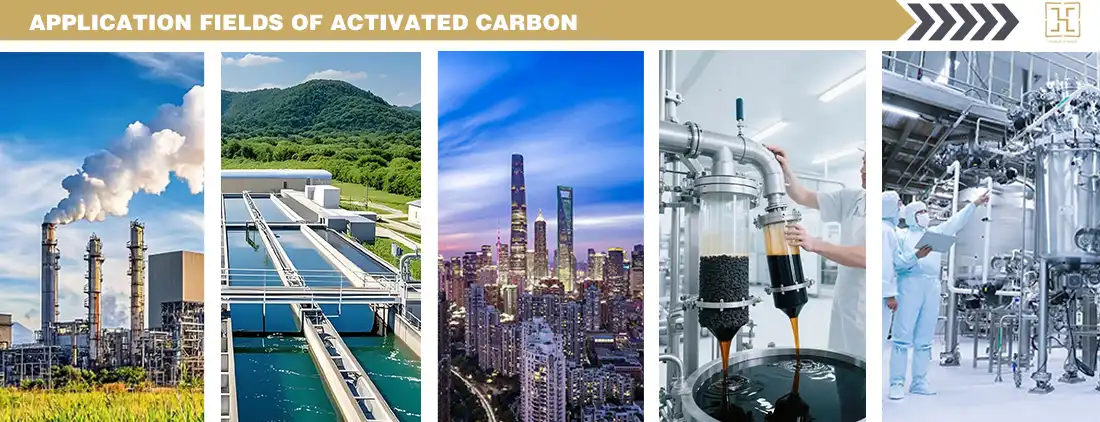
This activated carbon is used by municipal water plants and industrial wastewater treatment plants to get rid of chlorine, organic compounds, bad tastes and smells in drinking water, and for 8*30-mesh coal briquette crushing activated carbon, this mesh size is particularly effective at reducing trihalomethanes and haloacetic acids—harmful disinfection byproducts that are strictly regulated—while its structural stability allows for repeated regeneration, significantly lowering lifetime costs compared to single-use alternatives. Its compliance with standards for safe drinking water protects the public's health. Case studies from large-scale treatment plants show that it works to lower trihalomethanes and haloacetic acids, which are harmful results of chlorination that make it hard to regulate. Because the material is structurally stable, it can be used over and over again. This makes its lifetime costs much lower than those of single-use options.
The carbon's ability to soak up heavy metals, phenols, and gasoline products makes it useful for treating industrial wastewater. It is used by chemical plants and factories to stay within the limits set by environmental authorities. The strong pore structure can handle harsh conditions like high temperatures, acidic or basic pH levels, and oxidising agents without losing much of its effectiveness.
Air Filtration and Gas Purification
A big use case is getting rid of VOCs in industrial exhaust systems. Volatile organic compound pollutants from coating, printing, and electronics companies need to be captured before they can be released into the air. This activated carbon does a good job of absorbing toluene, xylene, acetone, and other chemicals, which helps businesses follow air quality rules. This substance is also used in business HVAC systems to improve the quality of the air inside by getting rid of smells and small particles of pollution.
Mercury and sulphur compound emissions are taken care of by flue gas treatment in power plants and other energy facilities. The carbon's large surface area and flexible hole distribution make it possible to selectively absorb harmful gases, which protects equipment further down the line and lessens the damage to the environment. Because it is thermally stable, it can be rebuilt at high temperatures without breaking down. This increases its useful life and lowers waste.
Chemical and Pharmaceutical Industries
Adsorbents that keep working well under tough conditions are needed for process cleaning in chemical manufacturing. This activated carbon cleans reaction lines by getting rid of colour bodies, leftover catalysts, and impurities. This makes sure that the result is pure and consistent. It is used by drug companies to remove trace organic impurities that could affect the safety or effectiveness of drugs and change the colour of active pharmaceutical ingredients. FDA and pharmacopoeial standards say that performance must be recorded and batches must be the same. The 8*30-mesh coal briquette crushing activated carbon process consistently meets these needs.
Food and Beverage Sector
The clarity and taste that people want in sugar refining, beverage clarification, and edible oil purification all depend on activated carbon. Its low ash level and normal pH keep the flavour and colour from changing in ways that aren't wanted. Producers can be sure that the material meets safety standards when it has NSF certification for food contact applications. Colourants, off-flavors, and leftover pesticides are successfully absorbed by the carbon, which supports clean-label and quality testing programs.
How to Choose the Right Mesh Size: 8x30 Mesh vs Alternatives?
Adsorption Performance Analysis
The clarity and taste that people want in sugar refining, beverage clarification, and edible oil purification all depend on activated carbon, and for 8*30-mesh coal briquette crushing activated carbon, its low ash content and neutral pH ensure that flavor and color profiles remain unchanged during purification, while NSF certification for food contact applications provides assurance of safety and regulatory compliance. Its low ash level and normal pH keep the flavour and colour from changing in ways that aren't wanted. Producers can be sure that the material meets safety standards when it has NSF certification for food contact applications. Colourants, off-flavors, and leftover pesticides are successfully absorbed by the carbon, which supports clean-label and quality testing programs.
Mechanical Durability and Longevity
8*30-mesh coal briquette crushing activated carbon has higher hardness than alternatives that are directly crushed, which lowers the production of fines during transport, handling, and operation. This feature is important in situations where backwashing or fluidisation happens a lot, because breaking down particles causes media to lose their effectiveness and cleaned streams to become contaminated. The structural strength of the material allows heat renewal, which lets it be used again and again, which extends its useful life and lowers the number of times it needs to be replaced.
Cost-Efficiency Considerations
When you buy in bulk, you get economies of scale that make the cost per unit lower. Procurement managers can get better prices and make sure they have enough inventory by making framework supply contracts and understanding minimum order numbers. The possibility for renewal, the service life, and the costs of removal should all be included in a lifecycle cost study. The price at which you buy something is important, but the overall cost of ownership usually favours higher-quality materials that last longer and remove contaminants more effectively.
Environmental and Regulatory Factors
Material choice is based on following local and international rules about the environment. Certifications from well-known groups like NSF, AWWA, and ISO show that the activated carbon meets standards for safety and performance. For permit applications and regulatory checks, proof of heavy metal content, leachable organics, and bacteria safety is needed. Suppliers who provide full technical data sheets and test results speed up the approval process and lower the chance of being fined for not following the rules.
Procurement Guide for 8x30 Mesh Coal Briquette Activated Carbon
Supplier Verification and Certifications
As part of your due diligence, you should first make sure that any potential suppliers have the ISO 9001 quality management, ISO 14001 environmental management, and ISO 45001 occupational health certifications. These certificates show that there is a set of rules in place to make sure that production is uniform, the environment is cared for, and workers are safe. Asking for audit records, customer references, and performance promises can help you check claims and figure out how reliable they are. Partnering with research institutions and helping to create industry standards are signs of technical know-how and a desire to come up with new ideas.
Logistical Factors and Delivery Capabilities
Lead times for regular goods are usually between 7 and 15 days, while lead times for special recipes can be anywhere from 15 to 30 days, and for 8*30-mesh coal briquette crushing activated carbon, this means procurement managers should verify that the supplier's inventory levels and production capacity align with project schedules, while also confirming availability of expedited shipping options (sometimes as fast as three days) through smart warehouse networks and established freight partnerships. Making sure that the supplier's inventory levels and production capacity are in line with the project timelines is important. In times of emergency, providers that offer fast "green channel" shipping (sometimes as fast as three days) through smart warehouse sites and long-standing transportation partnerships are helpful. Multiple modes of transportation (sea, air, and rail) and real-time tracking of shipments make the supply chain clearer and less uncertain.
Customization Options and MOQ Negotiations
For industrial uses, particular requirements like changed pore structures, added catalysts, or certain particle size ranges are common. Suppliers with their own research and development departments and test production sites can make solutions that work best for each process. Minimum order quantities depend on the type of product and how complicated the customisation is. If you're running a big or multiple-site business, negotiating flexible MOQs and delayed delivery plans can help you balance the costs of keeping goods with the security of a steady supply chain.
Comparative Evaluation of Manufacturers
When you compare several providers based on their technical performance, service trustworthiness, and total cost, you can make an educated choice. Ask for examples to be tested on a bench or in a pilot project to see how well they absorb water, how hard they are, and how well they work with other systems. Check out the professional support that is available, such as application building help, speed fixing, and training that can be done on-site. Long-term ties with suppliers based on open conversation and shared responsibility are more valuable than one-time purchases made only based on price.
Enhancing Performance with 8x30 Mesh Coal Briquette Activated Carbon: Best Practices
Optimization During Production and Activation
Manufacturers who want to get the best quality carbon should keep an eye on important process variables like the activation temperature, the steam flow rate, and the dwell time. Pore growth and surface chemistry are affected by how well you can control these factors. Product uniformity is achieved through statistical process control and regular run testing. Working together with material scientists and process engineers can help you find ways to increase yield, lower energy use, and make products better in ways that meet customer needs.
Storage, Handling, and Maintenance Protocols
Activated carbon's ability to absorb things stays strong as long as it is stored properly. The stuff should be kept somewhere dry and cool, away from sources of moisture and things that can oxidise it. Being exposed to air can cause pores to become fully saturated too soon, which lowers their usefulness. Keeping the surroundings clean is possible by using covered containers or moisture barriers. The way things are handled should create as little dust and mechanical stress as possible. This will protect the purity of the particles and lower the risks of exposure in the workplace.
Monitoring Techniques and Quality Verification
Changes in adsorption efficiency can be found before they have an effect on the process results by tracking performance on a regular basis. When media needs to be replaced or regenerated, contaminant levels can be compared to standard data by taking samples of cleaned runoff or gas streams. By analysing used carbon in a lab, we can learn more about how it is loaded and improve recycling processes. Keeping detailed records of operational conditions, maintenance activities, and performance metrics helps with efforts to make things better all the time and meets the needs of government reporting requirements.
Putting in place preventative maintenance plans for filter equipment, like checking for problems with the flow distribution, checking the level of the media bed, and making sure the backwash works, keeps the system working well and increases its lifespan. Teaching workers how to spot early signs of carbon exhaustion or system failure avoids costly process interruptions and makes sure that release permits are followed.
Conclusion
The 8*30-mesh coal briquette crushing activated carbon is a reliable and flexible tool that is used in many industries with strict cleaning requirements. Its designed pore structure, mechanical longevity, and agreement with international safety standards help solve important operating problems and protect the environment. You can get high-performance products that always give the same results if you choose the right supplier—one with proven scientific knowledge, strong quality systems, and open shipping options. Activated carbon keeps showing its worth in protecting public health, making products better, and allowing cleaner production processes, even as government rules get stricter and businesses look for long-term solutions.
FAQ
Why choose 8x30 mesh over 12x40 mesh?
The 8*30-mesh size greatly lowers pressure drop, which is very important in gas-phase or high-flow liquid systems where the 12x40-mesh size would create too much resistance. When the pressure drop is smaller, energy costs go down, and pumps and fans need to be serviced less often. When practical efficiency and flow rate are important, this coarser mesh gives better hydraulic performance without lowering the usefulness of adsorption.
Can this carbon be thermally regenerated?
In fact, its brittle structure and high mechanical hardness make it perfect for many thermal reactivation cycles. Regeneration brings back the ability to absorb by burning off the contaminants that were caught at high temperatures. This feature reduces the total cost of ownership by making the material last longer and lowering the number of times it needs to be replaced completely. This is good for both the budget and the environment.
What differentiates briquette crushed from direct-crushed coal carbon?
8*30-mesh coal briquette crushing activated carbon is made from finely ground coal mixed with binders and squished before activation. This makes the pores more uniform and the carbon denser than raw coal carbon that has been crushed directly. This way of making things gives them better mechanical strength, less dust, and more uniform adsorption properties, which fixes problems that happen a lot in industrial filter systems.
Source: High-Performance 8*30-Mesh Coal Briquette Crushing Activated Carbon from Shanxi Xinhua
For more than 60 years, Shanxi Xinhua Carbon Technology Industry Co., Ltd. has been making high-tech carbon materials. They use defense-grade quality systems and work with Tsinghua University and the Chinese Academy of Sciences on cutting-edge research and development. Our 8*30-mesh coal briquette crushing activated carbon source services include full customisation to meet your exact needs, including custom pore structures, filled catalysts, and product forms. We guarantee that all of our core products are in stock at all of our production bases in China. Standard orders are delivered within 7 to 15 days, and we also offer emergency three-day fulfilment. Our ISO 9001, ISO 14001, and ISO 45001 certifications make sure that the quality is always the same, and our expert team can help you improve your cleaning systems through application engineering. Contact us at greta@carbonxinhua.com or visit xhcarbontech.com to request samples, technical data sheets, or a customized quote for bulk procurement of premium activated carbon for sale.
References
1. American Water Works Association. AWWA B604 Standard for Granular Activated Carbon. Denver: AWWA, 2017.
2. Bansal, Roop Chand, and Meenakshi Goyal. Activated Carbon Adsorption. Boca Raton: CRC Press, 2005.
3. Derbyshire, Frank, et al. "Activated Carbons—Production, Characterization and Applications." International Journal of Coal Geology 50, no. 1-4 (2002): 243-269.
4. Marsh, Harry, and Francisco Rodríguez-Reinoso. Activated Carbon. Oxford: Elsevier, 2006.
5. National Sanitation Foundation International. NSF/ANSI 61: Drinking Water System Components—Health Effects. Ann Arbor: NSF International, 2020.
6. Ruthven, Douglas M. Principles of Adsorption and Adsorption Processes. New York: Wiley-Interscience, 1984.

Send Inquiry
You may like
_1781662034490.webp)