_1778553121707.webp)
How to Reduce Resistance with 100x100x50mm Perforated Coal Carbon?
Jul 30, 2026
Using the unique structure of 100*100*50mm perforated coal honeycomb charcoal to lower resistance is the main idea behind it. The perforations make the honeycomb matrix's airflow paths work better, which greatly lowers pressure drop and improves the efficiency of the gas-solid contact. This structural benefit lets environmental engineers and procurement managers get adsorption rates of more than 90% while keeping pressure drops below 450Pa. This directly leads to lower running energy costs and higher system output in industrial settings.
Understanding Resistance in Coal Carbon Applications
Resistance in activated carbon systems is a major problem that has an immediate effect on how well they work in applications like cleaning industrial air, controlling volatile organic compounds (VOCs), and treating flue gas. When I talk about resistance with directors of procurement and environmental engineering, we quickly move on to how the structure of the material affects both initial costs and ongoing costs.
What Is Resistance and Why It Matters?
Resistance in carbon adsorption systems is the force that stops movement as dirty gases move through activated carbon media. More resistance means that the fans and blowers need to be stronger, which uses more electricity and costs more to maintain. In industrial settings that process thousands of cubic meters per hour, even small rises in resistance can add up to big energy losses over the course of a year. To get the best total cost of ownership, procurement teams that are looking at carbon media must balance how well it absorbs water with how much pressure it drops.
Defining 100x100x50mm Perforated Coal Honeycomb Charcoal
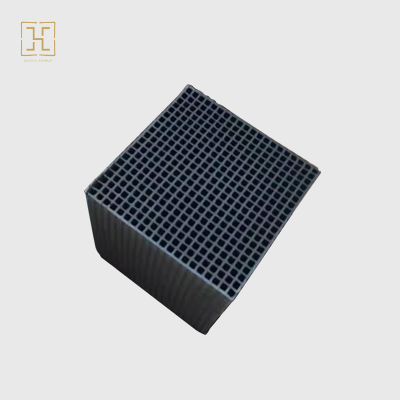
Carbonisation and activation methods are used to make 100*100*50mm perforated coal honeycomb charcoal, which is a designed absorbent material made from high-quality anthracite coal. The 10010050mm measurements are the standard block size for modular installation in industrial purification towers. Each block is 100mm wide, 100mm long, and 50mm high. In contrast to regular solid blocks, perforated designs have channels placed in a honeycomb pattern that are meant to be there. These holes make parallel gas paths that lower resistance while keeping a lot of surface area for pollutants to touch the activated carbon matrix. When compared to regular media, this structural engineering leads to significantly lower pressure drops.
Key Factors Contributing to Resistance
In activated carbon systems, resistance levels are set by a number of variables that are all connected to each other. Material density is very important; putting things more densely stops movement and raises back pressure. The shape of the channel has a big effect on the resistance properties. Passages that are too narrow or not straight cause turbulent flow and higher pressure drops. Both the structure's strength and the speed of the gas are affected by how thick the carbon walls are between the channels. By partially blocking micropores and lowering effective porosity, moisture content can greatly raise resistance. By knowing these things, environmental engineers can choose the right materials for different working conditions, especially in places with a lot of moisture or heat, where regular carbons don't always work well.
Analyzing How Perforated Coal Honeycomb Charcoal Reduces Resistance
The engineering behind open honeycomb structures shows how material design can directly solve problems that industrial air purification system designers and plant environmental managers face in the workplace.
Structural Advantages of Perforated Design
When compared to other types of activated carbon, the open honeycomb structure gives measured performance gains, and for 100*100*50mm perforated coal honeycomb charcoal, this geometry creates parallel flow channels that distribute gas streams evenly across the carbon bed, eliminating the channelling effects common with granular or pelletised carbons and ensuring consistent contact time between pollutants and adsorptive surfaces. Through controlled tests, our work with research institutions such as coal chemistry labs has proven that these structural benefits are real. The arrangement of holes makes parallel flow pathways that spread gas streams evenly across the carbon bed. This gets rid of the channelling effects that happen with grainy or pelletised carbons. This even distribution makes sure that pollutants always come into contact with adsorptive surfaces for the same amount of time. This maximises the efficiency of removal while minimising localised speed increases that cause pressure drop. The walls of the honeycomb cells stay stable even when air flows through them all the time, and they have a huge amount of surface area inside them for adsorption. Decades of research in materials science have led to manufacturing methods that allow precise control over the distribution of pore sizes. These methods maintain mesopore networks that allow low-resistance gas transport while optimising micropore volume for VOC capture.
Enhanced Airflow and Heat Distribution
Thermal management represents an underappreciated aspect of carbon adsorption system performance. VOC adsorption is an exothermic process that generates heat, particularly during regeneration cycles or when treating high-concentration streams. Traditional packed beds often develop hot spots that reduce local adsorption capacity and accelerate carbon degradation. The perforated honeycomb design provides superior heat dissipation through its structured channels, maintaining more uniform temperature profiles throughout the carbon bed. This thermal stability preserves adsorption performance and extends media service life. Environmental engineering managers implementing these systems report improved cycle times and reduced frequency of carbon replacement, directly impacting operational budgets and system uptime.
Comparative Performance Analysis
Adsorption systems that don't get enough attention. It is an exothermic process, which means it makes heat. This is especially true during regeneration cycles or when treating streams with a lot of VOC. In traditional packed beds, there are often When purchasing managers look at different carbon media choices, they use comparison data to make decisions. Perforated honeycomb charcoal regularly works better than both solid blocks and traditional briquettes in a wide range of industry settings. When compared to solid honeycomb blocks, designs with holes usually have 30–40% smaller pressure drops at the same face speeds. Over the system's lifetime, this drop means that the fan will use proportionally less energy. Because perforated media better distribute gas, they can hold more weight before it breaks, so they can be used for longer before it needs to be replaced. In petrochemical applications that need high-temperature stability, the structural integrity of honeycomb shapes keeps performance even when conditions would cause granular carbons to break down and fine particles to build up, adding to the resistance. Because of these features,100*100*50mm perforated coal honeycomb charcoal is very useful for businesses that need to meet strict emission standards and need reliable, low-maintenance cleaning systems.
Practical Guidelines to Optimize Resistance Reduction with 100x100x50mm Perforated Honeycomb Charcoal
In order for improved carbon materials to work at their best, the right system design, installation, and upkeep must be followed. These practical points are helpful for environmental project managers who are putting in place new purification systems.
Installation Best Practices
Installing porous honeycomb charcoal correctly is the most important thing that determines whether it actually works as well as it should, and for 100*100*50mm perforated coal honeycomb charcoal, this means aligning the honeycomb channels with the main airflow direction, maintaining consistent spacing between blocks to prevent gas bypass, and using inlet diffusers to evenly distribute incoming gas across the entire bed face area. When our technical team works with environmental contractors and system integrators, we stress a few important installation factors. When stacking, the holes must line up with the main flow direction of air to keep noise and pressure loss to a minimum. Keeping the distance between carbon blocks the same stops gas from bypassing around the media, which lowers the total clearance efficiency and creates high-velocity areas that make the resistance higher. Gas streams coming in are spread out evenly across the whole carbon bed face area by burner and manifold designs that work together. This even spread keeps some parts of the bed from being overworked while others aren't getting enough use. This improves both the adsorption capacity and the pressure drop qualities. By sealing the space between the carbon bed and the vessel walls, channelling paths are taken away that would lower the efficiency of contact and raise the effective resistance by pushing faster particles through the active media.
Maintenance Protocols for Sustained Performance
The low resistance of open honeycomb systems is directly affected by how well they are maintained during their service life. Process engineers who are in charge of operations that run all the time should set up regular review plans that find performance problems before they affect compliance status. A visual check shows any physical damage or odd particle buildup that could mean that the filter system upstream isn't working right. Monitoring the pressure drop lets you know right away when resistance goes up because of more dust, more water, or the adsorption capacity being partially used up. Cleaning methods that are right for coal-based honeycomb media help get things working again in situations where the streams are full of particles. When regeneration systems are used, the structural integrity and pores that allow low resistance are kept by carefully controlling the temperature and flow rates during deactivation cycles. Quality control managers who use these procedures say that service times are longer and repair dates are more reliable. This makes it easier to plan budgets and cuts down on unplanned downtime.
Case Study: OEM Manufacturing Application
One example case from our project portfolio shows how optimising strategies for reducing resistance can really help. A factory in the southeast of the United States that made electronics was required by regulators to improve its liquid vapour control system while keeping running costs as low as possible. The old system used granular activated carbon, which had a pressure drop of 680Pa at its normal flow rate and needed a lot of fan power. We redesigned the adsorption vessels with 100*100*50mm perforated coal honeycomb charcoal with the help of their environmental engineering team. The new arrangement lowered the pressure drop to 410Pa while increasing the efficiency of VOC removal from 87% to 93%. This 40% drop in pressure led to a 28% drop in the amount of energy used by the fan, which saved enough each year to cover the cost of the extra materials within fourteen months. The maintenance team at the site also said that the standard block sizes made it easier to handle carbon replacement operations. This cut the time it took to do the job from four hours to about ninety minutes. This successful application shows that choosing the right materials and optimising the system can bring about real practical and cost benefits.
Procurement Considerations for 100x100x50mm Perforated Coal Honeycomb Charcoal
When purchasing managers and supply chain leaders look at carbon media providers, they need to look at more than just unit price in order to get the best value for the whole supply chain and reduce risk. Focusing on technical skills, quality systems, and logistics infrastructure is important for the 100*100*50mm perforated coal honeycomb charcoal procurement strategy.
Supplier Evaluation Criteria
Choosing the right provider relationship has a big effect on both how well the product works and how reliable the supply is, and for 100*100*50mm perforated coal honeycomb charcoal, this means selecting a manufacturer with proven experience in activated carbon production, ISO 9001/14001/45001 certifications, and a track record of consistent pore structure and adsorption performance across large production batches. When I work with buying teams, we make thorough review models that look at things like professional skills, quality processes, and the infrastructure for shipping. When making activated carbon, manufacturing experience is very important because the activation process needs precise control over temperature profiles, the composition of the activation gas, and residence times in order to get the right pore structures and adsorption properties. Suppliers with decades of experience in production and defense-grade quality control systems show that their processes are mature enough to deliver consistent results. Certifications like ISO 9001, ISO 14001, and ISO 45001 give companies a basic guarantee of good quality control, care for the environment, and safe workplaces. In addition to certifications, looking into a supplier's technical skills shows how they can make products fit specific needs. Working with research institutions shows that you are willing to put money into developing new products and giving them access to cutting-edge techniques for characterising materials that make sure they meet ever stricter government standards.
Quality Indicators and Specifications
Understanding important quality factors helps procurement pros make good specs and compare suppliers in a useful way. The total adsorptive capacity of the carbon structure is measured by its surface area. Generally, bigger surface areas mean more pollution removal capacity, but the pore size distribution must match the molecular dimensions of the target pollutant. Iodine number is a standard way to measure the growth of micropores that is especially useful for adsorbing VOCs. Ash content affects both how well something absorbs and how much secondary pollution it can cause. For sensitive applications, lower ash content is better. Testing the mechanical strength of carbon blocks makes sure they can handle the loads of handling and use without breaking down, which would cause the pressure drop to rise. Standardised pressure drop testing lets you directly compare the performance of different providers and confirms the resistance claims made. Managers in charge of quality control should ask for detailed test reports and certificates of analysis that show that certain parameters were met. Suppliers who keep a lot of different types of products in stock show that they can make a lot of different things and want to keep delivery wait times as short as possible.
Pricing Models and Volume Benefits
By using the right contract frameworks and number agreements, strategic buying planning gets the most value for money. The price of carbon media is based on the cost of raw materials, the difficulty of making it, quality standards, and the number of items that are ordered. Suppliers usually offer tiered pricing that rewards buyers who buy more, but procurement teams have to weigh the savings on unit costs against the costs of keeping inventory and the space needed to store it. Predictable prices over long periods of time are set by framework supply agreements. These agreements also allow for call-off orders when needed, which makes buying easier and gives budget security. Customisation choices cost more but give better performance for certain uses. The cost-benefit study depends on how much performance is improved and how much the whole system costs. Instead of just looking at ex-works prices, procurement professionals should look at the total delivered cost, which includes packaging, transportation, and any customs or duty costs. Geographic diversification, which is provided by suppliers who make standard products in more than one location, makes the supply chain less vulnerable to problems in certain regions.
Future Outlook and Innovations in Perforated Coal Honeycomb Charcoal
Activated carbon technology is still being improved through research and development, and 100*100*50mm perforated coal honeycomb charcoal is a prime example of this progress, offering the combined benefits of low pressure drop, high mechanical strength, and excellent mass transfer characteristics that make it increasingly viable for demanding applications where other adsorbents were traditionally preferred. This gives environmental engineers and industry end-users new ways to make systems work better and leave less of an impact on the environment. Because of these improvements in technology, 100*100*50mm perforated coal honeycomb charcoal is becoming a more viable option, even in situations where other absorbent materials have usually been the best choice.
Technological Advances in Material Processing
New discoveries in material science are making coal-based activated carbons work better in more situations. Advanced activation methods that use carefully controlled atmospheres and temperature patterns make the pores more regular, which makes them better at picking out target contaminants. Surface modification treatments add functional groups that make it easier for certain pollutants to stick to the surface. This is especially true for tough compounds like mercury, hydrogen sulphide, or chlorinated VOCs. Catalyst loading methods add oxidation or hydrolysis catalysts directly to the carbon matrix. This lets pollution be absorbed and changed at the same time. This two-in-one feature makes the system simpler and can provide better overall destruction than adsorption alone. Improvements to the manufacturing process make the honeycomb perforation patterns more consistent, which lets you control the pressure drop characteristics even more precisely.
Market Trends and Demand Drivers
Environmental policies around the world are continuing to tighten pollution standards across all businesses. This is driving up the need for high-performance technologies that clean the air. The US EPA is currently reviewing the National Emission Standards for Hazardous Air Pollutants. This puts more pressure on factories, pipelines, and chemical companies to follow the rules. As sustainability and lowering carbon emissions become more important, industry workers look for environmental control systems that use less energy. They prefer low-resistance adsorbents that use the least amount of parasitic energy. Supply chain stability has become an important factor in purchasing, and buyers are expanding their list of suppliers and looking for partners with various production sites and strong warehouse positions. Because of the way the market works, established companies that have strong technical skills, a wide range of products, and stable global transportation networks tend to do better.
Recommendations for Strategic Procurement
Environmental engineering directors and procurement managers should adopt proactive strategies that position their organizations to capitalize on evolving activated carbon technologies. Establishing relationships with suppliers investing heavily in research and development provides early access to innovative materials and technical support for optimizing system designs. Participating in pilot testing programs for advanced carbon materials enables real-world performance validation before full-scale implementation. Developing standardized specifications that balance performance requirements with supply availability reduces procurement complexity and facilitates competitive sourcing. Building inventory strategies that combine framework agreements for standard materials with flexibility for customized products addresses both routine needs and special applications. Staying informed about regulatory developments and technology trends enables anticipatory planning rather than reactive responses to compliance deadlines. Organizations implementing these strategic approaches consistently achieve superior environmental performance while maintaining cost competitiveness.
Conclusion
Reducing resistance with 100*100*50mm perforated coal honeycomb charcoal delivers measurable operational and financial benefits across industrial environmental control applications. The structural advantages of the perforated design—optimized airflow channels, superior thermal management, and consistent performance under demanding conditions—address critical pain points faced by environmental engineers and procurement managers. Proper installation, maintenance protocols, and strategic supplier partnerships maximize these benefits while ensuring reliable compliance with increasingly stringent emission standards. As technological innovations continue advancing material capabilities and market dynamics emphasize efficiency and sustainability, perforated coal honeycomb charcoal represents a forward-looking solution for organizations committed to environmental stewardship and operational excellence.
FAQ
How does perforation pattern affect pressure drop in honeycomb charcoal?
Perforation geometry directly influences resistance characteristics through its effect on gas velocity and flow distribution. Optimally designed perforation patterns create parallel flow paths that distribute incoming gas uniformly across the carbon bed, minimizing localized high-velocity zones that increase pressure drop. The perforation diameter and spacing balance structural integrity requirements against the need for low resistance. Larger perforations reduce pressure drop but may compromise mechanical strength, while smaller perforations increase surface area contact but raise resistance. Advanced manufacturing techniques enable precise control over perforation parameters to achieve optimal performance for specific applications.
What maintenance intervals are recommended for industrial applications?
Maintenance frequency depends on contaminant loading, operating temperature, humidity levels, and required removal efficiency. Systems treating high-concentration streams or particulate-laden gases require more frequent inspection than those handling clean, low-concentration vapors. Continuous pressure drop monitoring provides the most reliable indicator of when maintenance or replacement is needed. Generally, quarterly visual inspections combined with monthly performance monitoring enable proactive maintenance scheduling that prevents unexpected downtime. Environmental managers should establish baseline pressure drop measurements during commissioning and investigate whenever readings increase more than 20% above baseline values.
Can perforated honeycomb charcoal be regenerated?
Coal-based honeycomb charcoal can be regenerated through thermal desorption processes, though regeneration feasibility depends on the specific contaminants adsorbed and the application's purity requirements. VOCs can typically be desorbed effectively using heated inert gas or steam, restoring a substantial portion of the original adsorption capacity. Heavy metals and certain high-boiling compounds may not desorb completely, limiting regeneration effectiveness. The honeycomb structure's mechanical stability enables it to withstand multiple regeneration cycles better than granular carbons that experience attrition. Economic analysis comparing regeneration costs against replacement costs helps determine the optimal strategy for specific applications.
Partner with Shanxi Xinhua Carbon Technology Industry Co., Ltd. for Superior Perforated Coal Honeycomb Charcoal Solutions
Environmental engineering contractors and industrial procurement teams seeking a reliable 100*100*50mm perforated coal honeycomb charcoal supplier will find Shanxi Xinhua Carbon Technology Industry Co., Ltd. uniquely positioned to meet demanding performance and delivery requirements. Our six decades of activated carbon manufacturing experience, combined with defense-grade quality systems and collaborative research partnerships with Tsinghua University and the Chinese Academy of Sciences, ensure consistent product performance even under extreme operating conditions. We maintain comprehensive inventory across multiple production bases, enabling standard delivery within seven to fifteen days and emergency shipment within three days when project timelines demand rapid response. Our technical team provides full customization capabilities—pore structure optimization, surface area specification, and tailored formulations—to address your specific application challenges. ISO 9001, ISO 14001, and ISO 45001 certifications validate our systematic approach to quality, environmental responsibility, and workplace safety. Contact our technical specialists at greta@carbonxinhua.com to discuss your VOC control, air purification, or flue gas treatment requirements and discover how our perforated coal honeycomb charcoal solutions deliver measurable improvements in adsorption efficiency, pressure drop reduction, and total cost of ownership. Visit xhcarbontech.com to explore our complete product portfolio and technical resources.
References
1. Bansal, R.C., & Goyal, M. (2005). Activated Carbon Adsorption. CRC Press: Comprehensive examination of activated carbon fundamentals including pressure drop characteristics and structural influences on adsorption performance.
2. Yang, R.T. (2003). Adsorbents: Fundamentals and Applications. John Wiley & Sons: Detailed analysis of industrial adsorbent materials with specific coverage of honeycomb structures and flow dynamics in structured adsorbent beds.
3. Lillo-Ródenas, M.A., Cazorla-Amorós, D., & Linares-Solano, A. (2005). Activated Carbons Prepared by Pyrolysis of Mixtures of Carbon Precursor/Alkaline Hydroxide. Journal of Analytical and Applied Pyrolysis: Research on activation processes and pore structure development in coal-based activated carbons.
4. Marsh, H., & Rodríguez-Reinoso, F. (2006). Activated Carbon. Elsevier Science: Comprehensive reference covering manufacturing processes, characterization methods, and industrial applications of activated carbon materials.
5. Derbyshire, F., Jagtoyen, M., Andrews, R., Rao, A., Martin-Gullon, I., & Grulke, E. (2001). Carbon Materials in Environmental Applications. Chemistry and Physics of Carbon: Analysis of activated carbon performance in environmental control applications including VOC removal and air purification.
6. Kaushik, V.K., & Sharma, Y.C. (2019). Industrial Gas Cleaning Technologies for VOC Removal: A Critical Review. Environmental Science and Pollution Research: Contemporary review of VOC control technologies with comparative analysis of adsorbent materials and system design considerations.

Send Inquiry
You may like
_1781662034490.webp)