_1778553121707.webp)
How to choose 20*50 mesh coal quality carbon for the industry?
Jul 24, 2026
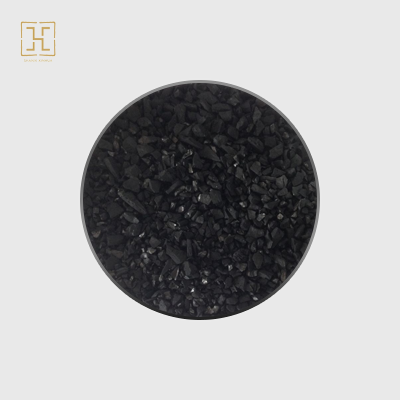
Your system's filtration performance, operational stability, and compliance results are all directly impacted by the 20*50 mesh coal quality crushing carbon you choose. This special activated carbon has particles that are between 0.3 and 0.85 mm in size, which makes it the perfect mix of fast adsorption and structure stability. Because briquetting produces a uniform spread of micropores, your treatment systems will be better able to pick up trace contaminants while still keeping their mechanical strength during high-flow operations. Knowing these basic features helps purchasing teams match the specs of materials to what they are actually used for in chemical processing, air purification, and treating water.
Understanding 20*50 Mesh Coal-Based Activated Carbon and Its Industrial Significance
What Defines 20*50 Mesh Particle Size
This number refers to the size of the particles that can get through a 20-mesh screen but not a 50-mesh screen. This means that the range can be precisely controlled between 0.30 and 0.85 millimetres. It is important to have a tight particle distribution because it affects how evenly your filtration media packs, how evenly liquids or gases contact the carbon surface, and whether your system has pressure drops or channelling. If you see "20*50 mesh" on a product sheet, it means that the product was made for uses where contact time is measured in seconds instead of minutes.
Why Briquette Crushing Delivers Superior Performance
Usually, coal-based carbons are crushed straight from big chunks, which can lead to porous structures that aren't smooth and weak mechanical qualities. To make briquettes, high-grade bituminous coal is ground up into a powder, mixed with special binders, shaped under high pressure, and then activated and crushed to the desired mesh size. This extra step makes a carbon that has more regular pores, a ball pan hardness of more than 95%, and a lot better resistance to wear and tear. There are fewer fines in your system, backwash cycles are cleaner, and it lasts longer.
Key Quality Standards and Certifications
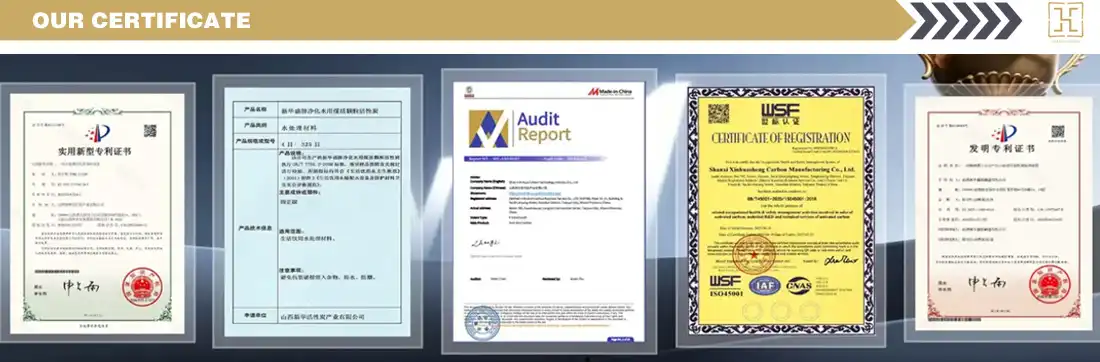
Industrial users should make sure that 20*50 mesh coal quality crushing carbon meets the requirements of ASTM D2862 for particle size distribution, ASTM D4607 for iodine value testing, and ASTM D3802 for hardness testing. Products meant to be used with drinkable water need to be certified by NSF/ANSI 61 to make sure that they don't release too many contaminants. Manufacturers who have ISO 9001, ISO 14001, or ISO 45001 certifications show that they follow strict rules for quality control, environmental management, and safety at work. With these credentials, you can be sure that the carbon you buy meets strict safety and performance standards in markets around the world.
Core Criteria for Selecting High-Quality 20*50 Mesh Coal Carbon
Micropore Content and Adsorption Capacity
How well fine-mesh carbon works depends on how it is structured on the inside. More than 65% of the micropore volume in premium grades is made up of holes that are smaller than 2 nanometres. Small molecules that are harmful, like chloramines, trace VOCs, pyrogens, and pharmaceutical residues, get caught in these micropores. Iodine levels between 800 and 1,100 mg/g can be used to measure the growth of micropores. Higher iodine levels are linked to more surface area and faster removal rates. When looking at different suppliers, make sure you ask for both standard iodine testing and a detailed pore distribution analysis of the carbon to make sure it will work with your specific contaminant profile.
Mechanical Hardness and Abrasion Resistance
Backwashing, thermal cycle, and turbulent flow are all physical forces that your carbon must be able to handle without making too much dust. A ball pan hardness above 90% means that the particles are strong and intact. When the wear rate is low, usually less than 2%, your filters stay clean, and the equipment further downstream stays safe. This longevity is even more important in automated systems that go through a lot of regeneration processes. Over time, weak carbons break down, which means they need to be replaced too soon, which costs money and causes unplanned downtime that throws off production schedules.
Ash Content and Purity Levels
Ashes are the inorganic minerals that are left over after carbon is burnt. A lower ash content—ideally 8% or less—means that there are fewer impurities that could get into your process streams. Heavy metals like arsenic, cadmium, and lead should stay below 1 ppm to protect processes like making semiconductors and pharmaceutical water systems. Ashes should be analysed for ash leaching to make sure that long-term contact with water or solvents doesn't let contaminants into the final product.
Bulk Density and Packing Characteristics
The bulk density of 20*50 mesh coal-based carbon is usually between 380 and 580 grams per litre. This determines how much adsorption capacity can fit into a certain vessel volume. There is more carbon per cubic metre when the packing is denser, but too much density can make the pressure drop more. To find the right mix, you need to know how fast your system flows and how long it needs to stay in one place. Suppliers should give engineers information on the settled bed density and void fraction so that they can make efficient vessels that use the least amount of energy and make the most contact.
Comparison of 20 Mesh vs 50 Mesh Particle Sizes: Impact on Quality and Performance
Adsorption Kinetics and Contact Time
Smaller particles have more surface area on the outside per unit of mass, which speeds up the rate at which contaminants move into the carbon's network of pores. It takes a 50-mesh particle longer to reach equilibrium than a 20-mesh particle with the same pore structure because it is smaller. However, beds that are full of only fine particles can cause too much pressure drop and increase the risk of media migration. The 20*50 mesh coal quality crushing carbon blend takes advantage of the speed of the smaller particles while keeping the flow stability of the larger granules. This mix works well in situations where cleaning time is limited, but filtering capacity can't be lowered.
Pressure Drop and Flow Dynamics
The lower pressure difference across the bed is caused by the coarser 20-mesh particles that let gases and liquids flow more freely. Finer 50-mesh particles pack closer together, which raises the resistance and requires more pump energy. Adsorption effectiveness and running costs must be balanced in industrial systems. A small shift toward coarser blends lowers the amount of energy needed for high-volume wastewater treatment. In ultrapure water polishing, it is important to get rid of all traces, so the blend is finer. Knowing the hydraulic shape of your system helps you choose the best particle spread for the best value.
Regeneration and Reactivation Potential
Activated carbon is heated to high temperatures during thermal reactivation to burn off contaminants that it has absorbed and recover its capacity. Finer particles are more likely to break when they are handled or heated and cooled. The briquetting method used in high-quality 20*50 mesh carbons makes the particles stronger, which increases regeneration outputs by lowering the amount of fines that need to be thrown away. This means lower costs over the whole lifetime and less work to get rid of trash. The people who run systems with more than one turn benefit the most from this lifetime benefit.
Procurement Best Practices: Finding Trusted Suppliers and Ensuring Quality
Verifying Technical Documentation and Certifications
For full technical data sheets with iodine number, methylene blue adsorption, ash content, moisture content, pH, bulk density, and ball pan hardness, please ask for them. Reputable manufacturers give certificates of analysis that are specific to each batch and keep track of things by numbering each lot. Getting an ISO certification shows that you are dedicated to managing quality consistently. Applications that use drinking water must be certified by NSF/ANSI 61. Third-party testing by separate labs adds another level of assurance, lowering the chance of getting low-quality goods.
Evaluating Manufacturing Capacity and Supply Stability
Industry users on a large scale need providers whose production ability and inventory depth have been proven. Manufacturers who have more than one production base in different areas can protect themselves from problems in the supply chain. Shanxi Xinhua Carbon Technology Industry Co., Ltd. runs factories that produce a total of 45,000 tonnes of carbon every year. This makes sure that core products are always available. Normal lead times are 7 to 15 days, which is enough time for regular restocking. However, faster channels can get important shipments to their destinations in as little as three days. Setting up a framework that deals with dependable providers saves your business from changes in the market and makes sure that prices will stay the same.
Conducting Pre-Qualification Testing and Sampling
Before placing a large order, you should ask for example samples and test them according to your company's rules. For example, breakthrough curves for air filtration, jar tests for water treatment, and column studies for chemical decolorisation all give you real-world information about how the carbon works in your particular situation. Compare the results to materials from existing suppliers and other suppliers. This investment in validation lowers the chance that expensive changes will need to be made to equipment or processes after deployment. Get your R&D team involved early on in the buying process to make sure that the properties of the materials you're looking at match the needs of the application.
Assessing Total Cost of Ownership
The purchase price of 20*50 mesh coal quality crushing carbon is only one part of the total cost. Think about the costs of shipping, handling, storing, renewal regularity, disposal costs, and downtime that come with changing media. Even if the price is higher up front, higher-quality carbon that is harder and better at absorbing contaminants often has a lower cost per kilogram of contamination removed. Ask for case studies or examples of placements where the supplier's product has saved money over its entire life. When these variables are added to financial models, they make it easier to make decisions about procurement.
Practical Tips for Optimizing Coal Quality Carbon Use in Industrial Processes
Implementing Rigorous Incoming Quality Control
Set up rules for inspecting every package. Find out the iodine value, moisture content, and particle size distribution of a random sample. A visual check should confirm that the colour is uniform and that there are not too many fines. Write down the results and check them against the proof of analysis from the seller. Deviations lead to an investigation, and if necessary, the batch is thrown out. Regularly keeping an eye on things creates a record of performance that helps with future buying choices and judging suppliers. Quality control keeps your process honest and makes sure you follow the rules.
Customizing Media Selection for Application-Specific Needs
There are different kinds of 20*50 mesh carbons. For chloramine removal in water treatment systems, carbons with more micropores work best, while for VOC removal in gas streams, higher CTC activity may be more important. For pharmaceutical uses, very low leachables are needed, while for industrial decolorisation, the focus is on making sure that larger dye molecules can get into the mesopores. Work with the scientific team at your provider to make sure that the pore structure, surface chemistry, and particle size distribution match the profile of the contaminants you need to remove. Leading manufacturers are different from commodity suppliers because they can customise their products by changing the activation temperature, the binders, or the coatings that catalyse reactions.
Monitoring Performance and Scheduling Timely Replacement
Keep an eye on breakthrough curves and trends in effluent quality to see when carbon is getting close to being used up. You could not follow the rules or get a bad product if you wait until performance gets worse. Based on past data and real-time tracking, predictive maintenance plans make media last longer without lowering their effectiveness. Partial changeouts are helpful for some systems because they only replace part of the bed at a time instead of the whole charge. This method evens out operational costs and keeps problems to a minimum. Advanced users use online analysers and automated alerts to find the best time to replace something.
Building Strategic Partnerships with Dependable Suppliers
Building long-term ties with reliable producers has benefits beyond just buying things once. Suppliers who care about your success help you fix problems with the process, share what they've learned from similar projects, and work with you on new ideas. They give your orders top priority when supplies are low and offer good terms for large orders. Regular reviews of performance and open communication make these partnerships stronger. The end result is a strong supply chain that can change with the times to meet new rules, market situations, and business needs.
Conclusion
Particle size accuracy, micropore development, mechanical hardness, and supplier dependability must all be considered when purchasing 20*50 mesh coal quality crushing carbon. When compared to standard crushing ways, the briquetting process gives better structural stability and more consistent performance. Instead of just looking at the purchase price, procurement teams need to check certifications, do pre-qualification testing, and look at the total cost of ownership. Customisation options and smart relationships with suppliers let you get the best filtration performance while staying in compliance and keeping lifecycle costs low. When you make decisions based on technical data and the needs of your specific application, you set up your business to be successful in tough industrial settings.
FAQ
What iodine number should I target for water treatment applications?
Iodine levels between 900 mg/g and 1,100 mg/g are good for treating water in most municipal and industrial settings. Higher numbers mean there are more micropores, which makes it easier to get rid of trace organics and chloramines. The upper end of this range is often specified for ultrapure water systems and pharmaceutical applications to make sure that the most contaminants are captured.
How does mesh size affect pressure drop in filtration systems?
Finer particles pack closer together, making it harder for fluids to move and raising the pressure difference. The 20*50 mesh mix strikes a good balance between fast adsorption and a reasonable drop in pressure. Systems with small pumps might like mixes that are heavier on the 20 mesh size, but high-performance uses can handle smaller distributions for faster kinetics.
Can 20*50 mesh coal carbon be thermally reactivated?
Yes, the high ball pan hardness that comes from briquettes increases reactivation rates by keeping particles from breaking down too much during heat cycles. To get the most out of the capacity recovery while keeping the structure's integrity, operators should follow the manufacturer's instructions for temperature changes and waiting times.
What certifications are mandatory for drinking water use?
In the United States, carbon must be certified by NSF/ANSI 61 to make sure that it doesn't leach harmful chemicals into drinking water. Additionally, ISO 9001 and related regional water safety standards offer extra proof of quality control and following the rules.
Partner with Shanxi Xinhua Carbon Technology Industry Co., Ltd. for Reliable 20*50 Mesh Coal Quality Crushing Carbon Supply
Every tonne of 2050 mesh coal quality crushing carbon that Shanxi Xinhua Carbon Technology Industry Co., Ltd. makes is backed by more than 60 years of research and development and more than 20 years of large-scale production to make it. Our defense-grade quality systems, partnerships with top research institutions like Tsinghua University and the Chinese Academy of Sciences, and multi-base production network make sure that you get materials that meet the highest standards for purity and adsorption performance. We keep 100% of our core products in stock, deliver standard orders within 7 to 15 days, and offer fast three-day fulfilment for compliance projects that need to be done right away. For your VOC removal, water purification, or chemical decolorisation needs, our expert team can make special changes to the pore structure, offer loaded catalyst options, and create formulations that are just right for the job. You can email our team at greta@carbonxinhua.com to get technical data sheets, set up sample testing, or talk about your buying needs with a 2050 mesh coal quality crushing carbon supplier who is dedicated to your business's success.
References
1. American Society for Testing and Materials. ASTM D2862-16: Standard Test Method for Particle Size Distribution of Granular Activated Carbon. ASTM International, 2016.
2. National Sanitation Foundation International. NSF/ANSI 61: Drinking Water System Components — Health Effects. NSF International, 2021.
3. Bansal, Roop Chand, and Meenakshi Goyal. Activated Carbon Adsorption. CRC Press, 2005.
4. Marsh, Harry, and Francisco Rodríguez-Reinoso. Activated Carbon. Elsevier Science, 2006.
5. U.S. Environmental Protection Agency. Design Manual: Municipal Wastewater Treatment — Adsorption Systems. EPA Office of Research and Development, 2000.
6. Activated Carbon Manufacturers Association. Standard Test Methods for Activated Carbon: A Comprehensive Guide. ACMA Technical Publication, 2018.

Send Inquiry
You may like
_1781662034490.webp)