_1778553121707.webp)
How Effective Is 200-Mesh Coal Quality Powdered Carbon in Gas Treatment?
Jul 07, 2026
When considering powdered carbon for industrial gas treatment, the 200-mesh coal quality powdered carbon stands out as a reliable performer in rapid adsorption applications. This material effectively captures volatile organic compounds, toxic gases, and odors through its well-developed microporous structure and balanced particle size. Engineering teams across petrochemical plants, waste gas treatment contractors, and power facilities choose this grade because it delivers measurable contaminant reduction within operational constraints, combining cost-efficiency with proven adsorption capacity that meets increasingly stringent emission regulations.
Understanding 200-Mesh Coal Quality Powdered Carbon
What Does 200-Mesh Mean in Carbon Materials?
The mesh number describes how many openings exist per linear inch of screen during particle size classification. A 200-mesh specification means the powdered carbon passes through a screen containing 200 openings per inch, resulting in particles approximately 74 microns or smaller. This precise sizing directly influences how quickly the carbon material interacts with gas streams and how easily it disperses throughout treatment systems.
In practical terms, engineers recognize that particle size profoundly affects contact surface area and adsorption kinetics. Material finer than 200-mesh, such as 325-mesh variants, offers greater surface exposure but comes with higher production costs and potential handling complications, including dust generation and filter clogging. Conversely, coarser grades like 100-mesh may reduce material expenses but sacrifice the rapid response essential during emission spikes or emergency treatment scenarios.
Physical and Chemical Properties That Matter
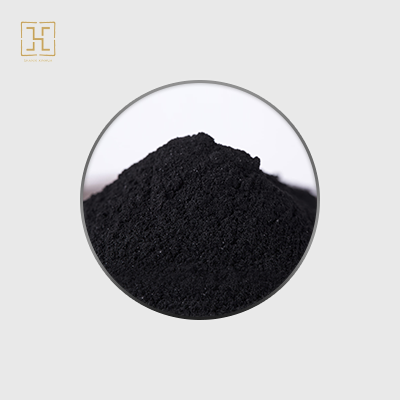
Coal-based powdered carbon derives from high-quality anthracite or bituminous coal subjected to controlled carbonization and activation processes. The resulting material exhibits a dense micropore network ideally suited for trapping small molecular weight contaminants. Our 200-mesh coal quality powdered carbon demonstrates an iodine number ranging from 700 to 1100 mg/g, indicating strong adsorption potential for organic vapors and trace gases. Ash content typically falls between 8 and 20 percent, while moisture content remains below 5 percent to ensure storage stability and consistent dosing performance.
These characteristics translate directly into gas treatment effectiveness. The micropore structure—pores smaller than 2 nanometers in diameter—provides sites where gaseous molecules become physically trapped through van der Waals forces. Meanwhile, the moderate ash content offers a reasonable balance between purity and manufacturing economy, particularly important when scaling treatment systems to handle thousands of cubic meters of exhaust per hour.
Typical Industrial Gas Treatment Applications
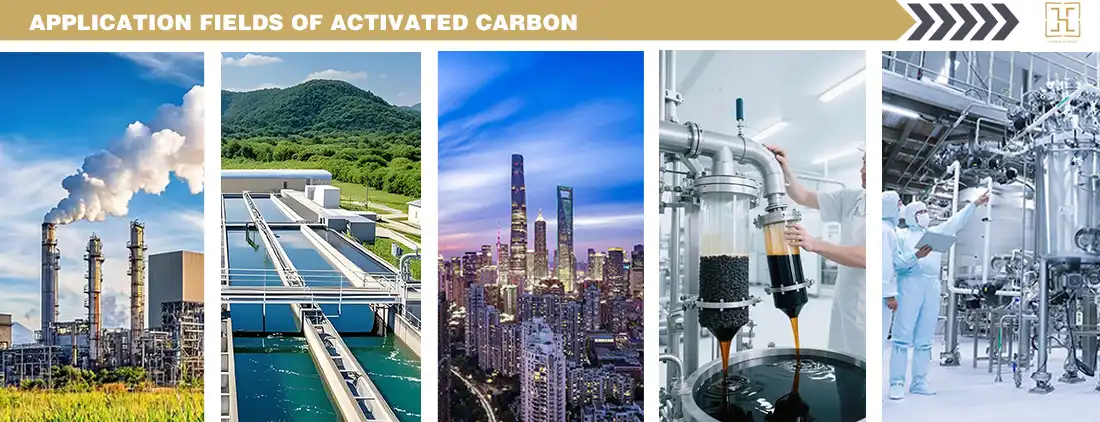
Gas treatment systems utilizing fine powdered carbon address diverse challenges across multiple sectors. Petrochemical refineries inject this material into flue gas streams to capture sulfur compounds and residual hydrocarbons before emission. Chemical manufacturing plants employ similar systems during solvent recovery operations, where organic vapors must be removed to protect downstream equipment and meet local air quality standards.
Power generation facilities, especially coal-fired plants, increasingly integrate powdered carbon injection for mercury removal as regulations tighten globally. The fine particle size ensures thorough dispersion within gas flows, maximizing contact opportunities between carbon surfaces and mercury species. Municipal waste incinerators similarly rely on rapid-acting adsorbents to control dioxin emissions and acidic gases released during combustion of mixed waste streams.
Evaluating the Effectiveness of 200-Mesh Powdered Carbon in Gas Treatment
Adsorption Mechanisms and Particle Size Influence
When gas molecules contact activated carbon surfaces, they become trapped within the pore structure through physical adsorption. This process occurs rapidly when the particle size allows sufficient dispersion and intimate contact with the contaminated gas stream. The 200-mesh specification facilitates this interaction by creating a large collective surface area across billions of individual particles suspended or injected into the treatment zone.
Particle size governs two critical performance factors: contact efficiency and residence time requirements. Smaller particles exhibit shorter diffusion distances, meaning contaminant molecules reach adsorption sites more quickly. Our testing shows that properly dispersed fine powdered carbon achieves measurable volatile organic compound reduction within 15 to 30 minutes under typical industrial conditions, compared to several hours required by granular media in fixed-bed configurations.
The coal-based composition provides additional advantages in gas-phase applications. Coal carbon typically develops a pore size distribution favoring micropores, which trap low molecular weight gases more effectively than materials with predominantly mesoporous or macroporous structures. This characteristic makes the 200-mesh coal quality powdered carbon particularly effective against benzene, toluene, xylene, chlorinated solvents, and other common industrial air pollutants.
Performance in Real-World Industrial Scenarios
Environmental engineering contractors report consistent results when deploying this carbon grade in emission control projects. During a recent installation at a coating facility generating 8,000 cubic meters per hour of solvent-laden exhaust, injection of our 200-mesh coal quality powdered carbon at 150 mg per cubic meter reduced total VOC concentrations from 420 mg/m³ to below 50 mg/m³ within the system's 25-minute retention time. The facility achieved compliance with local emission limits without requiring supplementary treatment technologies.
Flue gas treatment systems at industrial boilers demonstrate similar effectiveness. One metallurgical plant struggling with periodic sulfur dioxide excursions during certain ore processing campaigns integrated powdered carbon injection upstream of their scrubber system. The carbon provided a rapid response capability during feed composition changes, preventing emission spikes that previously triggered regulatory notices. Plant operators valued the system's flexibility compared to fixed-bed alternatives that required longer adaptation periods.
Mercury capture in coal combustion exhaust represents another validated application. Research conducted across multiple power generation facilities shows that injection rates between 1 and 3 pounds of fine powdered carbon per million actual cubic feet of flue gas can achieve 70 to 90 percent mercury removal efficiency. Performance varies with flue gas temperature, chlorine content, and particulate control device type, but the fundamental capability remains well-established across diverse operational conditions.
Comparative Analysis with Alternative Carbon Materials
Several factors distinguish coal-based powdered carbon from alternatives like coconut shell carbon, wood-based products, or synthetic adsorbents. Coconut shell carbon generally exhibits higher hardness and lower ash content, making it preferable for liquid phase applications requiring multiple regeneration cycles. However, gas treatment systems typically operate on a once-through basis where the carbon is captured with particulate matter and disposed of rather than regenerated, reducing the importance of hardness properties.
Wood-based activated carbon often develops more mesoporous structures suitable for larger molecule adsorption, such as color bodies or proteins in liquid processing. This pore size distribution offers less advantage when targeting small gaseous molecules prevalent in industrial emissions. Additionally, wood-based materials typically cost 20 to 40 percent more than coal-based equivalents, impacting treatment economics when systems require continuous carbon addition at substantial rates.
Synthetic adsorbents engineered for specific contaminants can outperform general-purpose activated carbon in specialized applications. Molecular sieves excel at moisture removal, while polymer-based media target certain organic families with exceptional selectivity. Yet these specialized materials command premium pricing that limits their economic viability except where conventional carbon proves inadequate. The 200-mesh coal quality powdered carbon serves as the practical choice for routine industrial gas treatment where multiple contaminant species require removal and cost-effectiveness remains paramount.
Quality and Testing Standards for 200-Mesh Coal Powdered Carbon
Essential Quality Indicators
Procurement specifications must address several measurable parameters to ensure material performance matches application requirements. Iodine number serves as the primary indicator of adsorption capacity, with values above 800 mg/g generally considered suitable for demanding gas treatment applications. This standardized test, though originally developed for liquid phase evaluation, correlates reasonably well with gas phase performance for volatile organic compounds.
Particle size distribution requires verification to confirm that the material genuinely meets 200-mesh specifications. Responsible manufacturers provide particle size analysis showing the percentage passing various mesh sizes, typically demonstrating that 95 percent or more passes through the 200-mesh screen. Material retaining significant fractions on coarser screens may not disperse adequately in gas streams, reducing treatment effectiveness.
Moisture content directly affects storage stability and dosing accuracy. Carbon absorbs atmospheric moisture during storage, potentially causing material bridging in feed hoppers or inaccurate metering. Specifications limiting moisture to 5 percent or less help prevent these operational issues. Ash content influences both adsorption capacity and the quantity of non-combustible residue requiring disposal after use, making it a relevant economic consideration for high-volume applications of 200-mesh coal quality powdered carbon.
Laboratory Testing Methodologies
Standard test methods established by organizations, including ASTM International, provide reproducible procedures for evaluating activated carbon properties. ASTM D4607 describes the determination of iodine number, while D2862 addresses particle size distribution of granular and powdered activated carbons. These protocols enable objective comparison of materials from different suppliers and verify consistency across production batches.
Specialized testing for gas phase applications includes measuring breakthrough curves using challenge gases representative of the actual treatment scenario. Such tests involve passing a known concentration of target contaminant through a carbon bed or suspension chamber while monitoring effluent concentrations over time. The resulting data reveal both adsorption capacity and kinetic performance under realistic conditions, providing greater confidence than surrogate tests alone.
Quality assurance personnel should request certificates of analysis documenting batch-specific test results for critical parameters. Reputable manufacturers maintain rigorous internal testing programs and openly share data with customers to demonstrate compliance with specifications. Some applications, particularly those involving potable water treatment or food processing exhaust, may require additional testing for heavy metal leaching or other contaminants that could transfer from the carbon to the treated medium.
Compliance with International Standards
Industrial gas treatment projects, especially those receiving government funding or serving regulated facilities, typically mandate compliance with recognized quality standards. ISO 12901 series standards address activated carbon terminology, sampling, and test methods, providing internationally harmonized specifications. Products certified to these standards demonstrate adherence to defined manufacturing and quality control practices.
Environmental management certifications like ISO 14001 indicate that manufacturers operate under systematic environmental controls, relevant when evaluating supplier sustainability practices and regulatory compliance history. Similarly, ISO 9001 certification provides assurance that quality management systems govern production processes, reducing variability between production batches and supporting consistent long-term supply relationships.
Shanxi Xinhua Carbon Technology Industry Co., Ltd. maintains all three ISO certifications—9001 for quality management, 14001 for environmental management, and 45001 for occupational health and safety—reflecting our comprehensive commitment to systematic excellence across manufacturing operations. These certifications, audited annually by accredited third-party organizations, provide tangible verification of our quality assurance capabilities beyond simple vendor claims.
Procurement Guide: Buying 200-Mesh Coal Powdered Carbon for Gas Treatment
Selecting Reliable Manufacturers
Successful procurement begins with identifying suppliers possessing both technical capability and operational stability. Manufacturers with substantial production history demonstrate proven ability to navigate raw material variations and maintain consistent product specifications across changing market conditions. Companies operating multiple production facilities offer supply security advantages, reducing vulnerability to localized disruptions from equipment failures, raw material shortages, or regulatory actions.
Technical support capabilities distinguish suppliers offering genuine partnership from those merely fulfilling orders. Gas treatment applications sometimes encounter unexpected performance issues requiring rapid troubleshooting and adjustment. Manufacturers employing experienced technical staff who understand application engineering can provide valuable assistance during system optimization, particularly when adapting standard products to unique operating conditions or challenging contaminant profiles.
Customer references provide practical insight into supplier reliability beyond marketing materials. Speaking directly with existing clients reveals real-world experiences regarding product consistency, delivery reliability, and responsiveness during problem resolution. Procurement professionals should specifically inquire about experiences during supply chain disruptions or quality issues, as these challenging situations reveal supplier character more clearly than routine transactions.
Understanding Pricing Structures and Logistics
Powdered activated carbon pricing reflects multiple factors, including raw material costs, production scale, quality specifications, and competitive dynamics within regional markets. Bulk purchases naturally command lower unit prices, with price breaks typically occurring at threshold quantities ranging from five to twenty tons, depending on the supplier. Long-term supply agreements spanning multiple deliveries often secure additional discounts while providing budget predictability for both buyer and seller.
Transportation costs represent a significant portion of the total delivered price, particularly for domestic shipments where material density and packaging influence freight charges. Our production facilities in Shanxi, Ningxia, Fujian, and Xinjiang enable optimized logistics by shipping from the location nearest each customer, reducing transit time and transportation expenses. Standard delivery schedules range from 7 to 15 days for stock items, while custom specifications may require 15 to 30 days, depending on production queue and testing requirements.
International shipments introduce additional considerations, including export documentation, customs clearance, and compliance with import regulations in the destination country. Experienced suppliers maintain relationships with international freight forwarders and provide necessary documentation, including certificates of origin, material safety data sheets, and quality certificates. Shanxi Xinhua Carbon Technology Industry Co., Ltd. supports global customers through established export channels and can arrange multimodal transport combining truck, rail, and ocean freight to optimize cost and delivery time.
Why Partner with Shanxi Xinhua Carbon Technology Industry Co., Ltd.
Our company brings distinctive advantages born from over 60 years of activated carbon research and development heritage. This experience base, combined with ongoing collaborations with Tsinghua University and the Chinese Academy of Sciences, ensures our products incorporate the latest advances in carbon material science. The 200-mesh coal quality powdered carbon we manufacture benefits from defense-grade quality control systems originally developed for protective equipment applications where performance reliability literally means life or death.
Production capacity across our four manufacturing bases totals 45,000 tons annually, providing ample supply capability for even the largest industrial gas treatment projects. We maintain a substantial inventory of core products, including 200-mesh coal quality powdered carbon, enabling rapid response to both planned procurements and emergency requirements. When situations demand expedited delivery, our green channel logistics service can ship materials within three days, helping customers address unexpected compliance issues or production disruptions.
Customization capabilities extend beyond standard catalog products to address unique application requirements. Our technical team can adjust pore structure, surface chemistry, and particle size distribution to optimize performance for specific contaminant profiles or operating conditions. This flexibility proves valuable when standard products deliver adequate but not optimal results, or when proprietary processes demand specialized adsorbent characteristics not available from commodity suppliers.
Future Insights and Optimization in Gas Treatment with 200-Mesh Powdered Carbon
Emerging Regulatory Trends
Environmental regulations continue to tighten globally as governments respond to public health concerns and climate commitments. Emission limits for volatile organic compounds have declined substantially over the past decade, particularly in industrialized regions including North America, Europe, and East Asia. Facilities that once achieved compliance with basic control technologies now require more sophisticated treatment approaches, driving increased demand for effective adsorbent materials.
Mercury regulations exemplify this trend, with allowable emission rates decreasing by 70 percent or more compared to standards prevailing two decades ago. Power generation facilities face especially stringent requirements given their visibility and aggregate emissions. These regulatory pressures create both challenges and opportunities—challenges for facilities struggling to meet new standards with aging equipment, and opportunities for solution providers offering proven technologies, including advanced carbon materials.
Emerging contaminants present another developing frontier. Substances like per- and polyfluoroalkyl substances (PFAS) increasingly attract regulatory attention despite limited historical monitoring. Gas treatment systems may require adaptation to address these compounds as emission limits emerge. Early evaluation of adsorbent performance against novel contaminants positions facilities advantageously compared to reactive compliance approaches implemented under enforcement pressure.
Performance Optimization Techniques
System design profoundly influences how effectively powdered carbon treats gas streams. Injection location, dispersion methods, residence time, and collection mechanisms all impact contaminant removal efficiency. Optimal injection points provide sufficient mixing length for complete dispersion while maintaining enough downstream residence time for adsorption equilibrium. Computational fluid dynamics modeling helps identify ideal locations and predict performance before committing to installations.
Carbon dosing rates require periodic optimization as feed gas composition varies seasonally or with production changes. Continuous emission monitoring systems provide feedback enabling adaptive control strategies that adjust carbon injection to maintain compliance while minimizing material consumption. Some facilities report achieving 15 to 25 percent carbon savings through implementing feedback control compared to fixed-rate injection strategies, substantially reducing operating costs over annual periods.
Integration with complementary technologies often yields superior results compared to standalone approaches. Combining 200-mesh coal quality powdered carbon injection with wet scrubbing systems, for example, can simultaneously address both particulate-bound and vapor-phase contaminants while utilizing existing infrastructure. Similarly, coupling carbon adsorption with catalytic oxidation provides destruction of adsorbed organics rather than merely transferring contamination to solid waste streams, potentially simplifying disposal requirements and reducing long-term environmental liability.
Sustainable Sourcing and Innovation Partnerships
Long-term supply relationships benefit both suppliers and customers through enabling collaborative improvement and innovation. Suppliers gain demand visibility, supporting production planning and inventory optimization, while customers secure priority access during supply constraints and influence over product development roadmaps. These partnerships prove particularly valuable when addressing novel treatment challenges requiring customized adsorbent development.
Sustainability considerations increasingly influence procurement decisions beyond traditional price and performance criteria. Carbon footprint associated with material production and transportation, energy consumption during activation processes, and end-of-life disposal options all factor into comprehensive environmental assessments. Suppliers demonstrating commitment to sustainable practices through certified management systems, renewable energy utilization, and waste minimization initiatives align with corporate responsibility goals adopted by many industrial organizations.
We welcome discussions with engineering teams exploring advanced gas treatment solutions or seeking to optimize existing systems. Our technical staff can evaluate specific applications, recommend appropriate material grades, and suggest system modifications to enhance performance. Whether addressing routine emission control needs or tackling complex contamination challenges, collaborative approaches leveraging our manufacturing capabilities and application expertise typically yield superior outcomes compared to transactional procurement relationships.
Conclusion
Effectiveness in gas treatment demands materials that balance adsorption performance, operational practicality, and economic viability. The 200-mesh coal quality powdered carbon addresses these requirements through optimized particle sizing that enables rapid contaminant capture while remaining cost-effective for large-scale industrial applications. Engineering teams across the petrochemical, power generation, and environmental services sectors rely on this material grade when facing stringent emission limits and variable operating conditions. Success depends not only on selecting appropriate materials but also on partnering with manufacturers offering technical depth, supply reliability, and commitment to continuous improvement supporting long-term operational excellence.
FAQ
Why choose 200-mesh coal quality powdered carbon over 325-mesh?
While finer 325-mesh materials offer greater surface area per unit mass, the 200-mesh specification provides an optimal balance between adsorption kinetics and practical handling characteristics for most industrial gas treatment applications. The slightly larger particle size reduces dust generation during material transfer and simplifies collection in baghouse filters or electrostatic precipitators. Additionally, separation from treated gas streams occurs more reliably, minimizing carbon carryover into downstream equipment. Cost considerations also favor the 200-mesh grade, as less intensive grinding reduces manufacturing expenses typically reflected in 10 to 15 percent lower pricing compared to 325-mesh equivalents.
How does coal-based powdered carbon compare to coconut shell carbon for VOC removal?
Coal-based activated carbon develops predominantly microporous structures ideally suited for capturing small molecular weight volatile organic compounds common in industrial emissions. Coconut shell carbon, while exhibiting higher hardness and lower ash content advantageous for liquid phase applications, typically commands 20 to 40 percent price premiums over coal-based materials. Gas treatment systems operating on a once-through basis without regeneration gain little benefit from the superior hardness characteristics, making coal carbon the economically rational choice for routine VOC control applications.
What storage conditions does powdered activated carbon require?
Powdered carbon requires storage in cool, dry locations protected from moisture, oxidizing agents, and ignition sources. The fine particle size creates potential dust explosion hazards if suspended concentrations reach critical levels in confined spaces, necessitating proper ventilation and ignition source controls during material handling. Sealed containers or silos with humidity control maintain product quality by preventing moisture absorption that can cause material caking and reduce adsorption capacity over time.
Can powdered activated carbon be regenerated after use?
Powdered carbon used in gas treatment typically becomes mixed with collected particulate matter in dust collection systems, making physical separation and regeneration impractical compared to granular carbon in fixed-bed configurations. Most facilities dispose of spent powdered carbon along with captured fly ash or process dust. Some high-volume applications investigate thermal regeneration of combined ash-carbon waste to recover carbon content, but this approach remains economically challenging except at very large scales.
Partner with a Trusted 200-Mesh Coal Quality Powdered Carbon Supplier
Shanxi Xinhua Carbon Technology Industry Co., Ltd. stands ready to support your gas treatment requirements with premium 200-mesh coal quality powdered carbon manufactured under ISO-certified quality systems. Our 200-mesh specification delivers proven adsorption performance backed by 60-plus years of material science expertise and ongoing research partnerships with leading technical institutions. Manufacturing capacity exceeding 45,000 tons annually across four production bases ensures supply stability, while our dedicated technical team provides application support from initial specification through ongoing optimization. Contact our procurement specialists at greta@carbonxinhua.com to request samples, discuss your specific treatment challenges, or obtain detailed technical specifications and quotations tailored to your operational requirements.
References
1. Bandosz, T.J., and Ania, C.O. "Surface Chemistry of Activated Carbons and Its Characterization." Interface Science and Technology, Vol. 7 (2006): 159-229.
2. Marsh, H., and Rodriguez-Reinoso, F. "Activated Carbon: Origins, Production, Properties and Applications." Elsevier Science & Technology (2006).
3. Srivastava, R.K., Jozewicz, W., and Singer, C. "SO2 Scrubbing Technologies: A Review." Environmental Progress, Vol. 20, No. 4 (2001): 219-228.
4. Granite, E.J., Pennline, H.W., and Hargis, R.A. "Novel Sorbents for Mercury Removal from Flue Gas." Industrial & Engineering Chemistry Research, Vol. 39, No. 4 (2000): 1020-1029.
5. Moreno-Castilla, C. "Adsorption of Organic Molecules from Aqueous Solutions on Carbon Materials." Carbon, Vol. 42, No. 1 (2004): 83-94.
6. Stencel, J.M., and Rubel, A.M. "Characterization of Activated Carbon and Coal-Based Adsorbents for Mercury Capture." Journal of the Air & Waste Management Association, Vol. 53, No. 4 (2003): 478-488.

Send Inquiry
You may like
_1781662034490.webp)