_1778553121707.webp)
How Does Acid-Etched Coal-Based Activated Carbon Improve Adsorption?
Aug 28, 2026
Acid-etched coal-based activated carbon significantly improves adsorption performance by undergoing a specialized deep acid-washing process that removes metallic oxides, heavy metal ions, and water-soluble inorganic salts from its surface and pore structure. This purification treatment enhances surface cleanliness, increases effective pore accessibility, and reduces ash content to below 5%—dramatically lower than standard coal carbons. The result is a highly pure adsorbent with superior adsorption kinetics, increased iodine values (800–1000 mg/g), and minimal risk of secondary contamination, making it ideal for sensitive industrial applications requiring exceptional purity and efficiency.
Introduction
Coal-based activated carbon has been a reliable workhorse in industrial adsorption processes for a long time. Its large surface area and strong pore structure make it very useful. But standard coal carbons often don't work well in demanding situations like making ultrapure water, refining pharmaceuticals, making electronics, or handling chemicals that need to be very pure because they contain minerals and metals that aren't supposed to be there. Acid-etching is a powerful post-treatment method that raises the performance level of coal-based activated carbon to a whole new level. This special process improves the surface chemistry and opens up binding sites that weren't available before by chemically dissolving ash-forming minerals and trace metal contaminants.
It is important for procurement managers, environmental engineers, and technical decision-makers to understand acid-etched variants because they have to deal with strict regulatory standards and demanding process specifications. This piece talks about how acid-etching improves adsorption efficiency, how it compares to regular carbons, explains real-life industrial uses, and gives useful buying tips to help people make smart choices in today's competitive B2B world.
Understanding Acid-Etched Coal-Based Activated Carbon
What Makes Acid-Etched Carbon Different?
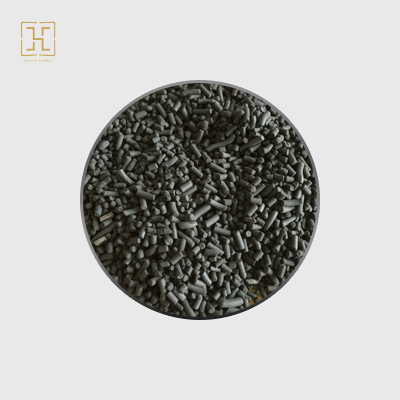
Acid-etched coal-based activated carbon starts out as high-quality anthracite. It goes through normal activation processes, usually with steam or chemicals, to get its unique porous structure. What makes acid-etched versions different is the deep acid-washing stage that comes after. Strong inorganic acids, like hydrochloric acid (HCl) or nitric acid (HNO₀), are used to soak the carbon in this process. These acids remove metallic oxides, calcium carbonate, iron compounds, and water-soluble salts that are buried in the carbon matrix. After being rinsed with deionized water and dried at high temperatures, the absorbent is very clean, with ash levels lowered to 5% or less, compared to 10–15% in coal carbons that have not been handled.
Enhanced Surface Chemistry and Pore Accessibility
The process of acid washing does more than just remove impurities. Acid-etched coal-based activated carbon can develop additional oxygen-containing surface groups during controlled acid treatment, which may improve interactions with polar molecules and certain organic contaminants. When mineral deposits are removed, previously blocked micropores and mesopores can become more accessible, increasing the available surface area for adsorption. This can support faster adsorption kinetics and improve the capacity of Acid-etched coal-based activated carbon for capturing selected contaminants such as heavy metals, chlorine, sulfur compounds, and volatile organic compounds (VOCs), depending on the specific treatment conditions. Acid-etched coal-based activated carbon can also retain good mechanical integrity when properly manufactured, while its final pH can be controlled within a suitable range for sensitive applications. By combining enhanced surface chemistry with improved pore accessibility, Acid-etched coal-based activated carbon can provide reliable adsorption performance in demanding purification processes. Properly specified Acid-etched coal-based activated carbon can therefore help maintain stable treatment conditions while supporting consistent contaminant removal.
Since these changes were made, acid-etched carbons are now considered high-quality adsorbents that are perfect for fields that need to be pure, consistent, and free from ionic leaching.
Comparative Analysis: Acid-Etched vs. Other Activated Carbons
Performance Benchmarks Against Conventional Carbons
When compared to steam-activated coal carbons, acid-etched versions always do better in situations where very little contamination is needed. Standard coal carbons have more ash, which can leach silica, iron, and other minerals into fluids that are being handled. This is not okay for cleaning semiconductor wafers, making injectable drugs, or processing for drinks. This risk is completely eliminated by acid-etched materials, which have carefully controlled levels of metal impurities (below 1000 ppm for iron, arsenic, and lead added together).
Coconut shell-based activated carbons are very hard and don't change much in temperature, so they can be used in gas-phase applications that need to be stable at high temperatures. But because they are harder to get in bulk tonnage amounts and cost more to make, they are not as cost-effective for large-scale industrial water treatment or flue gas purification projects. Acid-etched coal carbons fill in the blanks by offering the same level of purity at a lower price, backed by dependable supply lines that can produce multiple tons within expected lead times.
Cost-Effectiveness and Operational Longevity
The acid-washing method raises the cost of production, but it is worth it because it improves operations. Acid-etched carbons are better at regeneration because they keep more than 80% of their original adsorption capacity after thermal regeneration cycles. This longer operating lifespan cuts down on the number of replacements needed, the cost of removal, and the amount of time the system is down. Higher iodine adsorption values (800–1000 mg/g) and methylene blue rates (≥120 mg/g) mean that more contaminants are captured per unit mass, which means that smaller bed volumes are needed and more money is saved on building filtering infrastructure.
These economic benefits are very appealing to procurement teams that have to balance strict performance standards with tight budgets in environments where bids are competitive.
Industrial Applications and Benefits of Acid-Etched Coal Activated Carbon
High-Purity Water Treatment Systems
To meet stricter water quality standards, more municipal water treatment plants, commercial ultrapure water facilities, and desalination projects are considering high-purity adsorbents such as Acid-etched coal-based activated carbon. The controlled removal of ash and selected inorganic impurities can help reduce the risk of fouling downstream reverse osmosis membranes and ion-exchange resins. In high-purity applications, Acid-etched coal-based activated carbon can also be selected for its low extractables and controlled metallic impurities, helping treatment systems meet demanding trace-contaminant requirements when the material is properly tested and qualified. Semiconductor manufacturing requires extremely high-purity process water, so Acid-etched coal-based activated carbon may be used as a polishing medium where low ionic contamination and consistent adsorption performance are required. By combining controlled purity with effective adsorption characteristics, Acid-etched coal-based activated carbon can support advanced water-treatment processes and help maintain stable water quality. Proper specification and certification of Acid-etched coal-based activated carbon are essential for applications with stringent purity requirements.
Pharmaceutical and Food Processing Applications
In the process of making medicines, acid-etched activated carbon is an important decolorizer and impurity scavenger for the active pharmaceutical ingredient (API). Mineral ash is not present, which stops unwanted catalytic reactions and ensures uniformity from batch to batch. In the same way, beverage makers depend on acid-etched grades to keep their products from adding unwanted odors, turbidity, or mineral leftovers that would lower the quality of their products and make customers not want to buy them.
Gas-Phase Purification and Emission Control
Acid-etched carbons are usually used in liquids, but they work really well in high-purity gas filters, where even tiny particles or chemical interactions need to be removed. Power plants that clean up flue gas, biogas purification systems that get rid of sulfur dioxide (with adsorption capacities exceeding 180 mg/g for SO₂), and chemical factories that control VOC emissions can all benefit from acid-washed materials because they are more selective and make less dust. Because engineered forms like cylindrical pellets (1.5–3.0 mm diameter) or granules (8–30 mesh) are available, they can be used with fixed-bed, moving-bed, and fluidized-bed reactors in a wide range of industrial settings.
These proven performance improvements are right in line with what industrial buyers care about most: following the rules, making sure the process works well, saving money, and protecting the environment.
Selecting and Procuring Acid-Etched Coal-Based Activated Carbon
Key Evaluation Criteria for Procurement Teams
To choose the best acid-etched carbon, you need to pay close attention to a number of scientific factors. The iodine absorption value is a key measure of microporosity and the ability to collect organic compounds. The amount of ash and metal impurities directly affects how well it works for a given application. For example, ultrapure water and pharmaceuticals need ash levels below 3%, while less sensitive processes may be able to handle 5%. Mechanical strength (≥90%) makes sure that there is little wear and tear and fines buildup during handling and regeneration cycles, which keeps problems with downstream filtration from happening.
In chemically sensitive settings, keeping the pH level normal (6.0–8.0) is very important to keep the process running smoothly. The particle size distribution needs to meet the requirements of the reactor design. For packed-bed systems, cylindrical pellets work best, while granular grades work best for slurry uses. The adsorption values of methylene blue show the formation of mesopores, which is important for contaminants with higher molecular weights.
Supplier Evaluation and Quality Assurance
Suppliers with a good reputation use strict quality control methods, such as having a third-party lab test the product against ASTM D2866 (ash content), ASTM D3838 (pH), and ASTM D4607 (iodine number) guidelines. ISO 9001 certification for quality management, ISO 14001 certification for environmental compliance, and ISO 45001 certification for occupational health and safety show that a supplier is reliable and that the process is mature. Before agreeing to large orders, buyers should ask for certificates of analysis (COA), technical data sheets (TDS), and sample amounts to test in-house.
Lead times for normal grades are usually between 7 and 15 days, while lead times for custom specs are between 15 and 30 days. Different suppliers have different minimum order quantities, but most start at 1–5 metric tons. Pricing structures are based on the quality of the raw materials, the difficulty of the processing, and the number of orders. Ultra-low-ash grades will be more expensive, but they will have lower total costs of ownership due to longer service life and better performance.
The ability to handle logistics around the world is very important. International purchasing is made easier by suppliers who have networks for sea, air, and road transportation, can track shipments in real time, and know how to clear customs. Proper packing, like moisture-barrier bags inside rigid cases, keeps things in good shape while they're being shipped or stored.
Acid-Etching Process and Its Impact on Activated Carbon Performance
Step-by-Step Production Methodology
The acid-etching process starts with typically active coal carbon that has already been screened. The material is put into acid-resistant tanks, and strong inorganic acid solutions (10–30% HCl or HNO₀) are added at controlled temperatures and contact times. Mineral parts like silicates, aluminates, iron oxides, and calcium compounds are broken down by the acid, turning them into salts that can be dissolved in water. Strong stirring makes sure that all particles get the same treatment.
After acid treatment, Acid-etched coal-based activated carbon undergoes multiple washing cycles with deionized water to remove residual acid and dissolved salts until conductivity testing confirms that the remaining ionic content meets the required purity specifications. The washed Acid-etched coal-based activated carbon is then dried at controlled temperatures, typically around 150–200°C, to remove moisture while preserving the pore structure. During each processing stage, quality-control checks are performed on Acid-etched coal-based activated carbon to verify reductions in ash content, appropriate pH balance, mechanical strength, and moisture-related characteristics before packaging. These controls help ensure that Acid-etched coal-based activated carbon maintains consistent purity and adsorption performance from batch to batch. Proper washing, drying, and testing of Acid-etched coal-based activated carbon are especially important for applications that require low extractables and stable treatment performance.
Measurable Performance Improvements
Standard coal carbon and acid-etched coal carbon are compared in the lab and found to be very different. By using BET research to measure surface area, rises of 10 to 15 percent are seen because pores are no longer blocked. Iodine levels rise from 700–800 mg/g to 900–1000 mg/g, which means that microporosity has grown. It goes from having 12–15% ash to having less than 5% ash. At the same time, the iron and calcium levels drop from 2000 ppm to under 500 ppm and 3000 ppm to under 800 ppm, respectively.
These technology improvements show up in how things work in the real world. Operators of municipal water treatment plants say that filters need to run for 20–30% longer before breaking. Pharmaceutical companies say that batch failure rates have gone down because metallic contamination has been removed. With smaller carbon bed amounts, wastewater treatment plants can meet tighter discharge limits, which lowers both their capital and running costs.
Researchers are still looking into hybrid treatments that use acid-etching and surface impregnation of catalytic metals (silver, copper) to kill microbes, as well as alkaline post-treatments to change the surface charge to fit different types of contaminants. Because of these improvements, acid-etched carbons are now at the top of the list for developing next-generation absorbent technology.
Conclusion
Acid-etched coal-based activated carbon represents an advanced option for businesses that require strong adsorption performance, controlled impurity levels, and reliable operation under demanding process conditions. Through controlled acid treatment, Acid-etched coal-based activated carbon can achieve improved surface chemistry, reduced ash content, and greater accessibility to pores that may remain partially blocked in untreated carbons. These characteristics can support better contaminant removal, longer service life, and lower risks of secondary contamination when the material is properly specified and tested. For procurement managers, environmental engineers, and quality-control specialists in pharmaceutical, petrochemical, electronics, and water-treatment industries, Acid-etched coal-based activated carbon can provide a practical solution for applications where purity and adsorption performance are critical. As environmental requirements become more stringent and process-quality standards continue to rise, Acid-etched coal-based activated carbon can become increasingly valuable for demanding adsorption applications. Selecting Acid-etched coal-based activated carbon based on verified purity, adsorption capacity, mechanical strength, and application-specific performance can help support stable operation and long-term process reliability.
FAQ
Why Choose Acid-Etched Instead of Standard Coal Carbon?
Acid-etched carbon lowers the amount of ash from 12 to 15 percent to less than 5 or even 3 percent. This stops mineral leaching that gets in the way of high-purity processes. Getting rid of metallic impurities eliminates the risk of contamination in delicate processes like making ultrapure water, making drugs, and working with chemicals that are used in electronics.
Does Acid Treatment Affect Adsorption Capacity?
No, acid treatment actually speeds up the adsorption process by freeing up mineral salts that are blocking micropores. This makes the useful surface area bigger. Lab tests show that iodine values and methylene blue adsorption rates always go up after following the right acid-washing steps. This means that contaminants are captured faster and the material can hold more.
Is There Residual Acid in the Final Product?
Before they are dried, professional-grade acid-etched carbons are rinsed with deionized water several times until their pH level is neutral, which is between 6.0 and 8.0. Conductivity testing of the rinse water confirms that all the acid has been removed, which means that the finished product won't add any acidity to the applications that use it. In reports of analysis from good sources, there is pH verification data.
Can Acid-Etched Carbon Be Used for Gas-Phase Applications?
Yes, acid-etched coal carbons work great for filtering very pure gases where making mineral dust or reducing trace chemical interactions is important. Biogas purification, flue gas desulfurization (with SO₂ adsorption exceeding 180 mg/g), and VOC abatement in chemical manufacturing exhaust streams are some of the uses. Engineered pellet and granular forms can be used with a range of reactor types.
Partner with Shanxi Xinhua Carbon Technology Industry Co., Ltd. for Premium Acid-Etched Solutions
If you don't choose the right Acid-etched coal-based activated carbon supplier, your project could fail and cost a lot of money. The carbon technology company in Shanxi is called Xinhua. It has more than 60 years of experience with defense-grade quality control and more than 20 years of experience with making a lot of things at once for every ton we make. Working with Tsinghua University, the Chinese Academy of Sciences, and other top research institutes gives us access to cutting-edge formulation technology and the ability to make products that are exactly what you need, whether you need ultra-low-ash grades for pharmaceutical uses, high-strength pellets for fluidized beds, or SO₂-optimized materials for treating flue gas.
We keep a large collection across several production bases and guarantee delivery within 7–15 days for normal orders. For urgent needs, we offer green-channel service that speeds up the process to 3 days. With our ISO 9001, ISO 14001, and ISO 45001 certifications, as well as our real-time package tracking and full customs support, we can give your business the supply chain stability it needs. We provide not only material but also partnership, backed by technical consultation, sampling programs, and performance validation support, as a reputable manufacturer of Acid-etched coal-based activated carbon serving global environmental engineering contractors, municipal water systems, and petrochemical facilities.
You can talk to our team about your specific absorption problems and get detailed data sheets by emailing greta@carbonxinhua.com or visiting xhcarbontech.com. Let us show you how our acid-etched carbon options can help your process work better and be more environmentally friendly.
References
1. Marsh, H., & Rodríguez-Reinoso, F. (2006). Activated Carbon: Properties and Applications. Amsterdam: Elsevier Science Publishing.
2. Bandosz, T. J. (2006). Activated Carbon Surfaces in Environmental Remediation. Interface Science and Technology Series, Volume 7. Academic Press.
3. Bansal, R. C., & Goyal, M. (2005). Activated Carbon Adsorption. Boca Raton: CRC Press, Taylor & Francis Group.
4. Dabrowski, A. (2001). Adsorption—from theory to practice. Advances in Colloid and Interface Science, 93(1-3), 135-224.
5. Tascón, J. M. D. (2012). Novel Carbon Adsorbents. Amsterdam: Elsevier Science Publishing.
6. Radovic, L. R., & Sudhakar, C. (1997). Carbon as a Catalyst Support: Production, Properties, and Applications. In Introduction to Carbon Technologies (pp. 103-166). Alicante: Universidad de Alicante Press.

Send Inquiry
You may like
_1781662034490.webp)