_1778553121707.webp)
How does 8-30 mesh coal quality crushed carbon compare to coconut shell carbon?
Jul 03, 2026
When evaluating activated carbon for industrial applications, procurement managers often ask: how does 8-30 mesh coal quality crushed carbon compare to coconut shell carbon? The coal-based variant excels in mixed bed water treatment systems and medium-low flow rate operations, offering wider particle distribution (covering 0.60-2.36mm), superior mechanical strength with hardness exceeding 90%, and lower cost per ton. Coconut shell carbon, meanwhile, provides higher microporosity and purity but at a premium price. Coal-based crushed carbon suits high-volume municipal wastewater treatment, COD removal, and VOCs control, while coconut shell variants perform best in potable water purification and pharmaceutical-grade applications.
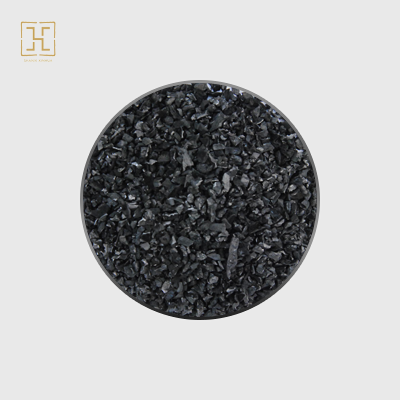
Introduction to 8-30 Mesh Crushed Coal, Carbon, and Coconut Shell Carbon
Understanding the fundamental differences between coal-based and biomass-derived activated carbons begins with examining their origins and structural characteristics. These differences directly impact performance in industrial purification processes.
Origins and Manufacturing Process
Coal-based crushed activated carbon originates from high-quality anthracite coal, particularly Jurassic-era deposits known for their uniform carbon structure. The manufacturing process involves carbonization at temperatures exceeding 800°C, followed by steam activation that creates a dual-pore system. This process yields medium-fine granular particles with smaller individual sizes, larger specific surface areas reaching 800-1100 m²/g as measured by iodine number, and a developed microporous structure that efficiently captures small-molecule organic compounds.
Coconut shell carbon comes from renewable agricultural biomass. The raw material undergoes pyrolysis and activation, creating predominantly microporous structures with surface areas often exceeding 1000 m²/g. The biological origin results in higher purity but also higher production costs and supply variability depending on harvest cycles.
Defining the 8-30 Mesh Range
The mesh size designation directly correlates with particle dimensions and performance characteristics. The 8-30 mesh specification covers particles ranging from approximately 0.60mm to 2.36mm, encompassing both 8-16 mesh and 16-30 mesh fractions in a single product. This wide particle range addresses a critical pain point in mixed bed filtration systems where single-mesh carbons create packing density deviations exceeding 10%, leading to channeling and reduced adsorption efficiency by up to 15%.
Our 8-30 mesh coal quality crushed carbon maintains particle size deviation below 5%, ensuring uniform packing density between 450–550 g/L. This consistency prevents flow channeling and eliminates dead zones that compromise treatment efficiency. The moderate packing density results in low filtration resistance, making it ideal for advanced purification applications operating at medium-low flow velocities of 0.8–1.2 m/s.
Structural Differences That Matter
The microporous structure in coal-based crushed carbon features a balanced mesopore ratio that effectively removes medium and large-molecule substances such as color compounds and colloids. Heavy metal ions, odor-causing substances, and small-molecule organic matter adsorb rapidly due to the faster adsorption kinetics enabled by smaller particle sizes and extensive internal surface area.
Coconut shell carbon exhibits a tighter micropore distribution optimized for gas-phase applications and removal of very small molecules. The biomass origin creates a cleaner pore structure with minimal ash content, typically below 5% compared to 8-12% in coal-based products. However, this comes at the cost of reduced mechanical durability and higher abrasion rates in high-flow liquid-phase applications.
Comparative Analysis of Quality Specifications and Performance
Selecting the right activated carbon requires understanding how chemical composition and physical properties translate into real-world performance across different industrial scenarios.
Chemical Composition and Purity
Coconut shell carbon achieves higher carbon purity, often exceeding 90%, with ash content below 5%. The lower ash content reduces the risk of secondary contamination in sensitive applications like pharmaceutical water purification. However, the premium purity comes with a price premium of 30-50% compared to coal-based alternatives in bulk procurement.
Adsorption Capacity and Efficiency
Iodine numbers provide a reliable indicator of total adsorption capacity. Our coal-based crushed carbon delivers iodine values extending from 800-1100mg/g, with batch consistency maintained through rigorous quality control aligned with AWWA B604 standards. This capacity enables COD removal efficiency exceeding 85% in municipal wastewater treatment handling initial COD levels of 300-800mg/L.
Carbon tetrachloride (CTC) activity, measuring gas-phase adsorption capacity, typically reaches 50-60% in coal-based products versus 60-80% in coconut shell variants. For VOCs removal in small to medium-scale gas treatment applications (handling concentrations of 150-400mg/m³), both materials achieve removal rates above 90%, though coconut shell carbon reaches saturation more quickly in continuous operations.
Mechanical Strength and Durability
Hardness measurements following ASTM D3802 methodology reveal coal-based crushed carbon achieves values of 90-97%, significantly outperforming coconut shell carbon at 75-85%. This translates directly to abrasion resistance, with coal-based materials showing less than 2% abrasion loss compared to 5-8% for coconut shell products during hydraulic transport and backwashing cycles.
Environmental and Regulatory Considerations
Both carbon types meet NSF/ANSI Standard 61 requirements for potable water contact when properly manufactured and certified. Our production facilities maintain ISO 9001, ISO 14001, and ISO 45001 certifications, ensuring consistent quality and safety across all batches. The hygiene license issued by Shanxi Provincial Health Commission validates suitability for drinking water purification applications.
Coal-based carbon utilizes abundant domestic resources, providing supply security and stable pricing unaffected by agricultural commodity fluctuations. Coconut shell carbon, despite its renewable sourcing advantage, faces supply chain vulnerabilities related to seasonal availability, regional harvest variations, and competition from other coconut-derived products. Environmental assessments must weigh the carbon footprint of long-distance biomass shipping against the extraction impacts of coal mining.
Typical Industrial Applications and Market Use Cases
Understanding where each carbon type delivers optimal value helps procurement teams match material specifications to operational requirements and project constraints.
Municipal and Industrial Wastewater Treatment
Coal-based crushed carbon dominates large-scale municipal wastewater treatment plants processing thousands of cubic meters daily. The wide particle size distribution covering 8-30 mesh ensures complete bed coverage in mixed bed configurations, while the less than 5% packing density deviation maintains consistent hydraulic loading across the entire filter bed. Treatment plants handling COD levels of 300-800mg/L achieve reliable reduction to discharge standards below 50mg/L with contact times of 20-30 minutes.
VOCs Control in Industrial Emissions
Printing facilities, spray coating operations, and chemical processing plants face stringent air quality regulations requiring efficient VOC capture. The moderate mesopore ratio in coal-based crushed carbon effectively adsorbs medium and large-molecule volatile organics common in these industries. Systems handling emission streams of 150-400mg/m³ achieve removal rates above 90%, maintaining compliance with EPA regulations and avoiding penalties.
Drinking Water Purification
Advanced drinking water purification requires balancing adsorption performance with safety considerations. Coal-based crushed carbon certified under NSF/ANSI Standard 61 removes chlorine, taste and odor compounds, and trace organic contaminants while meeting strict leachate limits for heavy metals and other potentially harmful substances. Beverage production facilities and brewery water treatment systems value the consistent quality and neutral taste profile.
Coconut shell carbon finds preferred use in point-of-use filtration and premium bottled water applications where the higher purity justifies the cost premium. The tighter pore size distribution excels at removing chloramine and very small organic molecules that contribute to off-tastes, making it the standard choice for high-end residential filtration systems.
Chemical Catalysis and Process Applications
The robust structure of coal-based carbon serves as an excellent catalyst support in chemical synthesis operations. Methanol synthesis, hydrogenation reactions, and various petrochemical processes utilize carbon supports to disperse active metal catalysts while providing thermal stability and mechanical strength. The moderate ash content does not interfere with most catalytic mechanisms and can even contribute to reaction pathways in certain applications.
Coconut shell carbon's higher purity makes it preferable in pharmaceutical synthesis and fine chemical production, where trace mineral contamination could compromise product specifications or poison sensitive catalysts. The cost differential becomes negligible in these high-value production environments where product purity drives profitability.
Procurement Insights — Pricing, Suppliers, and Supply Chain Considerations
Strategic procurement decisions require understanding market dynamics, supplier capabilities, and the total cost of ownership beyond the initial purchase price.
Market Pricing and Cost Analysis
Current market prices for 8-30 mesh coal quality crushed carbon, a coal-based crushed carbon product in the 8-30 mesh range, average $800–1200 per ton for industrial-grade material, with premium specifications commanding $1200–1500 per ton. Coconut shell carbon prices range from $1500–2500 per ton, representing a 30–80% premium depending on specifications and market conditions. Volume commitments exceeding 100 tons annually typically unlock 10–15% discounts and preferential delivery terms.
Total cost of ownership analysis must account for material longevity, reactivation potential, and disposal costs. Coal-based carbon's superior durability and multiple reactivation cycles reduce annualized costs by 20-30% compared to coconut shell alternatives in high-throughput water treatment applications. However, gas-phase applications requiring maximum adsorption capacity may justify the coconut shell premium through extended service intervals.
Supplier Selection and Quality Assurance
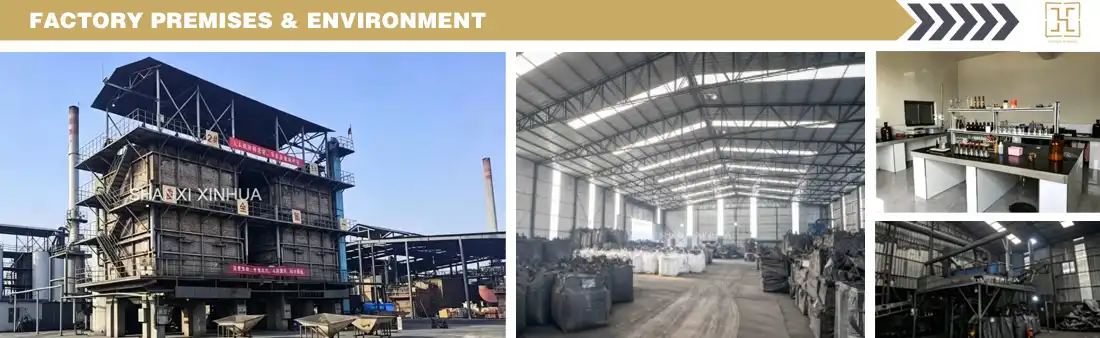
Evaluating potential suppliers requires examining production capacity, quality control systems, and technical support capabilities. Shanxi Xinhua Carbon operates multiple production bases across Shanxi, Ningxia, Fujian, and Xinjiang, with combined annual output reaching 45,000 tons. This scale ensures supply continuity and maintains 100% stock coverage of core products, including the 8-30 mesh coal quality crushed carbon specification.
Quality certifications provide essential risk mitigation. Look for suppliers holding ISO 9001 quality management certification, ISO 14001 environmental management certification, and ISO 45001 occupational health and safety certification. Product-specific certifications like AWWA B604 for water treatment carbons and NSF/ANSI Standard 61 for potable water contact validate compliance with industry standards and regulatory requirements.
Sample testing before bulk procurement remains critical. Request samples representing actual production batches and conduct independent testing for key parameters, including iodine number, CTC activity, ash content, hardness, and particle size distribution. Reputable suppliers provide detailed certificates of analysis and welcome third-party verification.
Logistics and Delivery Considerations
Standard delivery timelines range from 7-15 days for in-stock specifications, with customized formulations requiring 15-30 days for production and quality verification. Emergency procurement needs can be accommodated through expedited "green channel" delivery, providing material within three days for customers facing regulatory compliance deadlines or unexpected equipment failures.
Inventory management strategies differ between coal-based and coconut shell carbon. The abundant coal resources and established production capacity support just-in-time delivery and lean inventory approaches. Coconut shell carbon's supply variability argues for maintaining higher safety stock levels, increasing warehousing costs, and working capital requirements.
How to Choose the Right Carbon Source for Your B2B Needs
Procurement teams benefit from a structured evaluation process that aligns material properties with operational requirements, budget constraints, and strategic priorities.
Application-Specific Performance Requirements
Water treatment applications handling high organic loads and requiring robust materials favor coal-based crushed carbon. The wider particle distribution prevents bed compaction, maintains hydraulic flow rates, and delivers consistent performance across varying influent quality. Operations with medium-low flow velocities of 0.8-1.2 m/s particularly benefit from the optimized particle size range that prevents both carbon blowout and excessive pressure drop.
Gas-phase applications demanding maximum adsorption capacity per unit volume may justify coconut shell carbon despite the cost premium. Confined spaces with weight limitations benefit from coconut shell carbon's higher adsorption density, reducing the physical footprint of treatment systems. Pharmaceutical and food-grade applications requiring absolute purity standards default to coconut shell materials to eliminate any risk of taste or odor transfer.
Economic and Supply Chain Factors
Budget constraints drive many procurement decisions, particularly in price-sensitive municipal contracts and large-volume industrial applications. Coal-based crushed carbon delivers superior value when the total cost of ownership includes purchase price, replacement frequency, reactivation potential, and disposal costs. The 30-50% lower initial cost compounds through multiple reactivation cycles, potentially reducing lifecycle costs by 40-60% compared to coconut shell alternatives.
Supply security weighs heavily in critical infrastructure and continuous process operations where material shortages trigger production shutdowns or regulatory violations. Coal-based carbon's abundant raw materials and established domestic supply chains provide reliability unmatched by agricultural commodity-based alternatives. Long-term framework supply contracts with certified manufacturers like Shanxi Xinhua Carbon guarantee material availability and price stability across multi-year project timelines.
Technical Support and Customization
Complex applications benefit from supplier partnerships offering technical consultation and customized formulations. The ability to adjust pore structure, surface area, loaded catalysts, and product forms such as 8-30 mesh coal quality crushed carbon, powder, granular, columnar, and honeycomb enables optimization for specific contaminants and operating conditions. Suppliers with strong R&D capabilities, such as those collaborating with institutions like Tsinghua University and the Chinese Academy of Sciences, provide application engineering support that reduces system design risk and accelerates project commissioning.
OEM and private label options serve equipment manufacturers and system integrators building branded filtration solutions. Customized packaging, technical documentation, and regulatory support streamline product integration and market entry. After-sales service, including performance troubleshooting, reactivation services, and disposal coordination, adds value beyond the initial material transaction.
Conclusion
Both coal-based crushed carbon and coconut shell carbon serve critical roles in industrial purification, with selection depending on specific application demands and economic considerations. Coal-based 8-30 mesh coal quality crushed carbon materials in this range excel in mixed bed water treatment, high-volume wastewater processing, and VOCs control through superior mechanical strength, optimized particle distribution, and lower total cost of ownership. Coconut shell carbon remains preferred for applications demanding maximum purity and micropore density despite higher costs. Procurement professionals should evaluate performance requirements, budget constraints, supply chain reliability, and supplier technical capabilities when making sourcing decisions. Partnering with established manufacturers holding comprehensive certifications and proven production scale ensures material consistency, regulatory compliance, and long-term supply security essential for critical infrastructure and industrial operations.
FAQ
Which carbon type offers better reactivation potential?
Coal-based crushed carbon demonstrates superior reactivation performance due to its robust pore structure and high mechanical strength. The material withstands thermal reactivation temperatures exceeding 800°C without significant structural collapse, enabling 3-5 reactivation cycles with 85-90% capacity recovery. Coconut shell carbon's thinner pore walls degrade more rapidly under reactivation conditions, limiting practical reactivation to 1-2 cycles before mechanical integrity compromises filtration performance.
Can these carbons be blended for optimized performance?
Yes, blending coal-based and coconut shell carbons creates hybrid systems leveraging the mechanical durability of coal-based materials with the high microporosity of coconut shell carbon. Typical blends range from 70:30 to 50:50 ratios depending on application requirements. Reputable suppliers offer customized blended formulations with consistent particle size distribution and verified adsorption characteristics tailored to specific contaminant profiles and operating conditions.
How do environmental regulations affect carbon selection?
Regulatory compliance drives carbon selection in drinking water and food-contact applications requiring NSF/ANSI Standard 61 certification. Both carbon types can meet these standards when properly manufactured and tested, though coconut shell carbon's lower ash content simplifies certification. Emissions regulations favor materials demonstrating consistent VOCs removal efficiency across varying humidity and temperature conditions, where coal-based carbon's stability provides compliance assurance.
Partner with Shanxi Xinhua Carbon for Superior Activated Carbon Solutions
Shanxi Xinhua Carbon Technology Industry Co., Ltd. stands ready as your trusted supplier for premium 8-30 mesh coal quality crushed carbon backed by over 60 years of defense-grade manufacturing expertise. Our multi-base production system ensures continuous material availability with standard delivery in 7-15 days and emergency shipments within 72 hours. Every batch undergoes rigorous testing in our certified laboratories, meeting ISO 9001, ISO 14001, and ISO 45001 standards while maintaining less than 5% packing density deviation and exceeding 85% COD removal efficiency. We offer complete customization across pore structure, particle size, and adsorption performance, supported by collaborative R&D partnerships with Tsinghua University and the Chinese Academy of Sciences. Contact our technical team at greta@carbonxinhua.com to request samples, discuss your specific purification challenges, and discover how our coal-based crushed carbon delivers measurable performance improvements and cost reductions for your operations.
References
1. American Water Works Association. (2021). AWWA B604 Standard for Granular Activated Carbon. Denver: American Water Works Association Publications.
2. Bansal, R.C. & Goyal, M. (2005). Activated Carbon Adsorption. Boca Raton: CRC Press, Taylor & Francis Group.
3. Marsh, H. & Rodríguez-Reinoso, F. (2006). Activated Carbon: Origins, Properties and Applications. Amsterdam: Elsevier Science Publishers.
4. Mattson, J.S. & Mark, H.B. (1971). Activated Carbon: Surface Chemistry and Adsorption from Solution. New York: Marcel Dekker Incorporated.
5. NSF International. (2020). NSF/ANSI Standard 61: Drinking Water System Components - Health Effects. Ann Arbor: NSF International Standards.
6. Yang, R.T. (2003). Adsorbents: Fundamentals and Applications. Hoboken: John Wiley & Sons Incorporated.

Send Inquiry
You may like
_1781662034490.webp)