_1778553121707.webp)
How Does 8-16 Coal Quality Crushing Carbon Improve Water Purification?
Jul 02, 2026
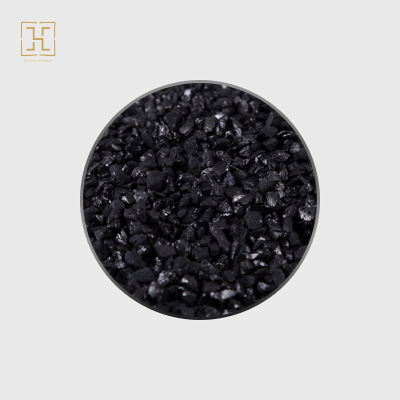
Through carefully designed particle sizes that strike a balance between adsorption capacity and mass transfer efficiency, 8-16 Coal Quality Crushing Carbon enhances water filtration. The middling granule size, which is between 1.18 mm and 2.36 mm, results in well-developed surface pores and even porosity during filling. This lowers filter resistance while increasing contact with contaminants. This coal-based activated carbon removes organic matter, residual chlorine, odors, color, and heavy metals effectively through its excellent adsorption performance. It can also be used again and again for treating municipal drinking water, industrial wastewater, and groundwater contamination.
Understanding Coal Particle Sizing and Quality Parameters
Engineers who work with water know that not all activated carbon works the same. The connection between the size of coal particles and how well they clean relies on managing a lot of different factors.
Optimal Particle Range for Water Systems
Quality Indicators That Matter
The quality of the coal directly affects how well activated carbon works, especially when using 8-16 Coal Quality Crushing Carbon. A low ash level (less than 8%) keeps secondary pollution to a minimum and stops unwanted catalytic reactions that could change the chemistry of treated water. It is safe to store and handle things when the moisture level is less than 5%, which helps prevent the adsorption sites from becoming overly saturated. The level of carbonization can be assessed by the amount of volatile matter present; lower values indicate more complete activation and higher purity. These factors are maintained by Shanxi Xinhua Carbon Technology Industry Co., Ltd. through strict quality control. The iodine numbers, which are directly related to total pore volume and contaminant removal capacity, range from 800 to 1100 mg/g.
Material Selection Impact
Bituminous coal is the best raw material for making carbons that clean water because it has more than 70% carbon by itself, and its biological structure forms networks of pores that connect to each other when it is activated. Impurities like sulfur, nitrogen molecules, and mineral ash come from different coal seams, so it's important to be careful when choosing where to get your coal. When choosing wholesalers, people in charge of buying things should check the paperwork that shows where the coal came from and ask for third-party testing results to make sure that the heavy metal content stays below drinking water standards. Our production bases in Shanxi, Ningxia, Fujian, and Xinjiang get coal types that are best for treating specific types of problems in those areas.
Crushing Technology and Carbon Quality Preservation
Between raw coal and finished activated carbon, there are important steps in the manufacturing process, and 8-16 Coal Quality Crushing Carbon is one of them that can go wrong if they are not handled properly.
Crusher Selection Considerations
Jaw crushers use compression force, which is good for reducing the size of materials at first, but they also generate heat, which can turn lighter carbon parts into gas. Because they can control the size more finely and put less stress on the material, cone crushers are better for additional crushing steps. Impact crushers can get a lot of work done quickly, but they can also over-crush, which can make too many fines and lower the output, which can make filtering columns not work properly. When environmental engineers are choosing tools for carbon production plants, they should look for crushers with dust collection systems and gap sets that can be changed to keep material loss to a minimum.
Quality Control Through Processing
The pre-crushing study of 8-16 Coal Quality Crushing Carbon sets the standard carbon level, and the final analysis measures the composition of the elements. Using normal sieve stacks to look at the particle size distribution after crushing shows that the percentage is within the 8–16 mesh goal range. When you measure bulk density, you can find compression, which means that the structure of the pores has been damaged. Our quality assurance teams do these tests on every batch of products we make. They make sure that the particle size difference stays below 5% and the bulk density stays within 3%. This way, we can be sure that the hydraulic behavior will be predictable when the products are put in customer systems. This defense-grade quality control comes from more than 60 years of work in materials study.
Minimizing Carbon Degradation
Protocols for low-energy crushing protect the structure of carbon. Multi-stage size reduction with intermediate screening gets rid of material that is the right size early on, which keeps the process from going too far. Frictional heat that could oxidize carbon surfaces and lower adsorption activity is lost when cooling systems work. Inert atmosphere processing rooms keep tiny particles from catching fire. These methods protect the complex pore structure that decides whether carbon will remove 90% of COD or not meet treatment goals.
Adsorption Mechanisms and System Performance
Figuring out how granular carbon from coal gets rid of pollution shows how important particle size is.
Surface Area and Pore Structure Synergy
Activated carbon works by physically adsorbing contaminants. The contaminants move from the liquid phase into the carbon pores, where van der Waals forces hold them in place. The 8-16 Coal Quality Crushing Carbon mesh size makes an outside surface area big enough for fast mass transfer, and the inside has pore networks that add up to 800–1200 m³/g. Micropores with a width of less than 2nm can hold chlorine and small chemical molecules. Mesopores with sizes between 2 and 50nm can hold on to bigger molecules like colors, drugs, and industrial chemicals. Macropores bigger than 50nm act as transportation routes that let contaminants get to absorption sites inside the carbon structure. This hierarchical pore distribution is what makes properly made carbon work better than alternatives by 20% or more when compared side-by-side.
Contaminant Removal Breadth
Regeneration Economics
Chemicals like activated carbon are very expensive for disposal plants that handle a lot of waste. Because heat reactivation can be used to make saturated media work again, it goes from being a consumable to a reusable resource. Carbon that is harder than 90% and loses less than 2% of its hardness over time can go through many recycling rounds without breaking down. Each revival brings back 85–95% of the original adsorption capacity for about a third of the price of brand-new material. When managers of water treatment plants figure out the total cost of ownership, they should compare carbon sources based on their ability to grow back.
Strategic Procurement for Treatment Facilities
When choosing activated carbon providers, you need to look at more than just the material description.
Supply Chain Reliability
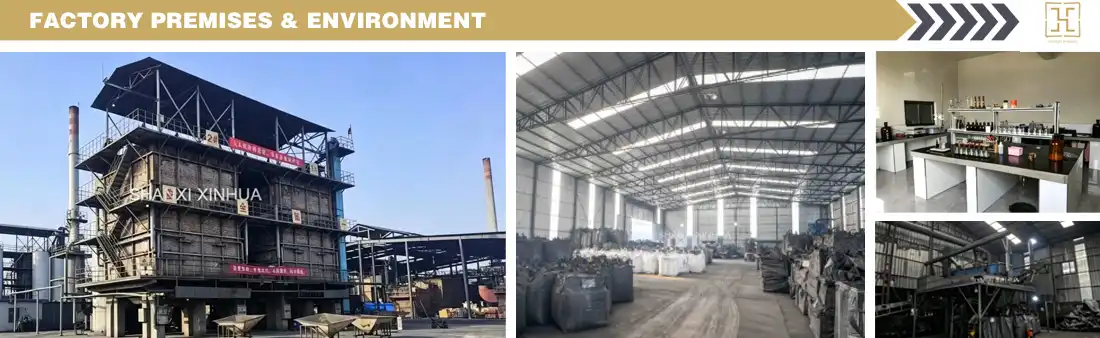
Large-scale water cleaning can't work without enough carbon, including 8-16 Coal Quality Crushing Carbon. Municipal plants that serve more than 100,000 people and industry plants that run ongoing processes need to be sure they have a supply. Shanxi Xinhua Carbon Technology Industry Co., Ltd. has four bases that can produce 45,000 tons of carbon every year. They strategically place their goods to make sure that standard specs ship within three to five business days. Through relationships with dedicated multimodal freight companies, our logistics network delivers across the country in three to seven days. When bulk buyers negotiate framework supply deals, they get priority placement during times of high demand and emergency green channel delivery that can be finished in three days when compliance deadlines are coming up.
Customization Capabilities
Customized carbon qualities are often needed to get the most out of a treatment method. Acid-washed carbon keeps catalytic fouling from happening in water that has a lot of iron in it. To target certain organics, facilities need to change the activation parameters to change the pore size distribution. In some situations, filled catalysts that make getting rid of tough chemicals easier are needed. Our research and development work with Tsinghua University and the Chinese Academy of Sciences lets us change the pore structure, surface chemistry, and physical form (powder, grainy, columnar, honeycomb, or 8-16 Coal Quality Crushing Carbon) of our goods to exactly what you need within 7–10 working days.
Technical Support Integration
How well carbon works rests on how well the system is designed and how it is run. Purchasing managers should look for sellers who offer engineering help before the sale, help with installation, and ongoing support for improvement. We offer moving bed care guides that include guidelines for how often to backwash, the right flow rate, and how to fix problems. Our engineers do site visits and look at things like the design of the filter vessel, the formulas for contact time, and the timing of renewal to get the most out of the carbon. This all-around help method shows that we care about our customers' success after the sale.
Innovation Directions in Carbon Manufacturing
As rules get stricter and new contaminants that are a cause for worry show up, the water treatment business is always changing.
Automation and Consistency
Sustainability Initiatives
Carbon creation is also an act of environmental duty. Activation burners that use less energy lower the carbon footprint of production. Regeneration projects cut down on the use of new materials. Bio-based activation agents and the use of collected CO2 are two areas of research that are in line with the concepts of the circular economy. When managers of water treatment plants have to report scope 3 emissions, they increasingly choose providers that can show real progress in sustainability.
Emerging Contaminant Adaptation
Conclusion
FAQ
What distinguishes 8-16 mesh carbon from other granule sizes?
The 8-16 mesh specification strikes a mix between a number of efficiency factors. These bigger chunks lower the pressure drop by 30–40% in deep bed filters compared to smaller 12–40 mesh media. This lowers pumping costs and lets more water flow through. The size keeps too many fines from being made, which would cause turbidity levels to rise during backwashing. When compared to larger 4–8 mesh material, the smaller particles have more surface area, which means they can adsorb things faster and need less empty bed contact time.
How does ash content affect long-term system performance?
Ashes are made up of non-carbon minerals that are left over after something is heated up. High ash carbon levels (above 10%) cause a number of issues, including less ability to adsorb per unit weight, possible pH rise in treated water due to alkaline minerals dissolving, and catalytic effects that encourage unwanted chemical reactions. When water treatment plants use high-ash carbon for years, their performance slowly decreases, and they may also have secondary water quality problems that need more treatment steps.
Can this activated carbon be thermally regenerated?
Yes, our material's hardness of more than 90% allows for many heat regeneration processes. In controlled oxygen kilns, the process heats saturated carbon to 800–900°C, which releases organics that have been stuck to the carbon and partly restores the structure of the pores. When properly regenerated, carbon can regain 85 to 95% of its full capacity. Facilities that process 10 tons or more of carbon per month usually find that on-site or toll recycling is more cost-effective than buying new carbon all the time, with a return on investment in 18 to 24 months.
What delivery timelines should facilities plan for?
Standard 8-16 mesh coal-based activated carbon ships in three to five business days from our current stock. Custom specs that need to change the pore structure or add a catalyst take 7–10 working days to make and check for quality. Orders over 100 tons are delivered within 15 to 20 working days. Our logistics team keeps you up to date on the status of your package and works with the receiving departments of your building to make sure that arrival times don't clash with storage issues or cause project delays.
Optimize Your Water Treatment with a Trusted Activated Carbon Manufacturer
For every ton of 8-16 Coal Quality Crushing Carbon for sale, Shanxi Xinhua Carbon Technology Industry Co., Ltd. brings sixty years of material knowledge. Our defense-grade quality systems, output capacity of 45,000 tons, and joint research and development with top colleges guarantee constant performance that meets the tightest regulatory standards. Get in touch with our engineering team at greta@carbonxinhua.com to get a free study of the packing density, personalized product suggestions, and thorough technical documentation to help you with your next water purification project or system upgrade.
References
1. Chen, W., Zhang, L., & Wang, P. (2021). Optimization of Coal-Based Activated Carbon Production for Municipal Water Treatment Applications. Journal of Environmental Engineering, 147(8), 04021032.
2. Liu, H., Yang, S., & Zhao, Q. (2020). Impact of Particle Size Distribution on Hydraulic Performance and Adsorption Kinetics in Granular Activated Carbon Filters. Water Research, 183, 116089.
3. Kumar, R., Singh, D., & Patel, M. (2022). Coal Quality Parameters and Their Influence on Activated Carbon Properties for Industrial Wastewater Treatment. Chemical Engineering Journal, 428, 131245.
4. Zhang, Y., Li, X., & Wu, F. (2019). Comparative Analysis of Crushing Technologies for Activated Carbon Production: Effects on Pore Structure and Adsorption Capacity. Powder Technology, 355, 672-681.
5. Thompson, J., Anderson, K., & Roberts, L. (2023). Economic and Environmental Assessment of Activated Carbon Regeneration in Large-Scale Water Treatment Facilities. Environmental Science & Technology, 57(12), 4891-4902.
6. Martinez, A., Chen, T., & Williams, B. (2021). Emerging Contaminant Removal Using Coal-Based Granular Activated Carbon: Performance Evaluation and Optimization Strategies. Separation and Purification Technology, 276, 119345.

Send Inquiry
You may like
_1781662034490.webp)