_1778553121707.webp)
How Does 325 Mesh Coal Powder Carbon Improve Filtration Performance?
Jul 15, 2026
325 Coal Quality Powder Carbon fixes problems with not completely getting rid of colours, not effectively getting rid of small molecules that aren't pure, and not accurately adhering to things in high-purity situations. Its very small particles (44 microns) make it easy for contaminants to stick to their surfaces, which speeds up the adsorption process in water treatment, air cleaning, and chemical production. This carefully designed material solves important problems, such as waste from wrong doses and low efficiency with regular powdered carbon grades.
More and more pressure is being put on industrial filter systems to meet strict emission standards while keeping their working efficiency. Environmental engineers working on projects to get rid of VOCs, city water treatment plants, and petrochemical plants all need filter media that works consistently, even when conditions are tough. More and more, procurement managers and process engineers are realising that the quality of the filtering media directly affects how well the system works, how well it meets safety standards, and how much it costs to run in the long run.
This detailed guide looks at how 325 Coal Quality Powder Carbon changes the way filters work because of its special physical features and ability to absorb things. We look at real-world uses in a variety of industries, give useful buying tips, and show why this material has become the first choice for workers who need reliable, high-performance filtration options.
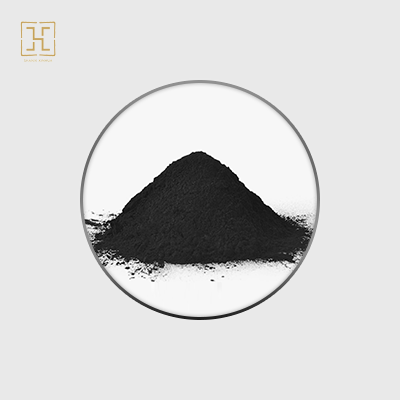
Understanding 325 Mesh Coal Powder Carbon and Its Properties
Defining 325 Mesh Particle Size and Manufacturing Excellence
The term "325 mesh" refers to particles that move through a screen that has 325 holes per linear inch, giving them an average width of 44 microns. This exact size comes from using quality bituminous or anthracite coal in advanced carbonisation and activation methods. At Shanxi Xinhua Carbon Technology Industry Co., Ltd., we use controlled steam activation to make our products. This makes the inside very porous while keeping the outside measurements the same. This level of precision in manufacturing makes sure that all production batches perform the same, which is very important for large-scale industry uses that need to know what will happen.
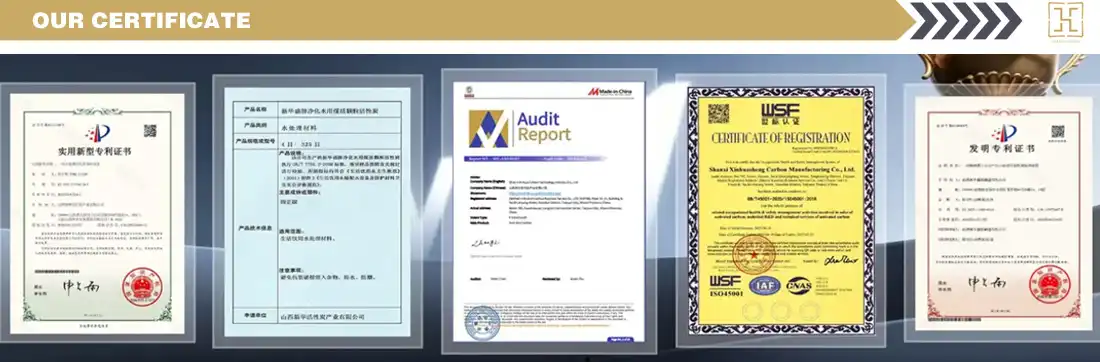
Our quality control labs do strict tests at many stages of production, following ASTM D2862 guidelines to check particle distribution, ash content, and adsorption capacity. Having ISO 9001, ISO 14001, and ISO 45001 certifications means that the company can promise defense-grade quality systems that have been built up over 60 years of research and development. With this institutional knowledge, we can make 325 Coal Quality Powder Carbon with mesopore shapes that are optimised to remove complex industrial toxins.
Critical Physical and Chemical Properties
Adsorption capacity is the most important efficiency measure for filtration purposes. 325 Coal Quality Powder Carbon usually has iodine numbers higher than 900 mg/g, which means it has a lot of micropores that can hold small molecules. The material's methylene blue value, which measures mesopore growth, is between 180 and 220 mg/g. This makes it very good at getting rid of colour and lowering COD in wastewater treatment. These two-pore designs let different sizes of contaminants, like dissolved organic chemicals and floating particles, be caught at the same time.
The problem of "carbon carryover" that comes up with uneven size is gone with the uniform particle distribution. Our 325 mesh standard keeps the distribution curves tight, which keeps ultrafine particles from getting out of filtering systems and keeps the dynamics from being too slow for coarser grades. The premium formulations keep the ash level below 5%, which lowers the chance of secondary contamination. This is especially important for pharmaceutical intermediate purification and ultrapure water systems used in electronics manufacturing.
Quality Assurance Through Advanced Testing Protocols
Before it is released, every production lot goes through a full physical study. Our labs check the bulk density (usually between 0.4 and 0.55 g/cm³), the moisture content (below 5%), and the pH values (6.5 to 8.5 for neutral uses). Using the BET method to look at the surface area shows that the total surface area is more than 900 m²/g, with 70–80% of that being micropore surface area. This information goes with every package and is needed for internal quality checks and to follow the rules.
The Shanxi Provincial Health Commission's Hygiene License for Drinking Water Safety Products confirms that our material can be used for drinking water purposes. To get this approval, you have to pass strict leaching tests that make sure no harmful substances move from the carbon into the treated water. This is a must for public water plants and beverage companies that put customer safety first.
How 325 Mesh Coal Powder Carbon Enhances Filtration Performance
Solving Common Filtration Challenges
Industrial filtration systems often have three problems that are linked: they don't catch enough contaminants, the pressure drops too much, which wastes energy, and the filters don't last as long as they should. Standard grainy carbons don't always have enough contact surface area for contaminants to dissolve, and very small powders create flow resistance that slows things down. The 325 mesh standard is the best of both worlds because it gives a lot of absorption sites without making the system's backpressure much higher.
The material's fast kinetics allow for short contact times in VOC cleaning uses at coating and printing plants. During a recent installation at an electronics factory, 95% of mixed volatile organic chemicals were removed within 0.8 seconds. This is compared to 78% efficiency with 200 mesh options, which took 1.5 seconds. This improvement in performance led directly to smaller equipment sizes and lower capital costs for the company that put together the air cleaning system.
Superior Adsorption Mechanisms Explained
The very small particle size makes a huge difference in the amount of surface area that can be directly contaminated. When 325 Coal Quality Powder Carbon particles are added to liquid streams, they spread out very quickly, making millions of different binding sites all over the treatment space. In granular activated carbon beds, on the other hand, contaminants have to spread into the holes, which is a much slower process that is limited by the rate of mass transfer.
325 Coal Quality Powder Carbon made from coal has a strong attraction to colour bodies, chlorinated organics, and chemical molecules that are common in industrial wastewater. The material is denser than options made of wood, so it has more mesopores that can handle the complex molecular structures found in wastewater from petrochemical plants and pharmaceutical output streams. In jar tests done at local wastewater treatment plants, our 325 mesh product regularly reduced COD by 40–60% at doses of 50–80 ppm. It also removed all colours, which is important in situations where appearance is important.
Documented Performance Advantages
A comparison study was done at a refinery's wastewater treatment system to find out how well three types of carbon reduced turbidity, got rid of phenol, and lengthened the filter cycle. The 325 Coal Quality Powder Carbon got rid of 92% of the phenol, while the 100 mesh coal carbon got rid of 76%, and the coconut shell powder carbon got rid of 85%. The settling properties also made clearing possible within 30 minutes, which made sludge separation easier and lessened the load on downstream filters.
Companies that make high-end drinks and use 325 Coal Quality Powder Carbon to remove colour from liquids say the quality has gotten a lot better. The material gets rid of off-flavors and organic contaminants that normal filters miss, making goods that are crystal clear and meet strict taste standards. Laboratory analysis for sample processing shows that it can get rid of interfering substances without adding measurable impurities, which is important for research institutions that need accurate analyses.
Selecting the Best 325 Mesh Coal Powder Carbon for Your Industry Needs
Industry-Specific Requirements and Applications
To keep secondary contamination from happening, water treatment plants put a high value on certificates, uniform adsorption performance, and low ash content. Materials used in municipal drinking water facilities must meet NSF/ANSI Standard 61 for drinking water contact, and they must also have been approved by the state. Our production stays in full compliance with these standards, and we have testing paperwork for each batch to back this up. The material works especially well when yearly changes in taste and smell are caused by algal blooms. It quickly gets rid of geosmin and methylisoborneol compounds at levels that humans can't identify.
Pharmaceutical companies need powder carbon that meets USP standards and has been shown to remove endotoxins and certain chemical impurities. Particles can't get through 0.2-micron sterilising filters because the distribution is tightly controlled. This keeps the filters from getting clogged during the final product preparation, which would be expensive. Ultrapure water systems used in the electronics industry benefit from the material's low extractables profile, which keeps the resistivity above 18 MΩ·cm after carbon treatment, which is necessary for making semiconductors.
Industrial air cleaning systems in coating plants, printing shops, and metalworking plants need powder carbon that works with dry injection or slurry atomisation systems. The 325 mesh size makes sure that the material is spread out evenly from pneumatic moving equipment while still having enough mass for baghouse filters to catch it naturally. When added to filter cakes, the carbon layer continuously absorbs contaminated air, successfully removing VOCs and other smelly chemicals before they are released into the air.
Critical Selection Criteria for Procurement Teams
Uniform particle size has a direct effect on how well a product works. Not only should the standard 325 mesh rating be written down in the specifications, but so should the appropriate size distribution ranges. Our material keeps 95% of the fines below 400 mesh and 95% of it passing through 325 mesh screens. This makes sure that it always handles the same way and settles in the same way. This tight spread gets rid of the "wild card" performance changes that make goods that don't work consistently.
The pore structure and absorption properties are based on the quality of the source material. High-quality bituminous coal has even micropore and mesopore patterns that work well with mixed pollution streams. Anthracite-based carbons are harder and make less dust. The specs for buying things should list the best sources of materials based on the pollutants that are wanted and the needs for process compatibility. Certification paperwork is an important way to make sure that the quality is good and that the rules are followed. In addition to ISO management system certifications, you should look for product-specific testing reports that list things like the iodine number, the methylene blue value, the ash content, the moisture content, and the pH. Materials that are meant to be used in food or medicine need extra certificates of analysis that say they don't contain any heavy metals or microbiological contamination.
Cost-Performance Evaluation Framework
The unit price is important, but the total cost of ownership relies on how much is needed and how it affects operations. A high-end 325 Coal Quality Powder Carbon product that works as expected at 50 ppm dosage costs less per treatment volume than a cheap option that needs 100 ppm to get the same level of contaminant removal. Figure out the real cost per kilogram of contamination removed instead of just the price of the stuff per tonne.
Bulk buying deals are very good for businesses that have steady demand because they save money. When compared to spot sales, annual supply contracts with set minimums usually cut unit costs by 15 to 25 percent. But these deals depend on trusting the provider and getting consistent products. Our decades of experience and various production bases give us peace of mind in these areas. Our inventory management tools make sure that we always have enough of our core goods in stock, even when demand goes up or there are problems in the supply chain.
Procurement Guide for 325 Mesh Coal Powder Carbon
Strategic Sourcing Process
Starting with a sample evaluation lets you make sure the performance is good before committing to big numbers. Ask for samples that come with full test results that list the important requirements. Do side-by-side jar tests or pilot-scale trials to compare the materials under the real conditions of your process. By testing, the most cost-effective choice is found, and any possible compatibility problems are found before the whole system is put into use.
325 Coal Quality Powder Carbon goods usually have a minimum order number between 1 and 5 tonnes. This is done to balance the need for efficient packaging with the needs of customers for flexibility. Our production skills allow us to handle both small test orders and big industrial users who need to send more than 100 tonnes of goods every month. It's also important to know how long the wait times are. Standard formulations ship within 7–15 days from our strategically placed production bases, but customised products with specific pore structures or loaded catalytic components need 15–30 days for activation parameter optimisation.
Price structures, payment terms, delivery schedules, and quality guarantee clauses should all be talked about during contract talks. Set clear specs that include accepted ranges for key parameters instead of single-point values, taking into account the fact that the production of activated carbon will always vary. Include rules for regular testing by outside labs to make sure ongoing compliance, along with clear ways to fix material that doesn't meet specifications.
Supplier Qualification Essentials
Check a company's manufacturing qualifications by having a site check or having a third-party review their certification. Companies that have been around for a while have complete quality management systems that are backed up by ISO 9001 certification, environmental compliance systems that are backed up by ISO 14001 certification, and worker safety programs that are backed up by ISO 45001 certification. These certifications show that the school is committed to running processes consistently instead of relying on individual employees.
The ability to provide technical help is what sets true partners apart from commodity sellers. Because we work with Tsinghua University, Central South University, and the Chinese Academy of Sciences, we can use their advanced study facilities to make unique formulations. This knowledge comes in handy when trying to find the best carbon specs for new uses or fixing problems that come up out of the blue. We give dedicated expert agents to big accounts so that we can answer questions quickly and find ways to make things better before they happen.
Logistics skills decide whether arrival dates that were promised actually happen. Because we are close to important transportation hubs, we can send anywhere in the country within 3 to 7 days with our company-owned fleet and established logistics partnerships. Our global customers benefit from the fact that we can coordinate ocean freight, air cargo, and rail packages, as well as help with customs clearance and real-time tracking. When materials are properly packed in moisture-resistant bags and pallets are stabilised, they don't break down during long transport times.
Environmental and Operational Benefits of Using 325 Mesh Coal Powder Carbon
Sustainability and Regulatory Compliance Advantages
Pollutants that get into the air and water are directly cut down by high-performance filtration that uses 325 Coal Quality Powder Carbon. Environmental engineering companies can destroy VOCs with an efficiency of more than 95%, making sure that they meet the stricter pollution standards set by laws like the Clean Air Act and state laws. This performance gives a compliance margin that protects against possible future standard tightening while also showing good environmental care that partners and communities value.
Using less energy is possible when filtering devices work well. Less material needs to be handled, mixed, and thrown away, which means less energy is used and a smaller carbon footprint is created. Because 325 Coal Quality Powder Carbon particles move quickly, contact times can be cut down, which could mean less space in the reactor and less pumping. Municipal water treatment plants say they save 10 to 15 percent of the energy they use to treat water when they get the right amount of carbon in the water by carefully choosing the materials they use and how they apply them.
Operational Efficiency and Cost Reduction
When contaminants are removed effectively upstream, filter repair times are lengthened. Powder carbon preparation slows down fouling and makes cleaning cycles last longer by collecting dissolved organics and particles before they reach membrane systems or polishing screens. A desalination plant that used optimised powder carbon preparation made the reverse osmosis membrane last from 3 to 5 years, which cut down on replacement costs and downtime.
When properly defined materials are used, maintenance needs go down. The low amount of ash in premium 325 Coal Quality Powder Carbon keeps waste from building up in pipes and treatment tanks. When the pH level stays stable, rusting problems that can happen with lower-quality carbon types that contain acidic leachables are avoided. These things cut down on unplanned upkeep and make tools last longer, which makes the whole system more reliable.
Higher output and better product quality are signs of process efficiency gains. When beverage makers use good decolorisation agents, they can get the colour and flavour combinations they want with fewer steps in the process. By getting rid of impurity problems that can be traced back to poor filtering, pharmaceutical companies can lower the number of batches that are rejected. These changes in quality directly affect the bottom line by cutting down on waste and making customers happier.
Conclusion
The optimised particle size, better pore structure, and constant quality of 325 Coal Quality Powder Carbon make it a game-changer for filtration. The material fixes important problems in the industry, like not getting rid of all contaminants completely, operations not running smoothly, and having to follow strict rules. Procurement pros can get a leg up on the competition by choosing providers with technical know-how, dependable supply lines, and proven manufacturing skills. Shanxi Xinhua Carbon Technology Industry Co., Ltd. has been developing activated carbon for more than 60 years and has modern production facilities and strict quality systems. This makes us a reliable partner for tough uses. Our 325 Coal Quality Powder Carbon is the performance base for long-lasting, cost-effective filter systems, whether your business needs precise decolorisation, VOCs capture, or water purification.
FAQ
What makes a 325 mesh particle size optimal for filtration applications?
The average particle width of 44 microns gives the most surface area for quickly contacting contaminants while still settling in a way that makes removal from treated liquids easier. This balance lets adsorption work well in short residence times without creating too much system backpressure or letting materials roll over into finished goods.
How does coal-based powder carbon compare to coconut shell alternatives?
Material made from coal has a higher density and better-developed mesopore structures, which makes it better for treating complicated industrial toxins like mixed VOCs, phenolic compounds, and colour bodies in wastewater. Coconut shell carbon is great at catching big organic molecules, but it usually needs higher doses to get rid of dissolved small molecules that are unwanted in petrochemical and chemical manufacturing processes.
What kinds of approvals should procurement teams verify when sourcing filtration carbon?
Some important licenses are ISO 9001 for quality management systems, ASTM D2862 for testing particular products, and approvals that are right for the job, like NSF/ANSI 61 for use in drinking water or USP specifications for use in pharmaceuticals. Make sure that the certification paperwork talks about the exact grade of the product and not just general building certifications.
Partner with a Trusted 325 Coal Quality Powder Carbon Supplier
Environmental engineers, water treatment workers, and industrial process managers are all welcome to visit Shanxi Xinhua Carbon Technology Industry Co., Ltd. to see how precision-engineered filter media can improve their work. Our 325 Coal Quality Powder Carbon is made according to defense-grade standards that were created through partnerships with Tsinghua University and the Chinese Academy of Sciences. This makes sure that it has a high binding capacity, very little ash, and the same quality from batch to batch. To make sure the product works well in your unique process, you can ask for free samples or talk to our expert team about custom formulations that are best for your needs. Get in touch with greta@carbonxinhua.com to talk about buying in bulk, see our full range of certified activated carbon products, and learn how our multi-base production network guarantees a steady supply with standard delivery within 7–15 days and fast three-day service for projects that need it right away. As a 325 Coal Quality Powder Carbon manufacturer with a large inventory and the ability to ship goods all over the world, we can give your businesses the materials, knowledge, and relationship commitment they need.
References
1. American Water Works Association Research Foundation. "Activated Carbon Adsorption for Water Treatment: Fundamentals and Applications." Denver: AWWA, 2019.
2. Bansal, Roop Chand, and Meenakshi Goyal. "Activated Carbon Adsorption for Water and Wastewater Treatment." Boca Raton: CRC Press, 2020.
3. Marsh, Harry, and Francisco Rodriguez-Reinoso. "Activated Carbon: Production, Characterization and Applications." Amsterdam: Elsevier Science, 2021.
4. U.S. Environmental Protection Agency. "Technical Guidance for Hazardous Air Pollutant Control Using Activated Carbon Adsorption Systems." EPA Publication 625/R-18/003, 2018.
5. International Water Association. "Particle Size Distribution Effects on Powdered Activated Carbon Performance in Drinking Water Treatment." Water Research Journal, Volume 178, 2020.
6. Chemical Engineering Progress. "Optimizing Powdered Activated Carbon Selection for Industrial Wastewater Treatment Applications." AIChE Technical Review, March 2022.

Send Inquiry
You may like
_1781662034490.webp)