_1778553121707.webp)
How Does 200-Mesh Wood Powder Charcoal Improve Syrup Purity?
Sep 18, 2026
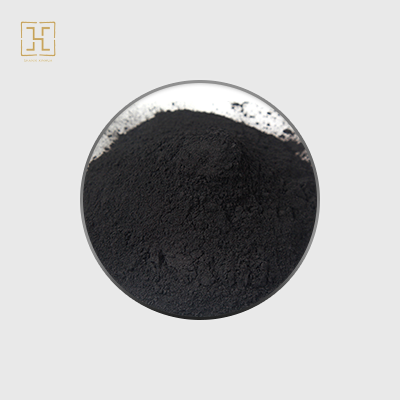
When syrup processors ask about decolorization performance, the answer often comes back to particle fineness and adsorption kinetics. 200-mesh wood powder charcoal improves syrup purity by deploying an ultra-fine activated carbon powder—produced from premium hardwood through precision carbonization, high-temperature steam activation, and controlled grinding—directly into the liquid phase. Its enormous specific surface area enables near-instantaneous contact with color bodies, colloidal impurities, and trace organics suspended in syrup. Because particles pass uniformly through a 200-mesh sieve, every gram of material contributes active adsorption sites, delivering measurable decolorization depth that coarser carbons structurally cannot match.
Understanding 200-Mesh Wood Powder Charcoal and Its Properties
What the "200-Mesh" Designation Actually Means
The word "mesh sizing" is not used in marketing; it is a physical limit. The holes in a 200-mesh sieve are about 0.074 mm wide. When at least 90% of a carbon powder goes through that sieve, the material that comes out has a much larger external surface area per unit volume than solid or 100-mesh options. This particle shape is what makes a difference in high-viscosity liquids like sugar liquor, where the diffusion lengths need to be kept as short as possible so that impurities can be caught quickly.
Hardwood Feedstock and Its Structural Advantage
The choice to use high-quality lumber as the raw material was made on purpose by the engineers. It starts with hardwood precursors that make a pore structure with lots of mesopores and macropores. These are the channels that hold heavy color molecules like caramels and melanoidins. Coal-based carbons tend to have micropores, which are good for adsorbing small molecules in the gas phase but not so good when the contaminants being removed are bulky organic pigments in syrup. When you combine the wood-derived structure with high-temperature steam activation, you get an iodine adsorption value of 950 mg/g and a methylene blue adsorption value of 200 mg/g. These are two industry-standard measurements that show how well the material can remove both small and medium molecular impurities.
The production steps are simple but technically demanding: precise carbonization locks in the carbon skeleton, high-temperature steam activation opens and expands the pore network, and ultra-fine grinding produces 200-mesh wood powder charcoal with a controlled particle size. The finished product has less than 4% ash, less than 8% moisture, a pH range of 5.0 to 7.0, and heavy metals (Pb, As, Hg) below the limits set by applicable regulations.
How 200-Mesh Wood Powder Charcoal Enhances Syrup Purity
Adsorption Kinetics at the Production Scale
On an industrial processing line, speed is important. In liquid-phase systems, regular granular activated carbon needs a long contact time—often 60 minutes or more—before it can effectively remove colors. It only takes 30 minutes for ultra-fine hardwood carbon powder to reach adsorption equilibrium, which is two to three times faster than many other options. In continuous syrup production, that difference immediately means more syrup being made, faster batch processes, and less energy being used for heating and mixing.
Surface mobility is what makes this speed possible. When the particle diameter falls below 0.074 mm, the main thing that slows down the performance of granular carbon—intraparticle diffusion resistance—breaks down. When pigments, colloids, off-flavors, and small amounts of organic impurities are added, they quickly attach to active adsorption sites, without having to go through the longer diffusion process that is needed in thicker media.
Measurable Improvements in Product Standards
Spectrophotometric caramel decolorization tests and ICUMSA color unit values are usually used to measure the quality of syrup decolorization. When refineries switch from regular powdered carbon to finer-mesh, higher-purity wood-based carbon, they always see less color left in the finished product, less iron (which stops iron-tannin color from turning dark), and better filtration press performance because there is less ash. Ashes levels at or below 4% keep leaf filters and plate-and-frame presses further down the line from prematurely blinding. This lowers the need for maintenance and unplanned downtime.
Dosage control is more accurate when 200-mesh wood powder charcoal spreads out evenly without clumping or settling. Process engineers can precisely add grams per liter and achieve the same level of decolorization from batch to batch. This level of operating uniformity is highly valued by both quality managers and procurement directors.
Evaluating Different Types of Charcoal for Syrup Purity Enhancement
200-Mesh vs. 100-Mesh and 300-Mesh Grades
To pick the right mesh size, you have to find a balance between how well it absorbs, how fast it filters, and how well it handles waste. When you use a 100-mesh powder, the bigger particles get filtered out easily, but you lose surface area and, as a result, decolorization depth. A 300-mesh powder has the most surface area, but it makes filtration harder because small carbon particles can get through the filter media and into the finished syrup, which is bad for food safety. The 200-mesh grade is purposely in the middle. It is fine enough for deep decolorization and fast kinetics, but not so fine that it can't be recovered through standard pressure filtration or sedimentation without a high risk of product contamination.
Wood Powder Charcoal vs. Coconut Shell Powder
Activated carbon made from coconut shells is known for having a lot of tiny holes and being very hard. This makes it the best choice for filtering water to get rid of small organic molecules and chlorine. Color bodies, polysaccharide pieces, and melanoidins are the toxins that matter in syrup purification. They are medium- to large-molecular-weight molecules. The mesopore-dominant structure of hardwood carbon makes it better at these specific targets because it has more capacity and faster reactions. It also has less inorganic ash because of the way wood works naturally, which protects the sweetness and safety of the final product even more.
Here are the key selection factors B2B buyers should evaluate before committing to a carbon grade:
- Pore size distribution: Mesopore volume above 0.3 cm³/g helps remove large molecules of color effectively in syrup settings.
- Methylene blue value: A level of at least 200 mg/g is a good indicator of the ability to catch medium-sized impurities.
- Iron content specification: Fe levels should be clearly certified to keep syrup from going brown through catalytic reactions.
- Filtration rate: This tells you if the carbon grade will work with the press equipment you already have. It is measured in seconds per 100 mL.
- PAH and heavy metal compliance: Mandatory for all applications that come into contact with food, as set out in GFSI-approved safety frameworks.
Sourcing and Procurement Strategies for 200-Mesh Wood Powder Charcoal
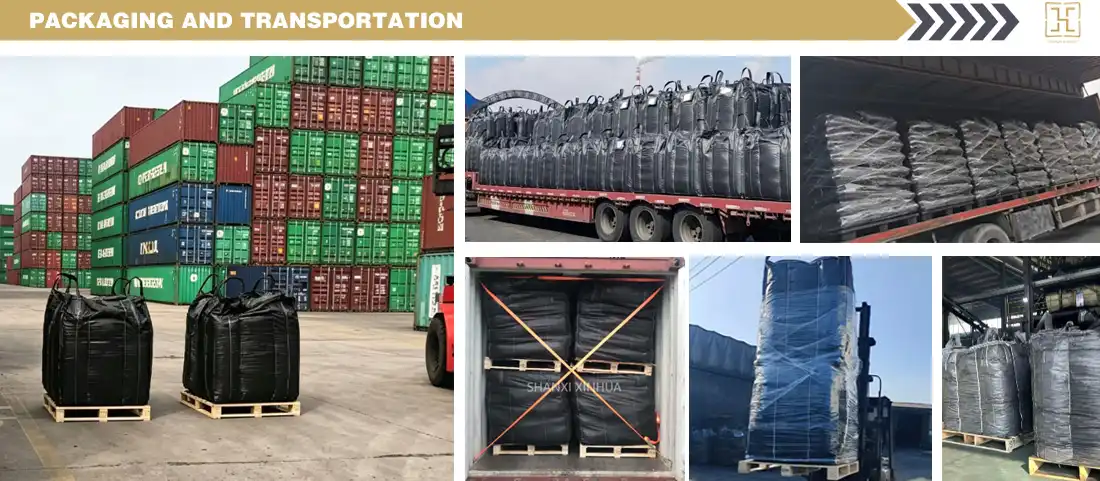
Orders usually get sent out between 7 and 15 days. When there is an emergency, procurement turns on a 3-day green channel with 24-hour answer proof. The company's shipping network supports global multimodal transport (sea, air, and train), with full customs clearance support and real-time package tracking. Deliveries are made across the country within 3–7 days. Customization includes engineering the pore structure, changing the particle size, changing the surface chemistry to meet the goal pH conditions, and making flexible package forms that can be used for handling large amounts in factories. When purchasing managers work on long-term framework contracts, they can be sure of stable inventory on all core product grades. This eliminates the risk of supply disruptions, which often throws off project deadlines that are set to meet compliance requirements.
Safety and Best Practices for Using 200-Mesh Wood Powder Charcoal in Syrup Purification
Handling, Storage, and Contamination Prevention
Handling ultra-fine carbon powders comes with some real but manageable risks. Controlling dust is the most important thing. Pneumatic conveying systems or wet-dosing slurry pre-mixing stop airborne particles from forming and lower the amount of exposure that people breathe in. The material should be kept in a cool, dry place in its original, sealed packaging. If the packaging is properly sealed, the material will stay stable for two to three years without losing much of its effectiveness. Exposure to water vapor or reactive agents in the air speeds up surface soaking and should be avoided.
Compliance and Sustainability
Applications that come into contact with food need to have PAH testing, heavy metal certification, and the ability to track back to where the raw materials came from. All three are standard parts of Shanxi Xinhua's package for quality control. When it comes to getting rid of it, powdered carbon is usually only used once in syrup uses because heat reactivation is too expensive for this particle size. In line with ISO 14001 environmental management requirements, the most responsible use of spent carbon carrying organic impurity loads is controlled burning or regulated industrial waste treatment.
Conclusion
Fine-mesh activated carbon derived from hardwood plays a unique and essential part in removing the color from syrup. Its particle shape, mesopore structure, fast adsorption rates, and low ash content all work together to provide better clarity than coarser or coal-based options at the same dose. The performance data for suppliers of 200-mesh wood powder charcoal is easy to understand: iodine value, methylene blue adsorption, ash content, iron specification, and filtration rate are the five technical factors that determine how well the charcoal works in real life. Verified certifications and the ability to reliably offer large quantities round out the seller qualification picture.
FAQ
Does pH affect adsorption performance in syrup systems?
Yes. At certain pH levels, some color bodies and organic impurities stick to the surface better. During production, you can change the surface chemistry to fit your process conditions. Before confirming an order, Shanxi Xinhua's technical team gives advice based on the application.
Can this powder be regenerated after use in syrup processing?
Technically, thermal reactivation is possible, but for 200-mesh powder grades, it's not cost-effective because a lot of material is lost during recovery. It is usually thought of as a one-time use item and thrown away through controlled industrial trash routes.
What distinguishes wood-based powder from coal-based powder for decolorization?
Wood-based carbon has a lot more mesopores and macropores, which makes it better at collecting the large-molecular-weight color chemicals that are in syrup. For gas-phase small-molecule tasks, powder made from coal works better.
How should I determine the correct dosage for my process?
Standard Method 2510 conditions are used in a jar test to simulate your specific liquid matrix and find the most cost-effective dosage rate (in parts per million) for the level of contamination you want to remove.
Partner with Shanxi Xinhua Carbon Technology for Industrial-Grade Decolorization Solutions
Certified 200-mesh wood powder charcoal is sold by Shanxi Xinhua Carbon Technology Industry Co., Ltd. to syrup producers, beverage makers, and food-grade liquid processors all over the world. As a reliable 200-mesh wood powder charcoal producer that makes 45,000 tons of charcoal every year, has ISO-certified quality systems, and offers a 3-day emergency delivery service, we can handle both large-scale framework contracts and tight project deadlines. You can email our scientific team at greta@carbonxinhua.com or go to xhcarbontech.com to ask for details, samples, or a personalized sourcing plan.
References
1. Ahmedna, M., Marshall, W. E., & Rao, R. M. (2000). Production of granular activated carbons from select agricultural by-products and evaluation of their physical, chemical and adsorption properties. Bioresource Technology.
2. Derbyshire, F., Jagtoyen, M., Andrews, R., Rao, A., Martin-Gullon, I., & Grulke, E. A. (2001). Carbon materials in environmental applications. Chemistry and Physics of Carbon.
3. Moreno-Castilla, C. (2004). Adsorption of organic molecules from aqueous solutions on carbon materials. Carbon.
4. Babel, S., & Kurniawan, T. A. (2003). Low-cost adsorbents for heavy metals uptake from contaminated water: A review. Journal of Hazardous Materials.
5. Crittenden, J. C., Trussell, R. R., Hand, D. W., Howe, K. J., & Tchobanoglous, G. (2012). MWH's Water Treatment: Principles and Design (3rd ed.). John Wiley & Sons.
6. Pellegrini, N., & Morelli, C. F. (2018). Activated carbon in food and beverage decolorization: Performance benchmarks and regulatory compliance. Food Chemistry.

Send Inquiry
You may like
_1781662034490.webp)