_1778553121707.webp)
High Purity 1.5 mm Coal Cylindrical Carbon Pellets for Filtration
Jun 17, 2026
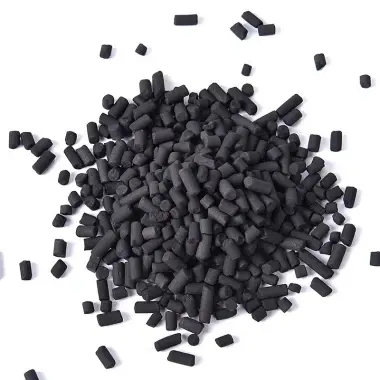
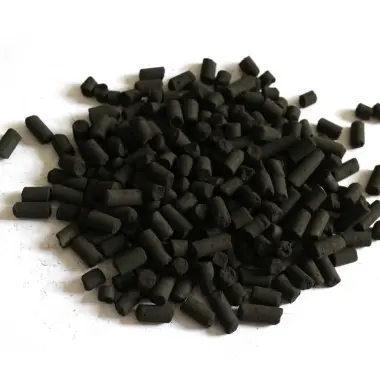
High-quality 1.5 mm coal cylindrical carbon pellets are a type of small-particle columnar activated carbon that is specifically made for fine filtration. Engineered pellets with regular particle sizes, smooth surfaces, and well-developed microporous design allow for fast mass transfer rates and high binding efficiency. They work especially well in small water purification systems, air filter systems, VOC preparation devices, and small-molecule adsorption in fine chemical processes that need to be very effective but don't have a lot of room.
Introduction
Getting activated carbon filter media is more complicated than just picking out a standard item. When you choose 1.5 mm coal cylinder carbon pellets for your filter systems, you're making choices that have a direct effect on how well the systems work, how much they cost to run, and how well they meet environmental standards. Environmental engineers, purchasing managers, and technical leaders at chemical plants, water treatment plants, and companies that make air purification systems know that exact size and high purity levels lead to measurable performance benefits.
Working with industrial clients has shown us a consistent pattern: systems built around carefully made carbon materials work better than those that use general options. This guide looks at the technical specs, making standards, and buying options for filter media that will help you choose the right one for your needs. If you're in charge of city water treatment infrastructure, VOCs removal systems, or adding filter parts to OEM equipment, you need to know about these specific carbon pellets so you can make smart buying choices that balance performance with total cost of ownership.
Understanding 1.5 mm Coal Cylindrical Carbon Pellets
Activated carbon pellets made from coal are 1.5 mm in diameter and are made by controlling the carbonization and activation methods that are used on high-quality coal material. The production accuracy keeps the particle diameters constant within a range of ±0.1 mm. This makes the flow characteristics and pressure drop profiles consistent in packed bed designs. This level of accuracy is important because the effectiveness of filtration depends on keeping the right amount of touch time between fluids that contain contaminants and surfaces that absorb them.
The pellets' chemical makeup is based on a basic carbon content that is usually higher than 85%. For high-purity uses, the ash content is kept below 8%, and low-ion versions are offered for semiconductor and ultra-pure water systems. Over 70% of the total pore volume is made up of microporous structure, with most pores having sizes between 0.8 and 2.0 nanometers. In water treatment uses, this pore distribution works especially well for removing small-molecule pollutants like volatile organic compounds, chlorinated solvents, and dissolved organic matter.
Iodine levels between 1000 and 1100 mg/g mean that the material has a lot of internal surface area, which is equal to 900 to 1100 square meters per gram. The ability of carbon tetrachloride to adsorb organic gases is usually between 50% and 80%, showing a strong attraction for them under normal testing settings. Ball-pan testing shows that the mechanical hardness is higher than 95%. This means that there will be little wear and dust production during shipping, handling, and use in backwashing conditions.
The thermal stability of 1.5 mm coal cylindrical carbon pellets lets them keep their shape at temperatures up to 400°C in neutral atmospheres. Their controlled oxidation resistance also makes them useful in applications that are open to air. When the apparent density is between 450 and 550 g/L, the packing properties are good because they match the ability to absorb water with the ability to conduct water. Because these pellets are very pure, have limited porosity, and are mechanically strong, they can be used in environments where pollution is a concern and where long service life requires high-quality materials.
Advantages of Using 1.5 mm Coal Cylindrical Carbon Pellets in Filtration
Activated carbon formulas with a 1.5 mm pellet diameter work better than those with a 3 mm or 4 mm diameter and powdered activated carbon. Smaller particles have more surface area compared to their volume, which speeds up the rate at which contaminants move from the bulk stream into the porous carbon matrix. This shape shortens the diffusion path length, which speeds up the process of reaching equilibrium adsorption capacity and makes dynamic performance better in continuous-flow situations.
When handling setups with limited room, fluid dynamics in packed beds tend to favor smaller particles. The higher packing density and less channeling that come with regular 1.5 mm pellets make small water purification capsules, point-of-use filter devices, and air purification bottles work better. The smaller particle size also makes the adsorption process more sensitive during the short touch times and changing flow rates that are common in home and small business equipment that is used intermittently.
The cost-effectiveness of 1.5 mm coal cylindrical carbon comes from making better use of resources. Because of improved mass transfer, a smaller carbon bed volume can remove the same amount of contaminants as a larger pellet-based system. This reduces both material consumption and equipment footprint. When dealing with high-concentration wastewater requiring more than 1000 mg/L of chemical oxygen demand, faster reaction kinetics lead to shorter holding times and smaller tank sizes. Its strong mechanical structure can withstand thermal or steam regeneration processes, which recover 70% to 85% of the original adsorption capacity. As a result, the economic benefits can be sustained over a longer operational lifespan.
Real-world performance data from public drinking water systems shows that 1.5 mm coal-based pellets remove chlorine and organic taste and odor chemicals more quickly than bigger options. This means that smaller contact chamber amounts can be used without affecting the quality of the treated water. Moving from 3 mm media to 1.5 mm media makes a noticeable difference in breakthrough time and bed usage for air cleaning uses that target low-concentration VOCs in pharmacy clean rooms and electronics manufacturing areas.
Manufacturing Process and Quality Assurance of 1.5 mm Coal Cylindrical Carbon
The first step in production is carefully choosing the raw materials. Anthracite or bituminous coal with low sulfur, low mineral content, and good volatile matter profiles should be found. The first steps are to break and size the material so that it can be mixed with binding agents that allow it to be extruded into cylinder shapes. For the extrusion process, precise die plates with limits of 1.5 mm in diameter are used. The moisture content and compression pressure are constantly checked to make sure that each production batch has the same density.
The 1.5 mm coal cylindrical carbon is carbonized in controlled-atmosphere kilns, where it is heated gradually from room temperature to 500°C–700°C over the course of 8 to 12 hours. This slow heating process removes volatile components and initiates the formation of a stable carbon matrix. The temperature profile follows established ramp patterns designed to prevent thermal shock and avoid structural damage to the cylindrical pellets. After activation, steam at temperatures between 800°C and 950°C develops a microporous network through controlled oxidation of carbon atoms. The final pore structure and adsorption capacity are determined by residence time, steam flow rate, and temperature profile. Real-time quality monitoring is used to adjust process parameters and ensure consistent product performance.
Post-activation processing includes cooling, washing to get rid of any remaining ash and impurities that can dissolve, drying to get the moisture level below 5%, and final sizing to get rid of any fines or large particles. As part of quality control procedures, each production lot is checked for iodine number, CTC binding, ash content, hardness, wetness, particle size distribution, and perceived density. Statistical process control charts show how parameters are changing over time and start studies when readings get close to the limits set by the specifications.
Certifications that show you follow the rules for ISO 9001 quality management, ISO 14001 environmental management, and ISO 45001 health and safety at work. Manufacturing plants keep records of their production, which lets them fully track everything from batches of raw materials to orders of finished goods. Independent proof of public specs by a third-party laboratory helps with quality checks by customers and regulatory reports. Shanxi Xinhua Carbon Technology Industry Co., Ltd. has several certified production bases that can make more than 45,000 metric tons of carbon each year. This makes sure that large industrial customers can always get what they need while keeping the quality of the products the same everywhere they're made.
Procurement Strategies for 1.5 mm Coal Cylindrical Carbon Pellets
To make good purchasing decisions for 1.5 mm coal cylindrical carbon, you must first evaluate suppliers by looking at their technical skills, quality processes, and how reliable their supply chains are. Manufacturers of reliable activated carbon keep a lot of scientific information on file, such as material safety data sheets, certificates of analysis for each batch, and performance proof reports from outside testing labs. Before agreeing to large orders, ask for samples that are similar to the current production runs and test them in-house to make sure they meet the required specifications.
A production capacity review helps you figure out if possible providers can meet your delivery dates and number needs. Manufacturers with more than one production facility offer backups to protect against problems with supplies. The way you handle your inventory is also important. Suppliers who keep a large stock of finished goods can meet emergency orders quickly when equipment breaks down, or a process upsets, and media needs to be replaced right away.
The state of certification should be carefully looked at. Suppliers with ISO 9001 certification have shown they are committed to quality control methods that lower variation from batch to batch. Environmental approvals show that responsible manufacturing practices are becoming more and more important for companies that report on their sustainability. When bidding on projects that will use drinkable water or methods that are safe for food, make sure that the bids meet the safety standards for drinking water and get any hygiene licenses that are needed in your area.
Price changes of 1.5 mm coal cylindrical carbon are caused by the cost of raw materials, the difficulty of making the product, and the state of the market. The unit price is important, but the total cost of ownership also takes into account performance factors like the ability to absorb, the potential to regenerate, and the service life in your particular working conditions. When they provide significantly better performance or longer refill times, higher iodine values, and lower ash content are worth the extra cost. Trial tests and smaller-volume uses can be accommodated by a minimum order number that is flexible. However, buying in bulk usually gets better prices for long-term supply deals.
Logistics issues include the right way to package the goods so they stay safe during travel, how long it will take to ship them from the factories to your facilities, and how to split the cost of freight. Domestic suppliers offer faster shipping times and easier customs clearance, while foreign suppliers may offer lower prices that make up for longer shipping times. Shanxi Xinhua Carbon Technology Industry Co., Ltd. has strong ties with transportation companies that allow normal delivery of stock items within 7 to 15 days. For pressing needs, there is also a green channel service that can be used within three days. Global multimodal transport skills help foreign customers by coordinating shipping by sea, air, and train, and by providing full customs paperwork and tracking access.
Making the Right Decision: Which Coal Cylindrical Carbon Size Fits Your Needs?
The best pellet size is chosen based on the details of the application. Because they take up less room and need to be able to respond quickly to adsorption, 1.5 mm pellets work best in small filter equipment like water purifiers, point-of-use systems, and portable air treatment devices. The smaller width makes it possible to get rid of contaminants effectively in bed levels as shallow as 50 to 150 mm, while still allowing for a reasonable drop in pressure and meeting treatment goals.
Compared with 1.5 mm coal cylindrical carbon, larger 3 mm and 4 mm pellets are better for applications that require low pressure drop, easy handling, and reduced dust generation. Large water treatment plants that process thousands of cubic meters of water per day often prefer these larger media sizes to reduce hydraulic resistance in deep-bed filters that can be several meters deep. As a trade-off, slightly slower reaction kinetics are accepted in exchange for easier operation and lower pumping energy consumption. Powdered activated carbon, on the other hand, offers the highest surface area and the fastest reaction rates, but it requires specialized dosing systems and separate handling equipment, making it more suitable for large municipal installations or specific chemical process applications.
VOCs treatment systems that work with low-concentration streams can benefit from the faster movement of small pellets, which allows for breakthrough times long enough for useful renewal cycles without needing too much carbon bed volume. When working with air streams that contain small amounts of organic contaminants, the pharmaceutical and electronics businesses find that 1.5 mm media works better than bigger sizes. The fast mass transfer properties are also used in chemical processing tasks that involve cleaning up small molecules in the production of fine chemicals.
Some of the best practices for integration are using the right bed support design to keep pellets from moving into equipment further downstream, leaving enough freeboard to allow for bed growth during backwashing, and making sure that the flow distribution systems make sure that there is even touch across the whole bed cross-section. Maintenance routines should keep an eye on changes in pressure that show fouling or channeling getting worse, backwash the system on a regular basis to get rid of collected particles, and replace the carbon based on tracking breakthroughs instead of picking random times. The performance benefits of exactly sized activated carbon media are at their best when the system is designed and run correctly.
Conclusion
To choose high-purity 1.5 mm coal cylindrical carbon pellets, you need to know how exact size, controlled porosity, and material purity affect the performance of a filter system. These special activated carbon materials are very helpful in uses that are limited in space and need fast adsorption and high pollution removal efficiency. A good buying process combines technical requirements with the total cost of ownership, the dependability of the seller, and the ability to handle transportation so that operations can continue without interruption. When you buy good carbon media, your system works better, you don't have to service it as often, and you know you're following environmental rules.
FAQ
What affects how long 1.5 mm coal cylinder carbon pellets can be used for filtering?
How long something works relies on how much contamination it has, how concentrated it is, and how it is used. When chlorine and organic waste are taken out of public water, the filters are usually replaced every 12 to 18 months. Every three to six months, industrial uses that deal with high-concentration garbage or volatile organic compounds may need to be replaced. Instead of just using calendars to decide when to replace something, monitoring breakthrough curves for target toxins gives you objective information.
Can these activated carbon pellets be made again and used again?
When heated to temperatures between 700°C and 850°C in a controlled atmosphere, thermal regrowth can bring back 70% to 85% of the original adsorption capacity. The ability to make money relies on the amount of carbon, the types of pollutants, and the availability of neighborhood renewal services. While steam renewal is a lower-temperature option that works well for volatile organic chemicals, it is limited by materials that stick to the surface and can't be removed.
How can I be sure that the carbon pellets I'm getting are real and pure?
For each output lot, you should ask for reports of analysis that show the iodine number, ash content, hardness, and moisture content. Use standard ASTM testing methods for spot checks or hire approved third-party labs. Suppliers with a good reputation, like Shanxi Xinhua, keep detailed records of their quality control processes and welcome customer inspections of their factories and production lines. This gives customers faith in the accuracy and stability of the materials they supply.
Partner with Shanxi Xinhua Carbon Technology Industry Co., Ltd. for Superior Filtration Solutions
Shanxi Xinhua Carbon Technology Industry Co., Ltd. brings over 60 years of activated carbon research and manufacturing expertise to your filtration challenges. As a leading 1.5 mm coal cylindrical carbon manufacturer, we deliver defense-grade quality through ISO-certified production facilities spanning multiple locations with 45,000-ton annual capacity. Our collaboration with Tsinghua University and the Chinese Academy of Sciences ensures continuous innovation in micropore optimization and high-purity carbon materials. Whether you need stock products shipped within seven days or customized formulations engineered for specific applications, our technical team provides comprehensive support from sample evaluation through full-scale implementation. Contact us at greta@carbonxinhua.com to discuss your filtration requirements and receive detailed technical specifications, competitive pricing for high-purity carbon pellets, and sample evaluation materials demonstrating our commitment to your operational success.
References
1. Bansal, R.C. and Goyal, M. (2005). Activated Carbon Adsorption. CRC Press, Taylor & Francis Group.
2. Marsh, H. and Rodríguez-Reinoso, F. (2006). Activated Carbon. Elsevier Science Ltd.
3. Crittenden, J.C., Trussell, R.R., Hand, D.W., Howe, K.J., and Tchobanoglous, G. (2012). MWH's Water Treatment: Principles and Design, 3rd Edition. John Wiley & Sons.
4. Mattson, J.S. and Mark, H.B. (1971). Activated Carbon: Surface Chemistry and Adsorption from Solution. Marcel Dekker Inc.
5. Yang, R.T. (2003). Adsorbents: Fundamentals and Applications. John Wiley & Sons Inc.
6. Derbyshire, F., Jagtoyen, M., Andrews, R., Rao, A., Martin-Gullon, I., and Grulke, E. (2001). Chemistry and Physics of Carbon, Volume 27. Marcel Dekker Inc.

Send Inquiry
You may like
_1781662034490.webp)