_1778553121707.webp)
High Performance 4-8 Coal Quality Crushed Carbon Material Supply
Jun 30, 2026
Crushed carbon products that work well are now necessary parts of modern industry purification systems. 4-8 Coal quality crushed carbon stands out as a unique material designed for strong pre-treatment uses in the chemical processing, gas cleaning, and water treatment industries. This guide talks about the important things that environmental engineering managers, supply chain directors, and technical specialists need to think about when they are buying adsorption materials that will work consistently even in tough conditions. Understanding the special features of coarse-grained coal-based crushed carbon, especially the 4-8 mesh size range, helps industry buyers make smart choices that balance performance needs with operating efficiency and legal requirements.
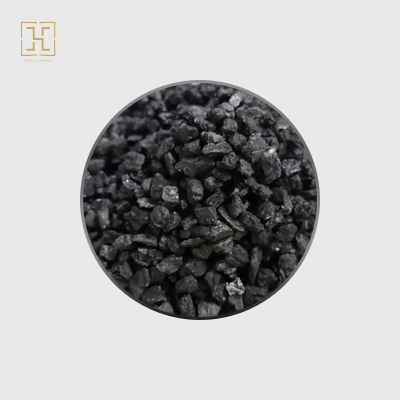
Understanding 4-8 Coal Quality Crushed Carbon Material
Physical Structure and Core Properties
The particles in coarse-grained coal-based crushed carbon are very big, measuring between 2.36 and 4.75 mm. This gives the material a rough surface with well-developed pores. This material is very strong mechanically, with hardness values that always go above 90%. This means that it won't break down during high-flow processes. Its strong physical properties make it ideal for uses where the quality of the material directly affects how long the system lasts. The pore structure pairs macropores, which move mass quickly, with mesopores, which provide enough surface area and usually give iodine values of 800 to 1100 mg/g.
Functional Capabilities in Industrial Systems
The main job of this type of carbon is to guard the steps that come after the purification ones. 4-8 Coal quality crushed carbon stops big impurities and dissolved solids before they reach smaller adsorption materials when used as an underlayment or pre-treatment layer. This safety feature lowers the number of clogs, increases the service life of the filter bed, and keeps the flow dynamics constant throughout the cleaning system. In addition to mechanical filtration, the material has real adsorption properties that can remove smells, large molecular organic compounds, and substances that change color from industrial streams.
Performance Metrics That Matter
When industrial buyers look at the quality of crushed carbon, they should pay attention to a few key specs. The iodine number shows the growth of micropores and the ability to adsorb substances. Hardness readings show how resistant the material is to wear down during backwashing cycles. Ash content affects the ability to absorb water, and it should usually stay below 15% for the best results. To stop microbes from growing during storage, the moisture level at arrival shouldn't be more than 5%. Tight control is needed over the particle size distribution—changes above the 4-8 mesh limit can cause flow routing issues that hurt the effectiveness of treatment.
Comparing Crushed Carbon Coal to Other Coal Types for Industrial Use
Particle Size Categories and Application Fit
The 4-8 Coal quality crushed carbon mesh group is in a unique place between the smaller grades and the bigger support media. The bigger particle size lowers the pressure drop a lot compared to 8-30 mesh materials that are usually used in mixed-bed setups. This is a very important benefit in high-flow systems where head loss directly affects running costs. The bigger grains can handle airflow rates of more than 1.5 m/s without breaking down or losing any material. This makes them perfect for fluidized bed solvent recovery systems and treating workshop exhaust. But when faster adsorption is needed or when working with low-viscosity liquids that contain small molecular contaminants, finer mesh sizes may be better, even though they have higher pressure drop fees.
Material Origin and Base Coal Selection
Activated carbons made from coal, including 4-8 Coal quality crushed carbon, come from bituminous coal, lignite, or anthracite, and each one has its own performance traits. Materials made from bituminous coal usually have better mesopore growth, which makes them better at decolorizing and adsorbing large molecules than materials made from anthracite. Shanxi Xinhua Carbon Technology Industry uses fine Jurassic lignite as its coal source because it is the best combination of mechanical longevity and adsorption efficiency. This geological age and rank give carbon naturally formed pores that can be activated to make them work better in industrial settings.
Economic Considerations Beyond Unit Price
It's important to compare prices at first, but buying workers also need to look at the total cost of ownership. Crushed carbon with a high hardness can survive many heat reactivation cycles, which greatly lowers the long-term costs of replacing materials. If you use the right carbon, you can get 96% of the liquid back. This saves you money on raw materials that often more than cover the cost of the carbon itself. Longer service life lowers the cost of removal and cuts down on the time needed to change media, which are often reasons to pay more for high-quality materials.
Criteria for Selecting High Quality 4-8 Crushed Carbon Coal Suppliers
Certification and Quality Management Systems
Reliable providers keep up-to-date quality approvals that show they are committed to consistent manufacturing standards. ISO 9001 certification proves that a quality management system is strict, and ISO 14001 certification proves that an environmental management system can do its job. The ISO 45001 certification shows that the company follows the right health and safety rules at work to keep workers safe and keep production going. These licenses don't promise the quality of a product by themselves, but the lack of them shows that there may be holes in the way quality is controlled. Shanxi Xinhua Carbon Technology Industry has all three certifications and specialty drinking water safety approvals. This shows that they have been developing defense-grade quality systems for decades.
Production Capacity and Supply Reliability
Buyers in the industrial sector need providers who can meet both planned and unexpected needs. Annual production capacity is a good starting point. For example, Shanxi Xinhua has a 45,000-ton capacity across various sites in Shanxi, Ningxia, Fujian, and Xinjiang, including 4-8 Coal quality crushed carbon, which ensures that supply stays steady even when there are problems in the region. The multi-base approach lowers geographic risk and lets you get the best delivery in each area. Inventory management practices are just as important. Suppliers who keep 100% of their core goods in stock can fill normal orders within 7–15 days, but those who use make-to-order models may need 30–45 days to deliver.
Technical Support and Customization Capabilities
Customized solutions that go beyond standard requirements are often needed for complex industrial uses, such as 4-8 Coal quality crushed carbon. Strong R&D departments in suppliers can change the shape of pores, the chemistry of the surface, the distribution of particles of different sizes, and create formulations that are specifically made for each purpose. Collaboration with research institutions shows technical complexity. For example, Shanxi Xinhua has relationships with Tsinghua University, Central North University, and the Chinese Academy of Sciences, which give them access to new material technologies and advanced methods for characterizing things. Practical technical support, such as engineering consultations 24 hours a day, seven days a week, on-site application help, and full testing services, sets sellers who can work with you apart from those who are just selling goods.
Optimizing the Procurement Process for Crushed Carbon Coal
Specification Alignment with System Requirements
For effective procurement to start, you need to make sure that the specifications you use fit your real operating conditions. 4-8 mesh sizes work best for high-flow gas treatment systems that need to keep the pressure drop to a minimum. Finer grades with faster dynamics may be better for lower-velocity uses. The amount of contamination determines the adsorption capacity that is needed. Streams with a lot of big molecular organics need enough mesopore volume, even if the micropore-related iodine numbers are high. The needed mechanical strength is affected by temperature and humidity. This is because thermal cycling and moisture contact weaken materials faster.
Supplier Evaluation and Due Diligence
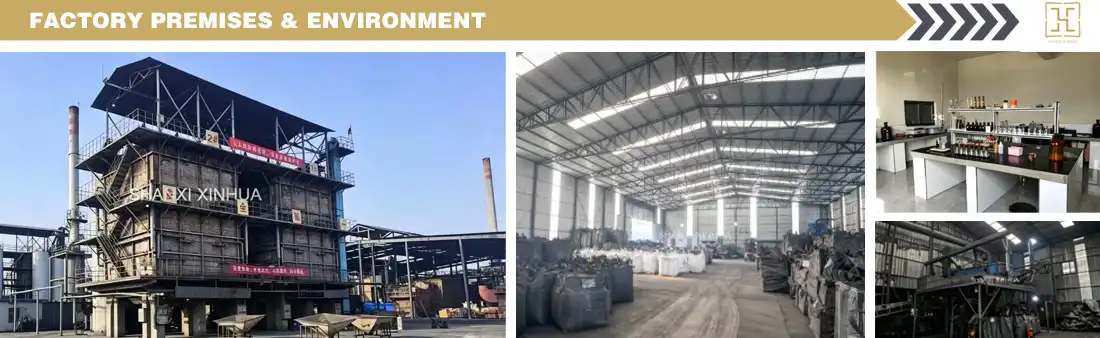
Thoroughly checking out suppliers greatly lowers the chance of buying. Ask for thorough scientific data sheets that show particle size distribution curves, pore size distribution analysis, and test results for iodine number, hardness, and ash content that are specific to each batch. Set up factory audits when you can to check the plant's production skills, quality control lab tools, and how the raw materials are sourced. The most accurate performance data comes from trying samples in real-world situations. Bench-scale breakthrough curves and pilot system trials show behavior that specification sheets can't fully describe.
Building Strategic Supplier Relationships
Environmental and Regulatory Considerations of Crushed Carbon Coal Usage
Emissions Control and Pollution Prevention
Activated carbon systems protect the environment on their own, but their use must be in line with larger rules and regulations. Handling used carbon requires the right classification—carbon that is full of harmful contaminants is considered controlled trash and needs to be thrown away or recycled in a certain way. Thermal reactivation is good for the environment because it extends the life of materials and lowers the need for new carbon. However, reactivation facilities need to control the fumes from burning and collect mercury and other volatiles that are released during heating. When carbon replacement work is done correctly, rogue emissions are stopped, which protects workers and the people around the site.
Compliance with US Environmental Standards
Industrial sellers in the US using 4-8 Coal quality crushed carbon have to follow EPA rules about garbage management, water release, and air pollution. The Clean Air Act requires technologies to control VOC emissions, and carbon adsorption systems have been shown to work as a way to meet these standards when they are built and kept correctly. When cleaning potable water, water treatment systems must follow the Safe Drinking Water Act, which says that carbon materials must have the right certifications and have few contaminants that can leak out. The Resource Conservation and Recovery Act (RCRA) controls the dumping of spent carbon. Knowing if your loaded carbon is hazardous garbage has a big impact on the costs and liabilities of removal.
Sustainable Sourcing and Circular Economy Approaches
Environmental responsibility is having a bigger impact on buying choices than just following the rules. Buyers who care about the environment should look at suppliers who show they can responsibly source coal, make products using less energy, and reduce waste. Activated carbon can be reactivated, which changes it from a consumable to a circular material. High-quality coal-based carbons can go through many renewal rounds without losing much of their effectiveness. New technologies like biological regeneration and electrical regeneration may be able to replace thermal renewal with ones that use less energy, but they are still mostly in the development stages for large-scale use.
Conclusion
FAQ
Why choose 4-8 mesh instead of finer carbon grades?
The 4-8 mesh standard works best when your system wants to keep pressure drop as low as possible and can handle the slightly slower adsorption rates that come with bigger particles. This thicker grade can handle fast flow rates without the fluidization problems that happen with smaller grades.
Can this material be reactivated after it has been saturated?
Of course. This carbon is very hard and is made from coal, which makes it great for multiple thermal reactivation processes. This makes the total cost of ownership much lower than with single-use options.
How do I prevent "black water" during initial system startup?
For proper setup, the system needs to be backwashed thoroughly and wet for 24 hours before it can be put into service. This gets rid of fines that are caused by shipping and air that is stuck in the pores.
Does the base coal type significantly affect performance?
Where the coal comes from is very important. Bituminous-based carbons usually have better mesopore structure for removing color and big molecules than anthracite-based materials, so choosing the source is an important part of the design process.
What kind of service life should I expect in typical applications?
How long the service lasts varies a lot on how much contamination there is and what the breakthrough conditions are. Most municipal water treatment systems last between 12 and 36 months before they need to be replaced or reactivated. However, industrial uses with higher loads may need service more often.
Partner with a Trusted 4-8 Coal Quality Crushed Carbon Supplier
Shanxi Xinhua Carbon Technology Industry Co., Ltd. has been making activated carbon for more than 60 years and can help you with your most difficult cleaning problems. As a well-known 4-8 Coal quality crushed carbon manufacturer, we keep a large amount of stock in all four of our production bases. This allows us to fulfill normal orders within 7-15 days and provide emergency service in just three days. With 800-1100 mg/g iodine values, ≥90% hardness, and 96% liquid recovery efficiency, our material has been tested and proven to work. It is backed by ISO 9001, ISO 14001, and ISO 45001 standards. We want procurement managers, environmental engineers, and technical directors to try out our collaborative approach, which combines the ability to make unique formulations, engineering help 24 hours a day, seven days a week, and full testing services. Email our team at greta@carbonxinhua.com to talk about your unique application needs, get technical data sheets, or set up sample testing in the way you actually use the product.
References
1. American Water Works Association. (2021). Activated Carbon: Principles and Applications in Water Treatment. AWWA Publishing.
2. Marsh, H., & Rodríguez-Reinoso, F. (2020). Activated Carbon: Properties, Production and Applications. Elsevier Science.
3. Bandosz, T.J. (2019). Activated Carbon Surfaces in Environmental Remediation: Interface Science and Technology Volume. Academic Press.
4. Crittenden, J.C., Trussell, R.R., Hand, D.W., Howe, K.J., & Tchobanoglous, G. (2022). MWH's Water Treatment: Principles and Design (4th ed.). John Wiley & Sons.
5. EPA Office of Air Quality Planning and Standards. (2021). Control of Volatile Organic Compound Emissions from Manufacture of High-Density Polyethylene, Polypropylene, and Polystyrene Resins. United States Environmental Protection Agency Technical Report.
6. Tien, C. (2018). Introduction to Adsorption: Basics, Analysis, and Applications. Chemical Engineering Monographs Series, Academic Press.

Send Inquiry
You may like
_1781662034490.webp)