_1778553121707.webp)
High Adsorption Coal Briquette Crushing Activated Carbon Supplier
Jul 30, 2026
The quality of your activated carbon becomes mission-critical when environmental compliance dates are coming up, and your VOC treatment system needs instant performance changes. Coal briquette crushing activated carbon stands out as a precision-engineered adsorbent that solves the problems of inconsistent pore structure and carbon running out too quickly. Unlike most materials that are directly crushed, this one goes through a complex briquetting process. In this process, pulverised bituminous coal is mixed with special binders, then squeezed under extreme pressure. The mixture is then carbonised and heated with steam before it is precisely crushed and screened. This careful method makes a uniform macropore and mesopore architecture that can absorb a lot of VOCs, heavy metals, and toxic gases, making it perfect for the toughest industrial uses. More and more, procurement managers in petrochemical refineries, municipal water treatment plants, and environmental engineering firms are realising that picking the right supplier for this advanced material is directly linked to the success of the project and the long-term costs of running it.
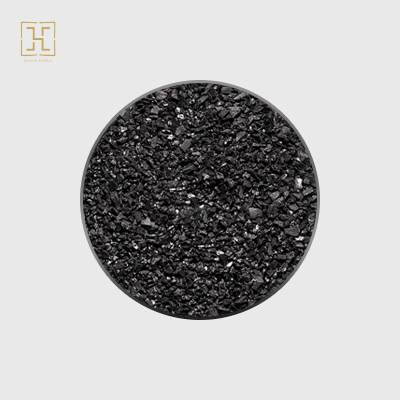
Understanding the Coal Briquette Crushing Process for High Adsorption Activated Carbon
The process of making coal briquettes using activated carbon starts with choosing high-quality bituminous coal and carefully checking its carbon content and ash levels. Raw coal is ground up into a very fine powder, usually less than 200 mesh, to make sure that it is all the same. This is done before it is mixed with specially made binders that keep the structure strong during the next steps of processing. After this, high-pressure briquetting is used to pack the mixture into thick, even forms that make it possible for controlled hole growth to happen.
Technical Components Driving Performance
After the briquettes are made, they are carbonised in oxygen-controlled ovens at temperatures above 800°C. This process gets rid of the toxic chemicals and creates the first carbon matrix. Then, steam activation happens at temperatures between 850°C and 950°C. This is when water vapour mixes with carbon atoms to make the large network of pores that are needed for good binding. The active briquettes are then crushed using high-precision machinery set up to make specific mesh sizes, like 4x8, 8x16, or 8x30, that balance surface area with hydraulic conductivity for a range of applications.
Critical Quality Factors
The uniformity of the particles is directly affected by how precisely they are crushed, which in turn affects how well carbon beds use their full adsorption potential. In fixed-bed systems, channelling happens when particle sizes aren't uniform. This shortens the contact time and lets contaminants get through without being cleaned. Material getting stuck in the crusher is usually because the moisture level isn't controlled well enough or the equipment isn't maintained well enough. This causes production delays and uneven output quality. Modern providers deal with these problems by using automatic systems to check for moisture and regular checking routines for crushers that keep flow rates and particle distribution specs constant.
When procurement teams understand these technical details, they can look at a supplier's ability to make more than just basic specifications. To find the best potential partners, you should ask specific questions about how often the crushing equipment is calibrated, how the particle size distribution is tested, and where quality control checks happen during the activation process. This will show you which suppliers meet the high standards needed for mission-critical environmental applications.
Benefits of Coal Briquette Crushing in Activated Carbon Manufacturing
When you compare activated carbon to regular direct-crushed coal carbon, the briquetting and breaking process completely changes how well it works, and for Coal briquette crushing activated carbon, this process creates a more uniform internal structure with optimized mesopore volume, consistently achieving surface areas above 900 m²/g while significantly reducing fines generation during handling and backwashing—a recurring issue with lower-grade alternatives that leads to premature system fouling. This process makes the inside of the material more uniform, and the activation factors can be used to exactly control the size distribution of the pores. This makes the surface area always greater than 900 m²/g, and the mesopore volumes are optimised for capturing big organic molecules. Briquetting evens out the density, which increases mechanical strength and greatly lowers the production of fines during handling and backwashing processes. This is a recurring issue with lower-grade options that causes systems to foul up too soon.
Economic and Operational Advantages
The process of briquetting makes better use of raw materials because it lets coal fines that would normally be wasted in direct-crushing activities be added. This efficiency leads to 15-20% higher yields compared to traditional ways, which has a direct effect on the cost of production per tonne. With uniform briquette density, it's easier to predict and control how much energy is used during activation. This is because precise temperature and steam flow management lowers the amount of fuel needed by 12–18%, according to operational data from multiple production facilities that were compared.
The higher mechanical hardness of briquette-crushed carbon—which usually shows a minimum hardness of 95% on standard tests—allows for many thermal reactivation cycles without causing major structural damage. Environmental engineering companies that manage large-scale VOC cleaning systems say that this reusability increases the service life of carbon by 200 to 300 percent, which lowers the total cost of ownership and makes it easier to get rid of spent carbon. Municipal water treatment companies find that reducing the amount of fines produced lowers the number of backwashes and turbidity spikes. This keeps the quality of the treated water stable while reducing the amount of work that needs to be done.
A big petrochemical refinery on the Gulf Coast switched from using regular coal carbon to briquette-crushed material. This made the breakthrough time variability in their hydrogen sulphide removal systems 40% less, which made maintenance scheduling more predictable and got rid of the need for emergency carbon replacements that happened three to four times a year.
Choosing the Right Coal Briquette Crusher for Activated Carbon Production
Choosing the right crusher is a very important choice that affects both short-term output and long-term operating freedom. Each of the three main types of crushing technology has its own benefits that depend on the size of the production, the particle size needs, and the need to fit into existing manufacturing processes.
Comparing Core Crushing Technologies
Jaw crushers are great for breaking down big activated carbon briquettes into smaller pieces. They can reliably produce coarse bits in the 4–8 mesh range, which is what most businesses need. Their strong design makes them good at handling rough materials, but they usually need extra breaking steps to get the final size. Hammer mills are very flexible and can handle a wider range of grain sizes. They do this by using high-speed spinning tools to break up briquettes. These units have screen layouts that can be changed easily to accommodate different mesh sizes. This makes them very useful for suppliers who make more than one grade of a product. Roller crushers use compression forces between cylinders that rotate anticlockwise to make particles of the same size with little fines. This is an important benefit when making high-quality materials for sensitive uses like pharmaceutical water purification or food-grade decolorisation.
The amount of production directly affects the right crusher capacity, and for Coal briquette crushing activated carbon, manual-feed hammer mills are suitable for small operations under 5 tonnes per day, while automated roller crusher systems with integrated particle size monitoring and feedback control are essential for large-scale facilities producing over 50 tonnes per day, where energy consumption can be optimized to as low as 0.8–1.2 kWh per tonne. Manual-feed hammer mills work well for small operations (less than 5 tonnes per day), but automated roller crusher systems with built-in particle size monitoring and feedback control loops are needed for large manufacturing facilities that make more than 50 tonnes per day. Energy use varies a lot. For example, new roller crushers use only 0.8 to 1.2 kWh per tonne of crushed carbon, while hammer mills use 1.5 to 2.0 kWh per tonne of crushed carbon.
When used continuously, jaw crushers need to have their jaw plates replaced every 6 to 12 months. Hammer mills need to have their hammer tips inspected every two to three months and replaced every 4 to 6 months. Roller crushers, on the other hand, usually need bearing service every 12 to 18 months and roll surface refurbishment every 24 to 36 months to keep working well. When comparing the initial investment in these technologies, procurement managers should add up all the costs of running the business, such as replacement parts, maintenance labour, and expected downtime.
How to Improve Activated Carbon Quality with Optimized Briquette Crushing?
Optimising particle size is the most manageable factor that affects how well activated carbon works in certain situations. The 8×16 mesh specification (1.18–2.36mm) works best for liquid-phase applications that need balanced kinetic and pressure drop performance. On the other hand, the 4×8 mesh specification (2.36- 4.75 mm) works best for high-flow gas-phase systems where minimising air resistance is very important. Finer 8x30 mesh material (0.59–2.36 mm) works better in treating drinking water in cities, where longer contact times and maximum surface use justify the higher pressure drop.
Integration with Activation Parameters
To get the most pores to form within the goal particle sizes, the crushing conditions should be matched with the activation conditions. Because they don't have to move as far, smaller particles activate more quickly and evenly. This is possible because their lower activation temperatures or shorter residence times increase yield. On the other hand, coarse particles need more active activation parameters to create enough internal porosity. However, this method may over-activate the surfaces on the outside, which can weaken their dynamic strength.
Some common problems with crushing are too much breaking, which makes too many fines that get through the screening equipment and contaminate the finished product, and uneven particle distribution, which can happen when crusher parts are worn out or the feed rate is not controlled properly. Using automated feed systems with weight-based flow regulation stops changes in feed rate, and replacing and inspecting screens on a regular basis keeps separation working well. Recycling oversized particles back through crushing circuits makes sure that all the material is used up and stops specification drift.
To make seamless integration into whole production lines, you need to pay close attention to how the materials are moved from one processing stage to the next, and for Coal briquette crushing activated carbon, this means selecting between pneumatic conveying systems that minimize particle damage but require dust collection, and belt conveyors that are less expensive but may generate more fines due to inter-particle friction. Pneumatic conveying systems keep particles from getting damaged during movement, but they need dust collection equipment to keep the air clean. Belt conveyor systems are cheaper to install, but they may generate more fines because particles rub against each other. By talking to providers who have experience with turnkey activated carbon manufacturing systems, buying teams can avoid problems with fit and improve the flow of materials throughout their facilities.
Procuring Coal Briquette Crushing Equipment and Activated Carbon Production Solutions
The first step in evaluating a supplier is to check that they have the right manufacturing certifications to show that they are committed to quality systems and being good to the environment. ISO 9001 certification means that quality management processes have been written down, and ISO 14001 certification means that environmental impact controls have been structured. Both of these are necessary for suppliers who work with regulated industries that must be able to show that their products are consistent and can be tracked. Companies with ISO 45001 certification have well-developed safety plans for workers that lower working risks and help ensure long-term supply reliability.
Building Sustainable Supplier Relationships
The prices of activated carbon vary a lot from one supplier to the next. Spot market purchases give buyers a lot of freedom, but they also put them at risk of price changes and uncertain supplies during times of high demand. Long-term framework deals lock in stable prices for 12 to 36 months and promise first access to production capacity, which is very helpful for environmental compliance projects that need to meet strict targets. If you commit to buying more than 100 tonnes of goods each year, you can usually get price breaks running from 8 to 15 percent. You can save even more by coordinating supply times that make the supplier's operations more efficient.
The ability to customise sets product sellers apart from real manufacturing partners. For OEM equipment makers and environmental engineering firms that need different levels of performance, being able to change the crushing requirements, the activation parameters to target specific contaminant profiles, and the loaded catalyst variants for specific applications is very useful. We at Shanxi Xinhua Carbon Technology Industry Co., Ltd. work closely with Tsinghua University and the Chinese Academy of Sciences. This lets us make custom formulations that solve specific adsorption problems, such as removing trace organics from ultra-pure water production or capturing mercury in high-temperature flue gas.
Support after the sale determines whether investments in equipment pay off as planned or become a burden on operations. Full installation services make sure that the crusher is properly set up and commissioned, and training programs for operators teach them important upkeep skills that keep machines from breaking down too soon. Our expert team is available 24 hours a day to help with problems, and our multi-regional shipping network speeds up the arrival of extra parts. Because we care about our customers' success, we have long-term partnerships with large petrochemical companies and municipal utilities. These companies depend on our steady supply of activated carbon to meet ever-tougher emission standards.
Conclusion
To find a dependable coal briquette crushing activated carbon provider, you need to carefully look at their production methods, technical skills, and how stable their supply chain is. When compared to other methods, the briquetting method offers clear benefits in terms of adsorption performance, mechanical longevity, and overall cost-effectiveness. To be successful at procurement, you need to know how the accuracy of the breaking affects the quality of the final carbon, pick the right tools for your needs, and build relationships with sellers who offer full expert support. If environmental engineering contractors, municipal water operators, and industrial facility managers put these factors at the top of their list, their companies will be better able to stay in compliance and save money on materials over time by making them easier to reuse and reducing the number of times they need to be replaced.
FAQ
How does coal briquette size affect adsorption efficiency in industrial systems?
The size of the particles directly affects the balance between the surface area that can be reached and the resistance to water flow. Larger particles, such as 4x8 mesh, reduce pressure drop in fast-moving gas streams, but they may have slower dynamic performance for contaminant loads that change quickly. Smaller 8×30 mesh carbon makes the most of its surface area in deep-bed liquid systems where longer contact time makes up for higher pressure needs. Matching the particle specifications to the flow features of the application improves both the efficiency of adsorption and the amount of energy used.
What distinguishes briquette-crushed carbon from directly crushed raw coal carbon?
Controlled binder addition and even compression in briquette crushing create uniform pore architecture. Direct crushing of raw coal, on the other hand, results in uneven density and random pore distribution. The briquetting process also gets rid of the weak crack planes that are found in raw coal. This makes pieces that are 30–40% harder and produce fewer fines when they are handled and used. In demanding situations, this uniformity in the structure means that breakthrough curves are more predictable and service intervals are longer.
Which crusher type suits large-scale activated carbon manufacturing operations?
Roller crushers are usually the best choice for sites that make more than 50 tonnes of material every day because they use less energy, make fewer fines, and make sure that the particles are all the same size. Their compression-based breaking method makes regular bits without the heat production that comes with high-impact hammer mills, so their ability to absorb substances is not lost. Automated systems with built-in screening and recycling loops make sure that material that meets specifications is always being made with little help from operators. This cuts down on labour costs while still meeting the high quality standards needed for premium activated carbon markets.
Partner with Shanxi Xinhua Carbon Technology Industry Co., Ltd. for Superior Coal Briquette Crushing Activated Carbon Supply
With six decades of experience making activated carbon and defense-grade quality control systems, you can trust us to be your reliable source for coal briquette crushing activated carbon for important environmental uses. With production facilities strategically placed in Shanxi, Ningxia, Fujian, and Xinjiang, we keep a full stock of all standard mesh sizes and can deliver within 7–15 days for regular orders. For urgent compliance projects, we offer a priority green channel with a 3-day turnaround time. Working with top research centers lets us make mixtures that are completely unique and solve your specific adsorption problems, like getting rid of trace mercury from waste gas or taste compounds from public drinking water. Contact our technical team at greta@carbonxinhua.com to discuss your requirements and receive detailed specifications, performance data, and competitive pricing for bulk activated carbon procurement. Visit xhcarbontech.com to explore our complete product range and discover how our ISO-certified manufacturing excellence delivers the consistent quality your operations demand.
References
1. Bansal, R.C. and Goyal, M. (2005). Activated Carbon Adsorption. Boca Raton: CRC Press, Taylor & Francis Group.
2. Marsh, H. and Rodríguez-Reinoso, F. (2006). Activated Carbon. Amsterdam: Elsevier Science Publishers.
3. Activated Carbon: Solutions for Improving Water Quality (2012). Denver: American Water Works Association.
4. Derbyshire, F., Jagtoyen, M., Andrews, R., Rao, A., Martín-Gullón, I., and Grulke, E. (2001). Carbon materials in environmental applications. Chemistry and Physics of Carbon, Volume 27, Marcel Dekker.
5. Çeçen, F. and Aktaş, Ö. (2011). Activated Carbon for Water and Wastewater Treatment: Integration of Adsorption and Biological Treatment. Weinheim: Wiley-VCH.
6. Tascón, J.M.D. (2012). Novel Carbon Adsorbents. Oxford: Elsevier Science & Technology.

Send Inquiry
You may like
_1781662034490.webp)