_1778553121707.webp)
Food Decolorization Using Wood-Based Activated Carbon Enhances Purity and Appearance
Sep 17, 2026
Food decolorization using wood-based activated carbon has become a cornerstone process in modern food manufacturing. Derived from high-quality hardwood through precision-controlled carbonization and high-temperature steam activation, this fine black powder delivers exceptional adsorption of pigments, colloids, and odor molecules without compromising flavor or nutritional value. Its developed microporous architecture, ultra-low ash content, and freedom from heavy metal residues make it the material of choice for processors who need reliable, repeatable purity across sugar refining, beverage clarification, condiment production, and nutraceutical extraction.
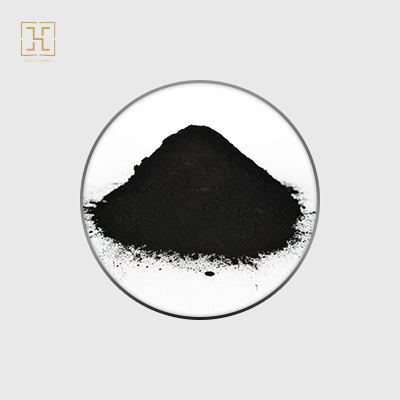
Understanding Food Decolorization and the Role of Wood-Based Activated Carbon
One of the first things people notice is the color. If the syrup is cloudy, the juice is dark, or the seasoning is an odd color, you can tell the quality is low before you even taste it. Food-grade purification technology has to get rid of those unwanted pigments—caramel compounds, polyphenols, and colloidal matter—without taking away the flavor or active nutrients. Food decolorization using wood-based activated carbon ensures that these impurities are removed efficiently while maintaining the product's sensory profile.
Why Wood-Based Carbon Outperforms Alternatives
Activated carbon made from wood naturally has a lot of mesopores (2–50 nm), which is a structural feature that carbon made from coal can't copy. Coal-based carbon has a lot of micropores, which makes it hard for it to hold onto big organic color molecules. Coconut shell carbon works great for gas-phase uses, but its smaller pores make it less effective for liquid-phase decolorization. This type of wood-based carbon meets both needs: it has a specific surface area of 1,000 to 1,600 m²/g and a lot of mesopores, which means it absorbs things faster and needs less of it.
Food Safety and Certification Baseline
Regulatory alignment can't be negotiated. In China, GB 2760, the Food Chemicals Codex (FCC), and EU law E153 all say that food-grade wood-based activated carbon has to follow certain rules. Heavy metals like arsenic, mercury, and lead must be below levels that can be detected. The pH range of 5.0 to 7.0 makes sure that it works with both acidic and neutral food matrixes without causing any problems.
Technical Insights: Preparation and Effectiveness of Wood-Based Activated Carbon
Whatever activated carbon material you use works because of how it was made. There are two main ways that the pores are activated: steam activation, which is physical, and phosphoric acid activation, which is chemical. Food decolorization using wood-based activated carbon utilizes these specialized architectures to target diverse impurity profiles.
Steam Activation vs. Chemical Activation
When steam is activated at temperatures between 800°C and 950°C, it burns off flammable matter and creates a network of micropores and mesopores. Activation with phosphoric acid at lower temperatures (400°C–500°C) creates a wider range of pore sizes and higher specific surface area values. This makes it ideal for getting rid of large molecule impurities that change color in juices and syrups. When used correctly, both routes make materials that can remove more than 95% of the caramel color in a single pass, which is a standard that cuts cycle time and carbon consumption costs directly.
Performance Data from Sugar and Syrup Processing
ICUMSA color ratings are the main way that sugar factories measure the quality of sugar made from cane or beets. It is common for a well-specified wood-based powder to reduce color to less than 50 ICUMSA in just one treatment pass. This is in contrast to 150–200 ICUMSA when using lower-quality or incorrectly specified carbon grades. Adsorption readings for methylene blue at or above 180 mg/g show that the mesopore volume is large enough for this use. Generic, low-purity carbon grades often cause yield losses of more than 10%, but sugar retention above 98% stops these losses.
Comparing Wood-Based Activated Carbon with Other Decolorization Methods
Chemical options like sulfur dioxide cleaning, hydrogen peroxide treatment, and ion-exchange resins are often looked at by procurement teams along with activated carbon. There are pros and cons to each method that affect the safety of the product, the cost of operation, and compliance further down the line. Chemical bleaching agents can leave behind reactive species that change the taste profiles and need extra steps to neutralize them. Ion-exchange resins are very selective, but they cost a lot more to buy and to regenerate. Food decolorization using wood-based activated carbon avoids these complications entirely.
Here are the core performance differentials that inform sourcing decisions:
- Adsorption selectivity: Wood-based carbon binds to color molecules and odor molecules but not to minerals, amino acids, or active pharmaceutical ingredients at normal dose rates, so the purity of the product is maintained.
- Operational cost: Food-grade wood-based carbon from China costs about 12,000 to 15,000 RMB per ton, while foreign carbon costs more than 25,000 RMB per ton and works just as well or better for about half the price.
- Regulatory cleanliness: There are no chemical residues or secondary effluents that need to be disposed of by an expert. The spent carbon is completely carbonaceous and can be handled according to normal waste procedures.
Procurement Guide: How to Source Wood-Based Activated Carbon for Food Industry
Finding a supplier of food-grade wood-based activated carbon is more complicated than just comparing prices. A single batch that doesn't meet the standards can stop production, cause regulatory non-conformance, and hurt the brand equity of the finished product. The following criteria are the foundation of a good process for evaluating suppliers of Food decolorization using wood-based activated carbon solutions.
Key Supplier Qualification Criteria
Coverage for certification is the starting point. At the very least, suppliers must have ISO 9001 certification for quality management, ISO 14001 certification for environmental management, and ISO 45001 certification for health and safety at work. Certifications like HALAL and KOSHER help reach more customers. For food safety checks to work, each package must be linked to production records, raw material sources, and analytical reports at the batch level. Technical paperwork should have Freundlich isotherm data for your individual liquid matrix, reports on particle size distribution, ICP-MS readings for heavy metals, and confirmation of the moisture content.
Supply Reliability and Delivery Terms
Large-scale food makers need a steady source. Check to see if the supplier keeps a separate inventory of finished goods, has more than one production site, and can respond within 24 to 48 hours to urgent requests for restocking. Standard delivery windows of 7–15 days for confirmed orders and faster channels for urgent needs are good performance benchmarks that should be built into supply contracts.
Future Outlook and Industry Trends in Food Decolorization Technology
The need for clean-label, barely processed food from consumers is making regulators look more closely at every ingredient. Food decolorization using wood-based activated carbon made from renewable wood biomass fits in easily with the ideas of the circular economy, especially when it comes from approved sustainable forestry operations or waste from sawmills.
Targeted surface functionalization, hybrid steam-chemical activation protocols, and precision grinding to application-specific mesh sizes are some of the new techniques used to improve the material's uses. These include refining edible oils, clarifying beer, and purifying pharmaceutical-grade extracts. Regulatory frameworks in the EU and the US are also lowering the amount of colorants that can be used in processed drinks. This will increase the need for high-performance decolorization materials at least until 2030. Setting up long-term frameworks with technically skilled and certified makers now will protect prices and give chosen customers access to supplies as market demand rises.
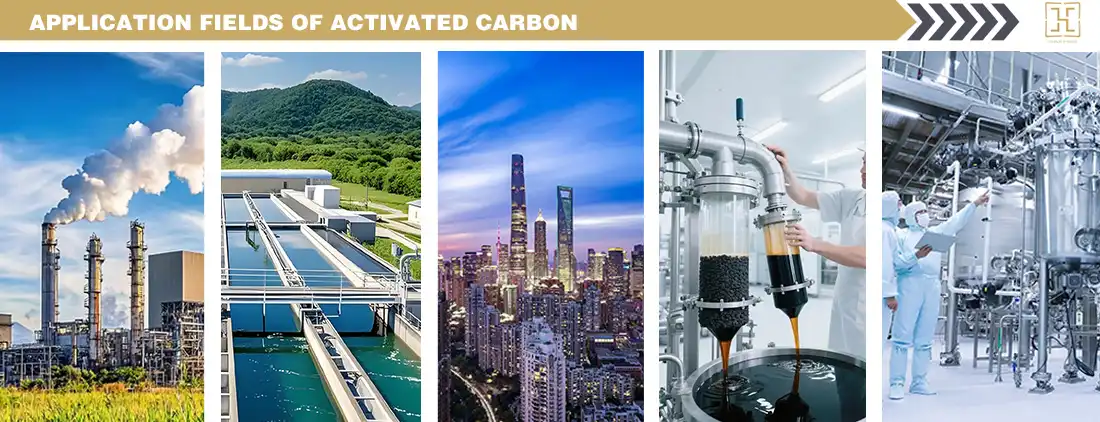
Conclusion
For Food decolorization using wood-based activated carbon, the material makes changes that can be measured and checked in terms of product purity, visual clarity, and regulatory compliance. Its mesopore-rich structure, ultra-low ash content, and lack of heavy metal contamination make it the technically best choice for reducing sugar, clarifying beverages, making condiments, and extracting nutrients. The most important thing to do to get uniform product quality is to make sure that the right carbon grade is used in your processing settings. This can be done through isotherm testing and a study of the certification.
FAQ
Is wood-based activated carbon safe for direct food contact applications?
Yes. Wood-based activated carbon that is food-grade and meets the standards of FCC, E153, and GB 2760 can be used directly with food. Heavy metals like arsenic, mercury, and lead are kept below detection limits. Chemically activated phosphate that is left over is not harmful and is kept within allowed limits.
Why is wood-based carbon preferred over coal-based carbon for liquid decolorization?
Carbon made from wood has more mesopores, which is important for catching big organic color molecules like caramel compounds. The micropore-dominant structure of coal-based carbon doesn't work as well for these bigger molecules in liquid-phase uses.
What certifications should I verify before purchasing?
Check that the product meets the requirements of ISO 9001, ISO 14001, ISO 45001, FCC, GB 2760, and, if necessary, HALAL and KOSHER. It's just as important to have batch-level analytical reports for heavy metals and adsorption capacity.
Can this carbon be regenerated after use in food processing?
Technically, it is possible to regenerate it, but most food applications treat it as a one-time use material to keep purity standards high and avoid cross-contamination.
How should food-grade activated carbon be stored?
Keep in a cool, dry place away from flammable chemicals in a container that can't be opened. Its big surface area makes it easy for smells to stick to it, which would make it less useful for food uses.
Partner with Shanxi Xinhua Carbon Technology Industry Co., Ltd. for Certified Food-Grade Purification Solutions
Shanxi Xinhua Carbon Technology Industry Co., Ltd. offers a trusted wood-based activated carbon manufacturer and supplier relationship backed by 60+ years of R&D expertise, four production bases, and ISO-certified quality systems. Our food decolorization using wood-based activated carbon delivers iodine adsorption ≥900 mg/g, methylene blue adsorption ≥180 mg/g, and ash content ≤5.0%—fully compliant with international food safety standards. Request a bulk quotation, technical datasheet, or sample today. Contact us at greta@carbonxinhua.com or visit xhcarbontech.com.
References
1. Hassler, J. W. Activated Carbon. Chemical Publishing Company, 1963.
2. Bansal, R. C., & Goyal, M. Activated Carbon Adsorption. CRC Press, 2005.
3. Stavropoulos, G. G., & Zabaniotou, A. A. "Production and characterization of activated carbons from agricultural by-products." Microporous and Mesoporous Materials, 2005.
4. Food Chemicals Codex (FCC). Activated Carbon Monograph. United States Pharmacopeia, 10th Edition, 2016.
5. Roskill Information Services. Activated Carbon: Global Industry Markets and Outlook. Roskill, 2020.
6. Dias, J. M., et al. "Waste materials for activated carbon preparation and its use in aqueous-phase treatment." Journal of Environmental Management, 2007.

Send Inquiry
You may like
_1781662034490.webp)