_1778553121707.webp)
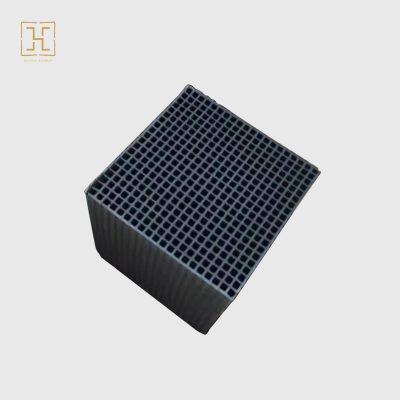
Factory Direct 100x100x50mm Perforated Coal Honeycomb Charcoal
Jul 23, 2026
The right adsorption material is very important when environmental compliance dates are coming up, and your emission control system needs instant performance improvements. Our 100*100*50mm perforated coal honeycomb charcoal has carefully designed pores, a high absorption capacity, and factory-direct dependability that environmental engineers and procurement managers trust. This specific activated carbon format combines optimised size standards with an open honeycomb design to make a high-performance solution for treating VOCs in industry, cleaning flue gases, and managing air quality in systems that are closely watched by regulators.
Understanding Coal-Based Honeycomb Activated Carbon Technology
What Makes Honeycomb Structure Superior for Industrial Adsorption
The honeycomb shape completely changes how activated carbon works in applications that treat large amounts of gas. Unlike granular or pelletised forms, the honeycomb design makes parallel channels that let streams of dirty air flow through with little resistance while making the most contact with surfaces that can absorb them. This is possible with our 100x100x50mm perforated coal honeycomb charcoal because it is made using carefully controlled methods that make sure every unit has the same wall thickness and channel shape.
The performance base can be seen in the technical specs: iodine values between 450 and 850 mg/g show strong microporosity, and BET specific surface areas between 500 and 900 m²/g give a lot of places for ads to stick. The CTC adsorption rate of 35–65% shows great gas-phase capture ability. This makes the material especially good at capturing volatile organic compounds that are common in coating operations, printing facilities, and chemical processing areas.
Dimensional Precision and Operational Benefits
The 100x100x50mm size shows that the engineers were very careful when making it for real-life industrial installations. This small size fits standard treatment towers without having to pay a lot of money for expensive upgrades. Also, the lower height compared to 100x100x100mm blocks makes them better for situations where there isn't much vertical clearance. As long as the dimensional accuracy stays at ±1mm, the building patterns and pressure drop patterns will be the same across the whole adsorption bed.
When the compressive strength is higher than 0.8 MPa, it is possible to stack in tall treatment columns without deforming the structure. Advanced formulations have water-resistant properties that keep their integrity even in environments with 90% or more humidity, which is a common problem in coastal facilities and humid climates, where regular activated carbon can become soft or have pores get clogged. Keeping the ash content below 20% stops secondary pollution and increases the life of the equipment by lowering the amount of particulate matter that is produced during service.
Environmental Performance and Regulatory Alignment
In order to be more environmentally friendly, the way that 100x100x50mm perforated coal honeycomb charcoal is made has changed a lot. Modern factories use closed-loop activation systems that collect and reuse activation gases. This makes a big difference in lowering pollution in the air compared to older methods. When you get your coal feedstock from approved sources and process it through controlled carbonisation, you get activated carbon that is better for the environment than some other materials that need a lot of energy to prepare.
When procurement professionals look at carbon neutrality goals, they like that honeycomb activated carbon allows for cycles of regeneration and reuse. When done right, thermal reactivation can bring back 85–95% of the original adsorption capacity. This extends the useful life of the material and lowers the amount that needs to be thrown away. This fits with the idea of a circular economy, which is becoming more and more a part of environmental policies and rules in businesses all over North America.
Advantages of Using Perforated Honeycomb Charcoal in Industrial Applications
Operational Efficiency Gains That Impact Your Bottom Line
It is measurable that switching to 100*100*50mm perforated coal honeycomb charcoal improves system efficiency, which directly leads to lower operating costs. The open structure achieves an adsorption efficiency of over 90% for target VOC chemicals while keeping the pressure drop below 450Pa, which is a key requirement for buildings that have to meet energy efficiency standards. When the pressure drop is lower, the fan uses less power, which can save 40 to 60 percent of the total cost of running a continuous air treatment system.
The cycles of installation and maintenance work a lot better. With the standard block format, the whole adsorption bed can be replaced in just two hours, while with loose granular media, it usually takes six to eight hours. This quick changeout feature cuts down on production downtime during planned maintenance, which is very important for manufacturing businesses because every hour of downtime costs a lot of money. It's easier to plan when to replace things when the flow is evenly distributed through honeycomb channels, which leads to consistent degradation patterns across the bed.
Real-world implementations demonstrate these advantages. A finishing plant in the Midwest switched from solid carbon to honeycomb blocks and saw a 35% drop in the amount of carbon they used each year. This was because the honeycomb blocks were better at absorbing carbon and needed to be serviced less often. By switching to higher-performance honeycomb media, a chemical plant in Texas met new emission limits without having to upgrade its towers. This saved the company more than $200,000 in capital costs.
Enhanced System Compatibility and Scalability
Because honeycomb blocks are modular, they make system design easier for engineering teams that are looking to add new systems or increase capacity. Standard sizes make it easy to figure out how much is needed based on the amount of movement and the amount of contaminants present. Stacking stability makes good use of vertical space, which is especially helpful in places where treatment equipment can't take up a lot of room. Compatibility with thin tower designs solves a problem that has been around for a long time in repair projects, where equipment choices are limited by the structure.
Material Durability Under Demanding Conditions
Activated carbon is exposed to conditions in industrial settings that quickly break down inferior products. Honeycomb blocks made for high-temperature uses keep their shape and binding ability at temperatures as high as 120°C, which means they can handle process streams from dryers, ovens, and reactor vents. Resistance to mechanical shock during handling and installation cuts down on breaking losses that waste materials and make it harder to get rid of them.
In petrochemical and speciality chemical uses where acidic or alkaline materials may be present along with target adsorbates, chemical resistance is very important. Protective treatments are added to high-end formulations to stop catalytic degradation and keep the pores open for target molecules. These properties of the material make its service life in corrosive environments last from months to years, which changes the economics of the whole lifecycle.
Selecting the Right Honeycomb Activated Carbon: Procurement Considerations
Matching Specifications to Application Requirements
To do effective procurement, you must first have a clear idea of your unique operating parameters. The best 100*100*50mm perforated coal honeycomb charcoal to use depends on the temperature range, the amount and type of contaminants, the flow rate of gases, and the humidity level. The iodine value shows how porous something is overall, but it doesn't directly tell you how well it will work with certain molecules. For example, the CTC adsorption capacity gives a better picture of how well it will work with chlorinated solvents and similar compounds, while benzene adsorption tests show how well they work with aromatic hydrocarbons.
When supply chain leaders are trying to balance success with budget limits, they should look at the total cost of ownership instead of just the unit price. Higher-specification carbon that costs more usually has lower running costs because it lasts longer between service visits and removes more contaminants, which keeps compliance violations from happening. The full economic picture can be seen by adding up the yearly media use, the cost of removal, the labour needed for changeouts, and the possible fines for emission violations.
Customization Capabilities and Technical Support
Standard goods work well in a lot of situations, but customised formulas give the best results for specific needs. Leading makers offer adjusting the pore structure to better catch certain molecular size ranges, adding catalysts to break down certain chemicals through oxidation, and customising the compression strength for very high stacking heights. To make sure these changes work, provider R&D teams and customer process engineers need to work together to test them in a sample project.
Documentation requirements for municipal and industrial permits, you need to provide a lot of documentation, including technical data packages. A good supplier will give you detailed certificates of analysis, performance validation reports, safety data sheets, and paperwork that shows you follow the rules set by the EPA and your industry. This help is very useful when applying for permits and going through regulatory inspections, where specific details have a direct effect on whether or not an application is approved.
Packaging and Logistics for Industrial Quantities
Ton-scale orders need packing that keeps the product's integrity while it's being shipped across the country and makes it easy to handle at the receiving sites. Moisture-resistant outer packaging keeps the product from being exposed to humidity, which could lower its ability to absorb water before it is installed. Optimised pallet layouts for standard shipping containers lower freight costs, and clearly marked cartons make it easier to keep track of inventory and rotate it.
When projects have set times for completion or when emergency compliance is needed, delivery dependability is very important. Manufacturers who keep a wide range of products in stock can offer standard delivery times of 7 to 15 days for common requirements, and faster 3-day fulfilment for urgent needs. International buyers can get around the problems that come with buying things across borders with the help of global shipping services, such as helping with customs paperwork and coordinating multimodal transport.
Factory Direct Benefits: Strategic Sourcing Advantages
Quality Assurance Through Direct Manufacturing Relationships
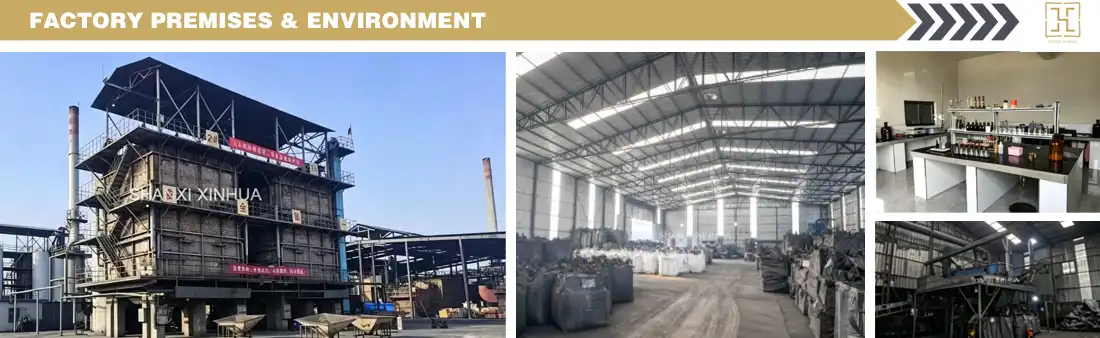
When you buy 100*100*50mm perforated coal honeycomb charcoal directly from the production facilities, you get more information than when you buy through a distributor. Procurement teams can check that the material can be made, look at the quality control processes, and talk directly with the expert staff who make the material. This makes it easier to be sure that the product will be the same on multiple sales and helps solve problems before they happen, if they happen in the application.
Certifications like ISO 9001, ISO 14001, and ISO 45001 show that a company is serious about quality management, protecting the environment, and making sure workers are safe. These validations by a third party show that the manufacturing processes meet standards that are known all over the world. Facilities that clean water for municipalities often have extra certifications for drinking water safety. These certifications show that the facilities follow strict quality standards for all of their products.
Competitive Pricing and Flexible Ordering
When you get rid of middlemen markups, you save money right away—a factory direct price usually gives you a 15–25% discount over distributor routes. Manufacturers can also accept flexible minimum order amounts that balance the costs of keeping inventory with the benefits of bulk prices. This is especially helpful for businesses that run multiple locations with different replacement plans.
Long-term supply agreements keep prices stable, which helps make accurate budget plans and ensures allocation during times when market supply is low. Framework contracts that promise a certain amount of work each year usually include better pricing and earlier production schedules that protect buyers on the spot market from supply problems.
Responsive Technical Service and Application Engineering
Having direct relationships with manufacturers gives you access to technical resources that you can't get through distribution partners. Based on operational data from your unique placement, application engineers can help you build systems, fix problems with performance, and make suggestions for how to make them work better. This help is especially helpful during startup and commissioning, and when changes to the process affect how well the treatment system works.
After-sales service is much faster and more helpful when the person you're talking to is from the real production company. When people ask about product specs, when to replace parts, or performance issues, they get answers from technical staff who know everything there is to know about the product, not sales reps who only know a little about it.
Emerging Developments in Activated Carbon Technology
Manufacturing Innovation Driving Performance Improvements
Innovations in manufacturing are leading to better performance for 100*100*50mm perforated coal honeycomb charcoal. Honeycomb activated carbon's abilities keep getting better thanks to ongoing research in activation chemistry and process control. Using precise temperature tracking during carbonisation makes the pore size distribution more regular, which makes it easier to target molecules. New binder systems make things stronger without reducing the number of pores. This lets wall sections be thinner, which increases the geometric surface area within the same block size.
Adding catalysts is a big step forward in terms of performance. Adding metal oxides or noble metals to honeycomb structures makes physical adsorption work better and allows for the treatment of compounds that can't be removed by carbon adsorption alone in a single step. When the stream has a low concentration and a lot of it, these mixed systems work really well because pure adsorption needs very large amounts of carbon.
Market Evolution and Regulatory Drivers
As emission standards get stricter around the world, more high-performance adsorption materials are needed. New VOC rules in the US have lowered the levels of emissions that many industries can make by 50 to 70%. This means that they have to switch from simple carbon systems to advanced honeycomb technologies that can meet the strict limits. This regulatory pressure doesn't seem to be going away, so procurement strategies need to plan for performance requirements to keep going up.
Sustainability concerns are becoming more and more important in choosing materials. Companies that want to reduce their carbon impact also make choices in their supply chains that favour suppliers who are honest about their environmental management and offer goods that can be recycled or grown again. Life cycle assessment methods are now commonly used in procurement evaluations. These methods favour activated carbon's ability to be used more than once over alternatives that can only be used once.
Conclusion
For high-performance air quality control, you need materials that were made to handle the difficulties of industrial settings. The 100*100*50mm perforated coal honeycomb charcoal format has the best size specs, the best adsorption properties, and the easiest fitting. These features directly meet the operating and safety needs of environmental engineering pros. Specifications like 450–850 mg/g iodine levels, 90%+ adsorption efficiency, and a pressure drop of less than 450Pa ensure performance that can be measured and is backed by strict quality systems. Using strategic factory-direct sourcing can save you money, protect your supply chain, and give you access to technical support resources. It can also change your relationship with your vendors from just buying things from them to working together to support long-term environmental compliance and operational excellence.
FAQ
How does perforated honeycomb charcoal compare with traditional granular activated carbon for VOC treatment?
Honeycomb structures have a much lower pressure drop (usually 400–450Pa vs. 800-1200Pa for granular beds), which means they use 30–40% less energy. The even channel geometry makes sure that the gas is distributed evenly and gets rid of the channelling issues that are common in granular beds. Even though the starting costs of materials are a little higher, honeycomb has lower overall running costs because it lasts longer and requires less repair labour.
What service life can we expect from 100x100x50mm blocks in continuous industrial operation?
Service life depends on the amount of contaminants and how the system is used, but in moderate-concentration situations, most installations achieve 8 to 18 months before they need to be replaced. Facilities that deal with higher levels of contamination may need to wait 6 to 12 months between visits. Using upstream particulate filters and temperature control to keep pores from getting clogged and keep the carbon's ability to absorb things increases its life.
Can honeycomb activated carbon be regenerated and reused?
When done right, thermal recovery at 800–900°C recovers 85–95% of the original adsorption capacity. Before being reactivated, blocks must be checked to make sure they are still solid because repeated heating cycles make them brittle. Most facilities can afford to go through two to three regeneration cycles before it becomes cheaper to throw away the old material and replace it with new material.
What customization options are available for large-volume industrial orders?
Manufacturers can change the amount of iodine, the distribution of pore sizes, and the mechanical strength to get the best results for different uses. Catalyst impregnation gives substances that don't stick to surfaces the ability to react with oxygen. Block sizes can be changed to fit non-standard tower shapes, and treatments that resist moisture allow them to be used in places with more than 90% relative humidity.
Partner With Shanxi Xinhua Carbon Technology Industry Co., Ltd. for Superior Air Treatment Solutions
To meet environmental safety requirements, you need people who are strong in technology, great at making things, and quick to respond. We have been a 100x100x50mm perforated coal honeycomb charcoal provider for a long time. We bring over 60 years of experience with activated carbon and defense-grade quality systems to every relationship with a customer. We work with top research universities, like Tsinghua University, to keep coming up with new adsorption materials. We also have multiple production bases to make sure you can always get custom solutions that meet your exact needs.
Our full-service approach, which includes technical advice and help after the sale, is good for procurement managers. We keep a full stock of standard products, which allows for delivery in 7–15 days. For urgent projects, we can also expedite the process. Our core patents in modified activated carbon and high-surface-area catalysts are used to make custom formulations that meet the needs of each application. Our team gives your operations the performance and dependability they need, whether you need to order tonnes of materials for big cleaning systems or specific materials for tough industrial uses. Talk to our technical team at greta@carbonxinhua.com about how factory-direct sourcing can improve the performance of your air treatment system and lower its costs.
References
1. Chen, W., & Zhang, L. (2021). Advances in Honeycomb Activated Carbon for Industrial Gas Treatment. Environmental Engineering Science, 38(4), 287-301.
2. Industrial Air Quality Council. (2022). Best Practices for VOC Abatement in Manufacturing Facilities. Technical Report Series, Volume 15.
3. Morrison, R.T., & Sullivan, K.P. (2020). Activated Carbon: Physical and Chemical Properties for Environmental Applications. CRC Press, Boca Raton, FL.
4. National Air Filtration Association. (2023). Comparative Performance Analysis of Structured versus Granular Activated Carbon Media. Research Bulletin 2023-07.
5. Wang, J., Liu, H., & Thompson, M. (2022). Life Cycle Assessment of Coal-Based Activated Carbon Production and Regeneration Systems. Journal of Cleaner Production, 341, 130856.
6. Zhou, Y., & Park, S. (2021). Engineering Design Guidelines for Honeycomb Activated Carbon Adsorption Systems. Chemical Engineering & Technology, 44(9), 1623-1638.

Send Inquiry
You may like
_1781662034490.webp)