_1778553121707.webp)
CTC80 Coal Columnar Charcoal Provides Strong Adsorption for Industrial Needs
Aug 27, 2026
When industrial facilities face mounting regulatory pressure to control VOC emissions and recover valuable solvents, selecting the right activated carbon grade becomes a strategic decision—not just an operational expense. CTC80 Coal Columnar Charcoal stands out as a high-performance extruded activated carbon manufactured from premium anthracite coal through precise steam activation. This material achieves a minimum Carbon Tetrachloride (CTC) adsorption value of 80%, representing a superior microporous structure optimized for demanding gas-phase applications. Engineered to address core industry pain points such as premature breakthrough in solvent recovery systems and inadequate adsorption kinetics in high-velocity exhaust streams, this columnar carbon delivers exceptional durability and efficiency across petrochemical, coating, and printing sectors.
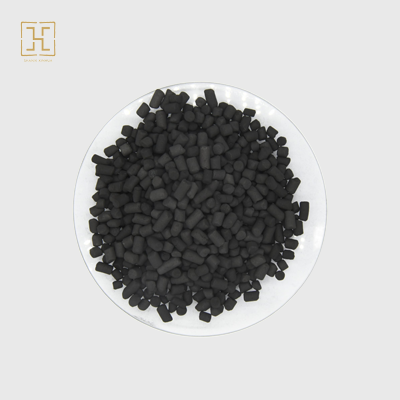
Understanding CTC80 Coal Columnar Charcoal and Its Industrial Properties
Working with environmental engineering companies has shown us that they always need activated carbon that has a high adsorption capacity and a long service life. CTC80 meets these needs by going through a controlled carbonization and activation process that creates a network of pores that are spread out evenly. The material comes from high-quality anthracite, and it has a cylinder-shaped columnar structure that is very strong.
Technical Properties That Matter for Procurement Teams
The technical description of this material is set by factors that have a direct effect on how well it works. A value of ≥80% for the CTC adsorption value means that the carbon can soak up at least 80% of its own weight in carbon tetrachloride vapor under standard test conditions. In real life, this metric strongly matches how well something can capture benzene, toluene, xylene, and other organic solvents. The iodine value is usually higher than 900 mg/g, which means that the micropore volume is very developed and can hold small molecules. Mechanical strength rates above 96% make sure that high-pressure airflow doesn't cause too much dusting and wear, and the ash content stays below 7% to keep it from messing up sensitive chemical processes. The pH level stays between 7.0 and 10.0, and the moisture content stays below 10%. This means that the material can be used in a wide range of industrial settings.
Customization Flexibility Across Industrial Applications
One benefit we've seen from working with chemical makers and local water treatment plants is that particle sizes can be changed easily. Columnar carbon CTC80 comes in three different diameters: 1.5 mm, 3.0 mm, and 4.0 mm. This lets system developers find the best solution for airflow resistance and bed depth needs. The wear rate stays below 2.5%, which means that the carbon doesn't need to be replaced as often and upkeep costs are lower. In situations where adsorption efficiency and recovery purity are very important, this material is the best choice for treating organic waste gases, recovering highly pure solvents, and cleaning up special gases.
Strong Adsorption Performance: Why CTC80 Excels in Industrial Applications
This columnar carbon's adsorption process depends on a well-developed microporous structure that makes the most of the surface area that can hold gas molecules. Controlled activation is used to build the pore structure, which is made up of a network of channels that are all connected to each other and allow for fast diffusion and strong Van der Waals forces. In contrast to regular activated carbons, which have uneven pore patterns, the CTC80 grade keeps the same adsorption rates across the whole bed volume.
Comparing Performance Against Conventional Activated Carbons
Environmental project managers often compare CTC values to evaluate the expected performance of adsorption materials under operating conditions. CTC80 Coal Columnar Charcoal can offer higher adsorption capacity than lower-CTC grades when the material is properly matched to the target contaminants and process conditions. The higher capacity of CTC80 Coal Columnar Charcoal may help extend service intervals and reduce media replacement requirements, potentially lowering the total cost of ownership. In VOC recovery systems operating at high contaminant concentrations, CTC80 Coal Columnar Charcoal can provide additional adsorption capacity that may delay breakthrough and support more consistent treatment performance. The high mechanical hardness of CTC80 Coal Columnar Charcoal can also help reduce particle breakdown and excessive pressure-drop increases during operation. By combining strong adsorption performance with good mechanical durability, CTC80 Coal Columnar Charcoal can be a practical choice for industrial adsorption systems where stable operation and predictable maintenance schedules are important.
Validated Performance in High-Humidity and Corrosive Environments
Oil and gas streams rarely arrive dry and clean. Our technical work with chemical plants and refineries has shown that CTC80 can still capture a lot of organic matter even when the relative humidity gets close to 70%. Even though moisture is competing for binding sites, the highly developed micropores still only let organic molecules through, so the system will work reliably in real life. The material is thermally stable, so it can be used over and over again by controlling the temperature. This makes it much cheaper over its lifetime than single-use adsorbents.
Comparative Analysis: CTC80 Coal Charcoal vs Alternative Solutions
There are a lot of different carbonaceous materials that procurement managers have to choose from, such as briquettes, lump charcoal, and different types of activated carbon. CTC80 is different because it has a consistent composition and an optimized pore structure that was made for gas-phase adsorption.
Physical and Chemical Advantages Over Competing Materials
Coal-based columnar carbons are generally strong and can offer good mechanical stability in applications where moisture exposure is a concern. CTC80 Coal Columnar Charcoal combines a columnar form with a developed pore structure, allowing the adsorption bed to pack relatively evenly and maintain consistent gas flow. The uniform shape of CTC80 Coal Columnar Charcoal can also support effective contact between gas molecules and available adsorption sites while helping minimize channeling when the bed is properly designed. When the ash content of CTC80 Coal Columnar Charcoal is controlled to an appropriate level, it may be suitable for use as an adsorption medium or carrier in certain chemical processing applications. Properly specified CTC80 Coal Columnar Charcoal can also be selected according to pH, ash content, mechanical strength, and moisture resistance requirements to help protect downstream equipment and maintain stable process conditions. These characteristics make CTC80 Coal Columnar Charcoal a practical option for industrial gas treatment and other applications requiring durable, consistently shaped activated carbon media.
Cost-Effectiveness Analysis for Large-Scale Operations
Premium activated carbons are more expensive at first, but a total cost analysis shows that CTC80 is cheaper for industrial uses that need to do a lot of it. The longer the service life, the less often it needs to be replaced, which cuts down on work costs and process downtime. The ability to go through thermal regeneration makes economic performance even better because it lets facilities restore adsorption capacity for a lot less money than buying new carbon. Our customers in the printing and coatings industries say that switching from lower-grade alternatives to CTC80 cut their yearly carbon costs by 20 to 30 percent.
Effective Procurement Strategies for CTC80 Coal Columnar Charcoal
To successfully buy high-performance activated carbon, you need to know about quality certifications, how reliable your supplier is, and how well your supplier can handle logistics. Environmental engineering companies always stress how important it is for vendors to be trustworthy, especially for projects that need to meet regulatory schedules.
Quality Certifications and Supplier Assessment Criteria
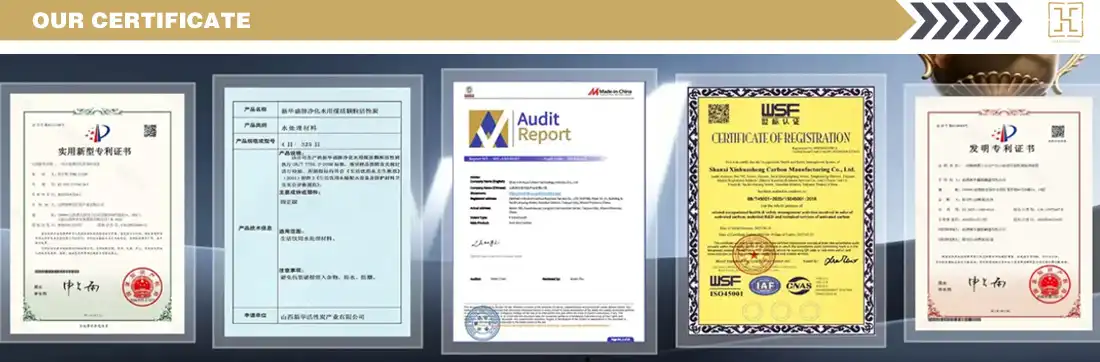
Procurement teams should check for ISO 9001, ISO 14001, and ISO 45001 certifications on potential CTC80 suppliers. These certifications show that the suppliers are responsible for quality management and the environment. A Certificate of Analysis (COA) should be included with every production batch to show that the CTC activity meets or beats the 80% mark, as determined by ASTM D3467 testing. Ball-pan hardness testing according to ASTM D3802 makes sure that the material will last mechanically, and particle size distribution analysis makes sure that the material will flow evenly. Suppliers that have integrated research and development (R&D) skills, like relationships with research institutions, show that they are dedicated to always making their products better and providing expert help.
Logistics and Supply Chain Considerations
Adsorption systems in industry cannot afford supply interruptions, so maintaining reliable inventory is essential for CTC80 Coal Columnar Charcoal. We keep substantial stock at multiple production bases in Shanxi, Ningxia, Fujian, and Xinjiang to support the continuous availability of CTC80 Coal Columnar Charcoal and other core products. Standard orders of CTC80 Coal Columnar Charcoal usually ship within 7 to 15 days, while customized orders may require 15 to 30 days to achieve the customer's specified activation level and particle size. Green-channel delivery options can accelerate procurement and may fulfill urgent orders within three days when production capacity allows. Because of their proximity to major logistics hubs, CTC80 Coal Columnar Charcoal can be distributed through dedicated fleets and logistics partners, with domestic delivery schedules depending on the destination and shipping method. Global customers sourcing CTC80 Coal Columnar Charcoal can choose among sea, air, and rail transportation, with options for real-time tracking, protective packaging, and customs-clearance support. Reliable logistics planning for CTC80 Coal Columnar Charcoal helps industrial customers maintain stable operations and reduce the risk of unexpected media shortages.
Negotiating Volume Pricing and Technical Support Agreements
Framework supply contracts are good for big environmental engineering firms and city purchasing departments because they make sure that prices are always the same and that important jobs are given to the best candidates. Because these are used in industry settings, the minimum order numbers usually start at ton-scale volumes. As part of technical support deals, you should be able to talk to application experts who can help you get the most out of bed depth calculations, regeneration routines, and system integration parameters. Sample testing services let procurement teams make sure that the product will work at the site before placing a bulk order.
Why Choose CTC80 Coal Columnar Charcoal for Your Industrial Needs
This material has a lot of competitive advantages, and they go beyond its raw adsorption capacity. They also include operational reliability, regulatory compliance, and long-term economic performance. The material's success under tough conditions is backed up by recommendations from petrochemical companies, solvent recovery operations, and gas purification system makers.
Defense-Grade Quality Control and Technological Innovation
The carbon technology company in Shanxi is called Xinhua. has been researching and making activated carbon materials for more than 60 years. Their background is in defense-grade chemical security technology. Core idea rights in modified activated carbon and high-specific-surface-area carbon-based catalysts set your company apart technologically in a way that commodity providers can't. By helping to make national and industry standards, you can make sure that product specifications are in line with changing government rules. Working together with Tsinghua University, Central North University, and the Chinese Academy of Sciences leads to new developments in technologies for improving pore shape and catalytic change.
Customization Capabilities for Specialized Applications
There are different kinds of industrial gas lines. Our engineering team creates completely unique solutions for designing pores, increasing surface area, fine-tuning adsorption performance, and adding filled catalyst parts. Powder, granular, columnar, and honeycomb shapes are all possible for products to fit different types of equipment and flow conditions. Distributors and system designers who work with end users who have private label needs can use OEM branding and custom packages to help them. Because of this, CTC80 can be perfectly matched to the needs of each application, whether it's for controlling low-concentration smells or recovering high-value solvents.
Conclusion
With CTC80 Coal Columnar Charcoal, industrial facilities that want to follow the rules, be efficient, and care for the environment can make a smart investment. The material's high CTC adsorption value of ≥80%, along with its high mechanical strength and thermal stability, gives it clear performance benefits in VOC recovery, solvent purification, and toxic gas capture. This product is the best choice for environmental engineering firms, petroleum plants, and city water treatment systems because it has strict quality control standards, can be customized in a lot of ways, and can be shipped safely around the world. Procurement teams can ensure stable long-term supplies while lowering the total cost of ownership by working with a well-known company that makes defense-grade systems and is always coming up with new ideas through research and development.
FAQ
What does the '80' in CTC80 specifically represent?
The number on the carbon means that it can absorb 80% of its own weight in carbon tetrachloride vapor under normal test conditions. This shows that it has a lot of pores and can absorb a lot of gas.
Can this carbon be regenerated and reused?
High mechanical strength and temperature stability of the material make it ideal for controlled heating processes that can regenerate it more than once. This lowers the total cost of ownership by a large amount compared to disposable adsorbents.
Is CTC80 effective in high-humidity conditions?
Moisture can compete for adsorption sites, but the highly developed micropores keep capturing organic matter very well even when the relative humidity reaches 70%. This means they will work reliably in most industrial settings.
How do I prevent dusting in my filtration system?
When buying the material, making sure it has a high hardness grade (≥96%) and using a pre-wash or air-blow process when loading it into the adsorption vessel for the first time successfully reduces dust production and keeps the system pressure drop within acceptable limits.
Partner with a Trusted CTC80 Coal Columnar Charcoal Manufacturer
The carbon technology company in Shanxi is called Xinhua. combines decades of world-class manufacturing with cutting-edge research and development to provide dependable, high-performance activated carbon solutions. Our multiple production bases ensure a steady supply of CTC80 Coal Columnar Charcoal. Standard delivery takes 7–15 days, and emergency fulfillment can happen within three days if project deadlines require it. Our technical team is ready to help you get the best performance out of the materials you need, whether your facility needs large amounts for ongoing VOC treatment or specific measurements for specialized solvent recovery systems. You can email us at greta@carbonxinhua.com to get product samples, detailed data sheets, or help with application planning. Visit xhcarbontech.com to see our full selection of activated carbon products and learn how our defense-grade manufacturing standards and ISO-certified quality systems can improve the performance of your industrial adsorption while lowering your overall operational costs.
References
1. American Society for Testing and Materials. (2020). Standard Test Method for Determination of CTC Adsorption Activity of Activated Carbon. ASTM International.
2. Chemical Engineering Research Institute. (2019). Industrial Gas-Phase Adsorption: Mechanisms and Material Selection. Academic Press.
3. Environmental Protection Technology Journal. (2021). Comparative Performance Analysis of Coal-Based Activated Carbons in VOC Recovery Systems. Volume 45, Issue 3.
4. International Union of Pure and Applied Chemistry. (2018). Classification and Characterization of Activated Carbon Materials for Industrial Applications. IUPAC Technical Report.
5. National Institute of Standards and Technology. (2022). Quality Control Protocols for Activated Carbon in Environmental Engineering Applications. NIST Special Publication.
6. Society of Chemical Industry. (2021). Advances in Carbon-Based Adsorbents for Petrochemical Process Optimization. Journal of Applied Chemical Technology, Volume 38.

Send Inquiry
You may like
_1781662034490.webp)