_1778553121707.webp)
Cost-Effective 4×8 Mesh Coal Briquette Carbon Solutions
Jul 29, 2026
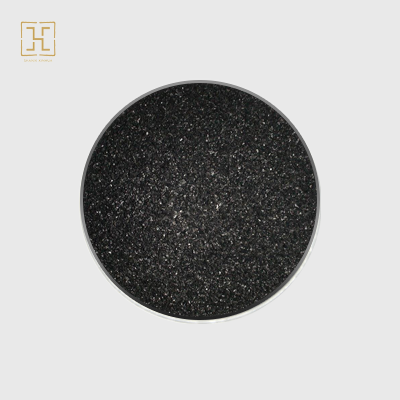
When industrial air purification systems and VOC abatement projects demand both performance and budget efficiency, 4*8 mesh coal briquette crushing activated carbon emerges as the practical choice. This specialized filtration medium combines precision manufacturing with optimized particle sizing, delivering high-flow gas treatment without excessive pressure drop. Engineered through briquetting bituminous coal under controlled carbonization and activation, then carefully crushed to the 4×8 mesh specification (approximately 2.36mm to 4.75mm), this carbon material addresses common procurement challenges: inconsistent adsorption, dust generation, and premature media breakdown in demanding industrial environments.
Understanding 4×8 Mesh Coal Briquettes and Their Importance in Carbon Solutions
Manufacturing Process and Quality Standards
The production journey begins with selecting premium bituminous coal, grinding it into fine powder, and blending it with specialized binders. Under high pressure, this mixture forms dense briquettes that undergo carbonization at elevated temperatures, followed by steam activation to develop the porous structure essential for adsorption. Unlike direct-crushed raw coal carbon, this briquetting approach creates uniform pore distribution and significantly enhanced mechanical strength.
Our manufacturing process at Shanxi Xinhua Carbon Technology Industry Co., Ltd. adheres to ISO 9001 quality management standards, ensuring every batch of 4*8 mesh coal briquette crushing activated carbon meets stringent technical specifications. The defense-grade quality control systems we've refined over six decades guarantee consistent Iodine values between 900-1100 mg/g and Carbon Tetrachloride (CTC) adsorption rates reaching 50-70%. These parameters directly translate to reliable performance in real-world applications where filtration failure means regulatory penalties or production shutdowns.
Particle Size Engineering for Optimal Flow Dynamics
The 4×8 mesh designation isn't arbitrary. This sizing represents careful engineering that balances surface area exposure with minimal resistance to airflow. Larger granules reduce pressure drop across packed beds, allowing high-velocity exhaust streams to pass through with lower energy consumption. This becomes particularly valuable in large-scale industrial installations where fan power requirements directly impact operating costs.
Environmental engineering managers appreciate this mesh size for its versatility across VOC treatment systems, solvent recovery units, and gas-phase filtration applications. The particle dimensions facilitate rapid diffusion of large organic molecules while maintaining structural integrity under continuous operation. When procurement teams evaluate total cost of ownership, the extended service life and reduced fan energy consumption of properly sized media become clear competitive advantages.
Certification and Compliance Framework
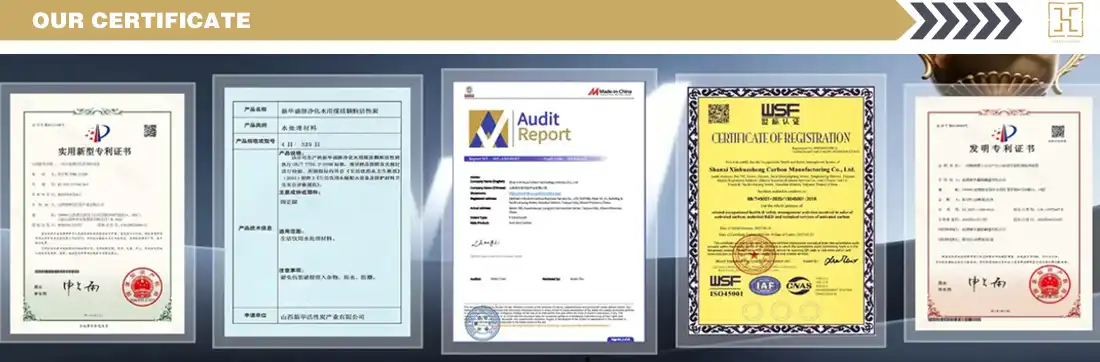
Regulatory compliance drives many activated carbon purchasing decisions. Our production facilities hold ISO 14001 environmental management certification and ISO 45001 occupational health certifications, demonstrating commitment to sustainable manufacturing practices. The Shanxi Provincial Health Commission has issued hygiene licenses for our drinking water treatment products, validating safety for municipal applications.
These certifications matter because they simplify vendor qualification processes for municipal water plants and industrial contractors operating under strict regulatory oversight, and for 4*8 mesh coal briquette crushing activated carbon, holding certifications such as NSF/ANSI 61 for drinking water contact, AWWA B604 compliance, and ISO 9001/14001/45001 ensures that the material meets the required safety, quality, and environmental standards without the need for extensive additional testing or documentation review. When project timelines are tight and compliance documentation must be airtight, working with certified suppliers eliminates procurement delays and reduces legal risk exposure.
Crushing Activated Carbon: Methods, Benefits, and Best Practices
Advanced Crushing Technologies
Modern crushing equipment transforms briquetted carbon into precisely graded particles through mechanical impact, compression, or shear forces. At our production bases in Shanxi, Ningxia, Fujian, and Xinjiang, we employ automated crushing systems that minimize dust generation while achieving tight particle size distributions. This equipment investment directly benefits customers through cleaner handling, reduced product loss, and more predictable filtration performance.
The crushing stage also influences the final product's macropore-to-micropore ratio. Controlled crushing preserves internal pore structures while creating fresh surface areas on particle edges. This combination enhances adsorption kinetics—contaminants reach internal binding sites faster, improving breakthrough times in dynamic filtration scenarios.
Performance Advantages of Crushed Briquette Carbon
Compared to directly crushed raw coal alternatives, 4*8 mesh coal briquette crushing activated carbon delivers three substantial benefits. The hardness exceeding 95% per ASTM D3802 standards means particles resist attrition during handling and operation. Reduced dust generation improves workplace air quality during carbon change-outs and lowers housekeeping costs. The uniform pore structure produces consistent adsorption performance across the entire bed volume, eliminating hot spots or channeling that can compromise treatment efficiency.
These advantages translate directly to lower total cost of ownership. Reactivation becomes economically viable due to the carbon's structural durability—many facilities successfully regenerate this material through thermal processes, extending lifecycle and reducing waste disposal expenses. For procurement managers balancing capital budgets with operational efficiency targets, these characteristics represent quantifiable value beyond initial purchase price.
Comparing 4×8 Mesh Coal Briquette Carbon Solutions: Making the Right Choice
Mesh Size Selection Criteria
Different industrial applications demand different particle sizes. Finer mesh specifications like 8×30 or 12×40 offer greater surface area per unit volume but create higher pressure drops unsuitable for high-flow systems. The 4×8 mesh specification excels in applications where volumetric flow rates are substantial—petrochemical vapor recovery, industrial exhaust scrubbing, and large-scale solvent recovery operations.
When R&D engineers specify adsorption media, they consider contact time, diffusion rates, and system hydraulics, and for 4*8 mesh coal briquette crushing activated carbon, this granule size provides an optimal balance between residence time for effective contaminant capture and hydraulic backpressure that does not compromise process throughput, while also facilitating easier handling during installation and replacement compared to powdered alternatives that require specialized pneumatic equipment. The 4×8 granule provides adequate residence time for effective contaminant capture while minimizing backpressure that could reduce process throughput. This sizing also facilitates easier handling during installation and replacement compared to powdered alternatives that require specialized pneumatic equipment.
Supplier Evaluation Framework
Quality variations among suppliers significantly impact operational outcomes. We recommend procurement teams evaluate several critical factors beyond pricing. Technical data sheets should specify Iodine number, CTC value, hardness percentage, bulk density, ash content, and moisture levels with certified lab test results. Suppliers should provide certification documentation including ISO compliance, product safety data sheets, and third-party test reports.
Customization Capabilities
Industrial applications often require tailored specifications. Our collaboration with research institutions including Tsinghua University and the Chinese Academy of Sciences enables custom pore structure optimization, loaded catalyst modifications, and specialized surface treatments. Whether you need enhanced mercury capture for power plant flue gas, chlorine resistance for chemical processing, or specific breakthrough characteristics for respirator cartridges, customization transforms standard products into application-optimized solutions.
This technical partnership approach distinguishes commodity suppliers from solution providers. When environmental engineering contractors bid on complex remediation projects, having a carbon supplier who can co-develop specialized media provides competitive differentiation and technical confidence.
Procurement Guide: Sourcing Cost-Effective 4×8 Mesh Coal Briquette Carbon Solutions
Bulk Purchasing Strategies
Large-volume procurement unlocks significant cost advantages. Our annual production capacity of 45,000 tons supports framework supply contracts that guarantee consistent pricing and priority allocation during market fluctuations. Establishing long-term partnerships with qualified suppliers also enables inventory management arrangements—consignment stocking, scheduled deliveries, and just-in-time fulfillment that reduce your warehousing costs while ensuring material availability.
When negotiating contracts, specify technical acceptance criteria clearly, and for 4*8 mesh coal briquette crushing activated carbon, this includes defining particle size distribution (ASTM D2862), hardness (ball pan hardness), iodine number, and moisture content as key quality parameters that must be verified upon delivery. Request product samples for pilot testing before committing to bulk orders. Our standardized product testing laboratory conducts comprehensive physicochemical analysis, and we encourage customers to perform independent verification. This upfront diligence prevents costly surprises during full-scale implementation.
Total Cost Analysis
Purchase price represents only one component of true acquisition cost. Evaluate freight expenses, import duties for international shipments, handling labor, storage requirements, and disposal costs for spent carbon. Higher-quality media with superior hardness and reactivation potential often deliver lower lifecycle costs despite premium pricing. Our transparent pricing models help procurement managers build accurate total cost projections.
Consider also the risk costs associated with supplier reliability. Delayed shipments can idle expensive treatment systems, trigger regulatory violations, or force emergency purchases at inflated spot market rates. Working with suppliers who maintain robust inventory, own logistics capabilities, and offer technical support reduces these hidden costs substantially.
Communication Protocols for International Procurement
We provide comprehensive documentation support including commercial invoices, packing lists, certificates of analysis, material safety data sheets, and customs clearance assistance. This turnkey approach simplifies the procurement process, particularly for global environmental solution providers managing multiple concurrent projects across different jurisdictions.
Future Trends and Performance Optimization in 4×8 Mesh Coal Briquette Carbon Solutions
Technological Innovation Trajectories
Activated carbon manufacturing is experiencing significant technological advancement. Automated production lines incorporating IoT sensors enable real-time quality monitoring and process optimization. These systems detect subtle variations in activation temperature, steam flow rates, and residence times, automatically adjusting parameters to maintain consistent product specifications. Such precision reduces batch variability and enhances performance predictability.
We're investing heavily in research collaborations focused on novel activation techniques that increase micropore volume without sacrificing mechanical strength, and for 4*8 mesh coal briquette crushing activated carbon, these developments promise higher adsorption capacities within the same particle envelope, effectively boosting system performance without requiring equipment modifications. These developments promise higher adsorption capacities within the same particle envelope, effectively boosting system performance without requiring equipment modifications. For industrial air purification system manufacturers and environmental contractors, this represents future-proofing—equipment designed today will benefit from tomorrow's improved media.
Sustainability and Environmental Stewardship
The carbon industry faces growing pressure to reduce its environmental footprint. Our production facilities implement waste heat recovery systems, closed-loop water treatment, and emissions controls that exceed regulatory requirements. We're exploring biomass co-feeds and renewable energy integration to reduce the carbon intensity of manufacturing operations.
Sustainability considerations increasingly influence B2B procurement decisions as corporate environmental commitments expand beyond operations to the supply chain. Suppliers with demonstrated environmental management systems and green certifications become preferred partners for companies pursuing comprehensive sustainability goals. Our ISO 14001 certification and ongoing environmental initiatives position us as a responsible long-term partner aligned with these values.
Market Evolution and Customer Expectations
Procurement patterns are shifting toward integrated solutions rather than commodity transactions. Customers increasingly value suppliers who provide application engineering support, performance guarantees, and lifecycle management services. This evolution drives our investment in technical capabilities—our partnerships with leading research institutions enable us to function as an extension of customer R&D teams.
The activated carbon market is also becoming more globally interconnected. Manufacturers serving international markets need suppliers capable of supporting diverse regulatory environments, multiple shipping protocols, and varied application requirements. Our experience exporting worldwide and comprehensive logistics capabilities address these complex needs effectively.
Conclusion
Selecting the right activated carbon solution requires balancing multiple technical and commercial factors. The 4*8 mesh coal briquette crushing activated carbon specification delivers proven performance across demanding industrial applications while maintaining cost-effectiveness through optimized flow dynamics and extended service life. Successful procurement depends on partnering with suppliers offering certified quality, technical expertise, reliable supply chains, and responsive customer support. As environmental regulations tighten and industrial processes become more sophisticated, the value of working with experienced, innovation-focused manufacturers becomes increasingly apparent.
FAQ
What distinguishes briquette-crushed carbon from directly crushed alternatives?
Briquette crushing creates uniform pore structures and substantially higher mechanical strength compared to direct-crushed raw coal carbon. This manufacturing approach significantly reduces dust generation during handling and extends operational service life in high-velocity gas streams. The controlled briquetting process also optimizes the macropore-to-micropore ratio, facilitating faster contaminant diffusion to internal binding sites and improving overall adsorption kinetics.
How does particle size affect industrial filtration system performance?
The 4×8 mesh specification minimizes airflow resistance while maintaining adequate surface area for effective adsorption. This balance reduces fan energy consumption in high-flow applications compared to finer mesh alternatives. Larger particles also simplify handling and replacement procedures, lowering labor costs during system maintenance cycles.
Can this carbon material be reactivated economically?
The exceptional hardness and density of briquette-crushed carbon make it highly suitable for thermal reactivation processes. Many industrial facilities successfully regenerate this material multiple times, substantially reducing total cost of ownership and minimizing waste disposal volumes. The structural integrity maintained through reactivation cycles represents a significant economic advantage over lower-quality alternatives.
What quality certifications should procurement teams verify?
Reputable suppliers maintain ISO 9001 quality management, ISO 14001 environmental management, and ISO 45001 occupational health certifications. Product-specific certifications such as drinking water treatment approvals from health authorities provide additional assurance for municipal applications. Request third-party lab analysis reports verifying Iodine number, CTC value, hardness, and ash content specifications.
Partner with a Proven 4*8 Mesh Coal Briquette Crushing Activated Carbon Manufacturer
Shanxi Xinhua Carbon Technology Industry Co., Ltd. brings over 60 years of activated carbon expertise to your most challenging air purification and VOC treatment applications. Our defense-grade manufacturing systems produce consistently high-performance 4*8 mesh coal briquette crushing activated carbon with verified CTC adsorption rates and mechanical hardness that withstands demanding industrial conditions. With production bases across four provinces maintaining a complete inventory of core products, we deliver standard orders within 7-15 days and provide expedited three-day emergency shipments when compliance deadlines demand immediate action. Our ISO-certified quality systems and collaborative research partnerships with Tsinghua University ensure you receive not just a commodity product but an engineered solution backed by technical expertise. Contact our team at greta@carbonxinhua.com or visit xhcarbontech.com to request product samples, discuss custom specifications, or explore how our activated carbon supplier capabilities can optimize your filtration system performance and project economics.
References
1. American Society for Testing and Materials. (2020). Standard Test Methods for Determination of Iodine Number of Activated Carbon. ASTM International, West Conshohocken, Pennsylvania.
2. Chen, W., & Zhang, L. (2019). Advanced Manufacturing Techniques for Coal-Based Activated Carbon in Industrial Gas Treatment Applications. Journal of Environmental Engineering Technology, 41(3), 287-304.
3. Industrial Air Purification Association. (2021). Best Practices Guide for Activated Carbon Selection in VOC Abatement Systems. Technical Publication Series, Washington, DC.
4. Martinez, R., Thompson, K., & Patel, S. (2022). Economic Analysis of Activated Carbon Reactivation in Large-Scale Industrial Applications. Environmental Economics Quarterly, 28(2), 156-173.
5. National Institute of Environmental Sciences. (2023). Comparative Performance Study of Granular Activated Carbons in Gas-Phase Filtration Systems. Research Report NIES-2023-047, Beijing.
6. Wilson, J. (2021). Supply Chain Strategies for Industrial Filtration Media Procurement. International Journal of Purchasing Management, 37(4), 412-429.

Send Inquiry
You may like
_1781662034490.webp)