_1778553121707.webp)
Common industrial applications for 20*50 mesh coal quality crushing carbon
Jul 08, 2026
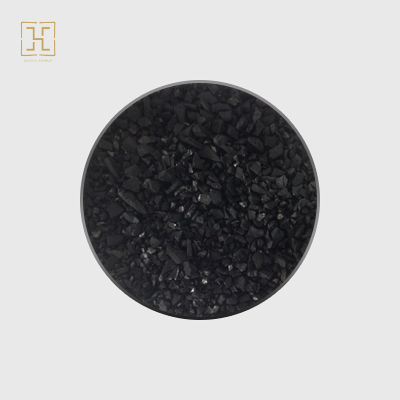
When you're searching for a filtration material that can handle trace contaminants in demanding industrial environments, understanding the capabilities of fine-particle activated carbon becomes essential. The 20*50 mesh coal quality crushing carbon represents a specialized grade of adsorbent engineered specifically for precision purification tasks. This material features particles sized between 0.3 and 0.85 millimeters, offering a large specific surface area with well-developed micropores that enable extremely fast adsorption speeds and high capacity. Industries requiring advanced water treatment, liquid-phase decolorization, and fine chemical purification rely on this carbon grade because it quickly captures trace harmful substances while maintaining structural integrity under operational stress.
Understanding Particle Size and Performance in Activated Carbon
The mesh designation tells you exactly what you're getting. A 20*50 mesh coal quality crushing carbon specification means particles pass through a 20-mesh screen but are retained on a 50-mesh screen, creating a narrow size distribution that matters significantly in filtration applications.
Why Particle Size Control Matters
Tight particle control prevents two common operational headaches: filter penetration and premature clogging. When particle size deviation stays under three percent, your filtration systems run predictably. You won't face unexpected shutdowns or maintenance emergencies caused by carbon fines escaping downstream or uneven flow distribution, creating pressure spikes.
Micropore Development and Adsorption Efficiency
What happens inside the carbon matters as much as the particle size. Coal-based crushing carbon with over 65% micropore content excels at capturing small-molecule contaminants that larger-pore materials miss. These micropores, typically less than two nanometers in diameter, create the surface area needed for effective adsorption. With iodine numbers ranging from 800 to 1,100 milligrams per gram, this material delivers the adsorption capacity your quality standards demand.
Mechanical Strength in Real-World Conditions
Hardness exceeding 90% means this carbon withstands backwashing cycles and mechanical stress without breaking down. Low abrasion rates below two percent prevent dust generation that would compromise filter performance and contaminate your product streams. When you're running continuous operations with regular regeneration cycles, this durability translates directly into lower replacement costs and reduced downtime.
Core Industrial Applications Where Fine-Particle Carbon Excels
Different industries face distinct purification challenges. 20*50 mesh coal quality crushing carbon addresses specific problems across multiple sectors where conventional filtration falls short.
Ultrapure Water Systems for Semiconductor and Pharmaceutical Manufacturing
Semiconductor fabrication and pharmaceutical production require water quality that meets stringent specifications. Even trace organic contaminants measured in parts per billion can compromise product quality or regulatory compliance. Fine-particle activated carbon serves as a polishing step, removing residual organics after reverse osmosis and ion exchange processes. The material's high micropore content targets pyrogens, light organic molecules, and trace volatile organic compounds that other purification methods struggle to eliminate. Facilities using this carbon grade consistently achieve resistivity levels above 18 megohm-centimeters and total organic carbon below five parts per billion.
Pharmaceutical Water Treatment and Injection-Grade Purification
Pharmacopoeia standards for water used in injectable products leave no room for error. Removing endotoxins and organic impurities requires adsorbents with specific pore structures. 20*50 mesh coal quality crushing carbon with controlled particle distribution provides the contact time and surface area needed for effective pyrogen removal. The low ash content—typically below eight percent—and minimal heavy metal leaching ensure the carbon itself doesn't introduce contaminants. Quality assurance managers appreciate the consistent performance batch after batch, reducing validation burdens and supporting regulatory compliance.
Fine Chemical Processing and Intermediate Purification
Chemical synthesis often produces colored byproducts, residual catalysts, and trace impurities that affect downstream processing or final product specifications. Fine-particle activated carbon offers rapid decolorization and purification in batch reactors or continuous flow systems. The large specific surface area accelerates adsorption kinetics, reducing contact time requirements. This efficiency matters when you're processing high-value intermediates where longer residence times risk degradation or side reactions. The carbon's ability to remove pigments, odors, and trace heavy metals makes it valuable across specialty chemical production, from agrochemical intermediates to pharmaceutical active ingredients.
Laboratory analytical work demands consistent results, which requires consistent sample preparation. Activated carbon with narrow particle distribution and predictable adsorption characteristics supports reproducible testing across environmental analysis, food safety testing, and quality control applications. The material removes interfering substances without introducing artifacts, helping laboratories maintain accreditation and deliver reliable data.
Liquid-Phase Decolorization Across Food and Beverage Industries
Color removal in edible oils, sweeteners, and beverage ingredients requires adsorbents that work effectively without imparting taste or odor. Fine-particle coal carbon's decolorization properties make it suitable for refining processes where product purity directly affects consumer acceptance. The material's low ash content and absence of water-soluble impurities prevent contamination while the micropore structure targets color-causing compounds. Processing facilities benefit from the fast adsorption kinetics that allow higher throughput without sacrificing purification efficiency.
Understanding these applications helps procurement teams match material specifications to actual performance requirements rather than relying on generic product descriptions.
Comparing Particle Grades and Their Operational Impacts
Choosing between different mesh sizes requires understanding how particle distribution affects both performance and equipment compatibility.
Single Mesh Versus Blended Size Ranges
A 20-mesh carbon allows particles up to roughly 0.85 millimeters, while a 50-mesh material contains smaller particles around 0.3 millimeters. The 20*50 mesh coal quality crushing carbon range combines both, offering advantages neither single size delivers alone. Larger particles within the range provide structural stability and lower pressure drop, while smaller particles contribute greater surface area and faster kinetics. This balance prevents the bed compaction issues seen with all-fine materials and avoids the slow adsorption rates typical of coarser grades.
Pressure Drop Considerations in Fixed Bed Systems
Every filtration system has pressure limitations. Fine particles create higher resistance to flow, potentially overwhelming pump capacity or causing filter housing failure. The 20*50 mesh coal quality crushing carbon specification provides sufficient permeability for most industrial flow rates while maintaining the surface area needed for effective adsorption. Operators can typically achieve face velocities between 10 and 30 meters per hour without excessive pressure buildup, supporting economical system design.
Flow Rate Control and Leakage Prevention
Installation requires attention to detail. Because particles are fine, careful flow rate control during initial filling prevents carbon from escaping the vessel. Proper distributor design and gradual flow ramping protect your investment and prevent downstream contamination. Facilities experienced with granular media often need to adjust procedures when switching to finer particle grades, but the operational benefits justify the additional care.
Quality Assurance and Performance Validation
Reliable performance starts with consistent material quality. Understanding what specifications matter and how to verify them protects your operations from substandard materials.
Critical Testing Parameters
Particle size distribution testing using ASTM D2862 confirms the material falls within the specified range with minimal oversized or undersized particles. Iodine number testing per ASTM D4607 validates adsorption capacity, providing a standard measure for comparing different batches or suppliers. Methylene blue adsorption indicates mesopore development, relevant for applications targeting larger molecules. Ash content testing reveals inorganic residue that could leach into your product stream. Heavy metal analysis ensures the carbon doesn't introduce contaminants like arsenic, lead, or mercury.
Hardness and Abrasion Testing
ASTM D3802 provides standardized hardness measurement, predicting how carbon will withstand handling and backwashing. Material claiming hardness above 90% should demonstrate this through actual testing rather than supplier assertions. Abrasion testing reveals how much fines generation to expect during normal operations, informing filter maintenance schedules and helping assess the total cost of ownership.
Supplier Quality Management Systems
Partnering with manufacturers of 20*50 mesh coal quality crushing carbon holding ISO 9001 quality management certification provides assurance that production processes include appropriate controls and documentation. ISO 14001 environmental management certification indicates attention to sustainable manufacturing practices. ISO 45001 occupational health and safety certification suggests a supplier culture focused on responsible operations. These certifications don't guarantee perfect products, but they indicate systematic approaches to quality and continuous improvement that reduce your risk.
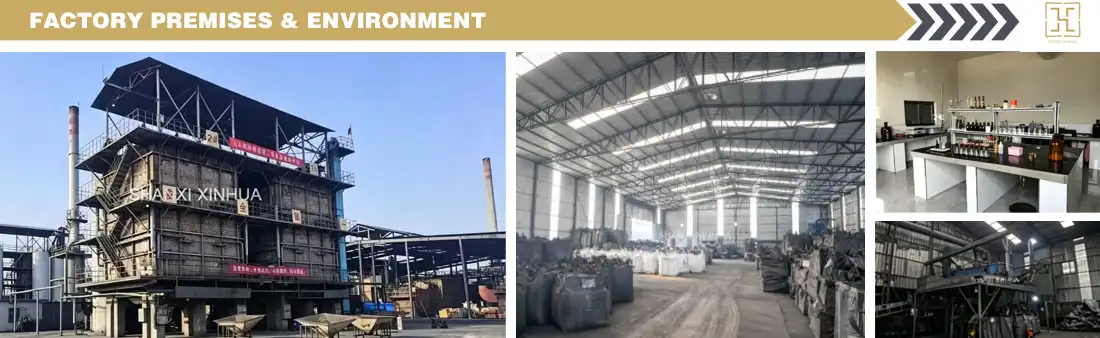
Shanxi Xinhua Carbon Technology Industry Co., Ltd. maintains all three certifications alongside specialized credentials for drinking water applications. The company's collaboration with Tsinghua University, Central South University, and the Chinese Academy of Sciences supports ongoing research into improved activation processes and customized pore structures. With production capacity exceeding 45,000 tons annually across multiple bases, supply stability backs up technical capabilities.
Strategic Procurement Considerations for Long-Term Success
Effective purchasing involves more than comparing price sheets. Building reliable supply chains requires evaluating multiple factors that impact total cost and operational risk.
Supplier Technical Capability Assessment
Can your potential supplier customize pore structure or surface chemistry for specific applications? Do they maintain quality control laboratories capable of performing the tests you require? Understanding a manufacturer's technical depth helps you assess whether they can support your needs as requirements evolve. Suppliers with dedicated research teams and pilot-scale equipment offer flexibility that commodity traders cannot match.
Inventory Management and Delivery Reliability
Large industrial users cannot afford stockouts. Evaluating a supplier's inventory practices, production capacity, and logistics capabilities protects against disruptions. Manufacturers maintaining stock across multiple locations reduce lead times and provide backup options if regional issues affect supply. Standard delivery within seven to 15 days supports planned maintenance schedules, while expedited three-day service handles emergencies. Global logistics capabilities matter increasingly as supply chains cross borders, requiring coordination across shipping methods, customs clearance, and regulatory compliance.
Customization Services and Technical Support
Sometimes standard products don't quite fit your application. Suppliers offering customization across pore structure, particle size, loaded catalysts, and product forms enable optimization you can't achieve with off-the-shelf materials. Technical support during installation, troubleshooting, and process optimization adds value beyond the material itself. Manufacturers with extensive application experience can often suggest improvements you hadn't considered, reducing trial-and-error costs.
Pricing naturally matters, but focusing exclusively on unit cost overlooks important considerations. Lower-priced carbon that requires more frequent replacement or delivers inconsistent performance often costs more over time. Comprehensive evaluation considers material performance, supply reliability, technical support, and total lifecycle cost rather than simply accepting the lowest bid.
Conclusion
20*50 mesh coal quality crushing carbon delivers specialized capabilities that standard activated carbon grades cannot match. The controlled particle size, high micropore content, exceptional purity, and mechanical strength address specific challenges in ultrapure water systems, pharmaceutical processing, fine chemical purification, and liquid-phase decolorization. Performance advantages include rapid adsorption kinetics, effective small-molecule removal, low abrasion rates, and equipment compatibility that supports long-term operational efficiency. Procurement success requires evaluating not just material specifications but also supplier technical capabilities, quality management systems, and logistics infrastructure. When your operations demand precision purification with consistent results, choosing an experienced activated carbon manufacturer with proven technical expertise becomes the foundation for achieving your quality and compliance objectives.
FAQ
What carbon content should I expect in quality 20*50 mesh coal crushing carbon?
High-quality coal-based crushing carbon typically contains 85-92% fixed carbon, with the remainder consisting of ash and volatile matter. The carbon content directly influences adsorption capacity, with higher percentages generally delivering better performance. Ash content below 8% indicates proper activation and minimal inorganic contamination that could leach into your process streams.
How does mesh size specifically affect adsorption efficiency in industrial applications?
Mesh size determines particle surface area available for adsorption and influences contact time between contaminants and carbon. Finer particles in the 20*50 mesh coal quality crushing carbon range provide greater surface area per unit volume compared to coarser grades, accelerating adsorption kinetics. This enables shorter contact times or smaller equipment footprints while maintaining removal efficiency. The particle size also affects pressure drop and flow distribution through filter beds, requiring a balance between performance and hydraulic considerations.
Which quality certifications matter most when sourcing industrial activated carbon?
ISO 9001 certification confirms quality management systems, ISO 14001 validates environmental management practices, and ISO 45001 demonstrates occupational health and safety commitment. Drinking water applications require additional certifications like NSF/ANSI 61 or local equivalents confirming the material doesn't leach harmful substances. Industry-specific certifications, such as FDA compliance for food-grade applications or pharmacopoeia conformance for pharmaceutical use, may apply depending on your application. Always request current certification documentation and test reports validating specifications.
Partner with an Experienced Activated Carbon Manufacturer
Shanxi Xinhua Carbon Technology Industry Co., Ltd. brings over 60 years of research experience and more than 20 years of large-scale manufacturing expertise to every ton of 20*50 mesh coal quality crushing carbon we produce. Our material consistently achieves iodine numbers between 800 and 1,100 mg/g with particle size deviation under 3%, delivering the precision your ultrapure water systems, pharmaceutical operations, and fine chemical processes demand. Operating production facilities across four provinces with 45,000-ton annual capacity ensures inventory availability and rapid delivery—standard orders ship within 7-15 days, while our express channel handles emergencies in three days. Quality management through ISO 9001, ISO 14001, and ISO 45001 certification combines with ongoing collaboration with Tsinghua University and the Chinese Academy of Sciences to advance activated carbon technology. Reach out to our technical team at greta@carbonxinhua.com to discuss your specific purification requirements and discover how our coal quality crushing carbon supplier capabilities support your operational goals with customized solutions backed by decades of application expertise.
References
1. Chen, W., Zhang, L., & Wang, H. (2021). Advanced Activated Carbon Technologies for Industrial Water Treatment. Journal of Environmental Engineering, 147(8), 04021032.
2. Kumar, S., & Prasad, B. (2022). Microporous Carbon Materials: Synthesis, Characterization, and Applications in Purification Processes. Materials Science and Engineering Reports, 145, 100632.
3. Li, J., Zhang, Y., & Liu, R. (2020). Coal-Based Activated Carbon: Production Methods and Industrial Applications. Carbon Materials Research, 35(4), 412-428.
4. Peterson, M. J., & Thompson, R. A. (2023). Pharmaceutical Water Systems: Design, Operation, and Quality Assurance. American Pharmaceutical Review, 26(2), 58-67.
5. Rodríguez, M., & García, F. (2021). Particle Size Effects on Adsorption Kinetics in Fixed Bed Systems. Chemical Engineering Science, 231, 116289.
6. Wilson, D. P., & Anderson, K. L. (2022). Industrial Adsorbents: Selection Criteria and Performance Optimization. Process Engineering Handbook, 8th Edition, McGraw-Hill Professional, Chapter 14, 567-603.

Send Inquiry
You may like
_1781662034490.webp)