_1778553121707.webp)
Coal Quality Granular Carbon Supports Efficient Drinking Water Purification
Aug 18, 2026
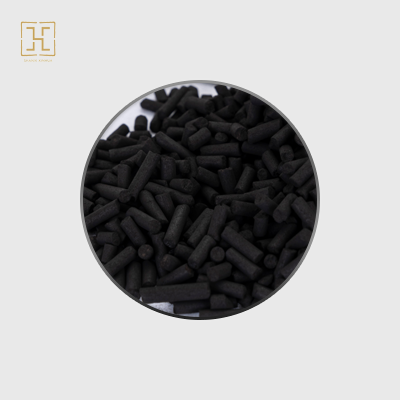
Clean drinking water remains a fundamental necessity for public health, yet achieving consistent purification efficiency poses ongoing challenges for municipal water plants and industrial facilities. Drinking Water Non-Washing Coal Quality Granular Carbon addresses these challenges through advanced material engineering. Produced from high-quality anthracite via precise activation and ultra-low dust screening, this specialized filtration medium eliminates the pre-treatment hassles traditionally associated with granular activated carbon. Its direct-add capability and superior contaminant removal performance make it an invaluable asset for procurement managers and environmental engineers seeking reliable, cost-effective water treatment solutions.
Understanding Non-Washing Coal Quality Granular Carbon for Water Filtration
The Science Behind Non-Washing Coal Carbon
Granular activated carbon made from coal has been used to treat water for decades, but versions that don't wash away the dirt are a big step forward. The material comes from certain anthracite layers that were activated by controlled steam at high temperatures. This created a large network of pores inside the rock that didn't need to be cleaned with chemicals later on. This way of making carbon keeps its structure while creating micropores and mesopores that are best at catching different kinds of contaminants.
Iodine adsorption readings between 800 and 900 mg/g show that the active surface area is usually higher than 900 to 1100 m²/g. The carbon can trap organic molecules, chlorine compounds, and trace metals through both physical adsorption and chemical interaction because its structure is so big on the inside. Non-washing coal carbon keeps its original mineral makeup, which makes it stronger and less likely to wear down during backwashing cycles. This is different from washed alternatives that go through acid treatments that could damage the pore structure.
Performance Characteristics That Matter
In real-world situations, this filtration medium stands out because of its measurable success measures. The amount of ash stays below 8%, which stops minerals from leaching out too much and keeps the water's chemistry stable. Granules with strength values above 90% can handle hydraulic stresses in deep-bed filters without making too many fines. The dust level stays below 0.1%, which pretty much eliminates the turbidity jumps that many water treatment processes experience when new carbon media is added.
Because Drinking Water Non-Washing Coal Quality Granular Carbon maintains a balanced pH range of 6.5–7.5, it does not significantly alter the chemistry of treated water, eliminating the need for additional pH adjustment after filtration. The strict control of heavy metal leaching for Drinking Water Non-Washing Coal Quality Granular Carbon follows GB 5749 requirements, addressing a critical concern in drinking water treatment where introducing contaminants during purification is unacceptable. With methylene blue adsorption values exceeding 100 mg/g, Drinking Water Non-Washing Coal Quality Granular Carbon demonstrates strong adsorption performance for larger organic molecules while its microporous structure continues to remove smaller contaminants effectively. The reliable characteristics of Drinking Water Non-Washing Coal Quality Granular Carbon make it a suitable choice for water treatment facilities seeking safe, stable, and efficient filtration solutions.
Comparing Granular Carbon Types: Why Choose Non-Washing Coal Quality Carbon?
Material Origins and Processing Differences
Professionals who treat water often have to choose between activated carbons made from coal, coconut shells, and wood. Each source material gives off different traits. Coconut shell carbon is usually harder and has smaller pore sizes, which makes it great for vapor-phase uses but sometimes less flexible for treating water in the liquid phase when there are different types of contaminants. Wood-based carbons are great at getting rid of stains, but they usually have lower material strength.
Granular carbon made from coal is a good compromise. The anthracite material used in types that don't wash has a lot of set carbon and not much volatile matter. Once activated, the pore structure that forms has a lot of mesopores, which allow for fast mass transfer, and micropores, which are what collect dissolved organics. This two-pore structure works really well for treating city water, where flow rates are high and contact times are short.
Economic and Operational Value Propositions
By getting rid of the need for pre-wetting and rinsing, real practical saves are made. Usually, traditional granular carbons need to be soaked for 24 to 48 hours and rinsed several times before they can be used. This takes time, water, and labor. Non-washing grades can be put straight into filter vessels and the system can be brought online within hours. This cuts down on the time the system is shut down for media replacement projects.
The cost benefits are increased by the ability to regenerate heat. When handled correctly, high-quality coal-based carbons can usually handle three to five regeneration processes. This makes them a lot cheaper in the long run than single-use options. The mechanical hardness stops fragmentation during repeated backwashing, so the bed's growth and filter efficiency stay the same over the service life. When looking at the total cost of ownership over a number of years, these factors often cancel out any higher initial unit pricing.
Key Procurement Considerations for B2B Buyers
Certification and Compliance Verification
To get activated carbon for use in potable water, you have to pay close attention to approval guidelines. Products must show that they follow the rules for safe drinking water. This includes material certificates that show the controlled amounts of heavy metals and organic impurities. When a company has ISO 9001 quality management certification, it means that they have strict controls over their production. When they have ISO 14001 environmental certification, it means that they use responsible methods for sourcing and processing materials.
In addition to ISO standards, regional certifications are important when evaluating Drinking Water Non-Washing Coal Quality Granular Carbon for municipal water treatment applications. Products based on Drinking Water Non-Washing Coal Quality Granular Carbon that are used in the United States should comply with requirements such as AWWA B604 standards and obtain NSF/ANSI 61 certification to demonstrate that they do not introduce harmful substances into treated water. These certifications for Drinking Water Non-Washing Coal Quality Granular Carbon require independent third-party testing that is separate from the supplier, providing procurement managers with verified performance evidence instead of relying only on manufacturer claims. During the purchasing process, complete certification documents for Drinking Water Non-Washing Coal Quality Granular Carbon should be readily available to support quality verification, regulatory compliance, and confident supplier selection.
Supplier Evaluation Criteria
When evaluating potential suppliers, you need to look at a number of operational factors. How well a maker can handle large-scale local projects or urgent replacement needs depends on how much they can produce and how much they stock. Multi-site production sites make the supply chain more resilient, making it less vulnerable to problems in different regions. Manufacturers that have been in business for decades usually have more stable quality and more reliable service than younger companies that are just getting into the market.
In addition to price comparisons, technical support skills should also be taken into account. Can the supplier help with application engineering to improve the design of the system? Do they offer free testing and pilot trial help before committing to a full-scale purchase? The fact that custom particle sizes, packaging layouts, and private label options are available shows that manufacturing is flexible, which is useful for specific uses. For global procurement operations to work, logistics facilities like regional warehouses, faster shipping choices, and people who know how to handle international freight becomes very important.
Environmental and Operational Advantages of Using Non-Washing Coal Granular Carbon
Sustainability Profile and Resource Efficiency
As companies try to reach their green goals, environmental concerns are becoming more and more important in their purchasing decisions. Activated carbon based on coal uses a lot of natural resources, and current mining methods have a lot less of an effect on the environment than old methods. The manufacturing process uses a lot of energy during activation, but the end result is a long-lasting product that can be used more than once, which makes the material more efficient.
When non-washing types don't use chemical washing steps, they use less process water and don't have to deal with the problems that come with treating acid or caustic rinse streams. Water utilities that care about the environment and industrial facilities that keep track of their Scope 3 emissions will like this cleaner production profile. When it's used up and can't be recycled anymore, spent carbon can be used to improve soil or as a fuel substitute in cement kilns. This keeps waste out of landfills and captures the energy value that's still there.
Extended Service Life and Maintenance Benefits
The operational advantages of Drinking Water Non-Washing Coal Quality Granular Carbon continue throughout the entire service life of the product. Due to the strong mechanical strength of Drinking Water Non-Washing Coal Quality Granular Carbon, the media experiences less abrasion and degradation during repeated backwashing cycles. This durability reduces replacement frequency, minimizes waste generation, and helps treatment facilities maintain stable operating costs. Systems using Drinking Water Non-Washing Coal Quality Granular Carbon can preserve their designed hydraulic characteristics for longer periods, avoiding flow restrictions caused by excessive carbon particle movement within the filter bed. The consistent structure of Drinking Water Non-Washing Coal Quality Granular Carbon improves process predictability, simplifies operational monitoring, and supports reliable long-term water treatment performance.
Because the material can absorb a lot of water per unit volume, it can be used to make filters that are smaller or last longer before they need to be replaced or regenerated. This is something that municipal water plants that are limited in room really value. Longer service gaps cut down on the number of times something needs to be handled, which makes the workplace safer by reducing worker exposure during media changes. These operational benefits often have a bigger effect than the direct cost savings. They help make the system more reliable and boost confidence in following the rules.
Future Trends and Innovations in Non-Washing Coal Granular Carbon for Water Treatment
Emerging Contaminant Challenges
As analytical tools get better at finding chemicals at very low amounts that couldn't be seen before, water treatment is facing new problems. Activated carbons with specific pore size distributions and surface chemistries that are best at collecting these permanent molecules are needed to get rid of per- and polyfluoroalkyl substances (PFAS). Advanced adsorption media are also needed for pharmaceutical residues, personal care product ingredients, and compounds that mess with hormones.
Researchers are looking into ways to change the surface of coal-based carbon in a way that makes it better at fighting these new contaminants while keeping the material's main benefits. By adding certain functional groups, impregnation can make it easier for molecules to bind. The reaction conditions are carefully controlled so that the pore structures match the molecular sizes of the contaminants. These new ideas build on the tried-and-true basis of coal-based granular carbons. They change them to fit the needs of today's water quality problems without giving up the cost-saving and efficiency gains that made them standard in the industry.
Smart Integration and Process Optimization
When sensor technologies and process automation are combined, they can be used to make activated carbon systems work better. By keeping an eye on breakthrough indicators in real time, operators can get the most use out of the media before replacing it, getting the most value out of each service cycle. Predictive maintenance algorithms can guess when something will run out based on how much contamination it has collected over time. This helps with planning ahead for purchases and shipping.
Advanced computer models mimic how contaminants move through carbon beds. This lets engineers find the best vessel configurations and media specs for different water quality profiles. These tools cut down on the actual trial-and-error that is usually needed for system design. This speeds up the time it takes to put projects into action. Partnerships between companies that make activated carbon and companies that make technology are likely to lead to integrated solutions that combine optimized media formulations with smart tracking systems. These solutions will offer performance guarantee that is valued by local and corporate buyers who don't want to take risks.
Conclusion
Coal-based granular activated carbon continues to demonstrate its value across a wide range of water treatment applications because of its reliable performance, cost efficiency, and operational convenience. Drinking Water Non-Washing Coal Quality Granular Carbon directly supports modern procurement objectives by eliminating additional pre-treatment requirements while maintaining effective contaminant removal that meets regulatory expectations. The practical advantages of Drinking Water Non-Washing Coal Quality Granular Carbon make it a dependable choice for facilities seeking stable purification performance and simplified system operation. As water quality challenges evolve and environmental considerations become more important in purchasing decisions, Drinking Water Non-Washing Coal Quality Granular Carbon continues to adapt through technological improvements while preserving the fundamental characteristics that have established its market position. Building strategic partnerships with experienced manufacturers of Drinking Water Non-Washing Coal Quality Granular Carbon gives water treatment organizations greater confidence in managing future purification demands and achieving long-term operational success.
FAQ
How does non-washing carbon perform compared to acid-washed varieties?
If you compare non-washing coal granular carbon to acid-washed options, it removes organic contaminants and lowers chlorine levels just as well, with iodine levels usually between 800 and 900 mg/g compared to 950 mg/g or more for top acid-washed grades. In municipal water treatment applications, there isn't much of a difference because other system design factors usually limit the overall removal efficiency before carbon adsorption capacity does. An important benefit is that non-washing grades are cheaper and easier to handle. This makes them the best choice for high-volume city and commercial uses where both performance and cost concerns are important.
What testing should buyers conduct before bulk procurement?
As part of responsible procurement, samples must be tested in circumstances that are similar to those of the real application. Testing in a jar with typical source water shows how well certain contaminants of concern are removed. Particle size research shows that the material meets the requirements for hydraulic loading rates in filter tanks that are already in use. Attrition resistance during backwashing cycles can be predicted by testing the hardness. An study of the leachate shows that the carbon won't add any unwanted substances, especially heavy metals and organic impurities, to the cleaned water. The most accurate performance data comes from pilot column studies, but they cost more. This is why they are best used for large-scale or long-term supply contracts where the extra proof work is worth it for buyer trust.
Can this carbon be regenerated for extended use?
When processed in special facilities that can handle controlled high-temperature treatment in low-oxygen environments, high-quality coal-based granular carbon can usually support thermal regeneration. This can extend its useful life by three to five cycles. Regeneration brings back 70–90% of the original adsorption capacity by releasing the organics that were trapped while keeping the carbon structure. The ability to make money relies on how much media is used, how easy it is to get to regeneration centers, and how much virgin carbon costs. Regeneration is often the most cost-effective option for large city setups. Smaller systems, on the other hand, may choose virgin media renewal because it is easier to handle. For regeneration to work, the mechanical strength of good coal carbon is essential, since weak materials can't handle the thermal stresses.
Partner with Shanxi Xinhua Carbon Technology Industry Co., Ltd. for Your Water Treatment Needs
Shanxi Xinhua Carbon Technology Industry Co., Ltd. has been working with materials for more than sixty years and now has a partnership with Tsinghua University and the Chinese Academy of Sciences to do advanced research. They use defense-grade quality control systems and have worked with both institutions on advanced projects. As a reliable company that makes Drinking Water Non-Washing Coal Quality Granular Carbon, we keep a large inventory across multiple production bases. This way, we can guarantee delivery within 7–15 days for standard specifications and 15–30 days for custom formulations. Our expert team offers application engineering support to help you choose the best media for your water quality problems and government rules. The company has ISO 9001, ISO 14001, and ISO 45001 certifications, which show that we are dedicated to quality, safety at work, and protecting the environment. We can meet urgent project deadlines within three days with our "green channel" delivery service. With full customs help and multimodal shipping solutions, global logistics skills support foreign buying. Email our team at greta@carbonxinhua.com to talk about the carbon you need for water treatment and to get detailed data sheets that are specifically made for your needs. You can see our full line of products at xhcarbontech.com and find out how our customization options can help you with your specific filter needs.
References
1. American Water Works Association. (2021). AWWA B604 Standard for Granular Activated Carbon. Denver: AWWA Publications.
2. Bansal, R.C., & Goyal, M. (2005). Activated Carbon Adsorption. Boca Raton: CRC Press.
3. Crittenden, J.C., et al. (2012). MWH's Water Treatment: Principles and Design (3rd ed.). Hoboken: John Wiley & Sons.
4. Jiang, J.Q. (2015). "The role of activated carbon in water treatment." Journal of Environmental Engineering and Science, 10(5), 239-251.
5. Marsh, H., & Rodríguez-Reinoso, F. (2006). Activated Carbon. Amsterdam: Elsevier Science.
6. National Research Council. (2008). Drinking Water Distribution Systems: Assessing and Reducing Risks. Washington: National Academies Press.

Send Inquiry
You may like
_1781662034490.webp)