_1778553121707.webp)
Coal Quality Char for Drinking Water Treatment Ensures Reliable Purification Performance
Aug 07, 2026
Ensuring access to clean, safe drinking water remains a fundamental challenge for municipalities and industrial facilities across the United States. Coal Quality Char for Drinking Water Treatment has emerged as a dependable solution, combining robust adsorption capabilities with cost-effective performance. This granular material effectively removes chlorine, organic contaminants, taste and odor compounds, and emerging pollutants from potable water systems. Its balanced pore structure and mechanical durability make it an essential component in modern water purification infrastructure, supporting compliance with increasingly stringent EPA regulations while maintaining operational efficiency.
Understanding the Role of Coal Quality Char in Drinking Water Treatment
Professionals in water treatment know that choosing the right absorbent material has a direct effect on how well the system works, how much it costs to run, and how safe it is for the public. For decades, coal-based granular carbon has been a reliable material for use in drinking water applications. However, many purchasing managers are still not sure what makes high-quality products different from cheaper ones.
Chemical Composition and Adsorption Mechanisms
High-quality bituminous coal that has been carbonized in a controlled way makes coal char. Unlike carbons made from wood, coal char has a special microporous structure that makes it perfect for catching small organic molecules that are common in city water sources. There are functional groups on the surface of the material that make it better at absorbing chlorine disinfection byproducts (DBPs), trihalomethanes (THMs), and haloacetic acids (HAAs). The Stage 2 Disinfectants and Disinfection Byproducts Rule makes it hard to regulate these chemicals, so getting rid of them effectively is important for following the rules.
The adsorption process works with Van der Waals forces and the physical trapping of the substance in the porous network of carbon. The iodine value of coal char is usually between 900 and 1100 mg/g, which means it has a lot of surface area inside. Values of methylene blue between 130 and 180 mg/g show that the material can handle bigger organic molecules. This dual ability works on both tiny toxins and macromolecular substances like natural organic matter (NOM), which is what starts the process of making DBP when chlorine is added.
Distinguishing Coal Char from Activated Carbon Alternatives
Activated carbon and coal char are two different goods, even though the words are often used to refer to the same thing. Standard coal char turns into carbon without being activated for a long time. This makes a material that can absorb enough gas at a lower cost. Because of this, it's especially good for large-scale government uses where performance and cost need to be balanced because of limited funds. Activated carbon, on the other hand, goes through more oxidation processes that make it much more porous and able to absorb things, but they also make it much more expensive to make.
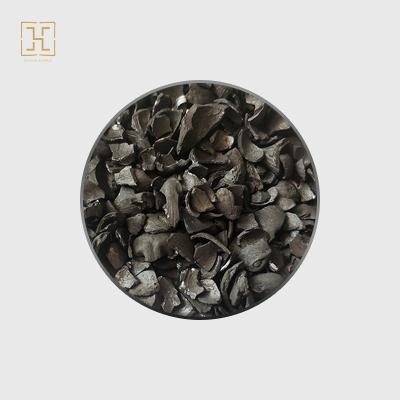
Granular carbon made from non-washed coal, including Coal Quality Char for Drinking Water Treatment, usually contains a small amount of remaining ash, typically less than 12%, which may temporarily increase pH levels during the first few hours of operation. This characteristic of Coal Quality Char for Drinking Water Treatment can be effectively managed by facilities through pre-soaking procedures or controlled rinse-to-waste periods during system commissioning. This practical approach allows procurement teams to achieve reliable organic removal performance with Coal Quality Char for Drinking Water Treatment without paying the additional cost associated with acid-washed carbon products. The balanced performance and cost efficiency of Coal Quality Char for Drinking Water Treatment make it particularly suitable for municipal water treatment plants that process surface water with moderate contamination levels. By selecting properly prepared Coal Quality Char for Drinking Water Treatment, operators can maintain effective purification results while optimizing operational expenses.
Three Critical Deployment Scenarios
The main place where coal char is used is in municipal GAC contactors, where it acts as a secondary barrier after regular sand filtration. The substance lowers the amount of Total Organic Carbon (TOC), which stops DBP from forming during the last steps of cleaning. This protective layer is especially helpful for water utilities in areas with a lot of agricultural runoff or seasonal algal blooms.
The second high-demand situation is managing an emergency bacterial bloom. During the warm months, when the number of cyanobacteria grows quickly, they release strong toxins like microcystins that regular sand screens can't get rid of. The specific mesopore distribution in good coal char is great at absorbing these medium-sized toxin molecules, allowing for quick action when regular treatment lines get too busy.
The third important use case is industrial pre-treatment for membrane systems. For reverse osmosis and nanofiltration to work, the water that goes into them must not contain chlorine or chemical foulants that break down polymer membranes. Through catalytic reduction, coal char gets rid of free chlorine while also absorbing humic substances and other foulants. This two-in-one protective feature increases the membrane's lifetime by 30 to 50 percent, which saves a lot of money over its whole life in places that make drugs, electronics, and drinks.
Comparing Coal Char Types: Choosing the Best Solution for Water Treatment
When purchasing managers look at different carbon media options, they need to think about more than just the initial purchase price. Knowing how different types of coal char work, what they need to be used for, and what their long-term value is helps you make decisions that are right for your facility's water quality problems.
Activated Versus Non-Activated Coal Char Performance
Granular carbon made from non-washed coal has strong benefits for uses in drinking water where there aren't a lot of contaminants. Its hardness level is higher than 95% according to ASTM D3802 testing. This means that it doesn't wear away much during backwash cycles, which keeps fines from building up and causing pressure drops or letting water through underdrains. The range of perceived densities, from 0.45 to 0.55 g/cm³, gives normal contactor designs the right hydraulic properties. This means that the bed can expand by 20 to 30 percent during backwashing without losing any media.
Products made from activated carbon have higher iodine values, sometimes exceeding 1200 mg/g. This means that they can absorb more per unit weight. This helps when it comes to cleaning up highly polluted industrial wastewater or dealing with new pollutants like PFAS chemicals. The better performance comes with much higher material costs, which makes the economics of lifecycle less appealing for large-scale city uses that treat relatively polluted source water.
The economic analysis is made more complete by the fact that non-washed coal char can be used to grow new plants. Its strong mechanical structure can handle heat regeneration, which means it can be used three to five times before it needs to be thrown away for good. This ability to be used again and again greatly lowers the long-term cost of replacing media, especially for big systems that process millions of gallons of water every day.
Lifecycle Value and Cost-Effectiveness Analysis
Procurement professionals should evaluate more than just the initial price per pound when calculating the total cost of ownership for Coal Quality Char for Drinking Water Treatment. The replacement frequency of Coal Quality Char for Drinking Water Treatment media, along with the labor costs involved in entering the vessel, removing used material, and installing new media, directly affects the overall operating expenses. The longer service life of Coal Quality Char for Drinking Water Treatment helps reduce maintenance requirements and improves cost efficiency over time. Compared with softer coconut shell carbons that may generate more fines and require more frequent replacement, Coal Quality Char for Drinking Water Treatment offers higher hardness and better resistance to physical breakdown. This durability makes Coal Quality Char for Drinking Water Treatment easier to handle, reduces operational interruptions, and provides a more reliable solution for long-term water treatment applications.
The large number of mesopores in the material makes it easy for contaminants to move quickly from the bulk water to internal binding sites. This feature makes empty bed contact times (EBCT) faster compared to micropore-dominant carbons, which lets more fluid flow through current contactors. Facilities can handle more materials without having to buy more vessels, which makes better use of their assets.
Operational energy use is also taken into account in lifetime estimates. Coal char's controlled density means that less backwash energy is needed to clean and expand the bed than with denser materials. Over the life of a 20-year facility, these energy savings add up to big cuts in operational costs while also helping the company meet its sustainability goals.
Procurement Guide: Selecting and Purchasing High-Quality Coal Char
To get reliable supplies of carbon media that meets your needs, you need to know about industry norms, certification requirements, and factors for evaluating suppliers. Professionals in B2B procurement have to understand technical specifications and judge a vendor's ability to provide consistent quality on a large scale.
Industry Standards and Quality Benchmarks
Standard B604 from the American Water Works Association (AWWA) is the main set of rules for using granular activated carbon in potable water applications. Products that meet this standard are put through a lot of tests to make sure they meet the requirements for cleanliness, performance, and physical qualities. The NSF/ANSI Standard 61 certification makes sure that the carbon's leachable parts don't put contaminants into drinking water, which is what the EPA says is needed to protect public health.
Particle size distribution is defined by sieve analysis according to ASTM D2862. Common mesh sizes are 8x30 and 12x40. The right size makes sure that the flow is spread out evenly and that the pressure drop is just right inside the contactors. The wear number test measures how durable something is mechanically and predicts how fast fines will be made during normal use. For grades that haven't been washed, floating material testing is especially important to make sure that there isn't too much media loss during the initial wetting and commissioning.
ICP-MS identification of trace metal leachate looks for arsenic, lead, aluminum, and other metals that could move from the carbon into the cleaned water. Strict limits keep secondary contamination from happening, which is very important since the goal of water treatment is to lower the amount of contaminants in the water, not to add new dangers. Dechlorination half-value length (HVL) testing measures how well a catalyst removes chlorine, which is important for membrane pre-treatment uses.
Evaluating Supplier Credentials and Capabilities
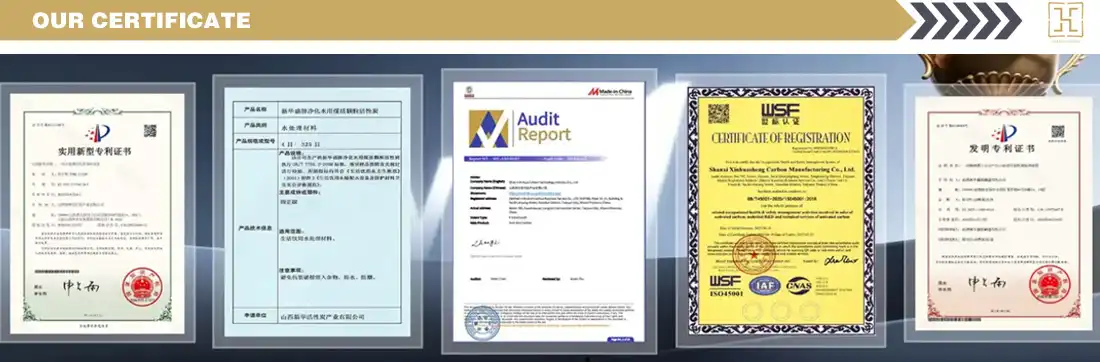
To build relationships with trustworthy sellers, buyers need to evaluate multiple aspects of a supplier's capabilities for producing Coal Quality Char for Drinking Water Treatment. Decades of manufacturing experience in Coal Quality Char for Drinking Water Treatment indicate that production methods have been continuously improved and technical knowledge has been accumulated, resulting in more consistent product quality. Facilities that maintain ISO 9001 quality management, ISO 14001 environmental management, and ISO 45001 occupational health certifications demonstrate structured process control and a commitment to continuous improvement in Coal Quality Char for Drinking Water Treatment production. Selecting an experienced supplier of Coal Quality Char for Drinking Water Treatment helps ensure stable supply, reliable performance, and consistent quality for long-term drinking water treatment applications.
Partnering with universities and national labs on research and development shows that a supplier is committed to new ideas and technological progress. Working together with places like Tsinghua University or the Chinese Academy of Sciences gives you access to cutting-edge materials science and lets you make changes that help solve new water quality problems. This research and development infrastructure makes it easy to act quickly when new toxins need different media specs.
The size and location of production facilities affect how reliable a supply chain is and how much it costs to move goods. Suppliers who have more than one factory with a total capacity of more than 40,000 tons per year can keep extra goods on hand to avoid problems when demand goes up. Regional distribution near major transportation hubs makes delivery across the continental United States possible in 3–7 days, which saves treatment facilities money on the cost of keeping inventory on hand. Emergency delivery procedures that offer 24-hour response times and fast 3-day shipping protect against media failures or contamination events that require rapid contactor media replacement.
Bulk Purchasing Strategies and Contract Structures
Framework supply deals help big buyers because they lock in prices and make sure that priority placement is given when the market is tight. Multi-year contracts with delivery schedules every three months make it possible to plan ahead for budgets while also adjusting for changes in seasonal demand. Purchasing managers should negotiate terms that cover quality assurance protocols, such as sampling before shipping, verification by a third-party lab, and procedures for rejecting material that doesn't meet specifications.
Payment terms and logistics arrangements have a big effect on landed costs. FOB origin pricing means that the buyer has to arrange for freight, which could lead to ways to save money by consolidating shipments or making backhaul arrangements. CIF destination price makes buying easier, but it may include freight surcharges. By understanding these frameworks, you can accurately compare costs when looking at different sources.
Provisions for technical help add a lot of value to the product itself. When suppliers offer application engineering help, system optimization advice, and efficiency troubleshooting, they build partnerships instead of just business ties. This help is very helpful when dealing with sudden changes in water quality, improving backwashing procedures, or planning system expansions.
Ensuring Reliable Purification: Practical Applications and Case Studies
Being deployed in the real world gives you important information about performance, operational issues, and problem-solving methods that tests in a lab can't fully capture. Looking at written applications helps procurement teams and plant operators plan for problems and use tried-and-true methods that work.
Municipal GAC Contactor Performance Documentation
After the EPA tightened its rules, a medium-sized water company in the Midwest put in place coal char contactors as a way to cut down on DBP. The facility treated surface water that had high levels of NOM, which caused THM levels to get close to what is allowed by law in the summer. Based on pilot testing, engineers chose granular carbon made from non-washed coal with a size of 12x40 mesh and a 15-minute EBCT.
After 18 months of use, the method regularly lowered TOC by 35–40%, which meant that the potential for THM formation dropped by 50%. The facility's pH went up at first, as expected, but it leveled off after 72 hours of operation. Backwashing at a rate of 20% bed expansion every 48 hours got rid of the solids that had built up without making too many fines. Monitoring data showed that the carbon kept working through two yearly cycles without breaking down, confirming that the 24-month replacement time was correct.
Emergency Response to Cyanotoxin Contamination
When microcystin levels in the reservoir went above what is considered safe, an algal bloom happened suddenly at a municipal treatment plant that serves 150,000 people. The standard treatment wasn't enough, so extra removal capacity was needed right away. Using an emergency supply procedure from a supplier, the utility set up temporary coal char contactors within 96 hours.
Small pores in the coal char made the microcystin levels drop from 3.2 μg/L to less than the 1.6 μg/L level that the EPA recommends for young children's health. A boil water advisory would have caused problems in the community and hurt public trust, but this quick response stopped it. The experience proved how important it is to have relationships with suppliers that allow for quick responses. As a result, the utility decided to install permanent GAC contactors as a safety measure against future bloom events.
Industrial Membrane Protection Applications
For industrial processes, a semiconductor production center needed ultra-pure water, and RO membranes made 500,000 gallons of water every day. The plant had faster membrane fouling, which cut the time between cleanings from 90 days to 45 days and put production plans at risk. Changes in the amount of chlorine in the city feed water were breaking down membrane polymers, and organic foulants were building up on the membrane surfaces.
Putting in coal char pre-treatment contactors got rid of all the free chlorine and cut the amount of organic matter by 60%. Cleaning times for membranes were increased to 120 days, which cut down on chemical use and downtime. The plant estimated that the investment in the carbon system would pay for itself in 14 months, since it would save money on membrane replacement costs, cleaning chemical use, and production delays.
Future Trends and Innovations in Coal Char for Drinking Water Treatment
The drinking water treatment industry is always changing because of new toxins, new rules, and the need to be environmentally friendly. Procurement professionals can make decisions that protect long-term value by understanding how trajectory shifts work.
Advanced Manufacturing Techniques Enhancing Performance
New developments in materials science are making different types of coal char with engineered pore distributions that target specific types of contaminants. Controlled activation processes make bimodal pore structures with micropores for capturing small molecules and mesopores for moving large amounts of matter quickly. These improved materials lower the amount of EBCT that is needed, which lets current contactors handle higher flow rates or get better removal at the same output.
Surface change methods that use catalytic metals improve the oxidative breakdown of chemicals that are hard to break down through simple adsorption. Some pesticides and medicines break down faster in coal char that is high in manganese. This helps address new worries about trace organic chemicals in source water. Adsorption and advanced oxidation processes come together in these functional materials, which are all in one medium.
Sustainability and Circular Economy Considerations
As more companies adopt ESG frameworks and carbon neutrality pledges, environmental duty plays a bigger role in their buying decisions. The thermal regeneration ability of coal char is in line with the principles of the circular economy because it allows media to be used again, which cuts down on the use of new materials and the burden of getting rid of them. When suppliers put money into regenerating infrastructure, they make closed-loop systems that are better for the environment and save customers money.
Life cycle studies that compare different types of media show that coal char made locally often has smaller carbon footprints than coconut shell carbon that has to be shipped across the ocean. As carbon accounting gets more complex, these differences will affect what people buy, especially public services that have to meet green requirements.
Regulatory Evolution and Quality Assurance
When the EPA changes its drinking water guidelines, it will probably set limits for more contaminants, such as some PFAS chemicals and 1,4-dioxane. Because of these changes in regulations, media will need to have certain adsorption properties. Suppliers with strong research and development (R&D) programs can quickly create and test specific carbons that meet new standards. This gives facilities that need compliance solutions a competitive edge.
Blockchain-based quality recording systems are becoming more popular as a way to track the origin of media and make sure that certification requirements are met. With these technologies, records of production batch data, quality testing results, and certification status can't be changed. Procurement teams can be more confident in their ability to check what suppliers say while still meeting the audit requirements of government agencies.
Conclusion
Coal Quality Char for Drinking Water Treatment has been shown to work well, be reliable, and save money in both public and commercial water purification systems. Its balanced pore structure gets rid of chlorine, organic contaminants, and taste-and-odor compounds while still being strong enough to withstand multiple backwash cycles. Procurement professionals can find the best solutions that protect public health, make sure regulations are followed, and lower lifecycle costs by learning about technical specifications, supplier capabilities, and best practices for applications. As problems with water quality change, working together with seasoned suppliers who can offer expert help and constant improvement will become more valuable.
FAQ
What technical parameters define high-quality coal char for drinking water applications?
The iodine value of superior coal char is between 900 and 1100 mg/g, which means it has enough internal surface area for adsorption to work. Values of 130–180 mg/g for methylene blue show that it can hold bigger chemical molecules. Hardness values above 95%, as measured by ASTM D3802, reduce wear and tear during backwashing. A low ash level (less than 12%) keeps pH effects to a minimum, and a perceived density of 0.45-0.55 g/cm³ makes sure that the hydraulics work right. Products should have AWWA B604 and NSF/ANSI 61 standards that show they are safe and work well.
How does coal char differ from activated carbon in water treatment?
Coal char turns into carbon without having to be activated for a long time. This lowers the cost of production while keeping the adsorption capacity high enough for local uses. Activated carbon goes through more oxidation processes, which make it more porous and improve its performance, but it costs more. For low amounts of contamination, non-washed coal char removes organic matter just as well, and it's cheaper for large-scale cleaning. Both materials can be heated and turned back into something new, but coal char is more durable and can handle more regeneration cycles.
Where can facilities source certified coal char products?
Reliable suppliers keep their ISO 9001 quality certifications up to date and provide extensive proof of AWWA and NSF compliance. Look at how big a company is, where their products are sold, how well they can help with technology issues, and if they have any R&D relationships. Suppliers who run more than one production facility with a total capacity of more than 40,000 tons per year offer more reliable supplies. Having established ties with research institutions shows that you have the technical know-how and creativity to meet your customization needs.
Partner with a Trusted Coal Quality Char for Drinking Water Treatment Manufacturer
Shanxi Xinhua Carbon Technology Industry Co., Ltd. has been working with activated carbon for more than 60 years and can help clean drinking water. Granular carbon from our non-washed coal consistently meets AWWA B604 and NSF/ANSI 61 standards and offers great value for money in both industrial and municipal settings. With production bases in several regions and an annual capacity of more than 45,000 tons, we keep a large inventory to ensure standard delivery within 7 to 15 days and emergency 3-day expedited shipping when tight deadlines require quick action. Through our study partnerships with Tsinghua University and the Chinese Academy of Sciences, we can make changes to meet the needs of new pollutants and specific applications. Email our technical team at greta@carbonxinhua.com to talk about your unique water cleaning needs, get free samples, or get full quotes. You can look at our full line of coal char products at xhcarbontech.com and learn why leading water utilities choose Shanxi Xinhua as their top supplier for reliable purification performance.
References
1. American Water Works Association. (2021). AWWA B604-21: Granular Activated Carbon Specification for Potable Water Treatment Applications. Denver, CO: AWWA.
2. Crittenden, J.C., Trussell, R.R., Hand, D.W., Howe, K.J., & Tchobanoglous, G. (2022). MWH's Water Treatment: Principles and Design, Fourth Edition. Hoboken, NJ: John Wiley & Sons.
3. National Science Foundation International. (2020). NSF/ANSI Standard 61: Drinking Water System Components – Health Effects Certification. Ann Arbor, MI: NSF International.
4. Summers, R.S., Knappe, D.R.U., & Snoeyink, V.L. (2023). Adsorption of Organic Compounds by Activated Carbon in Water Treatment. In Recent Advances in Drinking Water Purification Technologies. Cambridge, MA: Academic Press.
5. United States Environmental Protection Agency. (2019). Stage 2 Disinfectants and Disinfection Byproducts Rule: Technical Guidance Manual for Implementation. Washington, DC: EPA Office of Water.
6. Worch, E. (2021). Adsorption Technology in Water Treatment: Fundamentals, Processes, and Modeling. Berlin, Germany: De Gruyter Publishers.

Send Inquiry
You may like
_1781662034490.webp)