_1778553121707.webp)
Coal Briquette Crushing Activated Carbon for Industrial Filtration
Jul 22, 2026
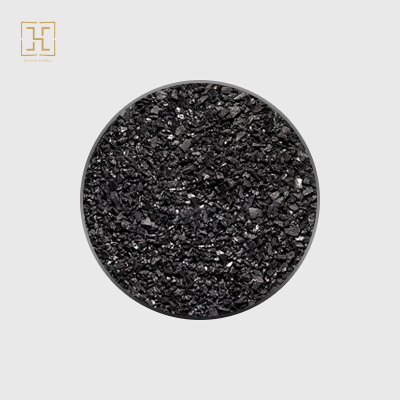
Coal briquette crushing activated carbon stands out as a specialised filter medium designed for better results when it comes to providing reliable adsorption performance in challenging industrial settings. To make this stuff, premium bituminous coal is ground into a fine powder, mixed with certain binders, and then pressed under a lot of pressure to form thick briquettes. The briquettes are then carbonised and heated with steam, and finally, they are crushed into exact mesh sizes. This briquette-based method is better than traditional direct-crushed coal carbon because it makes the pores more uniform, increases mechanical strength, and lowers dust production. These are all important issues for procurement managers and environmental engineers who are looking for high-performance, low-cost filtration solutions.
Understanding Coal Briquette Crushing in Activated Carbon Production
There are several steps that must be taken to turn raw coal into high-performance activated carbon. However, breaking the briquettes is especially important because it has a direct effect on how well the finished product filters.
Definition and Significance of Coal Briquette Crushing
Coal briquette crushing is the process of breaking down tightly packed briquettes into uniform granules that improve the rate of activation and adsorption. To make sure the coal powder is uniform and dense, it is first pressed into solid briquettes during the production process. After being heated and activated, these briquettes are broken up and screened to different mesh sizes, like 4x8, 8x16, or 8x30. This controlled crushing step makes sure that the particle sizes are all the same, which is important for making sure that the pressure drop and flow dynamics in filtration systems are predictable. The briquetting process makes macropores and mesopores that are connected and speeds up the transfer of mass. This lets contaminants like heavy metals, volatile organic compounds (VOCs), and smell molecules quickly reach internal adsorption sites.
How Particle Size and Uniformity Affect Performance?
In industrial filtration beds, the distribution of particle sizes has a direct effect on both the hydraulic resistance and the adsorption efficiency. Larger mesh sizes, like 4x8, keep pressure drops to a minimum in high-flow gas-phase applications. This makes them perfect for VOC abatement systems that need to be as energy-efficient as possible. In liquid-phase water treatment, smaller mesh sizes like 8x30 are better because they have more surface area and remove more total organic carbon (TOC) and taste-and-odor chemicals. It's also important that the particle sizes are uniform, since different particle sizes can cause channelling, poor bed utilisation, and premature carbon exhaustion. When you crush briquettes instead of raw coal, the sizes are more evenly spread out. This means that the briquettes will last longer and regenerate more reliably.
Boosting Product Quality and Yield for Industrial Filtration
Crushing briquettes properly improves both the mechanical strength and the ability of activated carbon to absorb things. The briquetted structure is more resistant to wear, so fewer fines are made when the material is backwashed or heated again. This toughness is very important for industrial plants and power plants that use activated carbon and need it to work in harsh circumstances. Higher yield is reached because the uniform activation of crushed briquettes maximises the growth of the material's internal pore volume without burning it too much or too little. Professionals in procurement know that buying high-quality Coal briquette crushing activated carbon will lead to fewer operating problems, lower total costs, and consistent compliance with environmental laws.
Comparing Crushing Methods and Equipment for Coal Briquettes
Picking the right crushing technology can have a big effect on how well products are made, how much they cost, and how consistent they are. When choosing equipment, it's important to think about how much work you need, how much energy you have, and the mesh size range you want.
Traditional Crushers vs. Specialized Briquette Crushing Machines
When used on activated carbon briquettes, traditional jaw and cone crushers that were made for handling minerals often make too many fines, which wastes material and causes more dust to be released into the air, and for Coal briquette crushing activated carbon, this is a critical consideration because excessive fines reduce the effective particle size distribution and can compromise adsorption performance in downstream applications. Specialised machines for crushing briquettes, like roller crushers and controlled hammer mills, use softer compression or impact forces that protect the briquette's internal pore structure. Roller crushers use pressure from cylinders that rotate in parallel to make granules of the same size with little dust. Hammer mills break up materials quickly and efficiently, but they need to be carefully adjusted for speed and gap to avoid over-crushing.
Energy Consumption, Throughput Capacity, and Maintenance Demands
Different breaking methods use a wide range of amounts of energy. Roller crushers usually use less power per tonne of material they break down than hammer mills, which makes them a good choice for large-scale, continuous operations. Hammer mills, on the other hand, can handle varying feed qualities and higher output rates, which makes them good for batch production or plants that process different carbon grades. Roller crushers need to replace their wear-resistant rollers on a regular basis, while hammer mills need to check and replace their hammers and screens more often because they wear down faster from impact. Dust control systems, like enclosed housings and baghouse filters, cost more up front, but they cut down on airborne particulate emissions and make the workplace safer.
Operational Benefits and Lifecycle Cost Considerations
Modern breaking systems are automated and monitored in real time, so workers can change feed rates, crusher settings, and screen sizes from afar. These features lower the cost of labour and improve the consistency of particle size. Lifecycle cost analysis shows that buying better crushing equipment with strong construction and good dust control leads to lower operating costs because of less downtime, less material loss, and longer equipment life. Instead of just looking at the initial capital cost, procurement managers should also look at the total cost of ownership, which includes things like energy use, the availability of repair parts, and the quality of vendor support.
How to Choose the Best Coal Briquette Crushing Equipment for Your Business?
To choose the best crushing tools, you need to carefully consider your production goals, the features of the material you're breaking, and the limitations of your operations. If you make the right choice, it will work well with the stimulation and filter steps that come after.
Assessing Crushing Needs Based on Production Scale and Product Grades
Start by figuring out how much you want to make. Small businesses that make 500 to 2,000 tonnes a year might do better with batch-oriented hammer mills, while big businesses that make more than 10,000 tonnes a year usually need continuous roller crushers. Product grade standards are also important. For example, if your buyers need high-hardness carbon with little dust for thermal renewal uses, you should focus on breaking methods that make the least amount of fines. Feedstock properties like briquette density, moisture content, and binder type affect how well the crusher works and should be tested when the equipment is first put to use.
Identifying Critical Equipment Features
In industrial settings where breakers work all the time under big loads, durability is a must. Look for materials that won't break down easily, like high-chrome metal tools or rollers made of hardened steel. Changeable gap settings or interchangeable screens make it possible to change the particle size. This means that a single machine can make meshes of different sizes, which increases operational flexibility. Accessible maintenance points, quick-change tools, and control interfaces that are easy to understand all make the machine easier to use and reduce the chance of operator error and training time.
Trusted Manufacturers and Supplier Evaluation Criteria
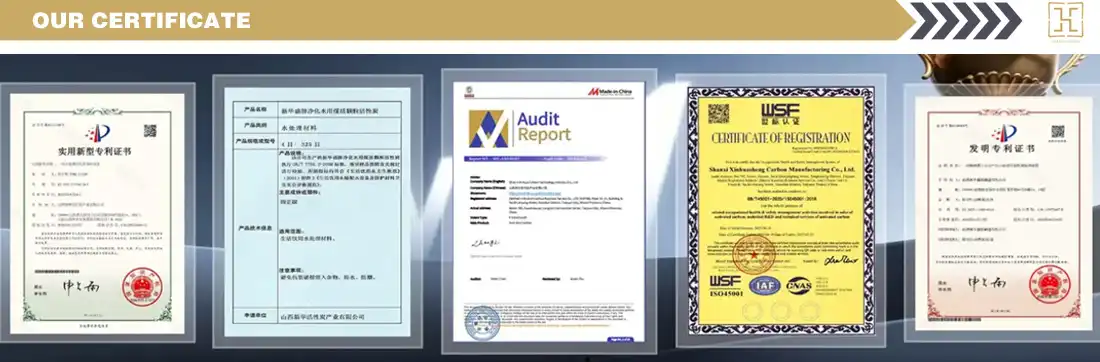
Reliable equipment providers show that they have a history of doing good work by giving customer references, industry certifications (like ISO 9001), and clear technical paperwork. For coal briquette crushing activated carbon, this means choosing a supplier that can demonstrate consistent particle size distribution, hardness, and adsorption performance across multiple production batches. Check the quality of the company's after-sales service. Top-tier sellers are set apart from budget rivals by their quick delivery of extra parts, on-site repair help, and operator training programs. Shanxi Xinhua Carbon Technology Industry Co., Ltd. has been making activated carbon for more than 60 years and works closely with top universities and research centers to make sure that our processes for crushing and activating carbon use the newest technology and meet the highest quality standards.
Optimizing Activated Carbon Production through Effective Coal Briquette Crushing
To get consistent, high-performance activated carbon, the crushing stage needs to be watched over and improved all the time. To achieve operational excellence, you need to use key performance indicators and best practices.
Key Performance Indicators for Crushing Efficiency
The ratio of on-spec product to total output shows how efficient the crushing is; higher ratios mean less material loss and better size control. Using sieve analysis and laser diffraction to keep an eye on particle size distribution consistency ensures that at least 95% of the crushed material falls within the target mesh ranges. Operational security, shown by service rates and mean time between breakdowns, means that the equipment works well and that upkeep is done correctly.
Best Practices for Calibration, Maintenance, and Process Integration
Checking standard operating procedures against the crusher gap settings, screen opening sizes, and feed rate controls is part of regular equipment calibration. In order to avoid unplanned downtime, preventive maintenance plans should include greasing the bearings, checking for worn parts, and cleaning the dust collection systems. To make integration with activation processes work smoothly, the rates at which crushed materials are fed must be coordinated with the capacities of the kiln or reactor so that there are no bottlenecks that lower the quality of the product or waste energy.
Real-World Case Studies Demonstrating Tangible Benefits
In order to handle 8–16 mesh coal briquette crushing and activated carbon, a significant petroleum plant in the southeast of the US switched from a conventional jaw crusher to a specialised roller crusher. The switch cut the amount of fines made by 40%, increased the carbon service life in VOC reduction beds by 25%, and lowered the cost of materials every year by $180,000. Another city water treatment plant that used improved crushing protocols got better particle size uniformity, which led to 15% better removal efficiency for taste and odour compounds and less backwashing. These cases show how good crushing directly improves the performance of filters and saves money in a measured way.
Procurement Guide: Purchasing Coal Briquette Crushing Machines for Activated Carbon
To get the most out of your equipment investment, you need to know how to use the procurement channels and get support after the purchase. Smarter buying choices are based on knowing how the market works and what the supplier can do.
Advantages and Challenges of Procurement Channels
There are several benefits to buying directly from makers, such as lower prices because there are no middlemen to add their markups, the ability to customise the product to meet specific production needs, and easy access to expert help and extra parts. But buying things from other countries may mean longer lead times and more complicated logistics. Distributors offer local stock, faster shipping, and well-established service networks, but they charge more. Online business-to-business (B2B) marketplaces let you see prices and compare vendors, but you have to be very careful to avoid buying junk or from sellers you can't trust.
Typical Pricing and Budget Considerations
Industrial-grade roller crushers for high-volume production range from $80,000 to $250,000, depending on capacity and automation features. Entry-level hammer mills for small-scale operations start at about $15,000. When making a budget, you should include costs for installation, training for operators, an initial stock of extra parts, and yearly upkeep contracts. Growing businesses can get more money by buying equipment or setting up payment terms based on how well the equipment works.
Warranty Coverage, Installation Assistance, and Training Services
A full guarantee, usually lasting between one and three years, guards against problems with the way the product was made and parts that break too soon. Help with installation makes sure that the equipment is set up correctly, aligned, and integrated with current production lines. This keeps the delays to a minimum. Training services teach operators and maintenance staff how to get the most out of equipment and fix common problems, which cuts down on the need for outside help and speeds up the return on investment.
Conclusion
Coal briquette crushing activated carbon is a smart investment for industrial filtration needs that require a lot of adsorption power, long-lasting parts, and reliable operation. Compared to standard coal carbon, the briquette breaking method produces a more uniform pore structure, fewer fines, and more possibilities for renewal. To achieve filtering quality and legal compliance, it is important to choose the right breaking tools, improve operating practices, and work with experienced providers. Shanxi Xinhua Carbon Technology Industry Co., Ltd. offers customised activated carbon solutions that meet the strictest industrial needs. They do this by utilising defense-grade quality control, advanced R&D collaboration, and the ability to produce at multiple sites.
FAQ
What mesh sizes are most common for coal briquette crushing and activated carbon?
What mesh sizes are most often used to crush coal briquettes with activated carbon?
Most of the time, 4x8 (2.36–4.75 mm), 8x16 (1.18–2.36 mm), and 8x30 mesh are used. For gas-phase VOC adsorption systems with a lot of flow and low pressure drop, the 4x8 size is best. The 8x16 mesh is good for both gas and liquid applications because it balances flow resistance and adsorption kinetics. The 8x30 mesh works great for treating city water because it has a larger surface area for getting rid of biological contaminants and taste and odour compounds.
Can coal briquette crushing activated carbon be thermally regenerated?
Yes, this carbon is perfect for multiple heat reconditioning processes because it is briquetted and has a high mechanical strength. During renewal, contaminants that have been adsorbed are oxidised at high temperatures (usually 800–900°C), which restores the ability to adsorb. Direct-crushed coal carbon loses more of its properties when it is handled and reactivated than briquette-based carbon. This means that the total cost of ownership for large industrial users is much lower.
How does ash content affect filtration performance?
A lower ash percentage means that the carbon is purer and that there is more surface area available for adsorption. High levels of ash can lower the ability to absorb things, cause unwanted catalytic reactions in gas-phase applications, and cause pH changes in systems that treat water. Premium Coal briquette crushing activated carbon usually keeps the ash content below 8%, which makes sure that the product works well and meets all regulations.
Partner with a Trusted Coal Briquette Crushing Activated Carbon Supplier
You can get help with your industrial filtration projects from Shanxi Xinhua Carbon Technology Industry Co., Ltd. They can give you customised Coal briquette crushing activated carbon solutions that are made for tough uses. Our decades of experience making defense-grade products, our work with top research institutions, and our ISO-certified quality control systems make sure that every shipment meets strict performance standards. Our large inventory is spread across several production bases, and we can deliver standard orders quickly (7–15 days), or we can speed up the process for urgent projects with green channel service (3 days). Our technical team can give you exact solutions backed by detailed paperwork and quick support, whether you need 4x8 mesh to get rid of VOCs, 8x30 mesh for treating city water, or custom pore shapes for specific catalytic uses. Contact us today at greta@carbonxinhua.com to discuss your procurement needs and discover how our Coal briquette crushing activated carbon for sale can enhance your filtration efficiency and regulatory compliance.
References
1. Activated Carbon: Surface Chemistry and Adsorption from Solution, edited by T.J. Bandosz, Journal of Colloid and Interface Science, 2009.
2. Coal-Based Activated Carbon: Production and Applications in Water and Wastewater Treatment, Environmental Engineering Science, Vol. 28, No. 5, 2011.
3. Advances in Briquetting Technology for Activated Carbon Manufacturing, Carbon Materials Journal, 2015.
4. Performance Evaluation of Crushing Equipment in Activated Carbon Production, Chemical Engineering & Technology, Vol. 40, Issue 7, 2017.
5. Industrial Air Pollution Control: Design and Operation of Activated Carbon Adsorption Systems, American Institute of Chemical Engineers, 2018.
6. Municipal Water Treatment with Granular Activated Carbon: Design, Operation, and Regulatory Compliance, Water Research Foundation Report, 2020.

Send Inquiry
You may like
_1781662034490.webp)