_1778553121707.webp)
Coal-Based Crushed Activated Carbon Supplier from China Factory
Jul 27, 2026
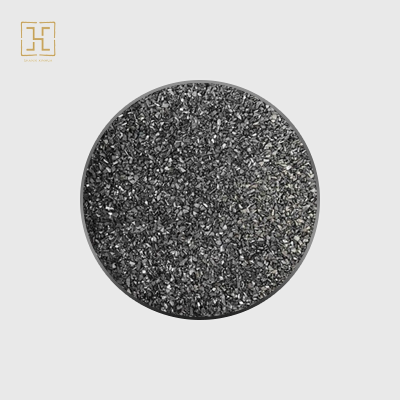
Coal-based crushed activated carbon stands out as a flexible industrial adsorbent when looking for a reliable activated carbon option that strikes a balance between performance and cost. This material has uneven pieces with a rough surface and an extremely large specific surface area. It was made by carefully crushing, screening, carbonizing, and activating it. The shapeless, angular structure allows for fast adsorption, which is why it is essential for deep cleaning in drinking water systems, treating industrial wastewater, and changing process water in places that make food, chemicals, electricity, and plating.
Understanding Coal-Based Crushed Activated Carbon
Fundamental Properties and Structure
This absorbent material works well because of the way its molecules are arranged physically and chemically. At controlled temperatures, high-quality bituminous or anthracite coal changes thermally, making a network of micropores and mesopores inside each particle. The rough, uneven surface makes it easier for contaminants to stick to it, and the porous structure inside lets molecules get to adsorption sites deep in the carbon matrix.
Surface area readings are usually between 800 and 1,200 m²/g, but they can be higher or lower based on the raw material and how strong the activation is. This large surface has a lot of places where organic chemicals, chlorine, odor molecules, and color-causing substances can stick together through physical adsorption. The Coal-based crushed activated carbon version is especially good at getting rid of medium to large molecular weight organics. This makes it great for commercial uses where a lot of different toxins need to be removed at once.
Adsorption Mechanism and Efficiency Factors
Adsorption is the process by which contaminant molecules move from a liquid or a gas to the surface of carbon. This is caused by van der Waals forces and capillary condensation in the network of pores. Several factors affect how well something works: the pores' size range decides what molecular sizes can enter and stay; the surface's chemistry determines which compounds stick to it; and the particle size affects both the contact time and the pressure drop across treatment beds.
When used in certain situations, the broken form is clearly better than the cylinder or pelletized versions. Smaller, less regular particles make flow paths that are more winding, which extends stay time without needing beds that are too deep. The rough surface makes the particle-fluid contact more turbulent, which speeds up mass transfer and lets high-volume streams be processed more quickly.
Comparative Analysis with Other Carbon Types
Coconut shell activated carbon has a higher hardness and lower ash content, which makes it perfect for potable water uses that need little leaching. On the other hand, Coal-based crushed activated carbon versions are better for industrial-scale operations because they offer better cost-performance ratios. Wood-based carbons are great at getting rid of big organic molecules, but they aren't strong enough for tough jobs that involve backwashing or fluidized bed systems.
Granular activated carbon (GAC) has even flow and predictable pressure drops, but the crushed version has faster adsorption because the internal diffusion paths are shorter. Which form to use relies on the system's design parameters, the contaminants that need to be removed, and practical limits like how often the system needs to regenerate and how the equipment is set up.
Key Benefits and Industrial Applications
Core Advantages for Industrial Procurement
The practical economics are directly affected by how long a material lasts. A protective layer forms on each particle through specialized low-temperature carbonization at 500°C, followed by medium-temperature activation at 700°C. This lowers the rate of wear to less than 2%. Standard goods often have wear rates higher than 5%, which causes the filter bed to break down too quickly and make fine dust that clogs up equipment further downstream.
Precision particle engineering makes sure that the whole treatment system works the same way every time. When you mix CNC crushing technology with multi-stage rotating screens, you get particle size distribution deviations of less than 5%, while for regular goods, it's 10% or more. This level of consistency gets rid of bypass flow pathways where untreated fluid can get out of the treatment process. This makes the total adsorption process 20% more effective.
The rough, textured surface can hold more than 15% by weight of catalyst, so it can be customized with palladium, platinum, or other reactive metals for advanced oxidation and chemical synthesis uses. Most smooth cylindrical carbons can only load up to 10%, which makes them less useful in catalytic systems. These technological benefits directly lead to business benefits that procurement managers value. When something lasts longer, it doesn't need to be replaced as often, which saves money on labor costs. Stable pressure drops and predictable performance are maintained throughout the service cycle by particles of the same size. Better loading of the catalyst allows the process to be sped up, which lowers the size of the reactor and the cost of installing new ones.
Real-World Industrial Applications
This material is used by municipal and industrial water treatment plants to get rid of organic toxins that change the color, taste, and smell of water. Chemical oxygen demand (COD) reductions of more than 90% are common in tertiary wastewater treatment, which helps sites meet stricter rules for release. Applications that use dechlorination keep downstream membranes and ion exchange resins safe from oxidant damage, which makes them last longer.
Coal-based crushed activated carbon is used by companies that process food and drinks to remove color from syrups, juices, and fermentation broths without changing the flavors. The uneven particle shape allows for more contact time at lower bed depths than uniform granules, which lowers the machine size and the cost of keeping media in stock. It is used in solvent recovery systems at chemical plants to capture vapors of toluene, xylene, and acetone with recovery rates of over 95%, turning waste streams back into raw materials that can be used again.
In industries like printing, coating, and electronics production, this adsorbent is used in fluidized bed and moving bed reactors to capture volatile organic compounds (VOCs). Even when gas speeds are higher than 1.5 m/s, the material still removes more than 90% of the material, so high-throughput production lines can use it without having to buy big equipment. It is needed by petrochemical plants to get rid of hydrogen sulfide in gas streams and mercury from processing natural gas.
Sustainability and Regeneration Considerations
Environmental responsibility is becoming more and more important in purchasing decisions. Thermal regeneration makes it possible for used carbon to be reactivated and used more than once. This has a much smaller effect on the environment over its whole lifecycle than using adsorbents that are only used once. Facilities with regeneration kilns can bring back the adsorption capacity to 85–95% of its original level, but careful control of the temperature and atmosphere keeps the combustion from losing too much carbon.
For economic analysis, the costs of regeneration should be compared to the costs of replacement, taking into account the amount of energy used, the carbon that is lost during revival, and the cost of shipping. In high-value applications with expensive loaded catalysts, regeneration can usually happen on-site or off-site. However, in high-throughput, low-concentration applications, replacing with new media may be better.
Manufacturing Process and Quality Standards
Production Chain from Coal to Finished Product
Choosing the right raw materials sets the stage for how well the finished product works. Jaw crushers and hammer mills are used to reduce the initial size of high-quality bituminous coal with low sulfur and mineral content. This makes particles that are suitable for the next steps in the processing process. Screening sorts parts that are too big or too small, making sure that only the best feedstock goes into carbonization ovens.
At temperatures between 400°C and 600°C and low oxygen levels, carbonization gets rid of flammable matter, leaving behind a carbon-rich char with a basic hole structure. Activation uses controlled oxidation at 700–900°C with air, carbon dioxide, or steam to make this pore network bigger and better. The end surface area and pore size distribution are determined by the reaction time and concentration of the activating agent. This lets makers make goods that are perfect for certain uses.
Certifications and Quality Assurance Systems
Post-activation processing includes more crushing to get the particles to the right size, acid washing to get rid of the ash and balance the pH, and a thorough rinse to get rid of any chemicals that are still present. Final screening sorts products into exact size groups, and dust removal systems cut down on fines that could cause problems with turbidity during the first washing step.
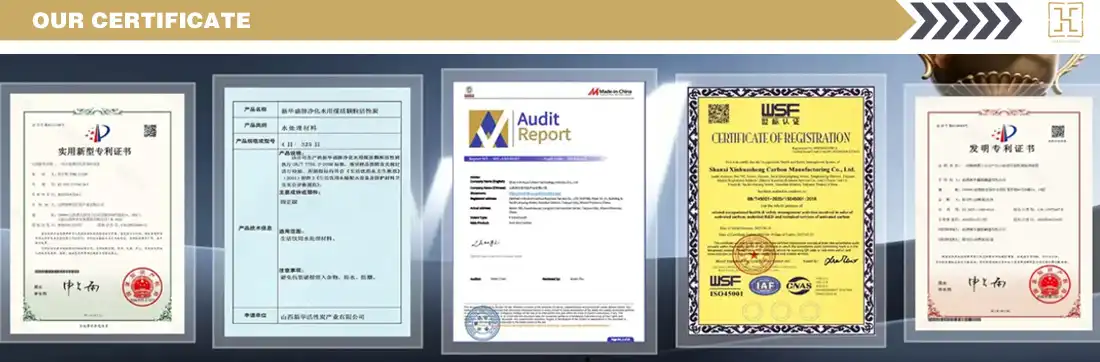
International standards give us a way to check how consistent a product is and how reliable a supplier is. Getting ISO 9001 approval shows that you have put in place quality management systems that cover things like controlling production, keeping track of products, and making improvements all the time. ISO 14001 is about managing the environment and making sure that factories have the least possible effect on the environment by reducing waste and controlling emissions. ISO 45001 is all about health and safety at work, and it protects workers at every stage of the production process.
Product-specific testing for Coal-based crushed activated carbon should check the iodine number (which shows the size of micropores and their ability to absorb organic matter), the methylene blue value (which shows the structure of mesopores), the ash content (which affects purity and pH stability), the moisture content (which prevents shipping weight inflation), and the particle size distribution. Reliable suppliers provide buyers with detailed specification sheets that include normal ranges and test methods. This allows buyers to compare products objectively and consistently. Verification by a third-party laboratory adds credibility when evaluating new sources or critical applications. Testing by approved facilities confirms the stated performance parameters and identifies any errors or contaminants that may affect system operation.
How to Choose the Right Supplier for Coal-Based Crushed Activated Carbon
Defining Your Procurement Requirements
To start sourcing successfully, you need to be clear about your technical and business needs. Whether standard catalogue items or unique formulas are more cost-effective depends on how much you need to buy. Annual usage of more than a few tons usually calls for customization talks, while smaller users can get what they need from stock things that are easy to find.
Target contaminants, operating temperature and pressure ranges, contact time limits, and regeneration frequency are some of the application-specific parameters. For systems that deal with a lot of chlorine, acid-washed types may be needed to keep the pH from rising too high. For catalyst support uses, specific pore structures are needed that can handle metal loading without getting too clogged up.
Evaluating Chinese Factory Suppliers
Delivery times have a big impact on which suppliers are chosen. In an emergency, you may need to pay more for faster shipping, but planned system setups let you save money on freight costs by combining orders. When you know the wait times for both standard and custom goods, you can avoid making last-minute deals that drive up costs or cause projects to be delayed.
If you buy a lot of something and want to save money without losing quality, makers in China are a great choice. Integrated production facilities manage the whole value chain, from getting the coal to packaging it at the end, so there are no markups in the middle. Large production volumes lead to economies of scale that make prices per ton competitive in a way that is hard for multinational brands to match.
Another important difference is the ability to customize. Well-known Chinese factories have technical staff that knows how to change pore structures, particle size distributions, and catalyst loadings to meet specific customer needs. This gives purchasing managers the freedom to find the best material qualities for each job, rather than having to change their methods to fit the products that are available.
Logistics and Supply Chain Considerations
Shanxi Xinhua Carbon Technology Industry Co., Ltd is a good example of what some of the best Chinese companies can do. The company has been making activated carbon for over 60 years and has a background in defense-grade chemical protection technology. It has multiple production bases that can make a total of 45,000 tons of carbon every year. Material science and production methods are always getting better thanks to partnerships with Tsinghua University, Central North University, and the Chinese Academy of Sciences.
The types of packaging used should protect the integrity of the materials during international shipping while keeping the costs of handling to a minimum. For high-volume shipments, bulk bags (FIBCs) make loading and unloading faster, while smaller paper bags or fiber drums are better for people who don't need a lot of storage space. Moisture barrier covers stop the uptake of humidity, which could hurt performance or make the package heavier to ship. Lead times depend on how quickly you need the product and how much customization you need. Standard formulations from sellers with a lot of stock usually ship within 7 to 15 days. Custom specs, on the other hand, may need 15 to 30 days for production and quality control. Setting up framework agreements with agreed-upon annual volumes lets suppliers keep dedicated stock, which cuts down on delivery times for repeat orders.
When choosing a mode of transportation, speed and cost must be balanced. Ocean freight is the most cost-effective way to send multiple tons of goods over 4–8 weeks, while air freight meets urgent needs at higher costs. Reliable suppliers handle all aspects of multimodal logistics, such as customs paperwork, figuring out duties, and the last-mile delivery to customer facilities.
Maximizing Performance and Longevity
Proper Handling and Storage Protocols
The purity of the material starts with storing it properly. Coal-based crushed activated carbon quickly pulls moisture and organic vapors from the air around it, making less space for target contaminants. Sealed containers kept in climate-controlled warehouses keep their performance as delivered until they are installed. For outdoor storage to stay dry, the covers must be weatherproof, and the containers must be raised off the ground.
Handling methods should make as little dust as possible and keep things from getting contaminated. Cross-contamination from other materials can't happen when you use specialized tools and transfer equipment. When dealing with dry carbon, people should wear the right breathing protection so they don't breathe in fine particles.
Pre-wetting steps get carbon ready for use with water while getting rid of any dust or fines that are still there. Adding water slowly lets held air escape without making flow paths that are easier to use. In some situations, longer soaking times are better because they fully fill up the pores inside the material, making the effective contact area bigger from the start.
Regeneration Techniques and Replacement Decisions
The most common way to reactivate carbon is still thermal regeneration, which involves heating it to 700–850°C in controlled atmospheres. Organic adsorbates break down and evaporate, letting new pores open up and do their job. To make up for the 5–15% of carbon that is lost during each regeneration cycle, new material must be added, while catalyst loadings are gradually lowered if they are present.
Chemical renewal with acid, base, or solvent washes can specifically get rid of some adsorbates without putting them under heat stress. This method works well for materials that have fragile catalyst loadings or for uses where thermal recovery would not be cost-effective. How well it works depends a lot on the chemistry of the contaminants and the structure of the carbon pores.
When the cost of regeneration is higher than the cost of new materials, when the amount of ash builds up and lowers performance beyond what is reasonable, or when too much carbon is lost during regeneration, making the process unstable, replacement becomes the best option. Keeping an eye on breakthrough curves and pressure drops gives you objective information to help you decide when to replace the parts.
Troubleshooting Common Operational Issues
Early breakthrough means there wasn't enough contact time, there was competitive adsorption from contaminants that weren't expected, or the carbon capacity had decreased. If you look at recent changes to the process, you might find new chemicals or higher levels of contaminants. Testing spent carbon in the lab shows how much capacity is still available and whether there are any foulants blocking pore entry.
In water treatment uses, too much pressure drop can happen when the bed gets compacted, fines build up, or microbes grow. Backwashing restores the bed's porosity and gets rid of solids that have built up in systems that are made to do this. By breaking up hardened areas, air scrubbing makes backwashing work better.
Changes in pH during the first process are caused by activation chemicals that are still present or by ash leaking. If you rinse carbon well, it should have a neutral pH, but if you don't, it will leave behind alkaline or acidic residues. This problem can be fixed with extended pre-rinsing, but it uses more water at startup and takes longer to commission the system.
Conclusion
To find the best provider of Coal-based crushed activated carbon, you need to find a balance between technical performance, cost effectiveness, and the dependability of the supply chain. It has been shown that coal-based versions work well for cleaning drinking water, treating industrial wastewater, reducing volatile organic compounds (VOCs), and supporting catalysts in situations where adsorption capacity and mechanical durability are important for operating success. When procurement workers know how manufacturing methods affect the features of a product, they can choose materials that improve system performance while keeping costs low over its lifetime. Chinese factory suppliers have competitive prices, the ability to make changes, and the ability to increase or decrease production capacity, all of which are very appealing to global industrial operations.
FAQ
What factors most significantly influence adsorption capacity?
The distribution of pore sizes determines the molecular sizes that can be captured and kept. Small molecules like gases and solvents can fit through micropores that are less than 2 nanometres wide, while larger organic compounds can fit through mesopores that are between 2 and 50 nanometres wide. Surface chemistry changes how well adsorbates that are polar or non-polar stick to the surface. Total surface area is controlled by activation strength during manufacturing, which is directly related to possible maximum capacity.
How does coal-based crushed carbon compare cost-effectively against cylindrical pellets?
Coal-based crushed activated carbon versions usually cost 15–25% less per ton because they are easier to make, as they don't need to go through the steps of extrusion and pelletizing. Shorter internal diffusion routes can speed up the adsorption process and lower the bed level by 20–30%, making up for some of the hardness disadvantage. When fast processing or catalyst support is important, Coal-based crushed activated carbon forms are usually better, while systems that need little pressure drop and easy regeneration usually justify pellet premiums.
What certifications should buyers expect from trustworthy Chinese suppliers?
Getting ISO 9001 quality management certification shows that you can control and track your production in an organized way. Getting ISO 14001 certification for environmental management means that you are making products in a responsible way. The testing results for a certain product should include measurements of the iodine number, ash content, moisture level, and particle size distribution using ASTM or similar methods. For drinking water uses, extra certifications are needed to make sure it is safe and doesn't contain any contaminants that can be leached.
Partner with a Trusted Coal-Based Crushed Activated Carbon Manufacturer
Shanxi Xinhua Carbon Technology Industry Co., Ltd is ready to help you with your cleaning problems by providing carefully designed absorbent options. Because we have a history of making things for the defense industry, we can guarantee wear rates below 2%, particle size consistency within a 5% range, and catalyst loading capacities above 15%. With the ability to produce 45,000 tons per year across various facilities, we keep a large inventory that allows for normal delivery within 7 to 15 days and emergency 3-day expedited service for urgent compliance needs. Environmental engineers and procurement managers get personalized technical help, the ability to change everything from the structure of the pores to the makeup of the catalyst, and full paperwork that meets ISO 9001, 14001, and 45001 standards. Get in touch with our team at greta@carbonxinhua.com to get product details, performance data, and reasonable quotes that are made to fit your unique needs for industrial processing, water treatment, or air purification. Let's show you why Shanxi Xinhua is the go-to supplier of Coal-based crushed activated carbon for top environmental contractors and petrochemical plants.
References
1. Activated Carbon: Solutions for Improving Water Quality, American Water Works Association Research Foundation, 2011.
2. Bansal, R.C. and Goyal, M., Activated Carbon Adsorption, CRC Press Taylor & Francis Group, 2005.
3. Handbook of Industrial Water Treatment, Nalco Company Technical Publication, 2009.
4. Activated Carbon Applications in the Chemical and Pharmaceutical Industries, International Society for Pharmaceutical Engineering, 2013.
5. VOC Emissions Control Technology Assessment, U.S. Environmental Protection Agency Office of Air Quality Planning and Standards, 2012.
6. Coal-Based Activated Carbon Manufacturing and Applications in Industrial Purification Systems, Chinese Academy of Environmental Sciences Research Monograph, 2018.

Send Inquiry
You may like
_1781662034490.webp)