_1778553121707.webp)
Coal-based crushed activated carbon: Properties, Applications & Guide
Jun 30, 2026
Coal-based crushed activated carbon is an important part of modern industrial cleaning systems because it can absorb a lot of different chemicals. It is made from high-quality coal after being crushed, carbonized, activated, and refined. It is essential for deep cleaning tasks in drinking water treatment, industrial wastewater management, and gas-phase contamination removal because the particles are not all the same shape and size, and the specific surface area is very large. This guide gives procurement managers, environmental engineers, and technical directors useful information about the qualities of materials, how well they work in different situations, and how to choose materials strategically so that they meet regulations and run their businesses well.
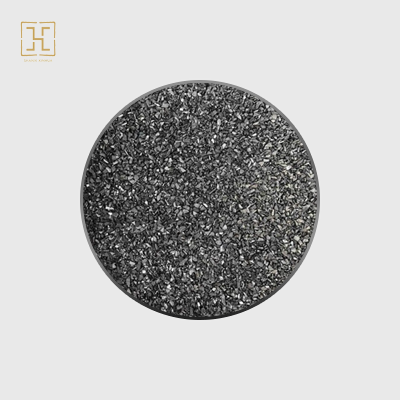
Understanding Coal-Based Crushed Activated Carbon
Manufacturing Process and Material Characteristics
To make this absorbent material, first, high-quality bituminous or anthracite coal is chosen. The coal is then carefully crushed and screened to create controlled particle size ranges. Volatile chemicals are pushed out during carbonization at about 500°C, which creates the original porosity. After being activated at 700°C in oxidizing atmospheres, a large network of microporous and mesoporous spaces is formed that determines the ability to adsorb. The two-temperature process makes a protected layer on the surface, which lowers the rate of mechanical wear to less than 2%. This is a lot lower than other methods, which have degradation rates of 5% or more.
Crushed types are different from columnar or grainy types because they don't have a set physical shape. The rough, uneven surface has two very important benefits: it makes it easier for the catalyst to load, and it speeds up the rate at which mass moves between the catalyst and the surface. Using CNC technology to keep the particle size distribution variation below 5% and vibrating screening to get rid of bypass flow in treatment beds is a typical way that water and gas cleaning systems lose efficiency.
Physical and Chemical Properties
The surface area is usually between 800 and 1,200 m²/g, and iodine levels above 900 mg/g mean that chemical compounds can stick to it strongly. Mechanical hardness above 95% makes sure that there is little wear and tear during shipping and fluidized bed processes. Most of the pores are micropores, which are less than 2 nm in diameter and are used to catch small molecules. Mesopores, which are between 2 and 50 nm in diameter, help bigger contaminants like heavy metals and complex organic molecules move through the system.
The naturally graphitic structure of carbon from coal makes it chemically stable in harsh situations like high humidity, acidic gases, and temperatures above 80°C. This makes broken adsorbent materials perfect for use in petroleum refineries and flue gas treatment systems, where the stability of the materials directly affects the system's ability to keep running.
Applications and Benefits of Coal-Based Crushed Activated Carbon
Water Treatment Systems
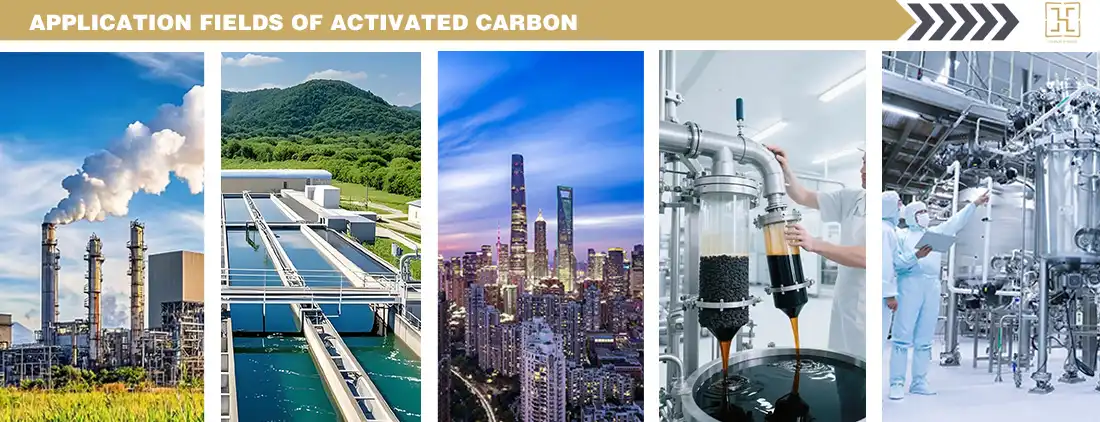
Coal-based crushed activated carbon is used by municipal drinking water plants to get rid of chlorine, organic micropollutants, taste compounds, and color bodies. Because the external surface area is very large, the adsorption speed is very fast. This means that contact times are faster in rapid filter units, which increases throughput without lowering water quality. Industrial wastewater treatment plants that deal with electroplating waste, textile dye waste, and pharmaceutical process water can get rid of more than 90% of the COD and lower the levels of heavy metals to below legal limits at the same time.
In emergency spill situations, pre-sized broken carbon can be quickly put into temporary filter systems because it is ready to use. This protects ecosystems downstream until permanent cleanup measures are put in place. Because the material can be used with both fixed-bed and moving-bed contactors, it can be used in a wide range of building designs.
Industrial Gas Purification
Coal-based crushed activated carbon is used in fluidized bed reactors to get rid of VOCs in coating plants, printing shops, and electronics factories. The uneven form of the particles keeps the bed fluid at speeds over 1.5 m/s. This high speed and over 90% removal efficiency make it possible to build small systems that decrease the size of the facility needed, which is important in industrial parks that don't have a lot of room.
Power plants treat their flue gas to get rid of sulfur compounds, mercury vapor, and leftover organic pollution. The rough surface lets catalysts (palladium, platinum, or copper-based formulas) penetrate at levels higher than 15% by weight. This turns the carbon bed into a reactive barrier where adsorption and catalytic oxidation happen at the same time. This two-part process makes reactions more efficient than 95%, which is 15% or more better than systems that don't use catalysts.
Chemical Processing and Catalyst Support
The high adsorption capacity and heat regeneration stability of crushed carbon are used in solvent recovery processes in the pharmaceutical and chemical industries. Recovery rates above 95% mean lower costs for raw materials and less dangerous trash to be thrown away. In catalyst support uses like making ammonia, methanol, and other chemicals, the material's structural stability under cyclic heating keeps the bed permeable, and the catalyst is spread out over long periods of time.
These practical benefits come from careful planning during production. At Shanxi Xinhua Carbon Technology, our production process results in a filling density variation of less than 3%. This gets rid of dead zones where reactants don't reach active sites. The result is performance that can be predicted from pilot tests to full production use.
Comparing Coal-Based Crushed Activated Carbon with Other Options
Material Performance Evaluation
Carbons made from coconut shells have more micropores per gram, but they aren't strong enough for high-speed fluidized bed processes. Alternatives made from wood have less ash, but they don't work as well in high-temperature situations above 150°C. Coal-based crushed activated carbon is the best choice for heavy-duty industry settings that need both adsorption capacity and physical sturdiness.
Columnar extruded carbon keeps the shape of the particles constant, which makes figuring out the pressure drop in fixed-bed systems easier. But because the outside is smooth, the catalyst can only be loaded to about 10% by weight, which is 50% less than when the types were crushed. When catalytic reaction rates are more important than hydraulic prediction, crushed shape gives clearly better results.
Cost-Effectiveness Analysis
The price of crushed carbon per kilogram is usually 30–40% less than the price of coconut shell alternatives, but it has the same volumetric adsorption capacity in gas-phase uses. The longer service life made possible by wear rates below 2% means that parts don't need to be replaced as often, which lowers the total cost of ownership by about 40% over three-year operating cycles, according to data from client sites in water treatment and chemical synthesis.
When purchasing managers have to balance limited funds with performance needs, they discover that carbon from crushed coal gives them the best return on investment for large-scale industry uses. Being able to get materials in multiple tons with shipping times of 7 to 15 days helps just-in-time inventory tactics that keep working capital from getting stuck in extra stock.
Procurement Guide for Coal-Based Crushed Activated Carbon
Supplier Selection Criteria
Quality certificates are the basis for judging a seller. ISO 9001 shows that quality management is done in a planned way, and ISO 14001 shows that environmental rules are followed during production. Getting ISO 45001 approval shows that you care about worker safety, which is a good indicator of organizational discipline that leads to consistent products. Before finishing orders, make sure you get certificates of analysis for each batch that show the iodine number, ash level, particle size distribution, and hardness. These will show you if the specifications for Coal-based crushed activated carbon are being met.
Transactional suppliers and strategic partners are different in terms of the level of technical help they offer. Application engineering help from suppliers, like system design reviews, performance models, and installation advice, lowers project risk and speeds up completion times. At Shanxi Xinhua Carbon Technology, our engineering team offers professional help 24 hours a day, seven days a week. They have worked with Tsinghua University and the Chinese Academy of Sciences for over 60 years and are experts in activated carbon.
Ordering Logistics and Customization
Standard particle size grades have minimum order numbers that start at 5 to 10 metric tons (0.5-2 mm and 2-4 mm ranges). There are price breaks for buying 20 and 50 tons in bulk, and business framework deals are available for yearly orders over 200 tons. Standard delivery from our many production bases in Shanxi, Ningxia, Fujian, and Xinjiang takes between 7 and 15 days. For pressing requests, we offer a fast green channel service that can deliver in as little as three days.
Customization choices include custom particle size distributions for different machine setups, catalyst pre-loading (palladium, platinum, or copper), adjusting the moisture content for instant use, and private label packaging for distributors and OEM installers. Our ODM services include formulating new goods when regular ones need better performance to meet the specific needs of process chemistry.
Risk Mitigation and Quality Assurance
By asking for checks of production sites, you can make sure that the facilities for quality control and manufacturing are working properly. Standardized testing labs are kept up and running at our sites by certified physicochemical analysis techs who keep an eye on each batch all the time. For procurement groups that don't like taking risks, third-party verification through approved testing centers adds another layer of confidence.
Set up seller performance scorecards to keep track of how many deliveries are made on time, how well specifications are met, and how quickly technical questions are answered. Our client return rate of more than 85% shows that we consistently deliver on these important areas. For mission-critical uses, you should set up backup sourcing relationships with secondary suppliers. However, our multi-base production system and big inventory, which ensures that we always have enough core goods in stock, reduce the risk of supply disruption.
Conclusion
Coal-based crushed activated carbon adsorbents are the practical choice for industrial processes that need to remove contaminants reliably, last a long time, and work well at a low cost on a large scale. The uneven particle shape, carefully planned size distribution, and high catalyst loading capacity meet the needs of water treatment plants, chemical synthesis facilities, and gas cleaning systems that have to follow strict environmental rules. Activated carbon can be turned from a common input into a strategic operating asset that drives compliance, efficiency, and a competitive edge by choosing a provider with deep technical knowledge, strong quality systems, and quick logistics capabilities.
FAQ
What particle size range is typical for crushed activated carbon?
There are standard industrial grades that run from 0.5 mm to 4 mm. For fluidized bed reactors, 0.5-2 mm is common, and for fixed-bed contactors, 2-4 mm is common. Custom sizing meets the needs of specialized equipment, and the particle size distribution variation is kept below 5% to ensure uniform hydraulic performance and get rid of skip flow that lowers the effectiveness of treatment.
How does crushed carbon compare to coconut shell carbon in adsorption capacity?
The carbon from coconut shell has more micropores per unit mass, which makes it better for small gas molecules like hydrogen sulfide. Additionally, Coal-based crushed activated carbon has an even spread of micro and mesopores, which means it works just as well with organic substances but is much stronger and more cost-effective. Application-specific research figures out the best material to use based on the toxins that need to be removed and the conditions of use.
What approvals prove that a product is safe and of good quality?
Check that the company has ISO 9001 quality management, ISO 14001 environmental compliance, and ISO 45001 workplace health approvals. These can be obtained from registered authorities. AWWA B604 compliance and NSF approval show that potable water uses are safe. Batch-specific documents of analysis that list the iodine number, ash content, and hardness of a material make it possible to track its history and confirm its performance.
Can crushed carbon be regenerated for reuse?
For gas-phase uses, thermal regeneration at 700–850°C restores 85–95% of the original adsorption capacity. However, the service life only lasts for 3–5 regeneration rounds before mechanical wear and tear forces replacement. Because of microbial colonization and permanent organic fouling, water treatment often uses single-use cycles. The used carbon is sent to cement kiln fuel replacement or specialized restart facilities.
Partner with a Trusted Coal-Based Crushed Activated Carbon Supplier
Shanxi Xinhua Carbon Technology Industry Co., Ltd. is ready to help you with your cleaning needs with defense-grade quality control systems that have been improved over 60 years of developing activated carbon. Our Coal-based crushed activated carbon goods have measurable performance improvements and are backed by ISO 9001, ISO 14001, and ISO 45001 certifications. They have sub-2% wear rates, 5% particle size variation, and over 15% catalyst loading capacity. We can produce 45,000 tons of goods every year and keep them in stock on several bases. We can ship standard orders within 7 to 15 days and provide emergency delivery in 72 hours when we need to meet tight deadlines.
Whether you're an environmental engineering contractor looking for materials for a city's water treatment upgrade, a petrochemical facility manager dealing with new emission standards, or a procurement director looking for a dependable manufacturer for long-term supply agreements, our technical team can help you with everything from the initial consultation to post-installation optimization. You can email us at greta@carbonxinhua.com to get specifications, set up performance tests with your process streams, or talk about prices for large orders for your next project. We offer full technical documentation, application engineering help, and performance guarantees for 12 months to make sure that your investment continues to work well.
References
1. Bansal, R.C. and Goyal, M. (2005). Activated Carbon Adsorption. CRC Press, Boca Raton.
2. Cheremisinoff, N.P. and Rosenfeld, P.E. (2010). Handbook of Pollution Prevention and Cleaner Production: Best Practices in the Agrochemical Industry. William Andrew Publishing.
3. Marsh, H. and Rodriguez-Reinoso, F. (2006). Activated Carbon. Elsevier Science, Amsterdam.
4. Suffet, I.H. and McGuire, M.J. (1980). Activated Carbon Adsorption of Organics from the Aqueous Phase. Ann Arbor Science Publishers, Michigan.
5. Tascón, J.M.D. (2012). Novel Carbon Adsorbents. Elsevier, Oxford.
6. Yang, R.T. (2003). Adsorbents: Fundamentals and Applications. John Wiley & Sons, New Jersey.

Send Inquiry
You may like
_1781662034490.webp)